

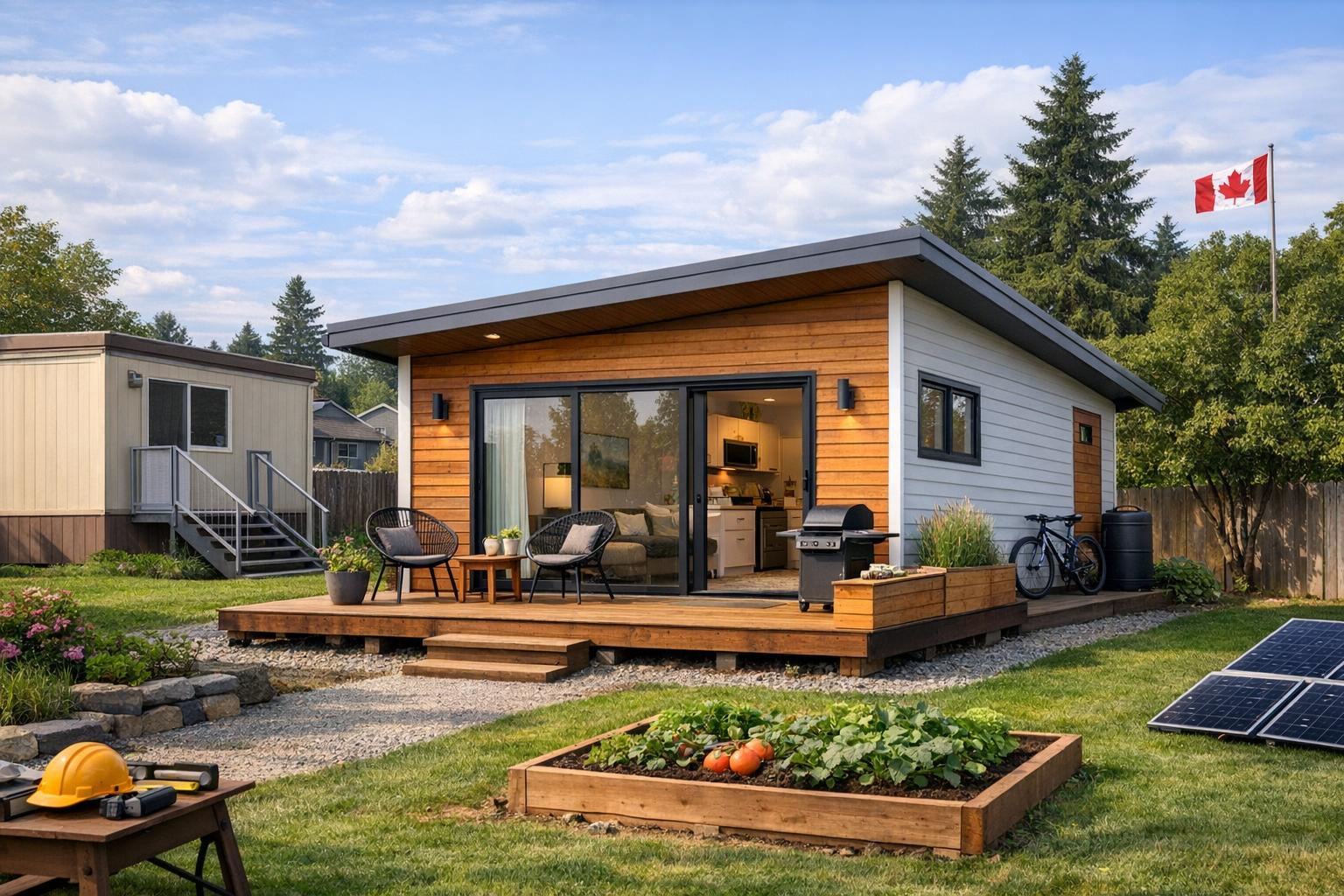
Repurposing School Portable ADU: Transforming Decommissioned School Portables in Canada (2026)
Estimated reading time: 10 minutes
Key Takeaways
- Adaptive Reuse: Transforming decommissioned school portables into certified ADUs offers a sustainable, cost-effective housing solution.
- Modular Conversions: Fast installation with pre-engineered, mobile structures that meet modern residential codes.
- Legal & Permit Strategies: Streamlined rules and regulations in provinces like Ontario simplify the conversion process.
- Environmental Benefits: Reusing existing buildings reduces waste and lowers carbon emissions.
- Proven Success: Case studies from Alberta, Ontario, Atlantic Canada, BC, and Quebec show effective implementations.
Table of contents
- Understanding School Portable ADUs
- Adaptive Reuse and Modular Conversions
- Design Tips for School Portable ADUs
- Permit Strategies and Legal Considerations
- Cost Comparisons
- Case Studies from Multiple Canadian Provinces
- Conclusion and Call to Action
- Additional Resources and References
- Frequently Asked Questions
Understanding School Portable ADUs
What is a School Portable ADU?
School portables, also known as modular classrooms, have been a cornerstone in Canadian education for decades. Originally designed to provide extra classroom space, they are now being repurposed through adaptive reuse to create legally certified accessory dwelling units (ADUs). Their pre-engineered, mobile construction makes them ideal candidates for quick and efficient modular conversions.
- Decommissioning: As enrollment numbers drop or permanent expansions are built, these portables become surplus assets ready for a new purpose.
- Conversion potential: Their ready-made design allows for rapid transformation into safe and compliant living spaces.
- Legal versatility: Converting these structures can simplify the addition of secondary suites compared to building new infill homes.
For detailed background, see the
Ontario’s updated ADU permit policies,
EcoHome’s ADU guide, and
Federal incentives.
Adaptive Reuse and Modular Conversions: What They Entail
Adaptive Reuse: Repurposing Buildings
Adaptive reuse involves taking an existing structure, such as a decommissioned school portable, and converting it into a fully functional living unit. This process minimizes waste by avoiding demolition and preserves resources.
- Environmental impact: Reduced emissions and minimal debris as demolition is largely avoided.
- Longevity: Keeping materials in use longer enhances community resilience.
- Preservation of character: Retains the original building’s unique identity while meeting modern needs.
Modular Conversions: Transforming Portables into Modern Dwellings
Modular conversions upgrade school portables with structural reinforcements, energy-efficient insulation, and modern mechanical systems to meet residential codes. This method enables a swift conversion, ensuring safe and comfortable living spaces.
- Structural reinforcements: Upgrades to the frame and foundations to support year-round living.
- Insulation and energy upgrades: Enhanced walls, floors, and roofs improve thermal comfort.
- Utility connections: Seamless integration with water, sewage, and electrical systems.
Learn more about these methods through
Adaptive reuse and modular upgrades and the
Comprehensive ADU guide.
Design Tips for School Portable ADUs
Space Optimization
With interior areas typically ranging from 30 to 60 square metres, every inch counts. Consider:
- Open-plan layouts: Removing internal walls creates flexible, light-filled spaces.
- Loft areas: Elevated sleeping spaces free up room for daytime activities.
- Built-in storage: Integrated benches and wall-mounted shelves help maximize storage without sacrificing space.
Creative Layouts and Multifunctional Furniture
Modern design strategies include fold-down Murphy beds, expandable tables, and sliding doors to make the most of compact layouts. Ontario regulations support creative, space-efficient designs as long as safety and egress codes are met. For more details, visit
Ontario regulation on space-efficient designs.
Landscape Integration and Sustainability
Smart placement of the ADU—set back from the primary residence—ensures privacy while allowing shared outdoor spaces. Consider eco-friendly features such as decks, green roofs, and solar-ready panels that not only improve energy efficiency but also enhance curb appeal.
Further reading on sustainable materials can be found in the
Federal housing design catalogue and through the
EcoHome guide.
Permit Strategies and Legal Considerations in Canada
General Permit Requirements
Legalizing a school portable ADU involves navigating provincial and municipal requirements. Homeowners must review zoning rules, lot size restrictions, and adhere to building code compliance for upgrades such as insulation, electrical and fire protection.
- Zoning confirmation: Verify that your property is eligible for an ADU.
- Setback and lot size: Flexible rules in urban centres can speed up the process.
- Building code updates: Ensure that the structure meets modern safety and energy standards.
Ontario’s Regulation 462/24 is a prime example of streamlined permit processes. Read more about it via
Regulation 462/24 and check guidelines in the
Ontario Building Code.
Specific Challenges and Strategies
Conversion challenges include classification of the unit, engineered drawings, and updating pre-existing systems. Early consultation with local planning offices, thorough site evaluations, and securing engineer-stamped designs are key to a smooth permitting process.
In regions such as Atlantic Canada, additional guidance is available from initiatives like
Sea Can Guys.
Cost Comparisons – School Portable ADUs vs. Traditional ADUs and New Builds
Cost Breakdown for Modular Conversions
Converting decommissioned school portables can be a highly cost-effective method for adding ADUs. Typical expenses in Canada (2026) include:
- Purchase of school portable: CAD 20,000 – 50,000
- Transportation: CAD 5,000 – 15,000
- Renovations:
- Insulation and windows: CAD 10,000 – 25,000
- Plumbing and electricity: CAD 15,000 – 30,000
- HVAC, foundation, finishes: CAD 25,000 – 45,000
- Permits and engineering: CAD 5,000 – 10,000
Total estimated cost: CAD 80,000 – 175,000.
In comparison, traditional on-site built ADUs and new modular homes are significantly more expensive and time-consuming, making adaptive reuse a compelling alternative.
| Option | Estimated Total Cost (CAD) | Key Savings Factors |
|---|---|---|
| School Portable ADU | $80K–$175K | Pre-built structure with quick setup |
| On-Site ADU | $150K–$300K | New construction with full foundation build |
| New Modular Home | $200K–$400K | New construction with no reuse |
Case Studies from Multiple Canadian Provinces (2026 Updates)
Alberta: School Portable ADU and Adaptive Reuse in Canada
In Alberta, surplus school portables are being repurposed as social housing and rural staff accommodations. Projects typically involve upgrades such as improved insulation, heating systems, and new residential plumbing fixtures. Detailed engineering assessments are required to meet municipal standards.
See more in the
Alberta school capital manual and
modular classroom upgrades.
Ontario: Modular Conversions Accelerated by New Regulation
Ontario Regulation 462/24 has streamlined the process, allowing homeowners in cities like Toronto and Ottawa to convert surplus portables into affordable backyard ADUs. These projects benefit from flexible interior layouts and a rapid permitting process.
More details can be found in the
Regulation 462/24 case study.
Atlantic Canada: Repurposing Buildings for Community Use
In regions like Nova Scotia, firms such as Sea Can Guys are leading the charge by converting school portables into legal, permanent homes. These projects emphasize full-code approvals and benefit from municipal support that speeds up permits.
British Columbia and Quebec: Adaptive Reuse Takes Hold
Pilot programs in BC and Quebec are demonstrating success with adaptive reuse concepts, promoting garden suites and gentle density ADUs. Local councils are focusing on energy-efficient upgrades during the conversion process.
Further insights are available in the
EcoHome ADU guide and the
Federal design catalogue.
Conclusion and Call to Action
Recap: The Value of Adaptive Reuse
Converting decommissioned school portables into ADUs through adaptive reuse offers significant advantages:
- Environmental Savings: Less waste and lower emissions from reusing existing structures.
- Affordability: Lower overall costs compared to new builds, with quicker turnaround times.
- Community Benefits: Increased availability of affordable housing and secondary suites that support multi-generational living.
- Simplified Permitting: Streamlined approval processes in provinces such as Ontario and Nova Scotia.
What’s Next? Your Action Steps
Explore your options by checking local zoning and building codes. Consult with professionals experienced in modular conversions and adaptive reuse. Leverage available federal and provincial incentives to reduce upfront costs. Now is the moment to enhance your property and address Canada’s housing needs.
For more design ideas, visit
Tiny Home Design in Canada. Learn about sustainable materials at
Eco-Friendly Building Materials in Canada, and review legal frameworks in
Canadian ADU Regulations. For financing options, see
The Ultimate Guide to ADU Financing Canada and be inspired by
Canadian ADU Success Stories.
Additional Resources and References
- Ontario Building Code and Regulation 462/24 guidelines
- Comprehensive EcoHome ADU guide
- Federal ADU and secondary suite incentives
- Alberta portable classroom specifications
- Sea Can Guys – Contact Modular Conversion Experts
- Tiny Home Design in Canada: Expert Tips for Maximizing Small Living Spaces
- Eco-Friendly Building Materials: Innovations and Best Practices for Tiny Homes and ADU Construction in Canada
- Canadian ADU Regulations: A Comprehensive Provincial Guide
- The Ultimate Guide to ADU Financing Canada
- Canadian ADU Stories: Inspiring Successes and Renovation Insights
Frequently Asked Questions
What is a school portable ADU?
A school portable ADU is a decommissioned modular classroom that has been repurposed into a legal accessory dwelling unit through a process known as adaptive reuse. This conversion meets modern residential standards while preserving the original structure’s benefits.
How does adaptive reuse benefit communities?
Adaptive reuse reduces construction waste, lowers overall costs, and speeds up project timelines. It helps address housing shortages by converting existing resources into functional living spaces and preserves community character.
What are the key steps to obtain permits for converting a school portable?
Key steps include confirming property zoning, reviewing lot size and setback requirements, ensuring the structure meets current building codes, and consulting with local planning authorities. Detailed, engineer-stamped designs are essential for a smooth permit process.
Leave a Reply