

Estimated reading time: 8 minutes
Key Takeaways
- *Canada’s extreme weather is pushing tiny home owners to adopt innovative disaster-proofing strategies.*
- *Elevated foundations, waterproof membranes, and fire-resistant materials enhance safety and resilience.*
- *Mobility and modular design allow for rapid evacuation and flexible relocation during emergencies.*
- *Government programs and sustainable design upgrades support a future-ready, disaster-resilient lifestyle.*
Table of contents
Understanding the Canadian Climate and Its Risks for Tiny Homes
Disaster-proofing tiny homes means designing and building compact dwellings—from accessory dwelling units to tiny houses on wheels—that can withstand floods, wildfires, and extreme weather events. As Canada faces more frequent and intense weather, both traditional and tiny homes are at risk. For example, floods in Manitoba and Ontario cause millions in damages while wildfires in British Columbia can threaten entire communities.
In today’s unpredictable climate, understanding local hazards is key. In provinces like Manitoba and Ontario, regional flood risks and in British Columbia wildfire threats demand specialized disaster-proofing methods.
Flood Protection: Keeping Tiny Homes Safe from Floods
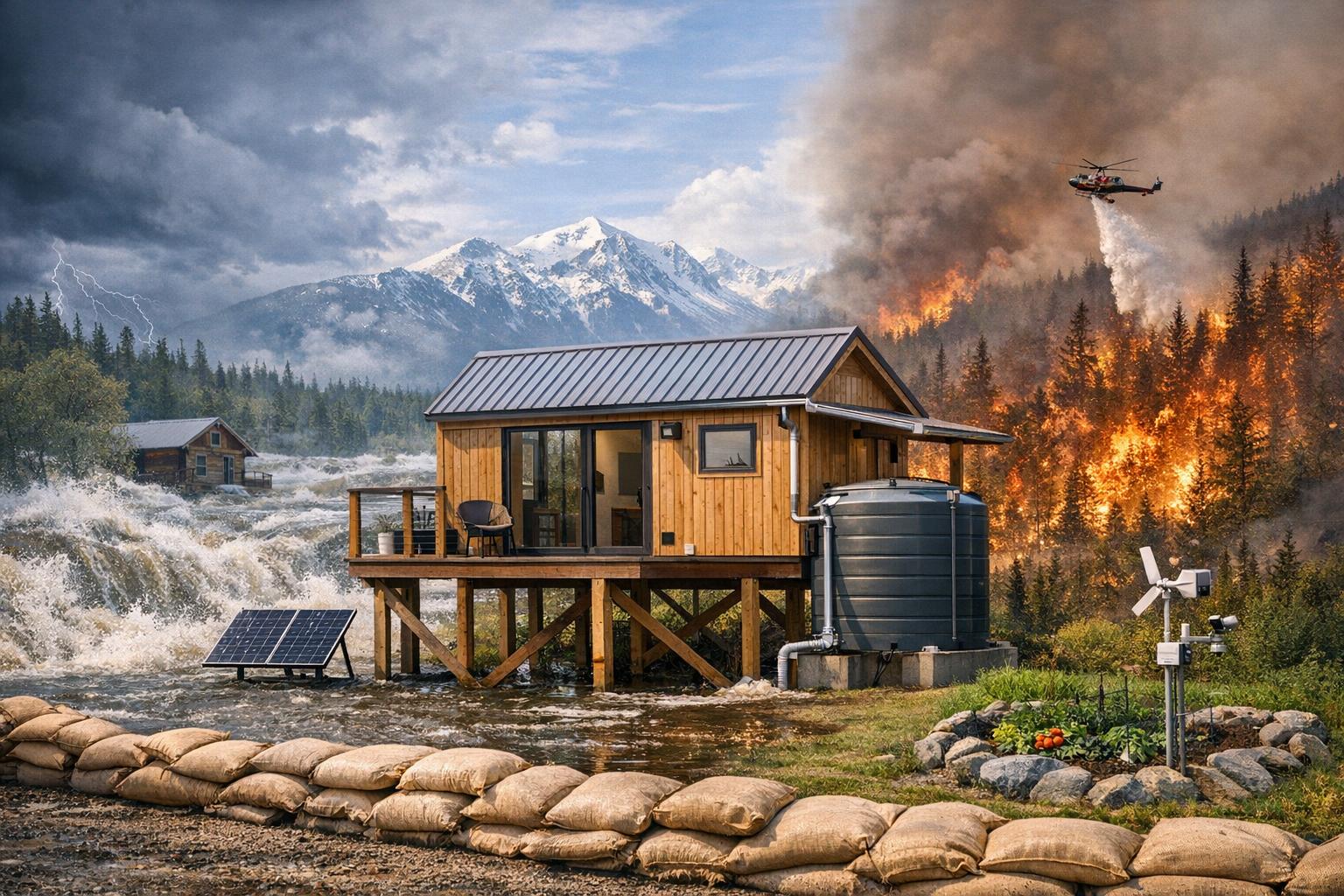
Flood protection is essential for tiny homes, especially in provinces prone to high water events. Assessing flood risk using provincial hazard maps and mapping safe zones significantly reduces potential damage. Elevating your tiny home—not only through raised pilings or foundation blocks but also by leveraging its mobility—can be a lifesaver.
Key strategies include installing waterproof membranes beneath floors and behind walls, adding automatic flood barriers on doors, and using high-performance materials that remain intact under flood conditions. For additional insights, check out resources like Climate Institute reports and solutions featured on Adustart Canada.
Building Fire-Resistant Tiny Homes in Wildfire Zones
With wildfires increasing in regions such as British Columbia, fire-resistant design is crucial. Roofing with metal or composite shingles, combined with the use of cross-laminated timber, provides greater safety against ember intrusion. Installing windows made from tempered glass and using flexible fasteners can further enhance a home’s resilience.
Creating defensible spaces with non-flammable landscaping and planning for mobility—especially in homes mounted on wheels—ensures that residents can relocate swiftly if needed. For more robust design ideas, refer to Saldan Homes and insights from Deep Blue Home.
General Design Principles: Disaster-Proofing, Flood Protection, and Fire-Resistant Design
A holistic approach to tiny home design combines flood protection, fire resistance, and overall durability. By selecting elevated and mobile bases, pairing waterproof membranes with fire-rated siding, and installing wind-resistant roofing, small homes can overcome many challenges posed by Canada’s extreme weather.
Sustainable upgrades like solar panels, Energy Star-rated appliances, and the integration of AI-driven simulation tools for predictive design add another layer of resilience. Builders and engineers are continually refining these methods to make disaster-proofing more effective and affordable.
Real-Life Case Studies: Disaster-Proofing Tiny Homes Across Canada
Real-life examples demonstrate the effectiveness of disaster-proofing strategies. In British Columbia, tiny home owners on wheels have successfully evacuated ahead of wildfire threats, while others have relocated away from spring floods with minimal damage.
High-risk areas in Manitoba and Ontario are witnessing a surge in modular tiny homes that incorporate elevated pads, metal roofs, and integrated firebreak landscaping. These case studies emphasize that even when disaster strikes, thoughtful design and adaptive planning can dramatically reduce losses.
Additional Resources and Practical Tips for Tiny Home Owners
For those looking to make their tiny homes disaster-proof, start with a comprehensive checklist:
- Map your risks: Use online provincial hazard maps to identify flood, wildfire, and extreme weather exposure.
- Elevate your structure: Build your tiny home at least 2 feet above historical flood levels.
- Install protective barriers: Utilize metal roofs, fireproof siding, waterproof underlayers, and automatic flood barriers.
- Plan for mobility: Design pathways and multiple evacuation routes to allow quick relocation if necessary.
- Incorporate green upgrades: Add solar panels and high-performance insulation to secure energy independence during outages.
For personalized advice, consult experts like those at Adustart and explore government programs such as the Homebuilding Innovation Initiative featured on the Government of Canada website.
Conclusion: Disaster-Proofing Tiny Homes Is the Future of Resilient Canadian Housing
Disaster-proofing tiny homes is not optional—it’s essential. By combining strategies like elevation, waterproofing, fire-resistant materials, and the unique mobility of tiny homes, Canadians can safeguard their investments and lives. The integration of these methods with sustainable design and government support is paving the way for a future of safe and resilient living.
Now is the time to act. Begin your journey toward a disaster-proof tiny home, and embrace innovations that will continue to evolve with our changing climate. The path to resilience is built on informed decisions, smart design, and continual adaptation.
Frequently Asked Questions
- What is disaster-proofing in the context of tiny homes?
Disaster-proofing involves designing and building tiny homes to withstand extreme weather events, floods, wildfires, and other natural hazards by using resilient materials, strategic site planning, and innovative building techniques.
- How can I make my tiny home flood resistant?
Key steps include elevating the structure above flood levels, installing waterproof membranes, using flood barriers, and choosing materials that can withstand prolonged moisture exposure. For more guidance, review resources like the Climate Institute report.
- Why is mobility important in disaster resilience?
Mobility—especially in homes on wheels—allows owners to quickly relocate in the face of impending disasters, reducing the risk of damage and ensuring safety during emergencies.
Leave a Reply