

Estimated reading time: 6 minutes
Accessibility in Tiny Homes: Navigating Canada’s 2025 Building Codes and Inclusive Design
Key Takeaways
- Canada 2025 Building Codes remove old exemptions to ensure even tiny homes and ADUs meet accessible standards.
- Adaptability is key – homes are built ready for future upgrades, as seen in Accessible Tiny Homes and Aging in Place with Universal Design and Retrofit ADU Strategies.
- Inclusive Design benefits everyone; from seniors and disabled individuals to families and visitors.
- Regulatory Navigation through detailed compliance and early consultations prevents costly redesigns.
- Market Advantages include higher resale value and broader appeal through accessible, future-proofed designs.
Table of Contents
- Introduction: Accessibility, Tiny Homes, and the 2025 Building Codes
- Overview of Canada 2025 Building Codes: Building Codes and Tiny Homes
- Impact of New Accessibility Standards on Tiny Homes: Opportunity and Obstacles
- Principles of Inclusive Design for Tiny Homes and ADUs
- Navigating Building Codes: Compliance for Accessible Tiny Homes
- Benefits Beyond Compliance
- Conclusion: Building a More Inclusive Future
- Frequently Asked Questions
Introduction: Accessibility, Tiny Homes, and the 2025 Building Codes
Accessibility in housing means designing and building spaces that work for everyone—whether you are disabled, a senior, or part of a growing family. It’s about removing barriers and planning for a future where homes adapt to changing needs.
Tiny homes and accessory dwelling units (ADUs) offer sustainable, energy-efficient living, yet integrating accessibility into these small spaces presents unique challenges. Canada’s upcoming 2025 building codes, including the new CAN/ASC-2.8:2025 standard, are set to transform how these homes are designed.
This post guides you through:
- Understanding changes in the Canada 2025 building codes
- Navigating the specific challenges of tiny home accessibility
- Implementing practical design tips and compliance strategies
Sources: Accessible Canada Standards | Disability Insider News
Overview of Canada 2025 Building Codes: Building Codes and Tiny Homes
What Are Canadian Building Codes?
The building codes set standards for constructing safe, accessible, and sustainable homes across Canada. The National Building Code (NBC) is the basis that provinces and territories tailor to local needs.
Key purposes:
- Guaranteeing safety and health in all structures
- Creating spaces where everyone—irrespective of physical ability—can live comfortably
- Ensuring that designs evolve with scientific and technological advancements
Major Accessibility Updates in the 2025 Codes
Removal of House Exemptions: Previously, many small residential units were exempt from accessibility rules. The 2025 codes now require that nearly every dwelling, including tiny homes and ADUs, adhere to these standards.
Introduction of Adaptability and Visitability:
- Adaptability: Homes are built with provisions for future accessibility updates – for instance, restroom walls pre-equipped with supports for later installation of grab bars. Learn more through our guide on Accessible Tiny Homes and Aging in Place with Universal Design and Retrofit ADU Strategies.
- Visitability: Ensures that all homes have barrier-free entries and accessible routes to at least one bathroom, facilitating visits by people of all abilities.
These changes promote inclusive design across all housing types, making homes safer and more adaptable.
Impact of New Accessibility Standards on Tiny Homes: Opportunity and Obstacles
Why Accessibility in Tiny Homes Is Tough
- Space Limitations: With just a few hundred square feet, even small modifications can be challenging. For innovative kitchen ideas, check out Tiny Home Kitchen Design: How to Maximize Efficiency and Style in Canadian Tiny Homes.
- Multi-Purpose Layouts: Spaces that serve multiple roles need careful planning to maintain clear areas for mobility aids.
- Cost Pressures: Adding accessibility features can impact the design budget, particularly in very small homes.
- Limited Proven Designs: There are fewer established models to follow, increasing uncertainty in the design process.
How the Canada 2025 Codes Help
The codes prioritize adaptability—tiny homes can be built “accessible-ready” with the capacity for future upgrades. For example, bathroom walls may include supports for grab bars even if the bars aren’t installed initially.
This forward-thinking approach avoids the expense of complete remodels down the line.
Essential Accessibility Features for Tiny Homes
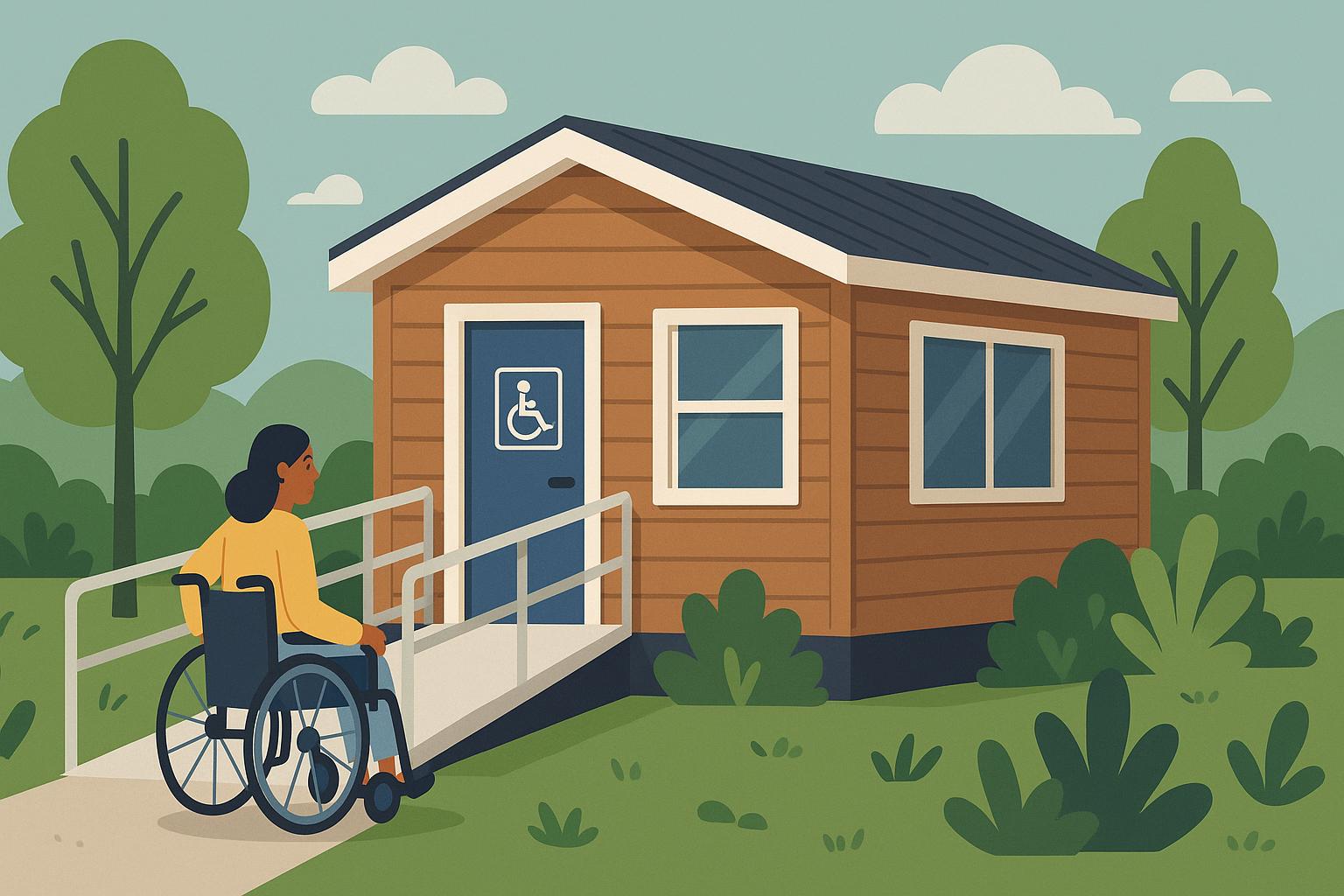
- Barrier-Free Entries: Design entries without steps, incorporating gentle ramps for easy access.
- Accessible Kitchens: Incorporate lowered counters, open knee spaces, and pull-out shelves to maximize usability.
- Adaptable Bathrooms: Pre-install wall backing for future grab bars and ensure layouts allow for easy maneuvering.
- Wide Doorways and Hallways: Ensure sufficient clearance for wheelchair access. More guidance is available in our Tiny Home Design in Canada Guide.
- Outdoor Accessibility: When possible, include accessible parking and pathways.
Principles of Inclusive Design for Tiny Homes and ADUs
What Is Inclusive Design?
Inclusive design (or universal design) means creating spaces that work for everyone from the start. It avoids later modifications by embedding flexibility and accessibility into every element of the home.
This approach benefits:
- Parents with strollers
- Seniors wishing to age in place – see Tiny Home for Seniors: Innovative, Accessible, and Community-Centric Living Solutions
- Individuals recovering from injury or surgery
- Visitors and residents with temporary or permanent disabilities
Source: Accessible Canada Standards
Practical Strategies for Inclusive Spaces
- Entryways: Use compact ramps (no steeper than 1:12) with slip-resistant surfaces.
- Maneuverability: Ensure open layouts with a 5-foot turning circle and space-saving doors.
- Kitchens: Lower countertops and leave knee space open, enhanced with pull-out shelves.
- Bathrooms: Design to allow easy transfers with wall backing for future grab bar installation.
- Lighting and Wayfinding: Install motion-activated lighting and use contrasting colors to guide movement.
- Smart Home Features: Opt for lever handles, touchless faucets, and integrated smart technology – more details in our Smart Home Technology for ADUs guide.
Navigating Building Codes: Compliance for Accessible Tiny Homes
A Step-by-Step Path to Accessibility and Code Compliance
- Identify All Applicable Codes: Determine which building codes apply to your area. Tiny homes and ADUs may have different guidelines. For assistance, refer to the Tiny Home Legal Clinic Guide.
- Review the 2025 Updates: Focus on NBC subsections 3.8.4 (adaptability) and 3.8.5 (visitability).
- Integrate Accessible-Ready Features: Use the CAN/ASC-2.8:2025 standard and plan for future modifications.
- Maintain Detailed Records: Document your design process, materials, and compliance measures.
- Work With Local Authorities Early: Consult your building department to confirm design interpretations before construction.
- Design for Future Adaptability: Build structures that allow easy modifications as needs change.
Common Pitfalls and How to Prevent Them
- Doorways Too Small: Ensure sufficient clearance for wheelchair access. Learn more from Designing Accessible Tiny Homes and ADUs.
- Narrow Hallways: Plan for hallways of at least 36 inches, preferably 42 inches wide.
- Difficult Stairs: Consider future lifts or alternative solutions for multi-level access.
- Insufficient Bathroom Space: Ensure there is at least 5 feet of open floor for wheelchair turning.
- Skipping Future Grab Bar Support: Pre-install wall backing to ease future modifications.
- Uneven Lighting: Use consistent, motion-activated lighting to minimize hazards.
Benefits Beyond Compliance: Why It Matters
Accessibility Is a Social Equalizer
Accessible homes benefit not only those with disabilities but seniors, families, and anyone experiencing temporary mobility challenges. Creating inclusive living spaces strengthens community bonds and supports independent living.
Source: Accessible Canada Standards
Market Advantages for Accessible Tiny Homes and ADUs
- Higher Resale Value: Accessibility features attract a wider pool of buyers, from aging individuals to families.
- Broader Rental Appeal: Inclusive homes can serve diverse demographics, enhancing marketability.
- Future-Proofing: Homes built to adapt remain competitive as building codes evolve.
- Community Impact: Accessible designs foster inclusive, supportive neighborhoods.
Conclusion: Building a More Inclusive Future
Accessibility is essential in modern housing. Canada’s 2025 building codes push tiny homes and ADUs to be built with an eye toward future adaptability and inclusiveness.
By integrating accessible-ready features and embracing inclusive design, builders and homeowners not only comply with regulations—they create communities that work for everyone.
Frequently Asked Questions
What does “accessible-ready” mean for tiny homes?
It means that while all accessibility features might not be installed at the outset, the home is built with structural provisions (like wall backing for grab bars) to allow easy future upgrades.
How will the Canada 2025 building codes affect tiny homes?
The codes require nearly all homes—including tiny homes and ADUs—to meet basic accessibility standards, either from the start or through adaptable, upgrade-ready design features.
What are some key principles of inclusive design?
Core principles include barrier-free entries, open layouts for easy maneuverability, adjustable kitchen and bathroom features, and smart lighting solutions that together create a space for everyone.
Leave a Reply