

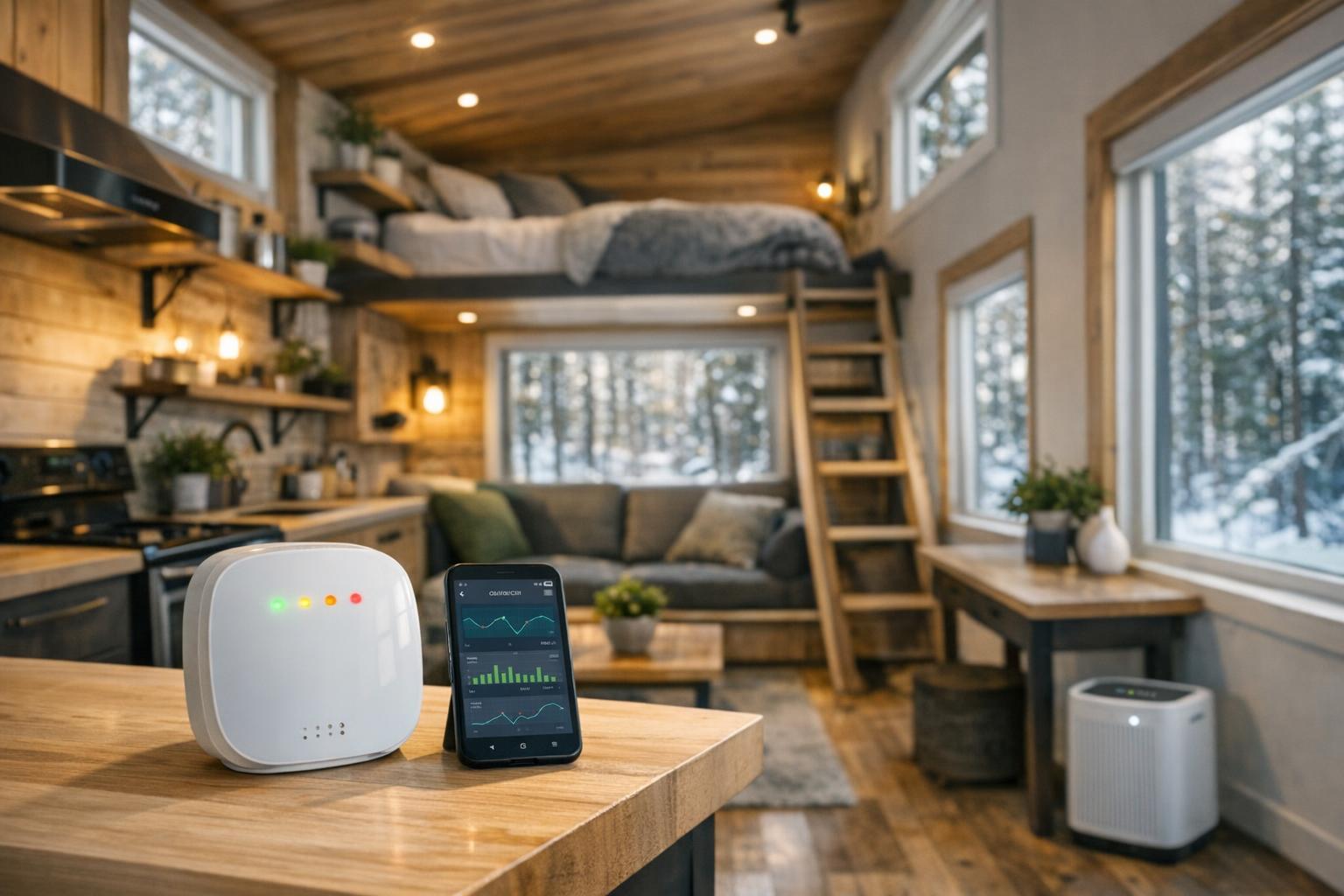
Air Quality Sensor Technology for Canadian Tiny Homes: Smarter Indoor Health for 2026
Estimated reading time: 10 minutes
Key Takeaways
- Air quality sensors are essential for monitoring indoor health in smart homes and tiny homes.
- Integration with smart home systems enables automated adjustments to improve air quality.
- Innovative sensor technology combines multiple detection methods for accurate pollutant tracking.
- Real-time monitoring helps reduce energy use, extend equipment life, and safeguard health.
- Emerging trends include AI-enhanced sensor fusion and predictive maintenance for future-ready homes.
Table of contents
- Introduction: Air Quality Sensor Innovations for Smart Home Tech and Tiny Homes in Canada 2025
- What is an Air Quality Sensor? Understanding Smart Home Tech Basics
- The Role of Air Quality Sensors in Smart Home Tech and Indoor Health
- Why Indoor Health Matters in Small Spaces: Air Quality Sensors and Tiny Homes
- Specific Considerations for Tiny Homes in Canada 2026: From Canada 2025 Onward
- Benefits of Real-Time Air Quality Monitoring for Canadian Tiny Home Owners
- Future Trends and Innovations: Air Quality Sensor Advancements in Canada 2026 and Beyond
- Conclusion: Making Air Quality Sensors Central to Smart Tiny Home Living in Canada
- Additional Resources/References
- Frequently Asked Questions
Introduction: Air Quality Sensor Innovations for Smart Home Tech and Tiny Homes in Canada 2025
Air quality sensor technology is transforming the way Canadians manage indoor health within the modern smart home landscape. An air quality sensor measures key air pollutants and environmental conditions—such as PM2.5 (fine dust), VOCs (volatile organic compounds), and CO₂ (carbon dioxide)—while simultaneously tracking temperature and humidity. With smart home tech becoming mainstream, these sensors are increasingly integrated into Canadian living spaces, including tiny homes where every cubic foot of air matters for safety and comfort.
In Canada 2025 and into 2026, the adoption of air quality sensors shows rapid growth as part of a broader shift toward digital home automation and sustainable living. Compact devices detect particulate matter and harmful gases, and pass this real-time data to smart home ecosystems—automatically adjusting air purifiers, humidifiers, fans, and HVAC systems to optimize indoor health. In tiny homes, where space is limited and ventilation can be challenging, air quality monitoring is even more crucial, making these devices a smart home must-have for Canadian households looking ahead to 2026.
-
For more information on how air quality sensors detect pollutants and work with smart systems:
Intretech News,
Science.gc.ca,
Adustart Tiny Home Living Guide
What is an Air Quality Sensor? Understanding Smart Home Tech Basics
An air quality sensor is a compact electronic device designed to detect and quantify pollutants in the air and provide information about indoor environmental conditions. Modern devices employ several sensing technologies, which include:
- Laser-based detectors: Precisely count the concentration and size of airborne particulate matter (PM2.5, PM10), crucial for tracking fine dust and smoke.
- Electrochemical cells: Identify the presence of harmful gases like carbon monoxide (CO), carbon dioxide (CO₂), and volatile organic compounds (VOCs) from cleaning agents, paint, or cooking.
- Thermistors and capacitive sensors: Measure environmental factors like temperature and humidity, which influence pollutant behaviour and comfort.
These components work together to give a full picture of indoor air quality. For example, if a sensor detects high carbon dioxide or VOC levels, it can notify inhabitants or trigger smart home devices to improve ventilation automatically.
Common Types of Air Quality Sensors in Smart Homes
- Low-cost PM2.5 sensors: Widely used for monitoring smoke from wildfires and urban dust, filling coverage gaps identified by Canada’s National Air Pollution Surveillance Program.
- Multi-parameter monitors: Devices that combine several sensors (PM2.5, VOCs, CO₂) into a single unit for comprehensive air quality tracking.
- Advanced modules (e.g. Renesas RRH62000): Integrate multiple pollutant detections, often with features for humidity, temperature, and gas detection in compact hardware.
Newer air quality monitoring solutions introduce sensor fusion, which merges input from diverse sensor types for better accuracy. Edge AI computing enables pattern recognition and anomaly detection, supporting smarter and faster home automation. Connectivity options like Matter and Zigbee enhance integration with intelligent home systems, making sensors more compatible, compact, and affordable.
-
See further details on technical advancements:
Intretech News,
Science.gc.ca,
Grand View Research,
Adustart Tiny Home Design in Canada
The Role of Air Quality Sensors in Smart Home Tech and Indoor Health
Integrating an air quality sensor into your smart home tech setup turns air monitoring into an active and automated process. Today’s sensors connect through common wireless technologies:
- Wi-Fi
- Bluetooth Low Energy (LE)
- Thread
- Matter (next-generation smart home standard)
This connectivity allows sensors to send real-time data to a home automation hub. The system can then respond with automated routines, such as:
- Turning on an air purifier if PM2.5 levels exceed safe limits.
- Activating a bathroom or kitchen exhaust fan if VOC or humidity readings rise.
- Adjusting HVAC or opening windows through connected actuators if carbon dioxide is elevated.
Example automation:
“If PM2.5 is high, then trigger air purifier to maximum for 30 minutes.”
Popular Canadian platforms like Google Home, Apple’s HomeKit, Samsung’s SmartThings, and open-source solutions like AirGradient make it easy to monitor and control air quality throughout the house. Users receive instant alerts, recommendations via their phone or smart display, reminders to replace filters, and the ability to view historical data and trends.
-
More on integration and platforms:
Intretech News,
SNS Insider,
AirGradient,
Adustart Smart Home Tech for ADUs
Why Indoor Health Matters in Small Spaces: Air Quality Sensors and Tiny Homes
Indoor health refers to the wellness and comfort of people living within enclosed spaces, primarily determined by air quality and exposure to pollutants. In the context of tiny homes, indoor health is particularly sensitive because:
- Limited ventilation: Pollutants like CO₂ and VOCs build up quickly in confined spaces.
- Moisture accumulation: Cooking, showering, or breathing can promote mold growth in areas with less airflow.
- External air threats: Wildfire smoke or urban particulates can rapidly increase PM2.5 levels in tiny spaces.
- Appliance use impacts: Heaters and stoves can degrade indoor air quality faster in small homes.
Continuous measurement with air quality sensors allows for immediate feedback and corrective action:
- Instant alerts signal when an air quality hazard is detected.
- Automated ventilation systems flush out pollutants before they reach harmful levels.
- Data logs help residents understand pollutant spikes, fostering healthier habits.
For Canadians in rural or wildfire-prone areas, tiny homes face unique risks where sensors complement the Air Quality Health Index (AQHI) by providing localized data.
- To read studies on indoor health and tiny home dynamics:
Specific Considerations for Tiny Homes in Canada 2026: From Canada 2025 Onward
The popularity of tiny homes in Canada continues to grow in 2026, building upon trends noted during Canada 2025. Several unique characteristics of Canadian tiny homes highlight the importance of indoor health and air quality sensor technology:
Environmental and Climatic Challenges
- Limited air volume: Indoor pollution accumulates faster in small, confined spaces.
- Extreme temperatures:
Eastern Canada: Cold and humid, where closed windows in winter increase CO₂ and moisture.
Western Canada: Hot and dry, with wildfire smoke elevating PM2.5 during summer.
Regulatory and Standards Context
While standards on indoor air quality are guided by Environment and Climate Change Canada through programs like the National Air Pollution Surveillance (NAPS) and AQHI tools, as of 2026 there are no nationwide minimums specifically for tiny homes. Adopting sensor-integrated smart home tech supports reducing energy use and protecting health, especially during high-risk seasons.
Practical Considerations
- Space constraints: Sensors must be compact, low-power, and easy to integrate in limited wall spaces or off-grid setups.
- Rural and remote use: Wireless options and open-source systems like AirGradient provide valuable solutions outside urban centers.
-
For more information:
Science.gc.ca,
SNS Insider,
Adustart Tiny Home Living Canada Guide
Benefits of Real-Time Air Quality Monitoring for Canadian Tiny Home Owners
Key Benefits
-
Early Detection:
– Identifies unsafe increases in PM2.5, CO₂, and VOCs before health risks escalate.
– Mitigates wildfire smoke infiltration during fire season.
-
Continuous Feedback:
– Provides constant data streams to inform homeowners of the current air quality.
– Automates responses such as activating ventilation or air purifiers.
-
Proactive Health Safeguards:
– Offers round-the-clock protection even when residents are asleep or away.
– Helps establish healthier living habits through data insights.
-
Energy and Cost Efficiency:
– Data-driven HVAC control can reduce energy use significantly.
– Optimizes system performance, potentially extending the life of air filters.
For Canadian tiny home owners, these smart sensors are an investment in both health and sustainability. They help maintain safe, comfortable living conditions year-round regardless of location or climate challenges.
-
Learn more about these benefits:
Science.gc.ca,
SNS Insider,
Intretech News,
Adustart Tiny Smart Home Canada
Future Trends and Innovations: Air Quality Sensor Advancements in Canada 2026 and Beyond
The Canadian air quality sensor market is set for major growth and technical evolution by and beyond 2026. Here’s what tiny home owners can expect:
Next-Generation Sensor Technologies
-
AI and Sensor Fusion:
– Devices will combine multiple data sources (particulates, gases, humidity) with AI to predictively adjust ventilation based on occupancy or weather conditions.
-
Increased Accuracy:
– Advanced sensors will reduce false alarms and enable more targeted air quality responses.
-
Predictive Maintenance:
– Systems will indicate when filter change is needed based on actual air quality usage rather than a fixed schedule.
Market Outlook
The global indoor air quality monitor market is projected to grow significantly, with smart home ecosystems (such as those using Matter) making real-time data accessible across devices—even in remote Canadian settings.
Innovations for Tiny Homes
Cheaper, smaller, and longer-lasting sensors will continue to evolve, transitioning from standalone gadgets to integrated environmental health systems.
-
Dive deeper into forecasts and emerging trends:
Intretech News,
SNS Insider,
Adustart Futureproofing Tiny Homes Canada
Conclusion: Making Air Quality Sensors Central to Smart Tiny Home Living in Canada
The adoption of air quality sensors in Canada’s smart home tech landscape is no longer optional—it’s essential for ensuring safe, comfortable, and sustainable indoor environments, particularly in tiny homes. Real-time monitoring empowers owners to prevent health risks, optimize energy use, save money, and confidently address challenges like wildfire smoke and extreme climates.
Take Action Today: Tiny home owners and other Canadians looking to future-proof their living spaces should explore sensor solutions such as AirGradient’s open-source devices or advanced modules with Renesas integration. When paired with popular smart home platforms, these technologies deliver a healthier, safer, and smarter indoor life.
-
For sensor options and integration guides:
Intretech News,
Grand View Research,
AirGradient,
Adustart Tiny Home Living Comprehensive Guide
Additional Resources/References
- Environment and Climate Change Canada: National Air Pollution Surveillance Program and AQHI
- Health Canada research on low-cost sensor applications for wildfire exposure
- AirGradient: Open-source air quality monitors for Home Assistant and smart home integration
- AirSENCE urban air quality monitoring
- Trusted smart home platforms for Canada
Frequently Asked Questions
1. What does an air quality sensor measure?
Air quality sensors measure various pollutants such as PM2.5, VOCs, CO₂, and other harmful gases, as well as environmental factors like temperature and humidity, to provide a comprehensive overview of indoor air quality.
2. How do air quality sensors integrate with smart home systems?
These sensors use connectivity protocols like Wi-Fi, Bluetooth LE, Thread, or Matter to communicate with a central hub. This integration allows automatic adjustments—such as activating an air purifier or improving ventilation—based on real-time air quality data.
3. Why are air quality sensors particularly important in tiny homes?
In tiny homes, limited space and ventilation can lead to rapid accumulation of pollutants. Air quality sensors provide instant alerts and automated responses, ensuring a healthier indoor environment even in confined spaces.
Leave a Reply