

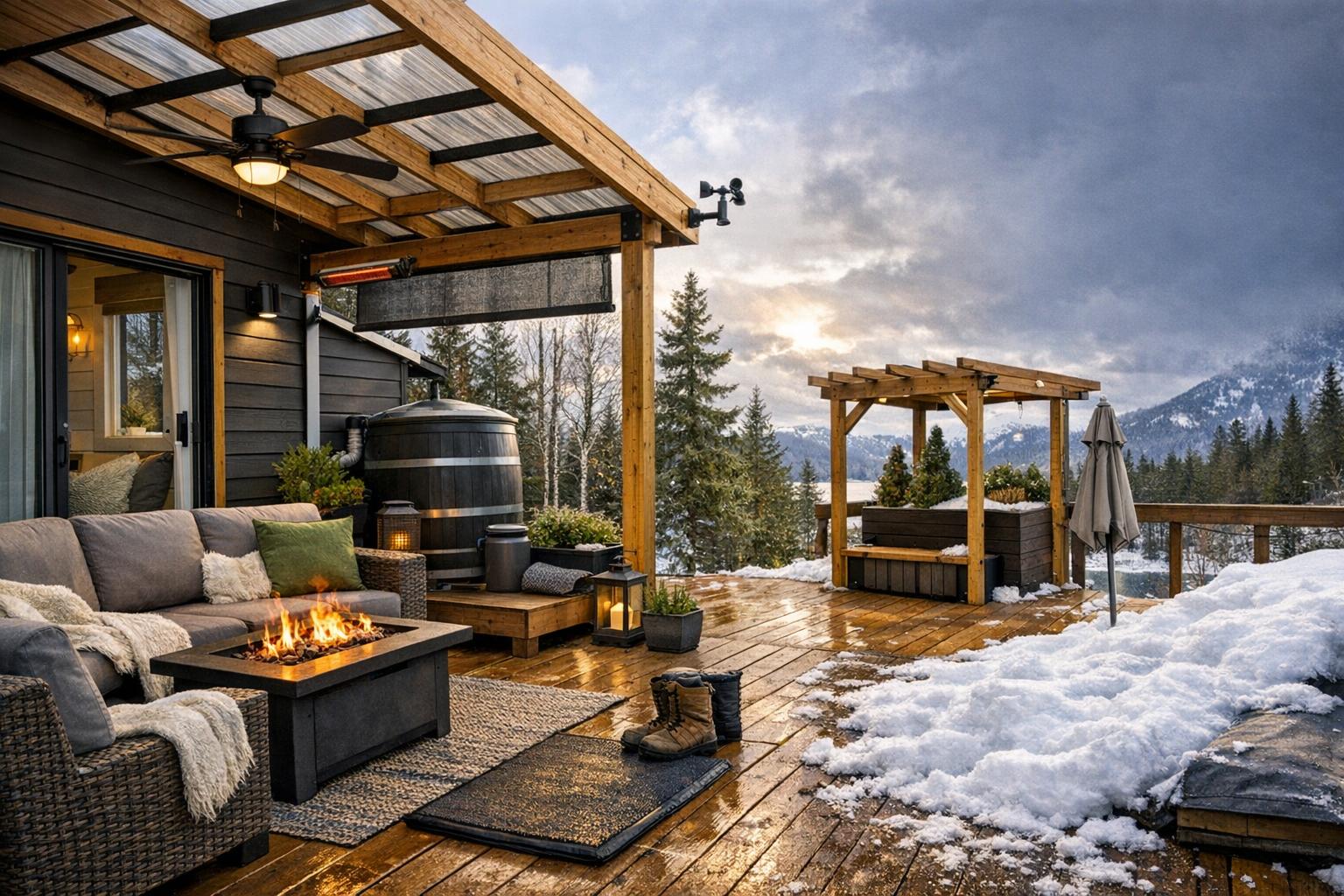
Climate‑Adaptive Decks: Resilient Tiny Home Decks for Canadian Outdoor Spaces
Estimated reading time: 7 minutes
Key Takeaways
- * Climate‑adaptive decks are essential for tiny homes in Canada to withstand extreme weather.
- * Resilient design, including layered construction and proper water management, ensures year‐round safety and comfort.
- * Thoughtful material selection and structural engineering address heavy snow, freeze–thaw cycles, and high winds.
- * Regular maintenance and seasonal preparation extend the life of your outdoor space.
Table of contents
- Understanding Canadian Weather Challenges for Outdoor Spaces
- Designing Climate‑Adaptive Decks for Tiny Homes
- Strategies to Maximize Comfort in Outdoor Spaces
- Climate Adaptation Techniques Specific to Canadian Tiny Home Decks
- Maintenance & Seasonal Preparation for Resilient Outdoor Living
- Conclusion & Call to Action
- Frequently Asked Questions
Designing climate‑adaptive decks for tiny homes is all about creating reliable outdoor spaces that endure the extreme ups and downs of Canadian weather. Whether you’re living in a cozy tiny home or an ADU (accessory dwelling unit), a well-built, climate-adaptive deck dramatically extends your living area, even when snow or high winds make cabin fever a threat.
Tiny home decks must do more than provide a place to sit. They’re an outdoor “room” for relaxing, dining, storing gear, and transitioning from the elements—making every square foot count in a compact home. Adopting resilient design ensures these outdoor platforms survive snow loads, freeze–thaw cycles, rain, heat, and wind—all while staying safe and inviting year-round.
References:
– Guide to Composite Decking in Canada
– Calgary Deck Design – Transform Your Outdoor Living Space
– Tiny Home Living Guide
Understanding Canadian Weather Challenges for Outdoor Spaces
Canadian weather is anything but predictable, and its extremes put tiny home decks and outdoor spaces to the test all year round.
The Main Weather Stressors
- Heavy Snow & Ice
- Deep snowfall and icy buildup can block access and damage fasteners.
- Freeze–Thaw Cycles
- Temperature swings cause expansion, contraction, and potential warping of deck materials.
- Rain & Moisture
- Excess moisture leads to rot, mildew, and slippery surfaces if drainage is poor.
- Summer Heat & UV
- High sun exposure degrades surfaces and can create dangerously hot areas.
- High Winds
- Strong gusts challenge the stability of posts, railings, and structural covers.
Seasonal Variability: How Conditions Change
- Winter: Icy, snow-covered decks demand design features like slip-resistant surfaces and proper drainage.
- Spring & Fall (Shoulder Seasons): Wet and chilly conditions require raised platforms and windbreaks.
- Summer: Shaded areas and UV protection become critical for keeping surfaces safe and cool.
References:
– Calgary Deck Design – Transform Your Outdoor Living Space
– Resilience Fact Sheet – CWC
– Guide to Composite Decking in Canada
– Tiny Home Living Guide
Designing Climate‑Adaptive Decks for Tiny Homes
To build a climate-adaptive deck that lasts, each detail must address Canadian weather and support resilient design principles. Let’s explore how to get this right for tiny home decks.
Resilient Design Principles for Tiny Home Decks
- Design for Your Microclimate:
- Size and anchor structural elements for local snow and wind loads.
- Consider site orientation to block wind and maximize sunlight.
- Layered Construction:
- Separate heavy framing from the walking surface for easy repairs.
- Water Management:
- Pitch the deck, use open board gaps, and embed drainage slots to direct water away.
- Safe Access Year-Round:
- Incorporate slip-resistant finishes and sturdy handrails for winter safety.
References:
– Calgary Deck Design – Transform Your Outdoor Living Space
– Climate Resilience Guide: Housing Design
– Tiny Home Living Guide
Durable Material Selection
- Composite Decking:
- Resists rot, splitting, and warping; low maintenance and eco-friendly.
- Provides a slip-resistant surface for enhanced safety.
- Pressure-Treated and Modified Woods:
- Pressure-treated lumber is affordable; thermally modified wood offers better stability.
- Hardware Matters:
- Always use corrosion-resistant fasteners like stainless steel or coated screws.
- Right Finish:
- Lighter colours and textured surfaces reduce heat buildup and improve grip.
References:
– Guide to Composite Decking in Canada
– Rooftop Decking with Thermally Modified Wood
– Resilience Fact Sheet – CWC
– Tiny Home Living Guide
Structural Engineering for Harsh Conditions
- Deep, Frost-Proof Foundations:
- Place deck footing below the frost line using concrete piles or sonotubes.
- Snow & Live Load Specification:
- Engineer joists and supports to handle heavy snow loads and live occupancy.
- Drainage & Airflow:
- Ensure free air movement and clear pathways to avoid water pooling.
References:
– Calgary Deck Design – Transform Your Outdoor Living Space
– Building a Deck in Cold Weather
– Tiny Home Living Guide
Strategies to Maximize Comfort in Outdoor Spaces
Making a deck comfortable in all weather takes more than just robust construction. The right resilient design features can transform your outdoor space into a year-round oasis.
Incorporating Shelter Elements
- Pergolas and Shade Structures:
- Provide cooling shade in summer and support for climbing plants.
- Can be enhanced with curtains, screens, or retractable awnings.
- Retractable Awnings and Canopies:
- Offer protection from sun and light rain; retract during heavy snow.
- Permanent Roofs and Covered Decks:
- Engineered for both snow and wind, they provide reliable entry protection.
- Windbreaks and Screens:
- Utilize slatted walls, glass panels, or shrubs to block cold winds while ensuring proper airflow.
Weather-Proof Furniture & Accessories
- Resilient Outdoor Furnishings:
- Choose powder-coated metal, all-weather resin, or treated wood furniture for durability.
- Smart Storage:
- Integrate built-in benches or compact sheds for storing accessories during storms.
Drainage and Ventilation
- Water-Shedding Details:
- Leave gaps between boards and slope surfaces to ensure water drains away.
- Permeable Surroundings:
- Use gravel or paver bands along edges to promote drainage and reduce mud.
- Under-Deck Ventilation:
- Maintain open airflow under the deck to prevent mold and extend lifespan.
References:
– Calgary Deck Design – Transform Your Outdoor Living Space
– Building a Deck in Cold Weather
Climate Adaptation Techniques Specific to Canadian Tiny Home Decks
Innovative Adaptive Design Elements
- Raised Platforms:
- Facilitate quick drainage and improve airflow beneath the deck.
- Ideal for mobile or skid-mounted tiny homes.
- Insulated and Thermally Conscious Surfaces:
- Add insulation under covered sections and use materials like thermally modified wood for consistency in varying temperatures.
- Modular and Demountable Decking:
- Allow seasonal reconfiguration to simplify snow clearing and adapt to changing needs.
Sustainable, Climate-Responsive Features
- Rainwater Management:
- Incorporate eavestroughs or rain chains to guide runoff safely away from the deck.
- Natural Shading with Plants:
- Use native, low-water plants to cool surfaces without added irrigation demands.
- Energy-Efficient Outdoor Comfort:
- Install outdoor heaters, smart fans, or misting systems with automatic controls to boost year-round comfort efficiently.
References:
– Calgary Deck Design – Transform Your Outdoor Living Space
– Climate Resilience Guide: Housing Design
– Smart Decks: Integrating Technology
Canadian Case Examples
Calgary and other Prairie-region cities provide real-world proof: decks here commonly use composite materials, roofs designed for heavy snow loads, and deep concrete footings to manage rapid temperature fluctuations and strong winds. Specialized guides from Canadian companies highlight design and finish techniques that ensure durability and everyday comfort in tiny home decks.
References:
– Calgary Deck Design – Transform Your Outdoor Living Space
– Guide to Composite Decking in Canada
Maintenance & Seasonal Preparation for Resilient Outdoor Living
Routine Upkeep
- Routine Cleaning:
- Sweep debris and wash the deck regularly to prevent mold and moss buildup.
- Fastener and Structural Inspections:
- Inspect rails, posts, and fasteners each spring and after severe weather for signs of damage.
- Wood Maintenance:
- Re-seal wood surfaces and promptly repair splinters, warping, or rot.
Seasonal Setup & Shutdown
- Fall/Pre-Winter Prep:
- Clear leaves and dirt, store soft furnishings, and brace or dismantle temporary shade structures as needed.
- Winter:
- Promptly remove snow with plastic tools and use non-corrosive de-icers to protect the decking.
- Spring Reactivation:
- Inspect for frost heave, tighten fasteners, and clean thoroughly before reintroducing outdoor elements.
References:
– Calgary Deck Design – Transform Your Outdoor Living Space
Conclusion & Call to Action
Building climate-adaptive decks is essential for tiny home and ADU owners in Canada who wish to enjoy safe and comfortable outdoor spaces throughout the year. By integrating resilient design, smart material choices, and robust foundations, you can create a deck that not only adds valuable living space but also stands up to the harshest conditions.
Ready to transform your tiny home deck?
- Start early: Consider your local weather, choose climate-smart materials, and invest in quality construction.
- Do your research: Use the guides referenced throughout this post as a roadmap for your project.
- Invest in resilience: Enhance your outdoor space for year-round comfort and safety.
Further reading and resources:
– Guide to Composite Decking in Canada
– Calgary Deck Design – Transform Your Outdoor Living Space
– Climate Resilience Guide: Housing Design
– Tiny Home Living Guide
Frequently Asked Questions
What makes climate-adaptive decks essential for Canadian tiny homes?
They are engineered to handle extreme weather conditions, including heavy snow, temperature swings, rain, and high winds, ensuring a safe outdoor space year-round.
What materials are best for building a resilient tiny home deck?
Composite decking, pressure-treated wood, and thermally modified materials are popular choices because they resist rot, warping, and require less maintenance.
How important is regular maintenance?
Regular maintenance is crucial. Cleaning, inspecting fasteners, and seasonal preparations keep the deck safe and extend its lifespan.
Can deck designs be adapted for seasonal changes?
Yes, incorporating elements like retractable awnings, modular decking, and proper drainage allows the deck to be reconfigured and maintained throughout the year.
Leave a Reply