

Community Tool Sharing: How Tiny Home Communities Can Save Money, Space, and the Planet
Estimated reading time: 8 minutes
Key Takeaways
- Tool Sharing Saves Money: By borrowing tools instead of purchasing them, communities cut down on individual costs.
- Space Optimization: Tiny home communities benefit from not having bulky tools stored in every household.
- Sustainable Living: Sharing tools reduces waste, promotes repair and reuse, and lowers the overall ecological footprint.
- Community Bonding: Initiatives like lending libraries create stronger neighbourhood connections and resource networks.
Table of Contents
- What is Community Tool Sharing?
- Benefits of Community Tool Sharing in Tiny Home Communities
- How to Start or Join a Community Tool Sharing Program
- Role of Neighbourhood Initiatives in Promoting Sustainable Living
- Challenges and Solutions in Community Tool Sharing
- Conclusion
- Frequently Asked Questions
What is Community Tool Sharing?
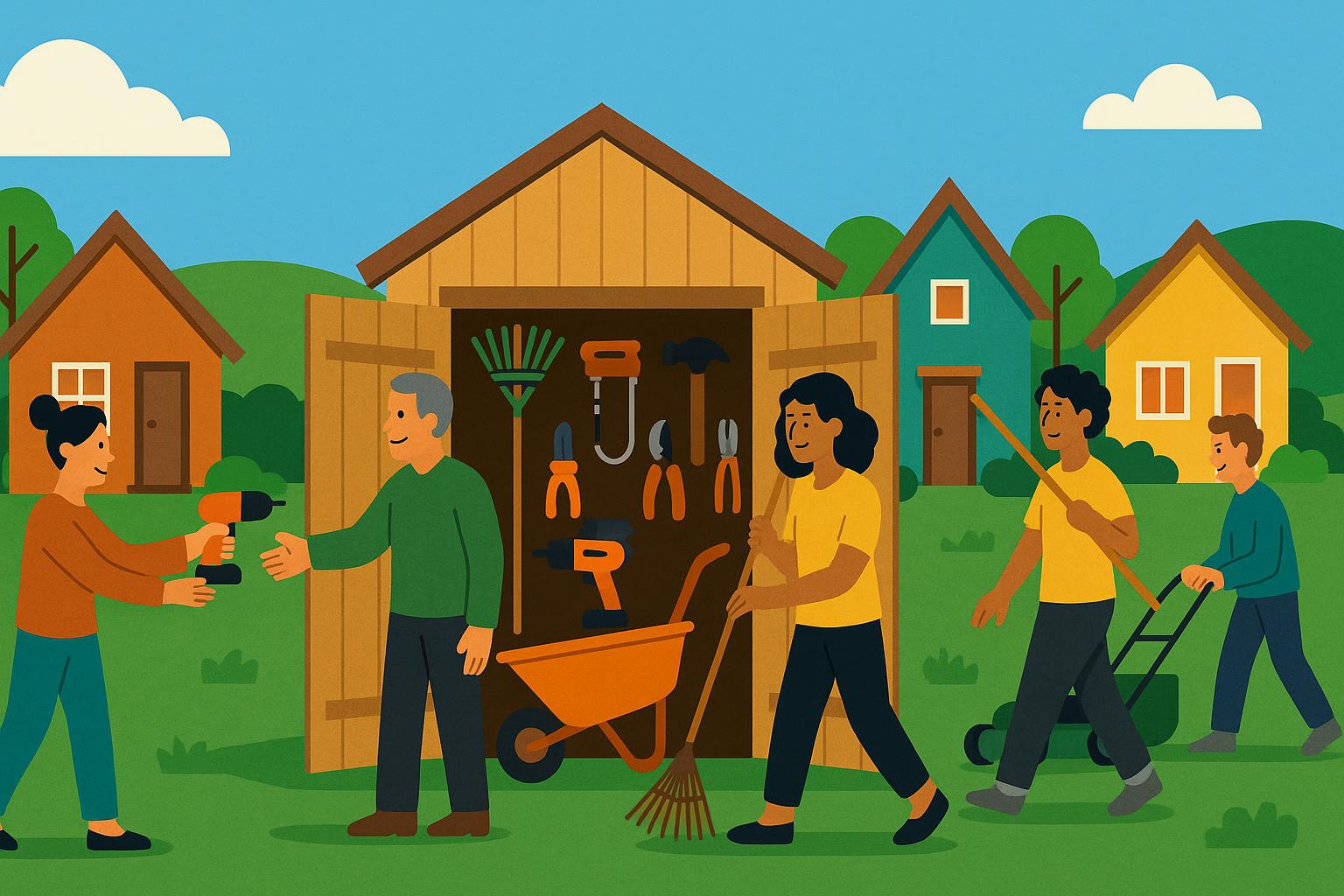
Community tool sharing is a cooperative system where a group—be it a tiny home community, co-op, condo board, or a collection of neighbours—shares access to a pool of tools and equipment. Instead of individual households investing in rarely used equipment, members borrow items like power drills, lawn mowers, or circular saws as needed. Learn more about the concept at
Adustart.
How Community Tool Sharing Works
- Memberships & Fees: Typically, members pay a modest annual fee or join on a donation basis.
- Borrowing Process: Tools are checked out for a set period (usually 3–7 days) and then returned.
- Inventory Management: Tools are recorded, labeled, and maintained by volunteers or staff to ensure efficiency.
In tiny home communities, sharing tools means no longer forcing each household to store bulky equipment, freeing up valuable space.
Benefits of Community Tool Sharing in Tiny Home Communities
Cost Savings: Affordable Tool Sharing
- Lower Ownership Costs: For example, a membership in a tool library can cost as little as $50–$100 per year, a fraction of the price of buying power tools.
- Accessible to All: Programs in cities like London offer affordable tiers, ensuring everyone can benefit.
- Pooled Resources: By sharing expensive tools, communities save hundreds or even thousands of dollars collectively.
More details on cost efficiency can be found at
Ellen MacArthur Foundation and related resources.
Environmental Benefits and Sustainable Living
- Reduce Waste: Keeping tools in circulation prevents unnecessary purchases and waste.
- Repair & Reuse: Shared items are more likely to be repaired and maintained, extending their lifecycle.
- Lower Carbon Footprint: Fewer new tools mean less manufacturing and disposal, contributing to greener communities.
Explore more about sustainable living at
Adustart Tiny Sustainable Living.
Space Saving for Tiny Homes
- Decluttered Living Spaces: Sharing tools means that bulky equipment is stored off-site.
- On-Demand Access: Borrow only what you need without the requirement to store rarely used items.
- Community Storage Solutions: Shared sheds or community centres efficiently house larger equipment.
For insights on space saving, visit
Canadian Woodworking.
Building Community Bonds
Beyond equipment, community tool sharing fosters neighborhood connections through skill-sharing workshops, repair cafés, and informal gatherings. As residents come together to exchange resources and knowledge, lasting social bonds are formed. Additional examples and case studies can be found at
Adustart Tiny Home Community Startups.
How to Start or Join a Community Tool Sharing Program
1. Define Your Target Group and Goals
Determine if you’re serving a tiny home community, laneway suites, condo boards, or an entire neighbourhood. Establish your vision and consider launching your initiative within existing community platforms.
2. Scope the Project and Form Partnerships
Collaborate with local nonprofits, community centres, and neighbourhood associations. Many successful programs begin by building on existing community infrastructure. See more details at
Adustart Tiny Home Community Startups.
3. Secure a Location
Choose a secure, accessible location such as a shared shed, community centre room, or repurposed space. Ensure it’s well-organized with clear signage and safety guidelines.
4. Build and Record an Inventory
Acquire tools through household donations, estate sales, or partnerships with local businesses. Record detailed information for each tool and label them for efficient check-out/check-in.
5. Set Up Inventory Management and Scheduling
Begin with a simple system, such as shared spreadsheets or free software. Assign unique IDs to each tool and establish clear loan policies regarding duration, renewals, and late returns.
6. Plan for Safety, Maintenance, and Legalities
Organize regular maintenance checks and require members to attend safety orientations, especially for high-risk equipment. Make sure every member signs a waiver to agree on responsible usage. Refer to guidelines offered by organizations like
RPIRG.
7. Organize Governance and Communication
Decide on the management structure—whether an informal committee or a formal nonprofit—and keep communication lines open with regular meetings, email lists, or community bulletin boards.
8. Learn from Proven Canadian Examples
Look at initiatives like the Toronto Tool Library and London Tool Library to understand diverse models that have worked across Canada.
Additional insights on establishing a tool sharing program can be found at resources like
Ellen MacArthur Foundation and
Canadian Living.
Role of Neighbourhood Initiatives in Promoting Sustainable Living
Neighbourhood initiatives such as shared gardens, seed libraries, and waste reduction programs complement tool sharing by providing the infrastructure and community support needed for sustainable living.
- Infrastructure Support: Local community centres and libraries can offer storage and operational spaces.
- Funding and Grants: Many initiatives benefit from government grants and volunteer support, easing startup costs.
- Educational Outreach: Workshops and repair cafés help normalize responsible consumption and environmental stewardship.
To learn more about incorporating tool sharing into broader sustainable strategies, read about community services for tiny homes at
Adustart Community Services.
Challenges and Solutions in Community Tool Sharing
1. Trust and Responsibility
Concerns such as tools being lost, returned late, or damaged can be mitigated by using membership forms, refundable deposits, and clear borrowing guidelines.
2. Coordination and Availability
Centralize tool storage in a single, well-managed location and use simple tracking systems like spreadsheets or basic apps to handle reservations.
3. Maintenance and Safety
Appoint a maintenance lead to oversee regular inspections and repairs. Establish safety protocols and require members to participate in orientations, particularly for high-risk equipment.
4. Liability and Insurance
Manage legal risks by consulting professionals for appropriate insurance policies and enforcing signed user agreements outlining safe practices.
5. Financial Sustainability
Diversify revenue sources through memberships, workshop fees, grants, and sponsorships. Collaboration with local centres can also help distribute operational costs.
More strategies on handling these challenges are detailed at
Ellen MacArthur Foundation.
Conclusion: Why Community Tool Sharing Matters for Tiny Home Communities and Beyond
Community tool sharing is not just about borrowing equipment—it is a gateway to affordable living, space conservation, and a more sustainable future. By pooling resources, tiny home communities and neighbourhoods can save money, reduce environmental impact, and build stronger bonds among residents.
Whether you join an established program or initiate a new one, every step towards tool sharing contributes to a resilient and eco-friendly community. For further examples and details, check out resources on sustainable practices at
Adustart Tiny Home Living Guide.
Frequently Asked Questions
Q1: What is community tool sharing?
A: Community tool sharing is a cooperative model that allows groups to pool tools and equipment so that individuals can borrow items as needed rather than owning them individually.
Q2: How can I join a tool sharing program?
A: Many communities have established tool libraries. Check with local community centres, libraries, or neighbourhood associations for membership details. You can also start your own initiative by forming a group with your neighbours.
Q3: What are the benefits of community tool sharing?
A: Benefits include cost savings, reduced clutter in living spaces, environmental sustainability through reduced waste, and strengthened community ties.
Leave a Reply