
Estimated reading time: 8 minutes
Land Lease Communities and Tiny Home Communities in Canada: What You Need to Know
Key Takeaways
- Affordability: Land lease communities lower the entry barrier for homeownership by allowing residents to own their tiny homes or ADUs while leasing the land.
- Legal and Regulatory Insights: Understanding zoning bylaws, building codes, and tenancy laws is critical before joining these communities.
- Financing Options: Non-traditional financing methods such as community bonds, government grants, and personal savings are often used.
- Sustainable and Minimalist Lifestyle: Tiny home communities offer eco-friendly and flexible living options, ideal for various lifestyles including snowbirds and retirees.
- Due Diligence: Research, legal review, and community involvement are essential for safeguarding your investment.
Table of Contents
Introduction: Land Lease Communities, Tiny Home Communities, and Legal & Financing Essentials in Canada
Land lease communities in Canada are housing developments where residents own their tiny homes or accessory dwelling units (ADUs) but lease the underlying land from a community owner, property manager, or non-profit. In these communities, people enjoy homeownership benefits without taking on the full cost of purchasing land.
Tiny home communities and ADU clusters are trending across Canada, offering minimalist, sustainable, and more affordable ways to live—especially for young professionals, retirees, and snowbirds. But before joining a land lease community, it is crucial to understand legal requirements like zoning bylaws and building codes, plus your financing options.
Land lease communities lower entry costs in many Canadian markets, but unique regulations and funding approaches mean you must research carefully to avoid pitfalls.
- Residents own their homes or ADUs but lease the land: source
- Tiny homes (usually under 400 square feet) support sustainable living for various lifestyles, including snowbirds: source
- For a deeper dive into benefits and minimalist living in tiny homes, see Tiny Home Living: The Big Benefits and Lifestyle Rewards of Living Small
- Learn about smart, space-saving design tailored for small homes in Tiny Home Design in Canada: Expert Tips for Maximizing Small Living Spaces
- For an overview of affordability and eco-friendly living, check How Tiny Home Communities Are Redefining Affordable, Eco-Friendly, and Communal Living
What Are Land Lease Communities? Understanding Land Lease vs. Traditional Homeownership
Land lease communities mean you purchase or even custom-build your own small home or ADU, but instead of buying the plot of land beneath it, you sign a lease for the exclusive right to occupy that spot within a larger, planned community.
Key features of the land lease model in Canada:
- Residents pay monthly land lease fees for:
- The land itself
- Shared amenities (gardens, laundry, community spaces)
- Utilities or infrastructure upkeep
- You retain ownership of your “movable” tiny house, cabin, or ADU—often designed for portability or modularity.
- Traditional homeownership includes both property and land ownership, letting you build equity in the land value. In contrast, land lease communities offer limited long-term equity since the land is leased.
Benefits and trade-offs in the Canadian real estate context:
- Lower upfront costs: Land lease models reduce the “buy-in” price, making homeownership more accessible even as real estate prices rise.
- Less built-up equity: Unlike conventional home ownership, you primarily invest in the structure without accruing land equity.
Learn more:
- Land lease explanation and fee breakdown
- How lease structure influences equity
- Tiny Home Living: Your Complete Guide to Micro Homes, Sustainability, and Lifestyle Freedom
- Portable Homes: Exploring Mobile Living, Affordability, and Sustainable Housing Solutions
- Tiny Homes: Space Optimization, Cost-Effective Living, and Sustainable Design Explained
Overview of Tiny Home Communities in Canada: Land Lease Model Expanding Nationally
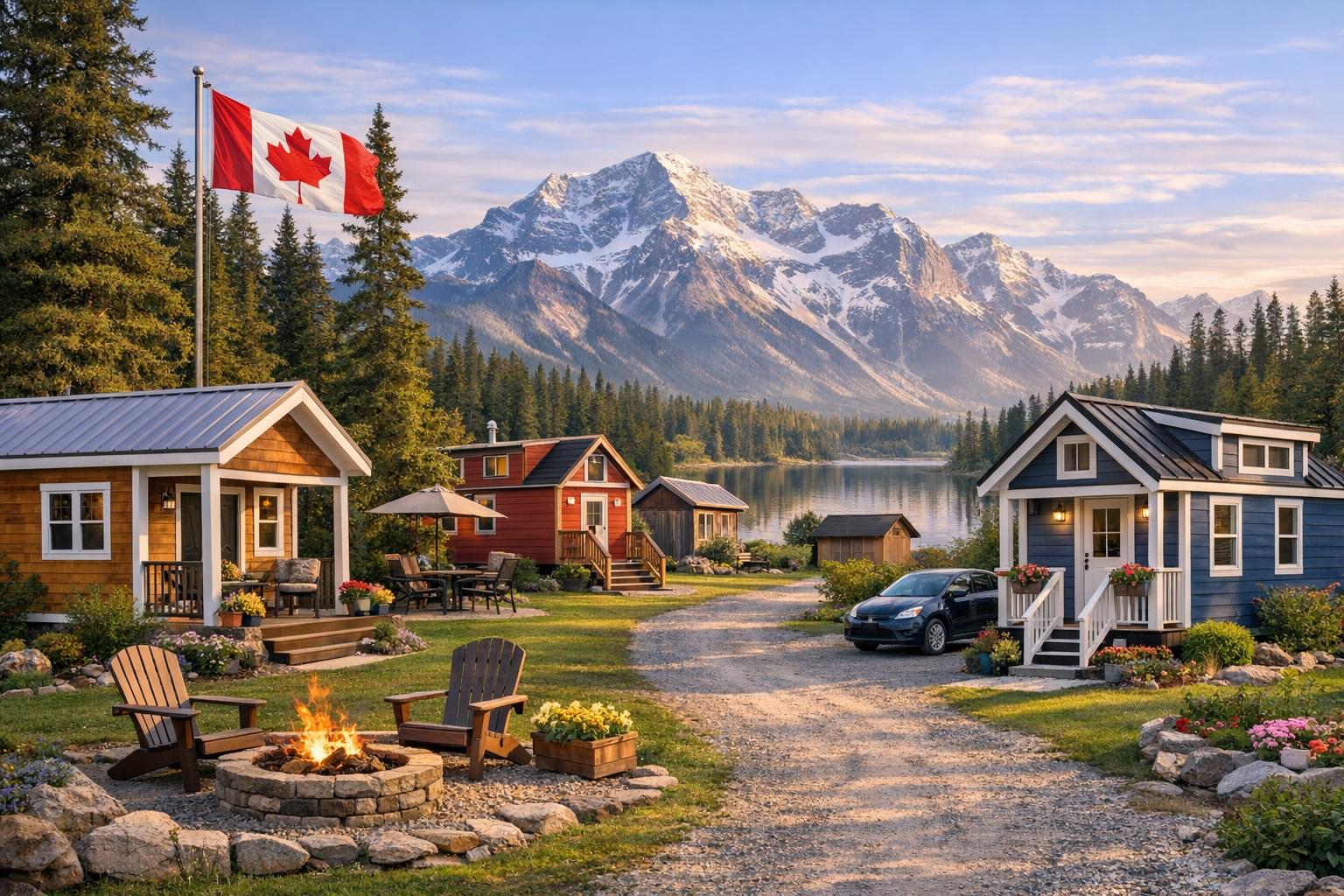
Tiny home communities, often managed through land lease arrangements, are rapidly emerging across Canada, particularly in provinces facing housing affordability challenges.
Notable trends and examples:
- Ontario: Non-profits such as the Tiny Town Association (TTA) aim to build net-zero villages in multiple cities with shared gardens and resident-managed co-ops.
- New Brunswick: Projects like “12 Neighbours” in Fredericton feature 99-unit communities tailored for affordable, dignified living.
- British Columbia: Micro villages in Terrace emphasize energy efficiency and sustainable design.
- Alberta: Calgary’s “Homes for Heroes” offers veteran-focused tiny home options with land lease fees around $600/month.
- Edmonton, AB: Zoning changes now allow tiny homes as single-detached housing or legal garden suites.
- Flexibility for snowbirds: Several communities are designed for seasonal residents with modular, portable, and climate-optimized builds.
Why are these communities so popular?
- Soaring real estate prices make affordable alternative ownership models increasingly attractive.
- Growing demand for a flexible, minimalist, and sustainable lifestyle suited for snowbirds, retirees, and temporary residents.
- Municipal governments are actively adjusting zoning bylaws to facilitate tiny home and ADU developments.
Further reading and examples:
Legal Requirements of Land Lease Communities in Canada: Zoning, Tenancy, and Building Codes
Before signing a lease or building your tiny home in Canada, it’s essential to understand the legal requirements governing land lease communities. Regulations vary depending on province and municipality.
Main legal considerations:
Land Lease Agreements
- Written leases must outline monthly fees, lease duration, renewal terms, and clauses regarding modifications or subletting.
- Review eviction protections, notice periods, termination policies, and any specific clauses related to modular or mobile tiny homes.
Tenant Rights & Provincial Laws
- The provincial Residential Tenancy Act (or its equivalent) protects residents from abrupt eviction, rent hikes, and unsafe living conditions.
- Regulations may differ—for example, Ontario and Alberta have distinct rules for mobile homes, tiny homes, and ADUs. It is wise to seek legal advice for your region.
Zoning By-laws and Local Permit Rules
- Zoning laws determine where tiny homes and ADUs can legally be placed on leased land.
- While some municipalities face challenges, others (such as Blind River in Ontario) are pioneering new bylaws for tiny home clusters.
Building Codes (Safety and Construction)
- All tiny homes on leased land must comply with provincial building code requirements, such as insulation, fire safety, structural strength, plumbing, and accessibility standards.
- Tiny homes on wheels might be excluded from “permanent residence” status, affecting lease terms and insurance.
Community or Cooperative Rules
- Some non-profit or co-op communities may impose additional requirements regarding shared amenities, community service, or active participation in site management.
For legal insights and zoning guidance, see:
Financing Options for Joining Land Lease Communities in Canada: Making It Work
Financing a spot in a land lease community diverges from traditional home mortgages. Prospective buyers need to explore alternative funding sources beyond conventional methods.
How financing works for land lease tiny home communities:
Ongoing Lease and Upfront Costs
- Residents pay a monthly lease covering the land, maintenance, and shared amenities.
- Upfront deposits vary by community—clarify these costs before signing any agreements.
Tiny Home Purchase or Build
- You are responsible for purchasing or constructing your own tiny home or ADU, typically a modular or mobile unit.
Financing Your Participation
- Personal Savings: Many buyers self-fund their tiny home purchase.
- Community Bonds: Non-profits like TTA may offer low-interest bonds to fund affordable projects, sometimes as part of the buy-in.
- Government Grants: Municipal, provincial, or federal grants can be available for energy-efficient or community-led developments.
- Private Investment: Some communities allow accredited investors to contribute to infrastructure funds.
- Resident Deposits and Work Contributions: Be prepared for deposits and possibly contributing service hours, such as landscaping or maintenance.
Why Traditional Mortgages Are Uncommon
Traditional mortgages rarely cover tiny homes on wheels or modular units on leased land since there is no permanent property ownership involved.
Explore financing models:
Pros and Cons of Living in Land Lease Communities: A Balanced View for Tiny Home Living in Canada
Choosing a land lease tiny home community involves balancing advantages and challenges for your financial and lifestyle goals.
Pros of Land Lease Tiny Home Communities
- Affordability: Lower entry costs compared to traditional home buying.
- Shared Amenities: Access to community gardens, co-operative centers, and maintenance services fosters a stronger sense of community.
- Sustainability and Flexibility: Energy-efficient, net-zero builds support eco-friendly living with reduced utility bills.
- Seasonal Options: Communities catering to snowbirds or retirees often offer flexible lease terms and portable homes.
Cons of Land Lease Living
- Zoning and Mobility Restrictions: Municipal bylaws may limit where tiny homes can be placed or expanded.
- Lease Uncertainty: Without land ownership, leases may be non-renewable or face sudden fee hikes.
- Limited Control: Decisions regarding infrastructure and major repairs are typically managed by the community operator.
- Modification Restrictions: Many leases or local rules limit the ability to make major renovations or sublet the property.
Summary Table: Land Lease Tiny Home Communities—Pros & Cons
| Aspect | Pros | Cons |
|---|---|---|
| Cost | Lower entry fees; shared utilities and amenities | Ongoing lease fees; limited land equity |
| Lifestyle | Community-focused; sustainable design | Regulatory hurdles; less autonomy |
| Tiny Home Fit | Modular, seasonal, energy-efficient builds | Challenges with building code compliance |
Supporting data and guides:
Practical Tips for Prospective Tiny Home Owners: Navigating Legal Requirements, Financing, and Land Leases in Canada
Research and Due Diligence
- Stay Connected: Utilize resources from provincial tiny home associations and attend events like Tiny Home Show Ontario 2025 to learn directly from experts and residents.
- Online Resources: Explore directories and news hubs (e.g., Tiny Homes in Canada, Tiny House Alliance Canada) for updates and builder contacts.
- Legal Verification: Read all land lease contracts and zoning bylaws with a qualified lawyer to ensure compliance with standards such as the Ontario Building Code.
- Community Involvement: Participate in municipal meetings or zoning hearings, especially if the community is proposing bylaw changes.
Financing Strategies
- Diversify Funding: Consider community bonds, local grants, and personal savings to cover deposits and ongoing lease fees.
- Plan for Sweat Equity: Some communities require service hours—budget for volunteer work as part of your commitment.
- Insist on Transparency: Request detailed cost breakdowns for maintenance, utilities, and lease renewals before committing.
Insider Perspectives
- Talk to Residents: Gain insights from current occupants or community managers regarding everyday living and potential challenges.
- Engage with Developers: Groups like TTA can offer lessons from recent launches and fundraising strategies.
Find additional resources:
Conclusion: Land Lease Communities and Tiny Home Living in Canada—Balancing Benefits, Legal Requirements, and Financing
Land lease communities are revolutionizing the Canadian housing market by offering a viable alternative to traditional homeownership for tiny home and ADU enthusiasts. These communities provide an affordable, community-oriented, and sustainable lifestyle option.
However, it is essential to weigh the benefits against challenges such as complex legal requirements, non-traditional financing, and zoning restrictions. Comprehensive research, legal consultation, and clear financial planning are indispensable before making a commitment.
Key takeaways:
- They present a lower-cost pathway to homeownership with a focus on community living and sustainable design.
- Understanding legal frameworks, building codes, and lease terms is crucial for protecting your investment.
- Creative financing—ranging from community bonds to government grants—plays a significant role.
- Informed research via events, resident feedback, and expert advice is key to navigating this innovative housing model.
Additional resources:
Frequently Asked Questions
1. What is a land lease community?
A land lease community is a development where you own your tiny home or ADU while leasing the land it sits on. This model helps reduce upfront costs and makes homeownership more accessible.
2. How do zoning and building codes affect tiny home communities?
Zoning bylaws and building codes vary by region and dictate where tiny homes and ADUs can be built, as well as the safety and structural requirements. It’s important to review local regulations and consult legal experts.
3. What financing options are available for joining a land lease community?
Financing can include personal savings, community bonds, government grants, and private investments. Since traditional mortgages may not apply, exploring non-traditional avenues is crucial for funding your tiny home.
Leave a Reply