

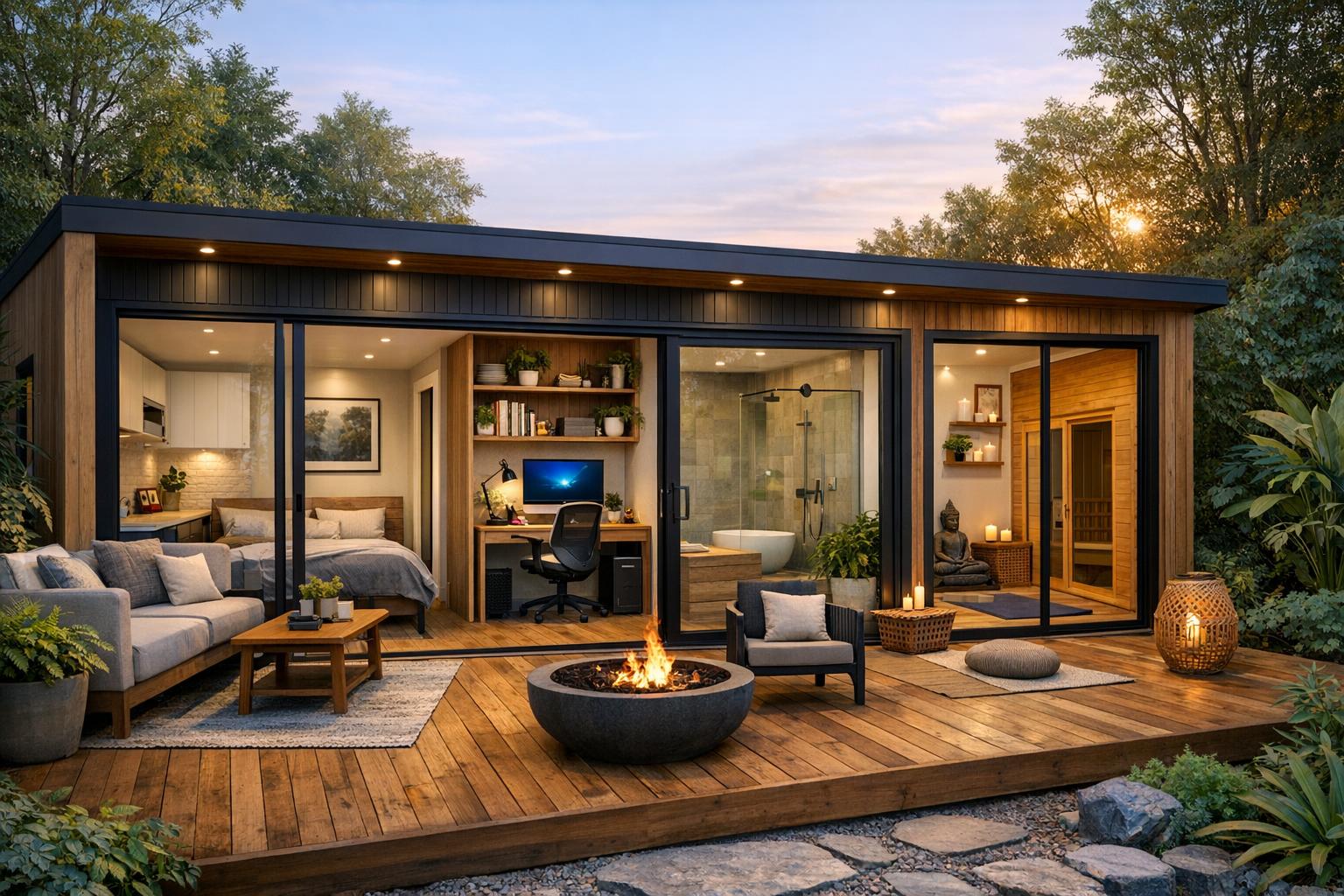
Multi-Purpose ADU: Maximizing Canadian Small Spaces with Integrated Living, Home Office, and Wellness Design
Estimated reading time: 10 minutes
Key Takeaways
- Multi-purpose ADUs integrate living, home office, and wellness design to maximize small Canadian spaces.
- Modern regulatory changes, including relaxed Ontario rules and BC initiatives, enable larger and more flexible units.
- Modular design, smart storage, and biophilic elements provide both function and well-being.
- Grants and pre-approved designs shorten timelines and reduce construction costs.
- These ADUs offer innovative solutions for homeowners, designers, and urban planners alike.
Table of contents
- Introduction: Multi-Purpose ADU Solutions
- Understanding Canadian Small Spaces
- The Multi-Purpose ADU Concept
- Innovative Layout Ideas for Multi-Purpose ADUs
- Integrating Wellness Design Principles
- Integrated Living: Blending Functions Seamlessly
- Benefits for Homeowners, Designers, and Urban Planners
- Conclusion
- Frequently Asked Questions
Introduction: Multi-Purpose ADU Solutions for Canadian Small Spaces
A multi-purpose Accessory Dwelling Unit (ADU) is a self-contained, secondary living area built on a residential property. Whether it’s a garden suite, laneway home, or basement suite, these units come equipped with independent cooking, sleeping, and sanitary amenities. They are fully functional year-round and provide the comfort of a primary dwelling – as detailed in
additional dwelling unit initiatives and
comprehensive ADU guides.
In the context of Canadian small spaces, these versatile units have become increasingly vital amid rising urban density and tight real estate markets. With regulatory updates – such as Ontario’s 2025 amendments that allow detached ADUs up to 1,200 square feet, eliminate owner-occupancy requirements, and relax parking mandates – innovative design is more accessible than ever. Read more about the updated regulations
here and
here.
The unique advantage of a multi-purpose ADU lies in its ability to combine living, workspace, and wellness zones within a compact structure, inspiring homeowners, designers, and urban planners to fully capitalize on every available square foot.
For additional insights into home office configurations, check out
productive workspaces and
home office strategies.
Understanding Canadian Small Spaces
Space is a premium commodity in Canadian urban and suburban areas. Cities like Toronto are constrained by lot sizes and stringent zoning rules, which limit building coverage, height, and setbacks. Similar challenges are faced in Vancouver’s laneways and Ontario’s single-family neighbourhoods, urging the need to optimize every available metre. Explore these constraints through insights from
Ontario ADU regulations and
local planning policies.
- Service Upgrades: Enhancing water, electricity, and drainage systems.
- Energy efficiency: Meeting the Ontario Building Code’s standards.
- Space optimization: Integrating full kitchens, bathrooms, and storage in limited spaces.
Despite these challenges, opportunities abound: pre-approved designs in municipalities like Sault Ste. Marie can reduce permit times drastically, and significant grants – such as up to 50% construction cost coverage in regions like St. Catharines and parts of BC – have been introduced. For details on available incentives, see
grant programs and
regional initiatives.
The Multi-Purpose ADU Concept
A multi-purpose ADU offers the ultimate solution to space limitations, transforming a single area into a dynamic home office by day, a cozy living area by night, and a wellness retreat in between.
Consider these advantages:
- Flexible Workspace: With the rise of remote work, the ability to convert a space for business during the day, then reclaim it for relaxation, is indispensable – as noted by
productivity experts. - Wellness Integration: Dedicated space for exercise or mindfulness enhances a balanced lifestyle.
- Optimized Usability: Thoughtfully designed layouts ensure that every square foot is put to effective use.
Features like modular elements, moveable walls, Murphy beds, and integrated storage not only increase functionality but also offer the flexibility needed to seamlessly switch between work, exercise, and leisure. Learn more about structural benefits from
Ontario construction guidelines and
BC housing initiatives.
Innovative Layout Ideas for Multi-Purpose ADUs
Designing a unit that efficiently accommodates living, working, and wellness zones calls for creative planning. Here are some actionable ideas:
Combine Home Office and Living Areas
- Foldable desks in kitchen islands: A desk that emerges during work hours and recedes during meals or gatherings.
- Lofted workspaces: Utilize mezzanines or lofts to craft quiet, elevated work areas while keeping living zones open.
- Sliding or pocket doors: Ensure clear visual and noise separation, facilitating smooth transitions throughout the day – as seen
here.
Smart Modular Furniture and Storage
- Sofa-beds and Murphy beds: Dual-purpose furniture that transforms spaces at a moment’s notice.
- Built-in cabinets: Clever storage for items ranging from yoga mats to workout equipment.
- Multi-functional islands: Act as workstations, storage units, or dining tables as the situation demands – further explored
here.
Sample layout designs include a ground-floor open plan with an upper wellness mezzanine, L-shaped zones dividing sleep, work, and leisure, or integration with outdoor garden elements to bring in natural light.
Integrating Wellness Design Principles
With modern living pressures, wellness design is not just aesthetic – it improves overall well-being by optimizing light, air, and spatial harmony.
- Maximizing natural light: Large, energy-efficient windows boost mood and reduce energy costs.
- Enhanced ventilation: Mechanical systems with heat recovery meet future energy standards, as highlighted in
regulatory guides and
air quality studies. - Calming palettes and accents: Use wood and neutral tones to create a soothing living environment – more on this can be found
here.
Consider dedicated zones for meditation, vertical hydroponic gardens, and multi-use exercise areas to ensure each element supports both function and mindfulness.
Integrated Living: Blending Functions Seamlessly
The essence of integrated living lies in creating spaces that fluidly transition between work, rest, and wellness. Open-plan layouts, sliding partitions, and smart technology are key to achieving this harmony.
- Open-concept designs: Maximizing flexibility and space.
- Smart lighting and climate control: Automated systems that shift from energizing brightness during work hours to calming ambiances for relaxation, as detailed
here. - Voice-activated controls: Streamline daily routines and enhance comfort with a touch or a word.
Real-world examples include Ontario detached ADUs with ground-floor work zones and rooftop wellness decks, as well as Sault Ste. Marie hybrid layouts that have simplified permitting while addressing modern family needs.
Benefits of Multi-Purpose ADUs for Homeowners, Designers, and Urban Planners
For Homeowners
- Additional Income: New regulations permit rental opportunities by relaxing owner-occupancy, as seen
here and
here. - Enhanced Lifestyle: Integrated living ensures an adaptable space that meets work, rest, and wellness needs.
For Designers
- Innovative Opportunities: Experiment with modular layouts, smart storage, and flexible furnishings – more inspiration available
here. - Streamlined Processes: Pre-approved plans and efficient permitting cut down project timelines significantly.
For Urban Planners
Conclusion: Multi-Purpose ADUs Transform Canadian Small Spaces with Integrated Living
The multi-purpose ADU is a powerful strategy for transforming compact Canadian spaces. By merging home office, wellness design, and integrated living, these units meet the demands of today’s lifestyle while remaining adaptable for future needs.
With relaxed regulations in Ontario and BC, coupled with attractive grant opportunities, now is the perfect time to consider your own ADU project. For guidance on zoning, design templates, and practical tips, visit
Ontario’s ADU guidelines,
comprehensive ADU guides, and
home office design tips.
Whether you are a homeowner seeking additional income, a designer looking to innovate, or an urban planner eager to optimize community spaces, the multi-purpose ADU offers a future-ready approach to integrated living.
Frequently Asked Questions
Q1: What is a multi-purpose ADU?
A multi-purpose ADU is a compact, self-contained living unit that integrates diverse functions like a home office, living space, and wellness area in one flexible environment.
Q2: How do changing regulations impact ADU construction in Canada?
Recent updates, particularly in Ontario and BC, have relaxed size restrictions and zoning requirements, enabling larger and more adaptable ADUs. These changes, combined with attractive grant programs, reduce both timelines and costs.
Q3: Can ADUs truly support integrated living?
Yes, with innovative design elements like modular furniture, smart partitioning, and biophilic enhancements, ADUs not only maximize space but also provide distinct areas for work, relaxation, and wellness, ensuring a seamless daily transition between multiple functions.
Leave a Reply