

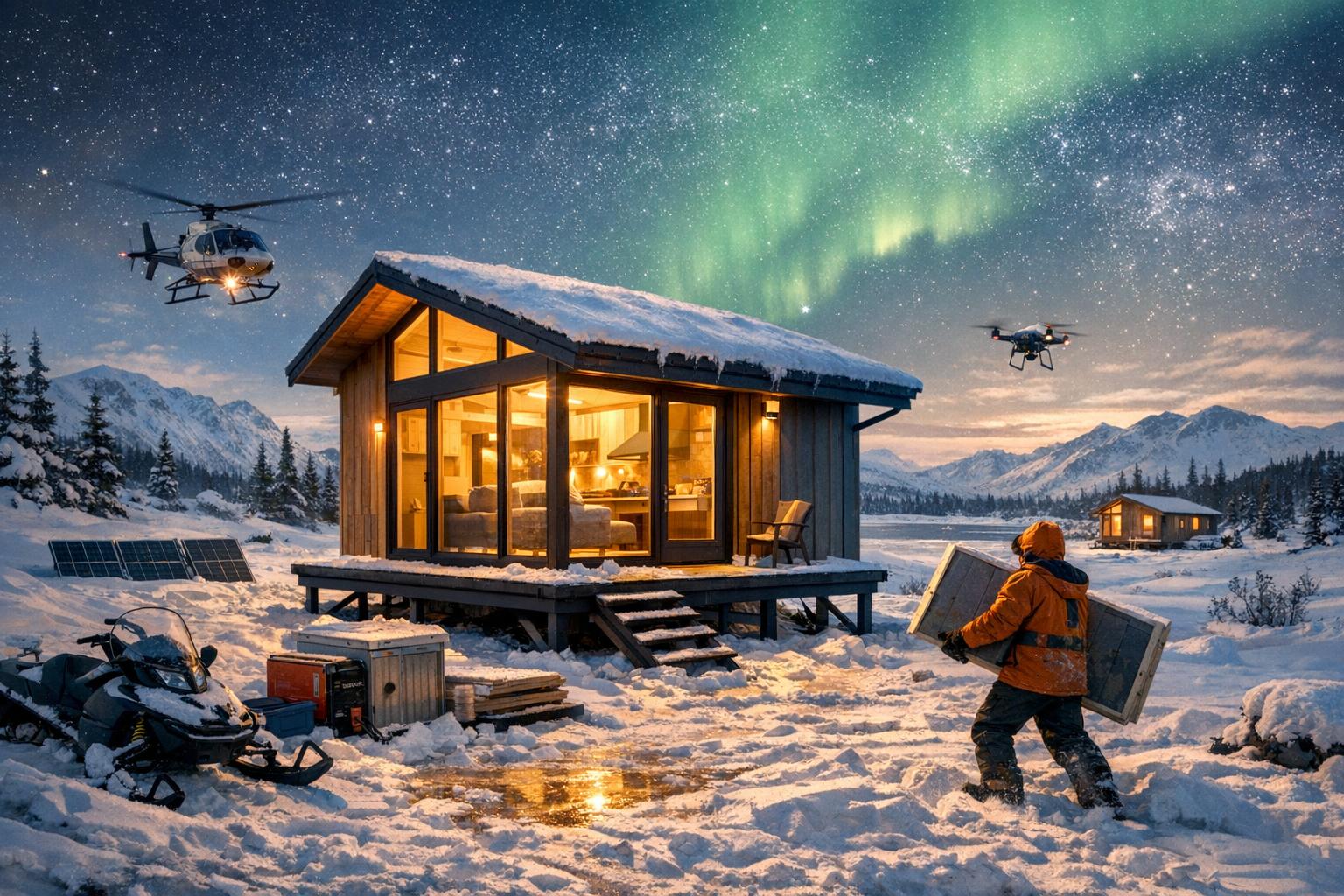
Innovative Solutions for Northern Canada ADUs: Overcoming Cold Climate Construction Challenges
Estimated reading time: 10 minutes
Key Takeaways
- Cold climate construction demands specialized foundations, high-performance envelopes, and innovative heating solutions.
- Remote ADUs face significant challenges such as high transportation costs, labor shortages, and shortened construction seasons.
- Permafrost requires engineering solutions like elevated pile foundations or adjustable jacking systems to prevent ground instability.
- Rural housing solutions using ADUs support multigenerational living, workforce accommodation, and community stability.
- Innovative design strategies such as modular construction and sustainable energy systems are transforming how homes are built in Northern Canada.
Table of contents
Building homes in northern Canada is never simple. When it comes to northern Canada ADUs—small, self-contained homes also called accessory dwelling units—the challenges grow even greater due to extreme cold, remote access, and harsh ground conditions. But new approaches in design, construction, and policy offer exciting rural housing solutions for northern Canada. In this article, we’ll dive deep into how to create successful northern Canada ADUs that last through tough winters and answer the need for flexible, affordable homes in remote communities.
Understanding the Environment of Northern Canada
Extreme Cold Climate Construction and Remote Conditions
- Long, harsh winters: Winter runs from October to May with temperatures often below –30°C.
- Sparsely populated and remote: Many communities can only be reached by plane, winter ice roads, or barge.
- Limited infrastructure: Municipal utilities and road maintenance may be minimal or unreliable.
Cold climate construction must tackle permafrost ground conditions, strong winds, and transportation limitations. For more detailed guidelines, visit Ecohome’s comprehensive guide and Adustart’s cold climate construction resource.
Permafrost: The Subterranean Challenge
Permafrost is ground that remains at or below 0°C for at least two consecutive years. Its presence can lead to ground instability, frost heave, and even collapse of foundations if traditional methods are used. Innovative solutions such as pile or post foundations create a “floating” effect that mitigates these issues. Learn more about foundation solutions at Tiny Home Foundation Options.
Materials and Design: Finding the Right Fit
- Durable materials: Metal roofing and tough siding withstand freezing temperatures and high UV exposure. See details in Why Metal Framed Tiny Homes Canada Are the Future.
- Effective insulation: High R-values for walls, roofs, and floors are critical to maintaining warmth. More tips can be found in The Ultimate Guide to Energy Efficiency Tiny Homes.
- Reliable heating: Emergency backup systems, such as heat pumps, are essential to combat the extreme cold. Explore more at Heat Pump for Tiny Home.
Challenges of Cold Climate Construction for Remote ADUs
Logistics and Transportation for Remote ADUs
- Seasonal road access: Winter roads over frozen lakes and muskeg or barge transport in summer.
- High freight costs: Shipping heavy materials like timber or insulation is expensive.
- Labour shortages: Contractors often have to be sourced from outside the local community. Refer to How to Choose a Reliable Tiny Home Builder Canada for further insights.
Structural Challenges: Permafrost and Cold Climate Construction
Traditional footings may fail in the face of permafrost and heavy snow loads. Roofs must support significant weight and wide wind gusts across open landscapes. Detailed construction techniques are provided by Canadian Snow Load Requirements, ensuring ADUs are built to last.
Energy Efficiency and Heating for Remote ADUs
Maintaining heat in remote ADUs is both a design and cost challenge. Insulation and efficiently sealed windows and doors can help reduce energy wastage. Additional insights can be found at The Ultimate Guide to Energy Efficiency Tiny Homes in Canada.
Short Construction Season in Northern Canada
With only three to five viable months for construction, weather delays can lead to significant cost overruns. Proper project scheduling is crucial, and more on this can be explored at How to Navigate ADU Construction Delay.
Innovative Design and Construction Solutions for ADUs in Northern Canada
Specialized Foundations for Permafrost
- Elevated pile or post foundations: These systems “float” the building above the ground to protect the permafrost. More info at Tiny Home Foundation Options.
- Adjustable jacking systems: Allow for re-levelling as the ground shifts.
- Thermal barriers: These help maintain a stable ground temperature below the ADU.
High-Performance Building Envelopes for Cold Climate Construction
A sealed, insulated envelope is critical. Methods include super-insulated wall assemblies, triple-pane windows, and airtight construction techniques. Additional best practices are discussed at Tiny Home Design in Canada and ADU HVAC Solutions.
Modular and Prefabricated Solutions for Remote ADUs
- Factory-built modules: Constructed off-site in controlled environments, then assembled on-site. See Prefab House Revolution for details.
- Panelized or flat-pack systems: Enable rapid assembly with reduced on-site labour.
- Standardized designs: Lower costs and simplify insulation and structural challenges.
Sustainable Energy and Heating Innovations for Rural Housing Solutions
- Solar PV panels: Harvest long summer daylight even in northern regions. More at The Ultimate Guide to Solar-Powered ADUs.
- Cold climate heat pumps: Modern systems operate efficiently even in extreme cold. Details available at Heat Pump for Tiny Home.
- Advanced insulation and smart controls: Minimizes energy loss and maximizes indoor comfort.
- Thermal storage: Systems that retain excess heat for emergencies.
Rural Housing Solutions and Community Impact
Addressing Rural Housing Shortages in Northern Canada
- Incremental housing: ADUs provide a lower-impact alternative to large subdivisions.
- Family and community support: Facilitates multigenerational living and alleviates overcrowding. More information at Multigenerational Living with ADUs.
- Workforce accommodation: Supports staff and seasonal workers, detailed at ADUs for Healthcare.
Social and Economic Benefits of Remote ADUs
- Multigenerational living: Ensures elders and family members can stay close while maintaining independence. See In-Law Suites in Multigenerational Homes.
- Elder care and accessibility: Single-storey ADUs designed for barrier-free access improve safety and usability. More at Accessible ADU Design.
- Economic boost: Construction and maintenance of ADUs create local jobs, as explained in How to Choose a Reliable Tiny Home Builder Canada.
Practical Considerations and Case Studies
Northern Canada ADU Case Studies: How Solutions Work in Practice
Modular Elder-Care ADU in a Yukon Community
- Foundation: Elevated steel piles protect the permafrost (Tiny Home Foundation Options).
- Envelope: Double-stud walls, R-45 blown insulation, and triple-pane argon windows (Energy Efficiency Guide).
- Heating: Cold-climate air source heat pump with propane backup and HRV (Heat Pump for Tiny Home).
- Delivery: Prefabricated sections built off-site and assembled in Whitehorse (Prefab House Revolution).
- Accessibility: Barrier-free design with wide doorways and step-free entry (Accessible ADU Design).
Prefabricated Workforce ADU Cluster in the Northwest Territories
- Design: Multiple ADUs with compact layouts and shared utilities.
- Foundation: Screw piles designed for permafrost challenges (Tiny Home Foundation Options).
- Envelope: Super-insulated, prefabricated panels ensuring rapid on-site assembly (Prefab House Revolution).
- Heating: Options include wood pellet stoves or electric baseboard heaters with heat recovery ventilation (Ecohome ADU Guide).
- Purpose: Temporary housing for essential staff in remote communities.
Planning and Permitting Tips for Northern Canada ADUs
- Zoning approvals: Ensure local bylaws permit ADUs (North Cowichan ADU Info).
- Building code compliance: Adherence to fire safety, egress requirements, and ceiling heights (Northbay ADU FAQs>, Niagara Falls ADU Guide).
- Geotechnical surveys: Critical for assessing soil and permafrost conditions.
- Climate-ready design: Factor in heavy snow, strong winds, and ice formation.
- Servicing and scheduling: Verify capacity for water, septic, and electrical systems and plan within the short construction window.
Resources and Key Partnerships for Northern Canada ADUs
- Municipal planning offices: For permits and zoning inquiries.
- Housing corporations: Provide funding and technical support.
- Local Indigenous organizations: Partnerships are crucial for design and land access. More at Indigenous Building ADU Canada.
- Colleges and apprenticeships: Work with northern trades programs to build local capacity.
- Regional development agencies: Offer non-profit and community resources for affordable housing.
Conclusion
Building northern Canada ADUs is challenging, yet innovative approaches offer real solutions for cold and remote regions. By addressing issues like permafrost, extreme cold, and logistical hurdles through specialized foundations, high-performance building envelopes, and modular construction, these small homes are becoming a viable option for rural housing.
Key takeaways include the necessity of robust design for cold climates, the importance of energy-efficient heating systems, and the potential for ADUs to support community stability and economic growth in remote areas. Explore further details through our linked resources to learn more about transforming northern housing challenges into sustainable opportunities.
Frequently Asked Questions
Q1: What makes northern Canada ADUs different from standard accessory dwelling units?
A1: Northern Canada ADUs are specifically designed to handle extreme cold, permafrost challenges, and remote logistics. This includes specialized foundation systems, enhanced insulation, and reliable heating options to ensure durability and safety in harsh climates.
Q2: How do specialized foundations help in cold climates?
A2: Specialized foundations like elevated piles or adjustable jacking systems minimize direct contact with shifting permafrost and mitigate frost heave, maintaining structural stability even in extreme freezing temperatures. More details can be found at Tiny Home Foundation Options.
Q3: Are modular and prefab ADU solutions practical for remote areas?
A3: Yes, modular and prefab ADU solutions allow for off-site construction under controlled conditions, which minimizes on-site labor and logistical challenges. They are particularly effective in remote regions where weather windows are short and transportation of materials is expensive.
Q4: How do ADUs support rural housing and community stability?
A4: ADUs offer flexible, incremental housing that can support multigenerational living and workforce accommodation. This not only strengthens family ties but also fosters economic stability in communities that face housing shortages. For more insight, visit Multigenerational Living with ADUs.
Leave a Reply