

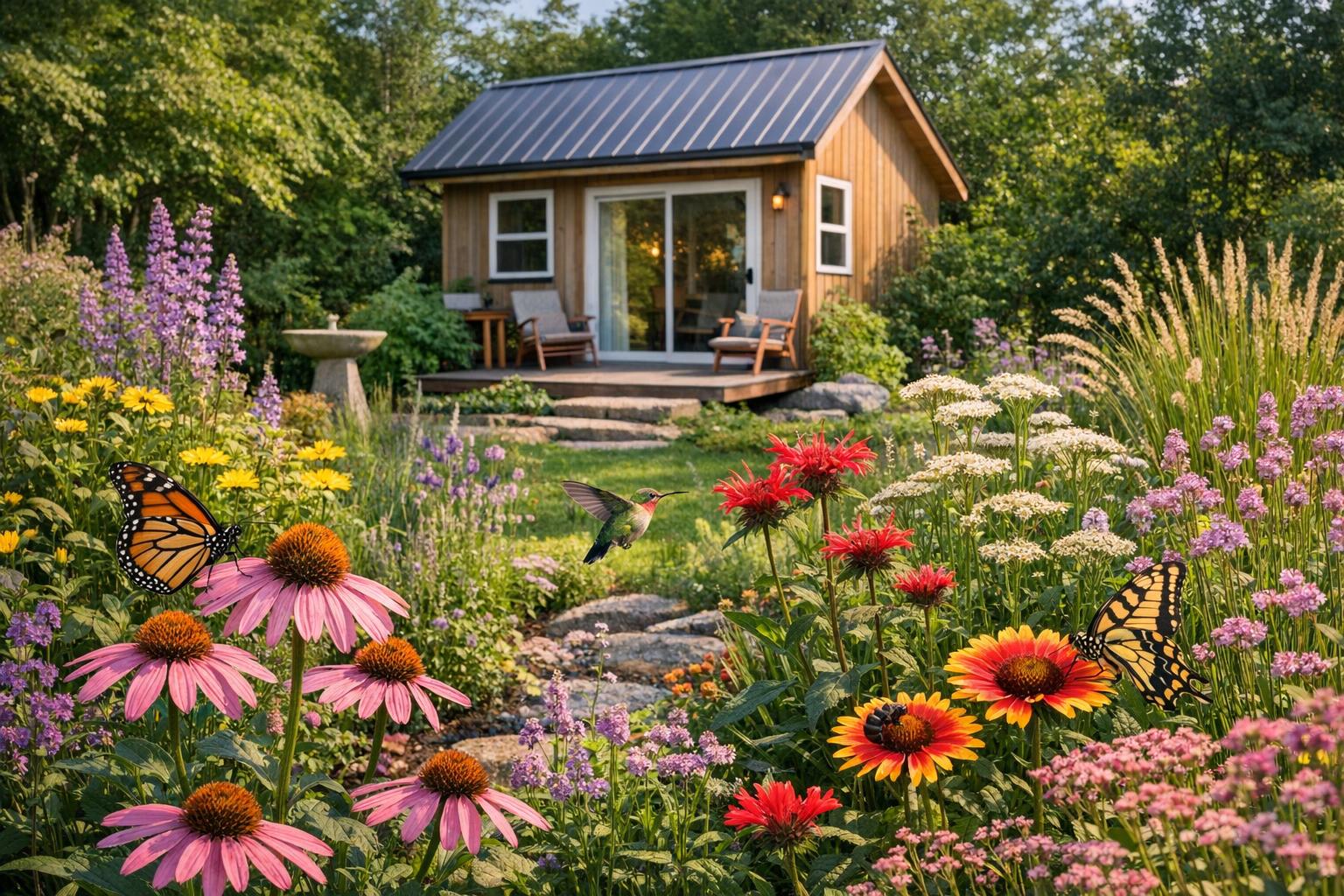
Creating a Pollinator Garden for ADU Landscaping: A Canadian Guide
Estimated reading time: 8 minutes
Key Takeaways
- Pollinator gardens boost biodiversity by attracting essential pollinators like bees and butterflies.
- Using native plants is key to a thriving, low-maintenance garden.
- Even small ADU spaces can be transformed into vibrant sanctuaries with creative design.
- Proper site assessment and plant selection ensure year-round blooms and support for local ecosystems.
- Sustainable gardening practices support community engagement and environmental stewardship.
Table of contents
- Introduction: Pollinator Garden and ADU Landscaping in Canada
- Understanding Pollinator Gardens: Attracting Biodiversity
- Importance of Native Plants in Pollinator Gardens
- ADU Landscaping: Small Spaces, Big Possibilities
- Supporting Canadian Ecosystems Through Garden Design
- Practical Steps to Create a Pollinator Garden in ADU Landscaping
- Additional Benefits and Inspirational Outcomes
- Conclusion: Your Canadian Pollinator Garden Journey Starts Now
- Frequently Asked Questions
Introduction: Pollinator Garden and ADU Landscaping in Canada
A pollinator garden is a designed outdoor space that attracts and supports local pollinators such as bees, butterflies, and hummingbirds. By providing food, water, shelter, and nesting habitat, these gardens sustain biodiversity and ensure healthy Canadian ecosystems. They are particularly beneficial for ADU landscaping and tiny home yards where space is at a premium.
Many Canadians face limited outdoor areas on tiny homes, balconies, or restricted yards. Creating a pollinator garden with native plants helps overcome space challenges, boosts biodiversity, and supports our crucial pollinators.
The benefits of establishing a pollinator garden extend beyond simple aesthetics:
- Enhances biodiversity by attracting native pollinators
- Supports resilient Canadian ecosystems
- Boosts food production through stable pollination
- Relies on low-maintenance native plants
- Provides year-round natural beauty
Understanding Pollinator Gardens: Attracting Biodiversity
Pollinator gardens are crafted to draw in and sustain pollinators by providing:
- Nectar and pollen for adult insects
- Host plants for butterflies and moths to lay eggs
- Secure habitats with shelter and nesting locations
These gardens are crucial for maintaining biodiversity and healthy environments. Pollinators, including bees, butterflies, and hummingbirds,.
contribute to the pollination of over 80% of all flowering plants. They:
- Support local wildlife by sustaining food webs
- Aid in fruit and seed production
- Reduce the need for chemical pest control
- Enhance soil health and water conservation
When you use native plants, you reinforce the natural bond that helps pollinators complete their lifecycle.
Importance of Native Plants in Pollinator Gardens
Native plants are species that naturally occur in the wild in Canada. They:
- Adapt to local climates, rainfall, and soil conditions
- Have co-evolved with Canadian pollinators, providing ideal nectar and pollen
- Remain non-invasive while supporting local flora and fauna
- Require less maintenance, water, and chemical inputs
Opting for native plants means catering to the specialized needs of local pollinators, enhancing biodiversity, and creating a sustainable outdoor space. Some common native species include wild bergamot, serviceberry, and goldenrod.
For more insights, check out resources from MJ Landscapers and the Toronto Master Gardeners.
ADU Landscaping: Small Spaces, Big Possibilities
Designing a pollinator garden within the constraints of ADU landscaping or tiny home spaces comes with unique challenges:
- Limited yard space, sometimes just a balcony or small patch
- Variable soil types—from sandy to clay-heavy
- Fluctuating light exposure due to urban conditions
- Minimal room for extensive plantings
Yet, by thinking creatively, even the smallest outdoor space can flourish:
- Vertical gardening: Use wall planters, trellises, or pocket planters to add layers of greenery. (See Landscaping Ideas for ADUs)
- Window boxes and balcony containers: Dense plantings of natives offer seasonal displays
- Ground-level micro-gardens: Even a 1×2-metre patch can support a variety of species
- Bloom calendar: Plan for continuous flowering from spring to fall
- Shelter features: Integrate wild corners, grass clumps, or logs for nesting spots
Embracing dense plantings and varied structures not only maximizes visual appeal but also enhances practical benefits for pollinators. Resources like the Toronto Master Gardeners provide further guidance.
Supporting Canadian Ecosystems Through Garden Design
Canada’s diverse ecosystems—from coastal rainforests to prairie grasslands—rely on region-specific native plants to sustain their unique wildlife. By designing your pollinator garden with these plants, you help to maintain local biodiversity.
Matching Plants to Canadian Ecosystems
Consider these suggestions:
Nationwide/Versatile Options:
- Canadian columbine (Aquilegia canadensis) – attracts bees and hummingbirds
- Wild bergamot (Monarda fistulosa) – supports bees, butterflies, and moths
- Serviceberry (Amelanchier spp.) – provides food for both pollinators and birds
Ontario/Toronto/GTA Examples:
- Common milkweed (Asclepias syriaca) – a vital host for monarch butterflies
- Canada wild rye (Elymus canadensis) – offers cover and nesting materials
- Switchgrass (Panicum virgatum ‘Prairie Winds’) – aids in soil stabilization and provides shelter
- Goldenrod (Solidago canadensis) – supplies late-season nectar for bees
For regional plant guides, refer to resources like Canada’s pollinator gardening guide and insights from the Humber Arboretum.
Practical Steps to Create a Pollinator Garden in ADU Landscaping
Step 1: Site Assessment in ADU Landscaping
Begin with a thoughtful evaluation of your space:
- Check sunlight: Determine if your area receives full, partial, or shade.
- Examine soil: Understand whether it is sandy, clay, or loamy. Both clay and sandy soils benefit from compost additives (Smart, Sustainable Ideas for Small Space Gardens).
- Determine exposure: Evaluate factors like wind, rain, and urban influences.
- Size and shape: Measure your space—even the smallest corner counts.
Matching your planting strategy to your site’s conditions is crucial. For practical advice, check out the guidance from the Toronto Master Gardeners.
Step 2: Selecting Native Plants for Maximum Benefit
Diversity is the cornerstone of a thriving pollinator garden. Choose a mix of native plants that bloom in different seasons:
- Spring: Canadian columbine and pussy willow
- Summer: Common milkweed, wild bergamot, and black-eyed Susan
- Fall: Goldenrod, asters, and switchgrass
This variety ensures continuous support for diverse pollinators and builds a resilient garden ecosystem (MJ Landscapers provides further insights).
Step 3: Planning for Biodiversity
Enhance biodiversity in your small space by:
- Dense planting: Plant closely to maximize space and suppress weeds.
- Water sources: Incorporate bird baths or shallow dishes with pebbles.
- Shelter elements: Leave wild patches or add logs and rocks for nesting sites.
- Nesting sites: Consider bee hotels and undisturbed soil areas for solitary pollinators.
Step 4: Maintenance Tips for Sustainability
Keeping your garden healthy requires:
- Avoiding pesticides and herbicides in favor of organic methods
- Watering wisely especially during the first year or drought conditions
- Allowing sections to grow naturally rather than over-weed or over-mow
- Amending the soil with compost and minimizing chemical fertilizers
- Observing which features attract the most pollinators and adjusting as needed
Additional Benefits and Inspirational Outcomes of Pollinator Gardens
A vibrant pollinator garden in an ADU setting brings numerous benefits:
- Property Enhancement: Luscious gardens create visually appealing spaces and unique outdoor charm.
- Increased Home Value: Biodiverse gardens add curb appeal and attract eco-conscious prospects (Secondary Unit Benefits).
- Environmental Leadership: Cultivating a garden reflects a commitment to ecological stewardship.
- Community Engagement: Inspires neighbors and fosters networks of pollinator-friendly spaces.
- Food Security: Healthy pollinator populations indirectly boost yields in adjacent veggie gardens and orchards.
Conclusion: Your Canadian Pollinator Garden Journey Starts Now
Building a pollinator garden with native plants in your ADU landscape is a powerful way to enhance biodiversity, improve your property, and support Canadian ecosystems. These gardens:
- Attract essential pollinators and maintain ecological balance
- Utilize low-maintenance native species for continuous seasonal beauty
- Transform even the smallest spaces into vibrant, resilient habitats
- Promote sustainable practices that benefit both wildlife and the community
Take the first step today: assess your outdoor space, choose region-appropriate natives, design for biodiversity, and watch your garden thrive. Explore more tips from the Toronto Master Gardeners and Canada’s Pollinator Gardening Guide.
Frequently Asked Questions
Q1: What is a pollinator garden?
A pollinator garden is an outdoor space designed to attract and support species like bees, butterflies, and hummingbirds by providing essential resources like nectar, pollen, and shelter.
Q2: Why are native plants important in these gardens?
Native plants are adapted to local climates and provide the best support for local pollinators, ensuring a resilient and low-maintenance garden.
Q3: Can I create a pollinator garden in a small ADU space?
Absolutely. With creative planning like vertical gardening, window boxes, and micro-gardens, even limited spaces can be transformed into thriving pollinator havens.
Q4: How do I maintain a healthy pollinator garden?
Maintenance includes avoiding pesticides, watering wisely, allowing some natural growth, and regularly adding compost to support the soil and plant health.
Q5: Where can I find more information?
For more details, consult resources like the MJ Landscapers guide, the Toronto Master Gardeners, or Canada’s official pollinator garden guide.
Leave a Reply