
Prebuilt Tiny Homes in Canada 2025: A Comprehensive Home Comparison and Pricing Guide
Estimated reading time: 10 minutes
Key Takeaways
- Affordability: Prebuilt tiny homes cost between $40,000 and $150,000—making them a cost-effective alternative compared to traditional homes.
- Sustainability: With eco-friendly designs including energy-efficient appliances and renewable systems, these homes support a greener lifestyle.
- Speed and Convenience: Factory-built methods allow for faster construction and predictable delivery times.
- Versatility: Options range from mobile tiny homes and modular designs to off-grid eco-homes, suiting various needs and lifestyles.
Table of Contents
Introduction: Prebuilt Tiny Homes in Canada – What, Why, and How
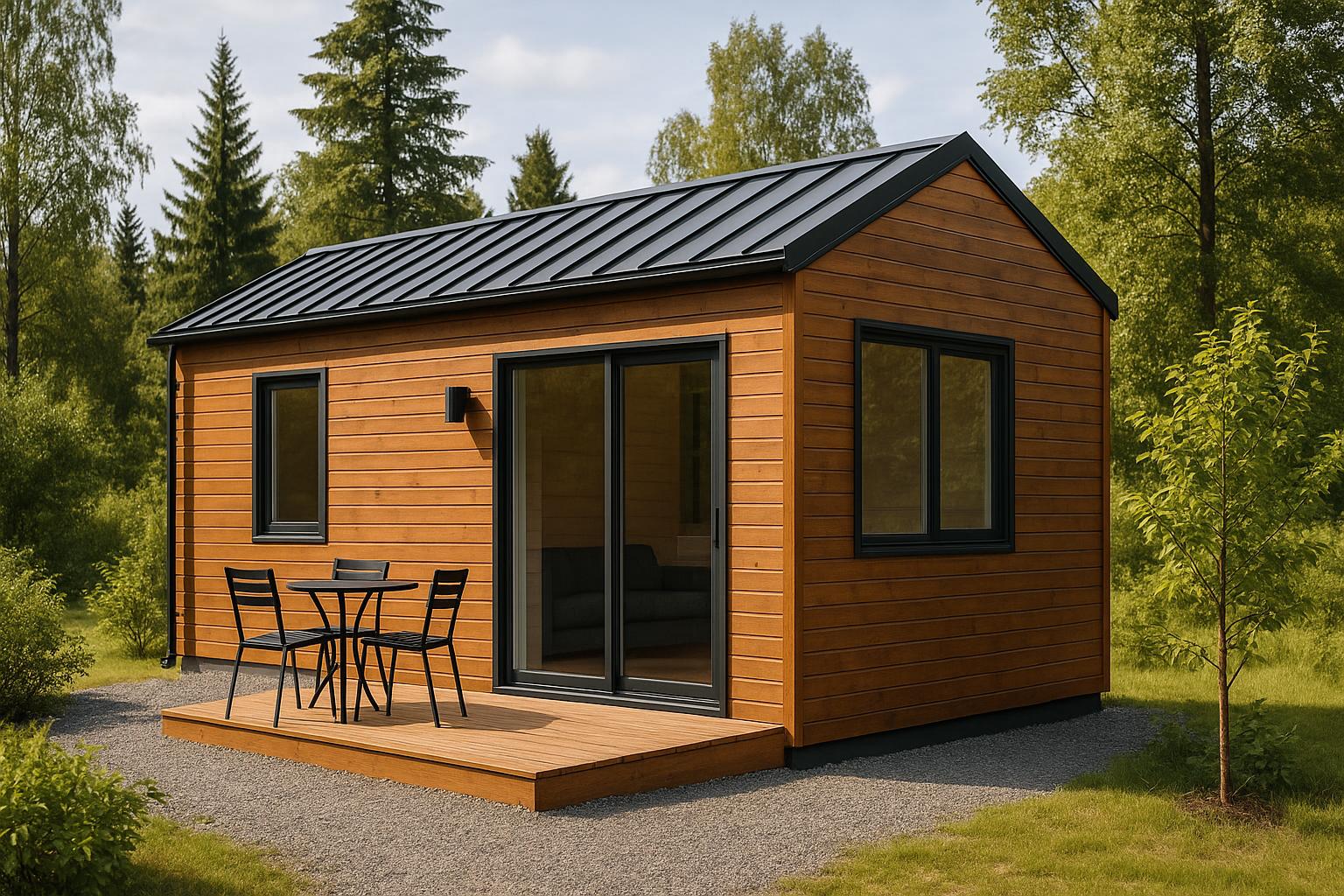
Prebuilt tiny homes are factory-built, move-in-ready small houses—usually between 200 and 600 square feet—delivered almost fully finished to your land or pad. Once on site, they typically just need basic connections for utilities like power and water, plus optional finishing touches like skirting or steps.
In 2025, prebuilt tiny homes are taking off in popularity across Canada. Canadian homeowners are turning to these compact dwellings for three major reasons:
- Affordability: Prebuilt tiny homes cost far less than conventional new houses.
- Eco-friendly design: With smaller footprints, energy-efficient appliances, and green materials, many models support a more sustainable lifestyle.
- Speed and convenience: Factory construction makes the building process faster, more predictable, and less affected by weather.
The average price for a standard home in Canada soared above $700,000 by 2025. In contrast, buying a prebuilt tiny home can cost between $40,000 and $150,000. These benefits are drawing urban downsizers, rural homesteaders, and cottage enthusiasts alike
(dhesirealestate.ca, tinyhouseplans.com, adustart.ca).
Purpose:
This guide is designed to help Canadians compare the most popular prebuilt tiny home models available in the country for 2025, understand their main features, and get a real-world sense of current pricing. It also provides a practical checklist for choosing the right model for your needs.
[Sources: dhesirealestate.ca, tinyhouseplans.com]
Overview of Prebuilt Tiny Homes in Canada (2025)
Market Trends and Growth of Canadian Models
Prebuilt tiny homes stand at the intersection of affordability, sustainability, and practicality—and are redefining what homeownership looks like in Canada in 2025.
- Market Growth: The prefabricated home sector—including prebuilt tiny homes—has grown into a $4.2 billion industry in Canada with 328 manufacturers nationwide.
- Demand Drivers:
- Affordability Crisis: With new conventional homes averaging over $700,000, Canadians seek options that cost a fraction of that price. Prebuilt tiny homes typically cost between $40,000–$150,000 all-in.
- Sustainability Commitment: Rising concerns about climate change and high utility bills push buyers toward homes featuring high-performance insulation, energy-efficient appliances, solar-ready wiring, and advanced water conservation systems
(rainwater harvesting for tiny homes in Canada, tiny home utilities Canada). - Construction Convenience: Factory-built methods mean homes are produced year-round, delivered quickly, and finished in weeks rather than months.
- Policy Shifts: Municipalities and provinces are adapting zoning and building codes to accommodate tiny homes, especially as affordable housing policies increase in focus
(Canada Federal Housing Policy 2025, Coherent Market Insights, IBISWorld).
Key Point: Tiny home demand is set to grow with Canada playing a major role in global market expansion through 2029.
[Sources: IBISWorld, Coherent Market Insights, Technavio Newsroom, dhesirealestate.ca]
Detailed Comparison of Canadian Prebuilt Tiny Home Models (2025)
Canadian Models: Mobile, Modular, and Off-Grid Options
Canada’s 2025 market features three main categories of prebuilt tiny homes. Each serves distinct needs with unique features.
1. Mobile Tiny Homes on Wheels (THOWs)
Towing flexibility and compact size
- Typical Size: 200–400 sq. ft.
- Key Features: Built on a road-legal trailer with RV-style hookups, this option is moveable and ideal for seasonal living.
- Best For: Urban ADUs, backyard offices, and mobile living enthusiasts (Home Office Solutions, Creating an ADU Home Office).
- Popular Example: Mint Tiny House Company, Teacup Tiny Homes, and Minimaliste’s “Orme” model.
- Price Range: $40,000–$110,000 depending on size, features, and finish quality.
2. Modular Tiny Homes on Foundations
Permanent foundations, more living space
- Typical Size: 300–600+ sq. ft.
- Key Features: Factory-built modules delivered and craned onto a permanent foundation with higher ceiling allowances and easier code compliance.
- Best For: Full-time homes, garden suites, and in-law units (Granny Flats Guide, In-Law Suites Guide).
- Notable Providers: Drop Structures, Nomad Micro Homes, Hummingbird.
- Price Range: $70,000–$150,000+
3. Off-Grid / Eco-Tiny Homes
Sustainable, self-sufficient designs
- Features: Incorporates full solar/battery packages, composting toilets, rainwater and greywater systems, and advanced insulation
(Composting Toilets Guide, Off-Grid Living Essentials). - Best For: Rural, recreational, or remote cottage living with a focus on low utility bills and minimal environmental impact.
- Model Examples: Treehugger Tiny Homes and Cabane.
- Price Range: $90,000–$150,000+ depending on the scale of solar, water, and battery systems.
Home Comparison: Key Features and Framework
Use the following checklist to compare 2025 Canadian models side by side:
- Size & Layout: 200–600 sq. ft.; options include single-level, split-level, or units with sleeping/storage lofts to accommodate 1–6 people.
- Structure & Materials:
- Framing: Wood (most common) or steel for added durability (Metal Framed Tiny Homes Canada).
- Cladding: Options include metal, fibre-cement, cedar, or composite siding.
- Flooring: Choices such as laminate, engineered hardwood, or vinyl plank (Sustainable Flooring Options).
- Eco-options: Reclaimed wood and recycled steel framing (Reclaimed Materials Guide).
- Insulation & Climate Performance:
- High R-value assemblies (R22–R40) using double/triple-pane windows for energy efficiency (Canadian Snow Load Requirements).
- Heat Recovery Ventilators (HRVs) improve air quality and meet CSA Z240 or A277 codes (Tiny Home Certification Canada).
- Energy & Water Systems:
- Readiness for on-grid/off-grid with full wiring for solar, wind, or back-up generators (Solar-Powered ADUs Guide).
- Heating options include electric baseboards, ductless mini-split heat pumps, or propane stoves (Heat Pump for Tiny Home).
- Hot water systems available in electric/propane instantaneous or tanked models (Water Heating for Tiny Homes).
- Water supply options using grid hook-up or autonomous tanks with rain/greywater filtration (Greywater Recycling Tiny Home Guide).
- Customization Options: Adjustable layouts, upgraded finishes, smart-home integrations (Smart Home Technology for ADUs).
- Eco-friendliness: Options include net-zero energy packages (Building Net-Zero Tiny Homes Canada), low-VOC finishes, and ENERGY STAR appliances.
Delivery and Installation: What Canadian Buyers Need to Know
- Delivery Range & Cost: Most homes ship via flatbed or trailer; expect delivery fees of $2,000–$10,000 depending on distance and access (Moving Tiny Home Across Provinces).
- Site Preparation:
- THOWs: Requires a level gravel or concrete pad, and access to electrical and water.
- Modular Units: Need foundation prep, permits, and utility trenching.
- Regulatory Considerations: Zoning, building codes, and local bylaws determine allowable uses and certifications (Tiny Home Legal Requirements Canada).
2025 Innovations in the Canadian Market
- Prebuilt net-zero energy homes for true off-grid living.
- Enhanced winterization with triple-sealed windows, HRVs, and foam insulation (How to Build a Winter-Proof Tiny Home).
- Smart-home automation integrated into compact footprints (Tiny Home Automation Canada 2025).
- Multi-use layouts for guest suites, workspaces, or aging-in-place solutions (Accessible ADU Design).
[Sources: Coherent Market Insights, IBISWorld, Technavio, Technavio Newsroom, dhesirealestate.ca]
Pricing Guide for Prebuilt Tiny Homes in Canada (2025)
Pricing Guide: Understanding the Cost of Prebuilt Tiny Homes
Buying a prebuilt tiny home is much simpler than custom stick-built construction. However, it’s important to understand price structure and influencing factors.
Typical Price Ranges in 2025
- Entry-Level/Budget Models (200–250 sq. ft.): $40,000–$70,000 with standard finishes and basic appliances.
- Mid-Range Homes (250–350 sq. ft.): $70,000–$110,000 featuring enhanced insulation, design options, and possible off-grid features
(Tiny Homes: Space Optimization, Cost-Effective Living, Sustainable Design Explained). - Premium/Large/Off-Grid Models (350–600+ sq. ft.): $110,000–$150,000+ offering high-end finishes, smart integrations, and full four-season capability
(Eco Tiny Homes 2025 Challenge).
Factors Affecting Pricing
- Size & Complexity: Larger, multi-level designs require more engineering and manufacturing.
- Materials & Finishes: Premium cladding, engineered flooring, and custom built-ins increase costs (Steel Framed Small Homes Canada).
- Utility Systems: Integrated solar, upgraded heating/cooling, and battery packages add value and cost.
- Customization: Bespoke layouts, ADA accessibility modifications, and luxury upgrades all drive prices higher.
- Delivery & Installation: Remote or larger units may incur significant shipping and on-site setup fees (Moving Tiny Home in Canada).
- Permits, Taxes, and Fees: Varying by province, these additional costs must also be factored in
(Understanding Hidden Costs in ADU Construction).
Budgeting Tips and Hidden Costs
- Add a Contingency: Budget an extra 10–20% for unexpected expenses such as site preparation or modifications (How to Choose a Reliable Tiny Home Builder Canada).
- Land Cost: Remember that land acquisition can be the largest expense, even when the home itself is affordable
(Tiny Home Land Lease Guide). - Insurance & Financing: Not all banks or insurers cover tiny homes; check for lenders that accept CSA A277 or Z240 certifications (Tiny Home Insurance Canada 2025).
- Ongoing Fees: Consider potential monthly pad rental, property taxes, and utility connections.
[Sources: dhesirealestate.ca, Technavio, Technavio Newsroom, IBISWorld, Coherent Market Insights]
How to Choose the Right Prebuilt Tiny Home for Your Needs
Choosing Among Canadian Models: Fit, Budget, and Location
Selecting the ideal prebuilt tiny home means matching the model to your usage, budget, and local regulations.
Clarify Your Primary Use Case
- Permanent Home: Requires robust insulation, all-season utilities, ample storage, and local residential code compliance
(Year-Round vs Seasonal Tiny Home Living Canada). - Vacation or Cottage: Prioritizes lightweight design, off-grid capability, and easy winterization
(The Ultimate Guide to Adding a Cottage ADU). - Rental Unit or Guest Suite: Focuses on durability, clever layouts, and maintenance ease
(Hosting Guests in ADU Rentals and Tiny Homes).
Think About Lifestyle, Budget, and Site
- Lifestyle Check:
- Number of occupants and space for work, sleep, or pets (Pet-Friendly Design for Canadian ADUs and Tiny Homes).
- Accessibility considerations (Accessible ADU Design).
- Setting Your Budget: Sum up all costs including home price, land or pad, site prep, delivery, permits, and contingencies.
- Know Your Local Rules:
- Consult local planners for zoning restrictions and allowable uses (Canadian ADU Regulations Guide).
- Determine if your municipality permits tiny homes as primary dwellings, garden suites, or secondary structures (Coherent Market Insights).
Home Comparison Checklist
- [ ] Does the layout meet your needs for occupancy, workspace, and pet zones?
- [ ] Is the insulation and winterization adequate for your region?
- [ ] Can you customize finishes or layout as desired?
- [ ] Are there eco-upgrades included such as solar and low-VOC appliances?
- [ ] Does the pricing cover delivery, installation, and post-install support?
- [ ] Are the builder’s credentials (CSA, local approvals) well established?
Summary and Final Recommendations: The Prebuilt Tiny Homes Advantage
Recap of Key Points
- Affordability: Prebuilt tiny homes in Canada offer an accessible alternative with prices ranging between $40,000 and $150,000 (dhesirealestate.ca).
- Home Comparison: Consider factors like mobility vs. permanence, insulation standards, customization options, and builder quality
(IBISWorld, Technavio, Coherent Market Insights). - Total Cost: Look beyond the base price to include permits, utility connections, and installation fees (Tiny Home Insurance Canada 2025).
Action Steps for Potential Tiny Home Buyers
- Request detailed quotes from multiple Canadian builders and insist on itemized pricing.
- Visit model homes or showrooms to verify quality and space.
- Consult local experts including planners, realtors, or legal advisors to ensure compliance with zoning and building codes (Canadian ADU Regulations Guide).
Frequently Asked Questions
Q1: What sizes are available for prebuilt tiny homes in Canada?
A1: Most prebuilt tiny homes range from 200 to 600 square feet, with options for both mobile units and modular, foundation-based models.
Q2: Are these homes energy efficient?
A2: Yes, many models feature high-performance insulation, energy-efficient appliances, solar systems, and sustainable materials to reduce energy use and carbon footprint.
Q3: How do I manage zoning and building code requirements?
A3: It is vital to consult your local planning department and review guides, such as the Tiny Home Legal Requirements Canada and Canadian ADU Regulations Guide, to ensure your tiny home meets local standards.
Q4: Can prebuilt tiny homes be used as primary residences?
A4: Depending on local zoning laws and building codes, many prebuilt tiny homes can serve as primary residences, though it’s essential to verify with your local municipality.
Leave a Reply