
Solar Panel Sharing: How Canadian ADU and Tiny Home Owners Can Save with Shared Energy
Estimated reading time: 7 minutes
Key Takeaways
- Shared Energy Benefits: Solar panel sharing allows multiple households, including ADU and tiny home owners, to access renewable energy without the need for individual installations.
- Cost Efficiency: By pooling resources, participants can reduce upfront costs and lower monthly energy bills by up to 40%.
- Environmentally Friendly: Shared solar projects greatly reduce carbon emissions and support Canada’s sustainability goals.
- Multiple Operational Models: Options include subscription-based, co-op ownership, and utility-linked projects to cater to various community needs.
- Government Incentives: Federal and provincial grants, rebates, and net metering programs help make solar energy more accessible.
Table of contents
- Introduction: Solar Panel Sharing for Canadian ADUs and Tiny Homes
- What is Solar Panel Sharing? Understanding Shared Energy Models
- Community Solar: The Canadian Context
- Why Canadian ADU and Tiny Home Owners Are Turning to Solar Panel Sharing
- How Solar Panel Sharing Works in Practice for Canadian ADUs
- Energy Savings and Environmental Impact
- Steps for Canadian ADU Owners to Join or Start a Solar Panel Sharing Initiative
- Challenges and Considerations for Solar Panel Sharing in Canada
- Conclusion: Solar Panel Sharing and the Path Forward for Canadian ADUs
- Frequently Asked Questions
Introduction: Solar Panel Sharing for Canadian ADUs and Tiny Homes
Solar panel sharing is a forward-thinking concept where multiple households or units, including Canadian ADU (Accessory Dwelling Unit) and tiny home owners, join forces to invest in a single solar power installation. Rather than each homeowner bearing the cost and space burden of an individual solar setup, the community pools their resources to benefit from one shared system.
This innovative model makes it possible for more Canadians to access shared energy. It helps break down barriers such as limited roof space and high upfront costs while delivering real energy savings and crucial environmental benefits. For many residents—especially those living in ADUs or tiny homes—solar panel sharing represents a practical, affordable, and planet-friendly solution that can change the way we power our communities.
Learn more about the foundational concepts of solar panel sharing here and here. For additional insights into adopting solar in small dwellings, consider our guide on Tiny Home Living: The Big Benefits and Lifestyle Rewards of Living Small, which highlights sustainability and cost-effectiveness.
What is Solar Panel Sharing? Understanding Shared Energy Models
Solar panel sharing occurs when a group of households or units subscribe to a single solar array located within their community or on a local building. Rather than owning panels individually, participants receive credits on their utility bills that reflect their share of the system’s electricity output.
This is not the same as everyone installing rooftop panels on their own home or ADU. Key differences include:
- Centralized Installation: One shared solar system serves many users.
- Billing Credits: Energy production is tracked, and credits or savings are distributed to each participant based on their contribution or subscription.
- No Direct Ownership Needed: Residents can access solar benefits without their own installation or home suitability.
Most shared arrangements use one of two operational models:
- Subscription Model: You pay a monthly fee to participate and receive solar bill credits in return.
- Ownership/Co-op Model: You purchase a specific share of a solar installation and are entitled to a proportion of the energy produced.
This collective approach aligns with Canada’s increasing focus on renewable energy, providing wider access while distributing costs and benefits more evenly. For more about how solar panel sharing works and its distinction from individual solar setups, see this guide and these community solar basics. Also, for a broader understanding of compact, sustainable living solutions that complement such energy models, see Mini Homes: The Ultimate Guide to Compact Living, Downsizing, and Urban Style.
Community Solar: The Canadian Context
Community Solar: How Shared Arrays Work in Canada
Community solar refers to projects where participants subscribe to a shared solar array and receive credits on their electricity bill. This model is particularly valuable in Canada, where:
- Winters are long and harsh, creating higher energy needs.
- Many residents, such as renters or tiny home and ADU dwellers, can’t easily install their own panels.
In Canada, community solar usually operates as:
- Utility-Linked Projects: Solar arrays are owned or managed by utilities or third-party providers. Subscribers join the project and get bill credits under provincial net metering programs (for example, Ontario or Alberta).
- Co-ops: Groups of households collectively own and manage a system, distributing credits and maintenance responsibilities.
- Government Incentives: Programs like the Canada Greener Homes Grant offer up to $5,000 in federal grants. In some provinces, such as Ontario, net metering credits and in Alberta, rebates up to 30% of total system costs or $0.75 per watt are available.
These arrangements make solar adoption more inclusive, especially for people who rent, have limited budgets, or lack suitable roof space.
Key points for ADU and tiny home owners:
– You don’t need to own land or have a south-facing roof.
– Net metering lets you benefit from off-site solar as if it were on your own home.
Explore more about community solar models in Canada here, here, and here. To understand how tiny homes fit into efficient urban living and sustainability, you might also find our article on Tiny Home Living: Your Complete Guide to Micro Homes, Sustainability, and Lifestyle Freedom helpful.
Why Canadian ADU and Tiny Home Owners Are Turning to Solar Panel Sharing
Addressing the Challenges for Canadian ADUs
For many Canadian ADU and tiny home owners, making the switch to solar has traditionally been difficult because of:
- Limited Roof Space: Small homes often lack the square footage needed for a full solar array.
- High Upfront Installation Costs: Installing an average 5 kW solar system can cost over $15,000, which is prohibitive for many.
- Regulatory and Zoning Barriers: Individual solar projects can require complex permitting and compliance with local ordinances.
- Temporary or Rental Status: ADUs and tiny homes are often non-permanent or rented, making ownership of fixed installations less attractive.
Solar panel sharing solves these problems by:
- Eliminating the Need for On-site Installations: No panels are needed on every home, so small or unwieldy roofs aren’t a barrier.
- Lowering Costs through Shared Investment: Upfront expenses are split among many, making solar more affordable for all.
- Collective Maintenance: Responsibility for repairs, warranties, and upkeep is shared or handled by professional managers.
- Scalability: Systems can be designed to expand with community growth.
These benefits extend solar access to groups who might otherwise be locked out by cost, space, or regulatory issues—making it especially effective for affordable housing and ADU communities.
For more on these challenges and how shared energy solutions help, see here and here. Also, for insights linking solar solutions with compact living benefits, review Tiny Home Living: A Comprehensive Guide to Minimalist, Sustainable, and Affordable Living in 2025.
How Solar Panel Sharing Works in Practice for Canadian ADUs
Shared Solar Models for ADUs and Tiny Homes
Solar panel sharing for Canadian ADUs typically uses one of these practical models:
- Shared Rooftop Installations: Panels are installed on the roof of a central building (such as a community centre or apartment block) and the energy produced is distributed to various homes via credits.
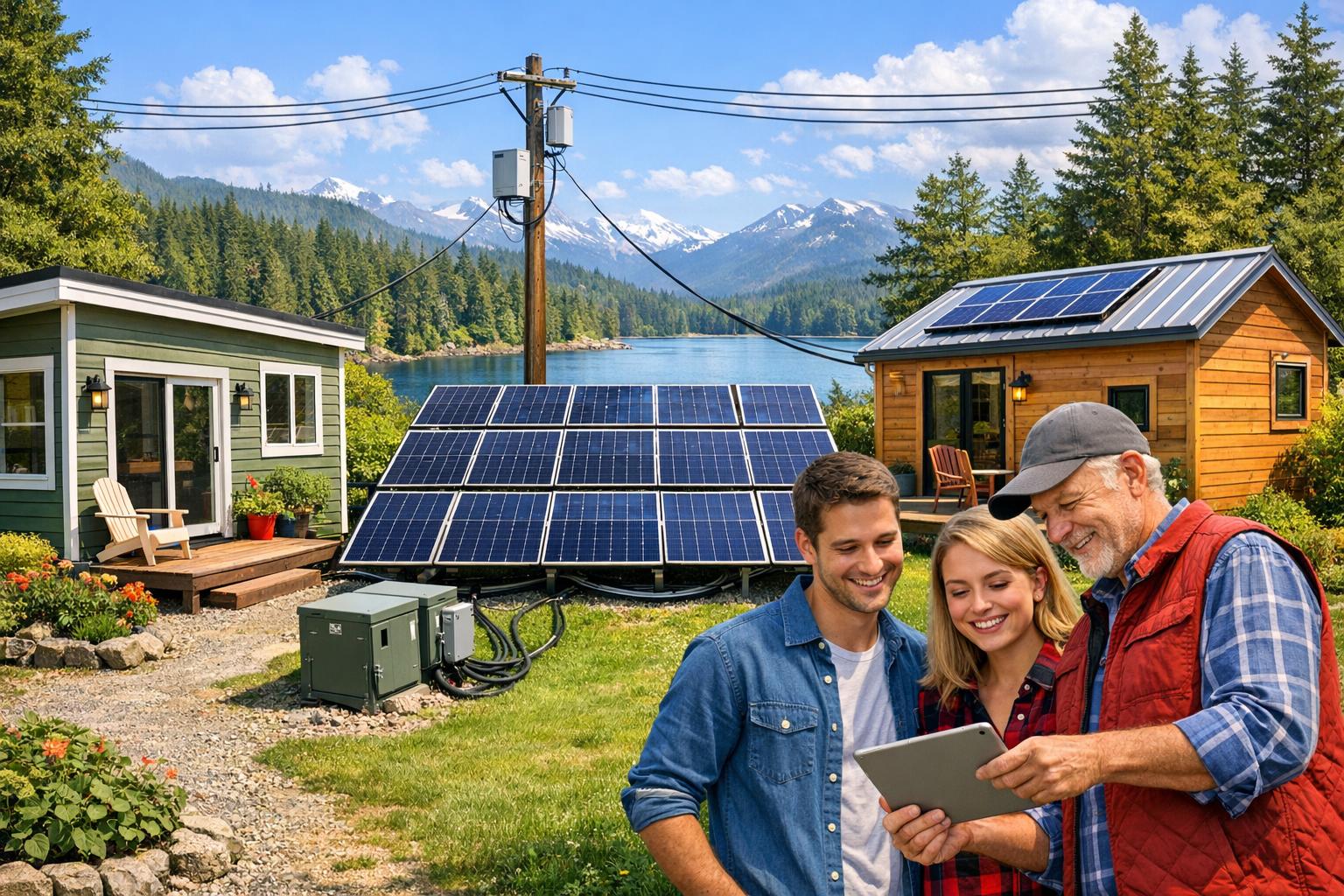
- Neighbourhood Arrays: A ground-mounted solar system in a shared open space serves several tiny homes, ADUs, and main houses connected through the grid.
- Co-op Ownership: Residents collectively invest in a solar system and formally share the energy credits and maintenance responsibilities under a legal co-operative agreement.
Crucial technology and infrastructure include:
- Inverters: Ensure efficient energy conversion from solar panels to usable electricity.
- Utility Metering: Smart meters and monitoring tools track individual shares and allow energy credits to be assigned accurately.
- Grid Integration: Connection to the municipal grid so participants can use credits directly on their electric bills.
Emerging Canadian examples:
– Multi-resident net metering pilot projects.
– Community co-ops in urban and rural developments, where residents in ADUs enjoy the same bill credits as owners of traditional homes.
For more real-world details:
Shared solar models for multi-unit communities
How inverters and utility credits work in shared energy systems
Case studies and co-op structures
If you’re exploring design and efficiency in compact living alongside solar solutions, consider reading Small Homes: Compact Living and Efficient Home Design for Stylish and Functional Urban Spaces.
Energy Savings and Environmental Impact
Quantifying the Energy Savings and Environmental Benefits
Solar panel sharing, as a community investment, delivers significant energy savings and powerful environmental benefits for Canadian ADU and tiny home owners.
Typical financial highlights:
- Average Savings: Joining a solar sharing program can reduce your electricity bills by 25-40%, translating to yearly savings of $1,000 to $1,200 per participating household.
- Return on Investment (ROI): With federal and provincial incentives, most households see ROI in 8 to 12 years. Ongoing maintenance cost is minimized by pooling expenses.
Environmental impact:
- Lower Carbon Emissions: Each participating household directly decreases its greenhouse gas footprint by using solar instead of fossil-fuel-generated electricity.
- Supports Canadian Sustainability Goals: Collective solar adoption accelerates the shift away from nonrenewable power, contributing to provincial and national climate targets.
Further points include government grants and rebates—like the $5,000 Canada Greener Homes Grant—and that shared solar can also boost the property value of ADUs or tiny homes. For a more in-depth look, see 25-40% bill savings and annual financial impact, federal and provincial incentives, and ROI, and environmental sustainability through shared energy.
For complementary perspectives on energy efficiency in small homes, check our detailed guide on The Ultimate Guide to Energy Efficiency Tiny Homes: Smart Strategies for Sustainable Canadian Living.
Steps for Canadian ADU Owners to Join or Start a Solar Panel Sharing Initiative
Getting Started: Joining or Creating a Solar Sharing Group
If you’re a Canadian ADU or tiny home owner interested in solar panel sharing, here is a step-by-step guide for getting involved or launching a neighbourhood project.
-
Assess Community Interest
- Survey Neighbours: Gauge interest and identify others who may want to participate.
- Site Audit: Find suitable community roofs or open spaces for a shared array.
-
Navigate Local Regulations
- Research Net Metering: Each province has different rules (e.g., Ontario’s net metering program). Find out what policies apply to your area.
- Permitting: Understand what municipal or regional permits are required.
- Co-op Agreements: Begin drafting an agreement covering participation, costs, and benefit sharing.
-
Identify Funding Resources
- Federal Support: Apply for the Canada Greener Homes Grant (up to $5,000) or Greener Homes Loan (up to $40,000 interest-free).
- Provincial Incentives: Explore provincial rebates (e.g., Alberta’s 30% rebate or Ontario’s net metering credits).
- Local Programs: Some cities or utilities offer additional funding or support.
-
Select Appropriate Vendors
- Compare Solar Providers: Look for those offering shared billing, group leasing, maintenance packages, and established experience with community solar.
- Evaluate Proposals: Choose the best value and most credible provider.
-
Establish a Co-op Agreement
- Draft a legal agreement covering cost contributions, maintenance and warranties, and how and when credits are distributed.
Quick Tip: Many successful projects begin with tenants’ associations or neighbourhood committees.
For detailed guidance and examples, see getting started with solar panel sharing, finding the right funding and support, and comparing vendors and selecting services.
Additional context on creating productive backyard spaces that complement solar sharing efforts can be found in Home Office Solutions: How ADU Offices and Backyard Workspaces Boost Remote Work Productivity.
Challenges and Considerations for Solar Panel Sharing in Canada
Navigating Hurdles and Best Practices
While solar panel sharing opens new doors, it’s important to understand potential challenges and know how to address them.
Common obstacles:
- Upfront Shared Costs: Collective investment can be a hurdle if some community members hesitate or if cost-sharing isn’t equitable.
- Legal and Regulatory Complexities: Multi-owner agreements, governance, and compliance with utility/net metering rules can add paperwork and delays.
- Grid and Metering Logistics: Arranging separate utility credits for each participant and dealing with the technicalities of grid integration can be complex.
- Maintenance Responsibilities: Without clear agreements, disputes can arise over who handles repairs or how long-term costs are divided.
Best practices for success:
- Draft Clear Co-op Agreements: Clearly define cost shares, responsibilities, and dispute resolution measures.
- Partner with Established Solar Providers: Reliable companies offer better warranties and help streamline installation and group billing.
- Maximize Incentive Use: Take full advantage of federal and provincial grants and rebates to extend your budget and offset initial expenses.
- Transparent Communications: Keep all participants informed about production, credits, costs, and maintenance schedules.
Addressing these considerations from the outset leads to a smoother and more rewarding shared solar project. Learn more about mitigating challenges and ensuring smooth implementation here and here. For further understanding of relevant local permitting and regulatory challenges with small dwellings, see Canadian ADU Regulations: A Comprehensive Provincial Guide to Secondary Suites, Zoning Laws, and Building Permits.
Conclusion: Solar Panel Sharing and the Path Forward for Canadian ADUs
Solar panel sharing gives Canadian tiny home and ADU owners a practical, affordable way to access the benefits of clean electricity—without individual space limitations or high setup costs. Through shared energy models like community solar, participants enjoy substantial energy savings, lower carbon emissions, and collective access to renewable technology.
Key takeaways:
– Pooling resources delivers real, measurable impacts: up to 40% lower bills and annual savings of more than $1,000 per household.
– Community co-op and shared energy initiatives are supported by federal and provincial government incentives, reducing payback periods.
– With proper planning and clear group agreements, challenges like upfront costs and administrative tasks can be managed effectively.
Ready to make a change?
Explore existing local community solar programs, initiate a conversation with your neighbours, or reach out to reputable renewable energy service vendors. By taking action today, you can lower your costs, enhance your property, and support Canada’s shift toward a more sustainable energy future.
For more details on the benefits and starting your own solar panel sharing project, check these resources:
Affordable solar options for Canadian homeowners
Solar incentives and case studies in Ontario
Shared energy environmental advantages
For broader lifestyle context, consider Tiny Home Living: The Ultimate Guide to Affordable, Sustainable, and Stylish Compact Living.
Frequently Asked Questions
Q1: What is solar panel sharing?
A1: It is a system where multiple households, including those in ADUs and tiny homes, share a single solar installation, receiving credits on their electricity bills for their proportional energy production.
Q2: How does solar panel sharing help reduce costs?
A2: By pooling resources, the upfront installation and maintenance costs are split among participants, leading to lower individual expenses and access to government incentives.
Q3: Are there specific models for community solar in Canada?
A3: Yes, models include utility-linked projects, co-ops, and subscription-based setups – all designed to adapt to diverse community needs and regulatory environments.
Q4: What should I consider before joining a solar panel sharing initiative?
A4: Consider community interest, local regulations, funding sources, vendor credibility, and establish clear agreements regarding cost sharing and maintenance.
Q5: How do I learn more about solar panel sharing opportunities in my area?
A5: Start by researching local community solar projects, government incentive programs, and consulting resources such as guides from Mag Solar and Perch Energy.
Leave a Reply