

Estimated reading time: 7 minutes
Key Takeaways
- Rural ADUs offer a scalable and cost-effective solution for housing farm workers.
- 2025 regulations will introduce stricter standards in worker accommodations.
- Proper design and compliance not only improve living conditions but also boost operational efficiency.
- Engaging with expert consultations and following local guidelines is essential for future-proofing accommodations.
Table of contents
- Introduction: Farm Worker Housing, Canadian Agriculture, and Rural ADUs
- Overview of Farm Worker Housing Needs in Canadian Agriculture
- What Are Rural ADUs and Their Role in Farm Worker Housing?
- Understanding the 2025 Regulations Affecting Farm Worker Housing in Canada
- Practical Design Considerations for Building Rural ADUs for Farm Workers
- Real-Life Examples and Case Studies
- Benefits of Investing in Rural ADUs for Farm Worker Housing
- Conclusion
- Additional Resources / Next Steps
- Frequently Asked Questions
Introduction: Farm Worker Housing, Canadian Agriculture, and Rural ADUs
Farm worker housing provides the essential accommodation for temporary foreign workers (TFWs) and migrant agricultural workers (MAWs) across Canada, ensuring farms can meet seasonal labour demands and maintain food production. Established standards by the Canada Mortgage and Housing Corporation (CMHC) and guidelines available at farmworkerhousing.ca underline the importance of providing housing that is both adequate and safe.
The innovative solution of rural ADUs—Accessory Dwelling Units—has emerged as a flexible, scalable, and cost-effective option. These units include bunkhouses, modular homes, or cabins, and are designed to adapt quickly to fluctuating workforce numbers while meeting essential compliance standards.
Overview of Farm Worker Housing Needs in Canadian Agriculture
Across Canada, challenges in farm worker housing include inconsistent quality, overcrowded facilities, outdated structures, and non-compliance with evolving federal and local standards. These issues can lead to reduced worker morale, higher absenteeism, and overall decreased productivity.
Conversely, ensuring that accommodations are inspected, maintained, and compliant results in:
- Improved physical and mental health for workers
- Enhanced satisfaction leading to higher retention rates
- More efficient seasonal transitions for farms
For more detailed insights, refer to resources such as farmworkerhousing.ca and the UFCW Canada report.
What Are Rural ADUs and Their Role in Farm Worker Housing?
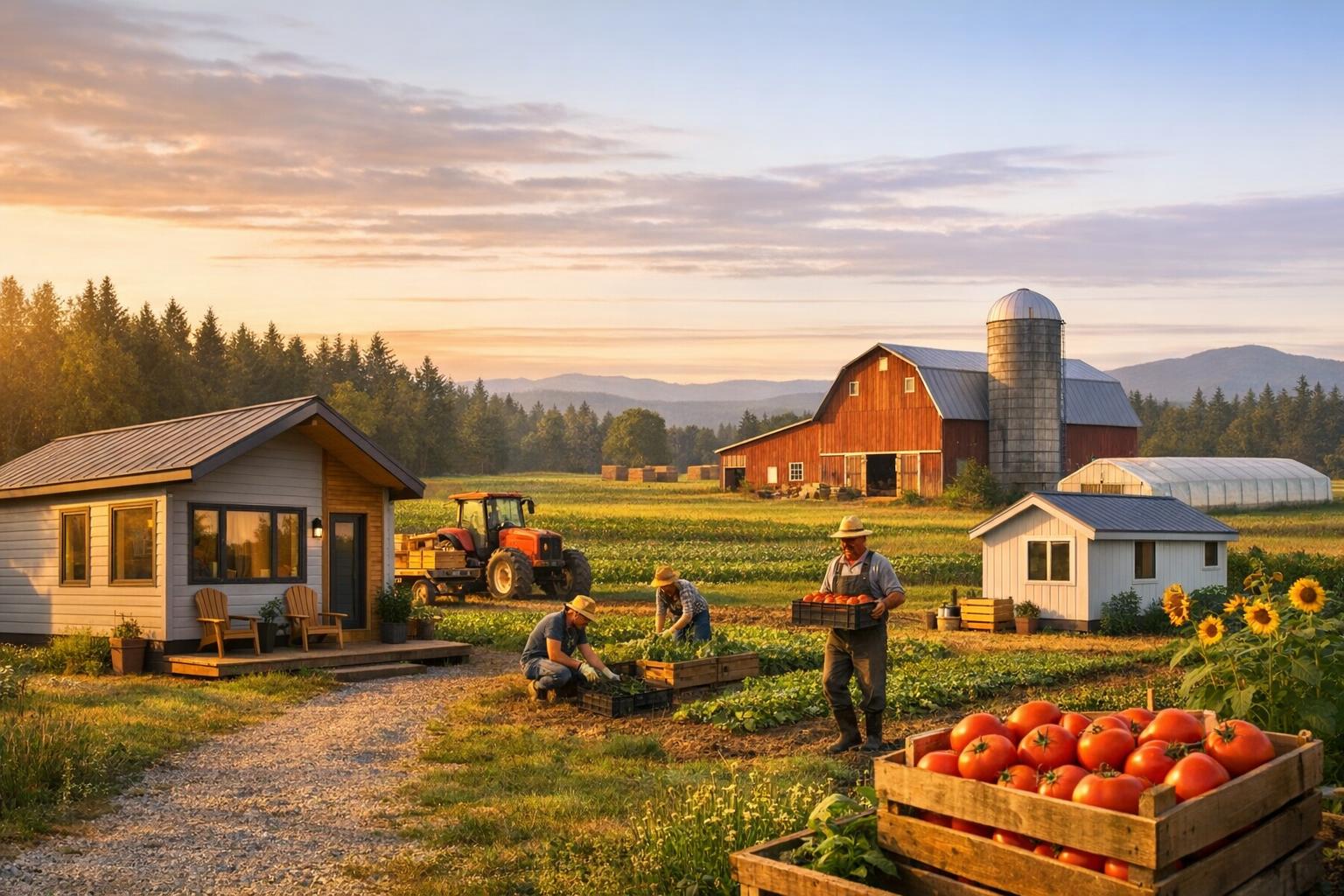
Rural ADUs are self-contained living spaces located on farm properties. They include a variety of housing types such as bunkhouses, modular homes, tiny houses, and cabins detached from the main farmhouse. Their role in farm worker housing is pivotal because they:
- Provide temporary or seasonal accommodation
- Allow flexible adaptation to workforce changes
- Offer a scalable solution that can grow with the needs of the farm
Learn more about rural ADUs and their benefits on housing standards at Employment and Social Development Canada and Farms Ontario.
Understanding the 2025 Regulations Affecting Farm Worker Housing in Canada
The upcoming 2025 regulations aim to introduce enhanced national housing standards. Key changes include:
- Building Code Compliance: Ensuring all units meet or exceed local safety and habitability standards.
- Mandatory Inspections: Scheduled within 8 months of the LMIA application process.
- Occupancy Limits: No bed-sharing, with a minimum of one bed per worker.
- Essential Amenities: Guaranteed access to potable water, sanitary facilities, and climate control.
For further information, consult the BC Worker Housing Standards Info Toolkit and guidelines on the national housing standards website.
Practical Design Considerations for Building Rural ADUs for Farm Workers
Successful design of rural ADUs hinges on combining functionality with compliance. Key considerations include:
Private Sleeping Quarters
- Each worker should have a minimum amount of personal space with lockable doors.
- Partition walls or curtains can enhance privacy.
Climate Control and Ventilation
- Adequate insulation to withstand Canadian winters and summer heat.
- Efficient heating, cooling, and ventilation systems are critical.
Cooking and Sanitation Facilities
- Each unit or shared space must have functional kitchens and bathrooms.
- Properly maintained utilities and connection to municipal services are essential.
Explore recommendations on design and modular construction at Adustart and Farms Ontario.
Real-Life Examples and Case Studies: Farm Worker Housing and Rural ADUs in Canadian Agriculture
Ontario’s F.A.R.M.S. Program
This program exemplifies the successful deployment of seasonal bunkhouses and modular accommodation. Key practices include:
- Strict adherence to inspection schedules.
- Clear guidelines on occupancy ratios and private living spaces.
- Proactive engagement with local health and safety regulations.
Learn more about the program at Farms Ontario.
UFCW Canada’s 2024 Report
The report highlights the need for reform in housing standards, advocating for improved privacy, better living conditions, and legal compliance. The insights from this report have driven significant improvements in farm worker housing models.
Read the detailed report at UFCW Canada.
Benefits of Investing in Rural ADUs for Farm Worker Housing
Investing in rural ADUs delivers multiple benefits that extend beyond basic compliance:
- Worker Satisfaction and Retention: Secure and dignified housing builds trust and improves retention.
- Operational Efficiency: Easy onboarding and accommodation streamline seasonal workforce management.
- Legal Assurance: Compliant facilities reduce risks associated with penalties or shutdowns.
- Sustainability: Energy-efficient, modular designs help reduce ongoing costs.
Further details can be found at the national housing standards site and BC’s toolkit.
Conclusion: Bringing Practical Design to Farm Worker Housing in Canadian Agriculture
Providing high-quality and compliant farm worker housing is imperative for sustaining Canadian agriculture. Rural ADUs present a smart solution that marries practicality with modern regulatory demands.
By planning ahead and engaging with design experts, farm operators can ensure smoother seasonal transitions, foster a healthier workforce, and secure long-term operational success in line with the forthcoming 2025 standards.
Additional Resources / Next Steps
Stay informed and compliant by consulting these resources:
- Employment and Social Development Canada: Agricultural Worker Housing Guidelines
- National Standards for Farm Worker Housing
- Seasonal Housing and Inspection Guidance (Farms Ontario)
- Ottawa Public Health: Temporary Foreign Worker Housing Requirements
- BC Worker Housing Standards Info Toolkit
- Modular Homes: Cost-Efficient & Green Solutions
- Farmstead ADUs and Rural Housing Solutions
Next Steps: Contact experienced design consultants, review local guidelines, and schedule certified inspections to prepare for the 2025 regulatory updates.
Frequently Asked Questions
Q1: What exactly is a rural ADU?
A rural ADU is an accessory dwelling unit built on farm property designed to offer self-contained, flexible accommodation tailored for seasonal and migrant workers.
Q2: How will the 2025 regulations affect existing farm worker housing?
The 2025 regulations will introduce stricter building and inspection standards. Farms will need to ensure their housing solutions, including rural ADUs, comply with new occupancy, safety, and amenity requirements to avoid penalties and ensure worker safety.
Q3: Can rural ADUs be retrofitted to meet new standards?
Yes, many rural ADUs can be retrofitted with improved insulation, updated sanitary facilities, and enhanced safety features. Consultation with design experts is recommended to ensure full compliance.
Q4: Where can I find more information about the guidelines?
Additional details and updates can be located at the official sites of ESDC, farmworkerhousing.ca, and local public health resources such as the Ottawa Public Health.
Leave a Reply