

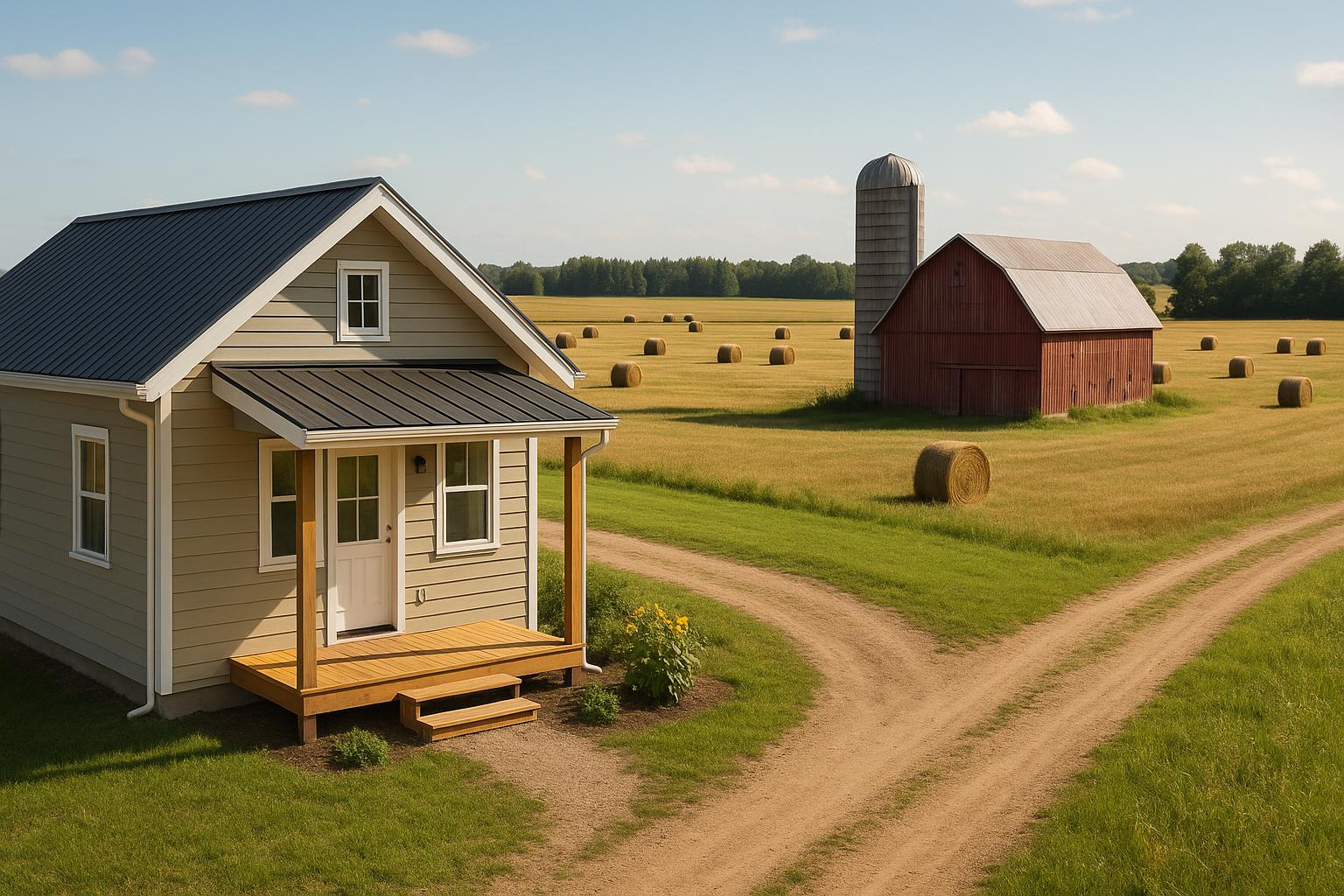
Farmstead ADUs: Innovative Solutions for Rural Housing Challenges in Canadian Agriculture
Estimated reading time: 8 minutes
Key Takeaways
- Farmstead ADUs offer flexible, independent housing solutions that support multi-generational farm families and seasonal workers.
- They address rural housing challenges by adding dwellings without fragmenting valuable farmland.
- ADUs can lower costs, bypass many planning hurdles, and integrate seamlessly into farm layouts.
- Innovative design and energy-efficient features make them a sustainable choice for Canadian agriculture.
- Clear policies and regulations are essential to ensure ADUs serve long-term rural housing needs.
Table of contents
- Introduction: Defining Farmstead ADUs and Their Importance
- Overview of Rural Housing Challenges in Canadian Agriculture
- The Role of Farmstead ADUs in Supporting Rural Farm Operations
- Addressing Housing Needs for Seasonal Workers through ADUs
- Innovations in ADU Design and Implementation for Rural Settings
- Broader Impacts of ADUs on Rural Communities and Canadian Agriculture
- Conclusion: The Case for Farmstead ADUs in Canadian Agriculture
- Frequently Asked Questions
Introduction: Defining Farmstead ADUs and Their Importance
Farmstead ADUs, or farmstead accessory dwelling units, are a new and practical way for Canadian farms to add housing on their land without breaking up farmland or building extra homes from scratch. A farmstead ADU is an independent secondary unit with its own kitchen, bathroom, and sleeping facilities, recognized by Canadian provinces under various terms such as accessory dwelling unit, additional dwelling unit, or garden suite.
These dwelling units are built on the same parcel as a main home but function as complete, self-contained residences. Across Canada, you may see ADUs referred to differently depending on province or city bylaws, such as:
- Accessory dwelling unit
- Additional dwelling unit
- Garden suite
- Granny flat
(Source: Prince Edward Island, Essex, Norfolk County)
With rural housing challenges growing in Canada, the appeal of farmstead ADUs is on the rise. Innovative uses of ADUs are helping to address urgent problems tied to rural housing, workforce shortages, and transitions in family-operated farm businesses. ADU innovation is becoming a backbone for supporting Canadian agriculture by providing flexible housing for family members, farm labour, and even long-term tenants—all while keeping farmland intact.
Prince Edward Island
Essex
Norfolk County
Affordable Housing Solutions
Multi-Generational Living with ADUs
Overview of Rural Housing Challenges in Canadian Agriculture
Rural housing is often a struggle on Canadian farms. The issues include:
- Shortages of affordable and adequate rural housing, especially in farming areas far from cities or towns.
- An aging housing stock, with many older dwellings in need of renovation or replacement.
- High costs for new construction, particularly on low-density or remote properties.
Because many farms operate outside urban rental markets, finding nearby housing for family members or farm workers can be difficult. The limited local supply, combined with expensive and outdated homes, makes it hard for farm operations to evolve.
These problems have real impacts:
- Farms have trouble attracting and keeping needed workers—particularly seasonal workers.
- Young farm families can’t always afford to stay, which affects farm succession and community sustainability.
- Overall farm productivity may fall when adequate housing isn’t available onsite.
- Housing shortages can even push families and workers out of rural areas into larger centres where more options exist, draining vitality from small communities and affecting Canadian agriculture’s long-term future.
Essex
Courtenay
Cornwall Definition
Affordable Housing & Social Equity
Seasonal Housing & Tiny Homes ADUs
The Role of Farmstead ADUs in Supporting Rural Farm Operations
Farmstead ADUs provide farmers and rural landowners with flexible housing solutions. Here’s how they work in the context of Canadian agriculture and rural housing:
Flexible Living Arrangements
- Multi-generational living: Farmstead ADUs allow aging parents to stay on the farm, let adult children return home, or accommodate new operators in succession.
- Variety of layouts: ADUs can attach to the main house, go above garages, or stand alone in a detached structure—so long as they follow local zoning and code requirements.
Technical and Economic Benefits
- Lower costs: Building an ADU is typically much cheaper and less difficult than constructing a new principal house.
- Easier planning: ADUs often face fewer planning or permitting hurdles, making them a more accessible solution for expanding rural housing.
- Code compliance: Local governments set rules on unit size, setbacks, safety, and services, but treat ADUs as part of the main property—streamlining the approval process.
Seamless Farmstead Integration
- Fits farm layouts: ADUs are sited close to existing services, driveways, and farm infrastructure, avoiding disruption of fields or workspaces.
- Incremental housing: Adding one or two units at a time lets farms slowly build up housing capacity as needs change, without major changes to the property’s rural character.
Examples of Supported Uses
- In-law suites for seniors or retired farmers.
- Independent homes for farm successors or adult children.
- Onsite rentals for long-term farm workers or tenants.
The pragmatic flexibility of ADUs makes them uniquely suited to the evolving, seasonal, and multi-generational needs found on Canadian farms.
Prince Edward Island
Essex
Norfolk County
In-Law Suites Guide
Multigenerational Living with ADUs
Addressing Housing Needs for Seasonal Workers through ADUs
Seasonal workers are the backbone of many Canadian farms, particularly in fruit, vegetable, and greenhouse operations. Yet securing good, safe, and code-compliant housing for these workers remains challenging.
Unique Needs of Seasonal Workers
- Many seasonal or temporary foreign workers face crowded, unsafe, or substandard homes in rural areas.
- Housing must be close to where work is done to reduce commute time, boost productivity, and support worker well-being.
How Farmstead ADUs Help
- Private and comfortable: Farmstead ADUs are full homes, so they provide privacy, dignity, and comfort for seasonal employees—unlike temporary bunkhouses or crowded lodgings.
- Flexible use: Between busy seasons, ADUs can be used for family members or long-term tenants, maximizing the value of each unit year-round.
- Legal and regulatory compliance: ADUs must meet local and provincial rules for safety, building standards, occupancy, and use. Jurisdictions may have special rules for “farm help houses,” occupancy limits, and fire codes.
Making ADUs Work for Workers
- Design units for comfort and safety, following all building codes.
- Know occupancy limitations and rules around seasonal vs. long-term rentals.
- Ensure ADUs are registered and permitted as required by the municipality.
- Collaborate with labour programs and regulatory agencies to meet all housing and worker welfare standards.
Farmstead ADUs give farms a practical, modern alternative to traditional temporary housing, improving quality of life for workers and making it easier to attract and keep reliable labour.
Essex
Norfolk County
Cornwall
Seasonal Housing & Tiny Homes ADUs
Mobile Tiny Homes for Seasonal Work
Innovations in ADU Design and Implementation for Rural Settings
ADU innovation is changing the way rural Canadians house family, workers, and tenants. Here are the latest design and policy trends tailored specifically for rural and farmstead contexts:
Energy-Efficient, Sustainable Features
- Compact designs: ADUs average around 70–75 square metres, making them easy to heat, clean, and maintain.
- Better insulation: High energy efficiency is key for Canadian winters, using advanced insulation and airtight construction.
- Low-maintenance materials: Metal roofs, fibreglass, and fibre-cement siding mean less work for busy farm families.
Designed for Rural Aesthetics
- Farm-friendly architecture: Many new ADUs echo traditional barns or rural cottages, blending seamlessly into the landscape.
- Flexible placement: Whether attached, above a garage, or detached, units can be located to minimize farmyard disruption and keep character intact.
Policy and Implementation Advances
- Municipalities in small towns and rural regions now promote ADUs as part of rural housing strategies.
- Broad acceptance of tiny homes, provided they meet building code, has created new legitimate options for secondary units.
- Clearer guidance from provinces and local governments makes navigating codes and zoning much easier for farm owners.
Case Studies and Examples
- Courtenay, BC: Families install garden suites or build above-garage units for relatives or long-term renters within walking distance of the main house.
- Norfolk County, ON: Detached ADUs in traditional farmyards allow new generations to stay on the land.
ADUs now use energy-saving designs and rural-appropriate styling while streamlining planning, offering rural communities new housing solutions that are attractive, comfortable, and robust.
Courtenay
Norfolk County
Eco-Friendly Building Materials
Energy Efficiency in Tiny Homes
Broader Impacts of ADUs on Rural Communities and Canadian Agriculture
The integration of farmstead ADUs into rural areas has wide-ranging benefits for Canadian agriculture and rural communities:
Helping Solve Rural Housing Shortages
- Adding ADUs increases housing supply on existing serviced land without fragmenting, subdividing, or otherwise damaging productive farmland.
- ADUs provide affordable, accessible dwellings for farm families, local workers, and seniors.
Boosting Resilience and Supporting Succession
- By letting multiple generations live on the same property in separate units, ADUs support smooth farm succession planning.
- Rental income from ADUs can help stabilize family finances and invest back into the farm.
Strengthening Local Economies and Communities
- More people living and working on or near farms supports local schools, health clinics, and small businesses.
- Retaining families and workers in rural areas helps maintain the social fabric and vibrancy of rural towns.
Addressing Challenges and Risks
- Infrastructure: Many rural areas rely on private wells and septic systems with capacity limits; more units can strain these unless carefully managed.
- Regulatory complexity: Navigating overlapping codes (agricultural zoning, worker housing, building safety) can be daunting and needs clear guidance from local governments.
- Initial costs: Building new ADUs requires up-front investment—though costs are typically less than building a new principal house.
- Misuse worries: Some worry about ADUs being used for short-term rentals, which is why many regions require long-term use to preserve genuine housing stock.
Collaborative local leadership and clear rules make farmstead ADUs an effective approach for enhancing rural life and supporting the future of Canadian agriculture.
Essex
Courtenay
Cornwall
Rural ADUs & Small Town Revitalization
ADU Permitting Ontario Guide
Conclusion: The Case for Farmstead ADUs in Canadian Agriculture
Farmstead ADUs are proven, innovative solutions to the persistent rural housing challenges faced by Canadian agriculture. By adding independent, code-compliant units on existing farm parcels, farmers can house relatives, incoming successor generations, and seasonal workers without damaging farmland or dramatically altering rural community character.
The key benefits include:
- Flexible housing options for multi-generational farm families, aging parents, and adult children.
- Safe, comfortable accommodation for seasonal farm workers, making farms more attractive places to work.
- Incremental, cost-effective expansion of rural housing stock through ADU innovation.
- Increased resilience, smoother farm succession, and stronger rural economies through additional rental income and on-farm support.
Yet, success depends on clear community guidelines to manage infrastructure, codes, costs, and to ensure ADUs are used for long-term housing—not for short-term rentals. As energy efficiency, design innovation, and rural policy continue to improve, these small homes can offer powerful support for Canadian farm sustainability.
Take Action: If you’re a farm operator, rural planner, or local government official, consider how farmstead ADUs could benefit your property or community. Support policies that make ADU construction straightforward and practical. With the right tools and rules, farmstead ADUs are a sustainable, low-impact way to meet rural housing needs and secure the future of Canadian agriculture.
Essex
Norfolk County
Courtenay
Cornwall
ADU Investment Canada Guide
Rural ADUs & Small Town Revitalization
Frequently Asked Questions
What is a Farmstead ADU?
A Farmstead ADU is an independent secondary dwelling built on the same parcel as a main home. It includes its own kitchen, bathroom, and sleeping facilities, and is designed to provide flexible housing options without subdividing farmland.
How do Farmstead ADUs benefit rural farms?
They help by offering cost-effective, code-compliant housing for family members, seasonal workers, and long-term tenants while keeping the integrity of farmland intact. This aids in farm succession and local community stability.
Are there special design considerations for seasonal workers?
Yes. Farmstead ADUs are designed to be private and comfortable with flexible layouts that meet local building codes, ensuring safe living conditions for seasonal and temporary workers.
What should farm owners consider before building an ADU?
Farm owners should review local zoning laws, building codes, and regulations, consider infrastructure capacities like water and septic systems, and evaluate the long-term housing needs of their farm operations.
Can ADUs be adapted for multi-generational living?
Absolutely. ADUs are ideal for multi-generational living, supporting aging parents, adult children, or new successors in a way that keeps the family together while maintaining independence.
Leave a Reply