

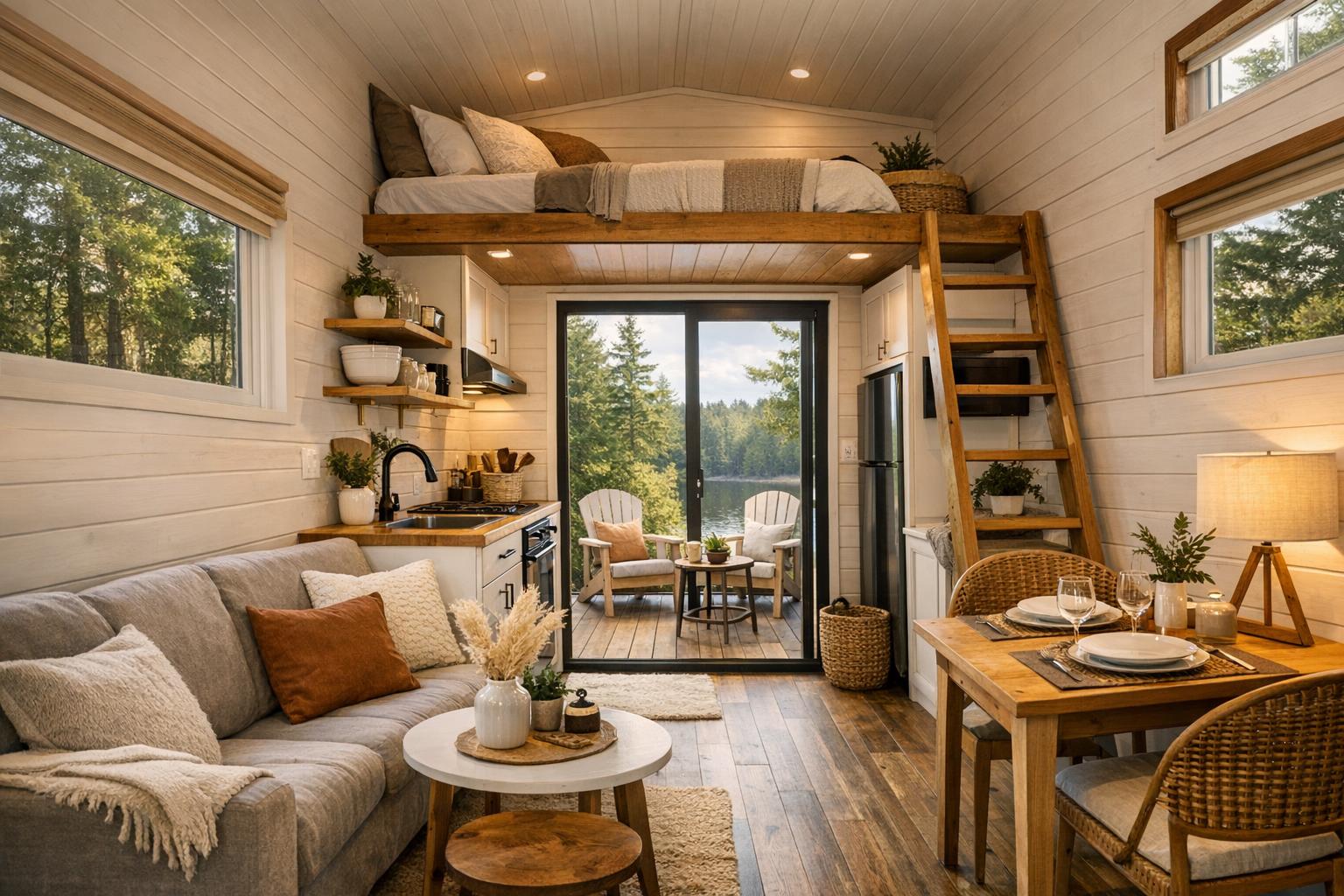
Maximizing Value: Tiny Home Staging & Seller Strategies for the Canadian Market
Estimated reading time: 8 minutes
Key Takeaways
- Tiny home staging enhances visual appeal and market value through strategic home presentation.
- Effective decluttering and furniture rearrangement maximize limited space.
- Incorporate proven staging principles to boost sale speed.
- Tailor designs to Canadian-specific factors such as climate and local aesthetics.
- Strategic staging not only enhances appearance but also accelerates transactions.
Table of contents
- Introduction: Tiny Home Staging in the Canadian Market
- Understanding Tiny Home Staging & Home Presentation
- Actionable Seller Strategies for Tiny Home Staging
- Tailoring Home Presentation to the Canadian Market
- Additional Real Estate Tips for Selling or Renting Tiny Homes
- Conclusion: Bringing It All Together for Canadian Tiny Home Success
- Frequently Asked Questions
Introduction: Tiny Home Staging in the Canadian Market
Tiny home staging is the process of preparing and designing tiny homes and accessory dwelling units (ADUs) to enhance their visual appeal and market value. By using careful decluttering, smart furniture placement, and attention to detail, staging helps buyers and renters envision a comfortable life in a compact space.
This practice is growing in relevance as more Canadians seek affordable, sustainable, and flexible living solutions. Learn more about core staging principles at Fliphaus: A Guide to Maximizing Your Home’s Appeal.
Strategic home presentation combined with focused seller strategies results in faster, more profitable transactions. Tiny home staging ensures that your property isn’t just seen—it truly stands out, while also accounting for regional climate and design preferences.
Section 1: Understanding Tiny Home Staging & Home Presentation
What Makes Tiny Home Staging Unique?
Staging a tiny home differs from staging a traditional house. With limited space, effective home presentation demands:
- Space limitations: Many tiny homes have less than 400 square feet.
- Multifunctional design: Every element often serves more than one purpose.
- Visual balance: Creating an open, inviting ambiance is key—avoid a cluttered look.
Key Principles of Tiny Home Staging
1. Decluttering for Perceived Space
- Remove unnecessary items to create a sense of spaciousness.
- Prioritize clear surfaces to enhance openness.
- Store large or personal items out of view to keep the focus on the space’s potential.
2. Furniture Rearrangement & Multi-purpose Layouts
- Use only essential pieces that optimize functionality.
- Select furniture with built-in storage, such as ottomans with hidden bins or Murphy beds.
- Utilize modular seating that can adapt for various uses—work, relaxation, or dining.
3. Neutral Décor Selections
- Adopt soft, neutral color palettes to appeal to diverse tastes.
- Use consistent flooring and wall treatments to create seamless transitions.
Common Mistakes to Avoid
- Overcrowding: Too much furniture can overwhelm limited space.
- Inadequate lighting: Poor or mismatched lighting can make the space seem even smaller.
- Excess personal clutter: Family photos and unique collections may distract potential buyers.
Professionally staged homes can sell 30-50% faster than un-staged ones, as noted by Real Estate Magazine. For further insights, explore Minimalist Living: A Step-By-Step Guide to Declutter Your Life.
Section 2: Actionable Seller Strategies for Tiny Home Staging
Decluttering and Maximizing Minimal Space
Decluttering is at the heart of tiny home staging success. Follow these seller strategies:
- Edit ruthlessly: Keep only items essential for both function and style.
- Organize vertically: Use wall-mounted shelves, hooks, and racks to store items efficiently.
- Create open sightlines: Remove bulky items from view to keep floors clear.
A well-organized space feels larger and more inviting. For additional strategies, consult Downsizing: A Complete Guide to Decluttering Tiny Homes.
Utilizing Multi-purpose Furniture and Clever Storage Solutions
Choosing adaptable furniture can transform the feel of a tiny home:
- Modular sofas: Convert between seating, lounging, and even sleeping.
- Built-in benches: Utilize lift-up seats that offer discreet storage.
- Fold-down desks and Murphy beds: Enhance the space’s versatility.
- Consider integrated smart storage solutions that include under-floor compartments and hidden organizers.
Enhancing the Environment with Lighting and Colour Schemes
Effective lighting dramatically enhances a tiny home’s appeal:
- Multiple light sources: Combine ceiling fixtures, wall sconces, and lamps to eliminate shadows.
- Warm LED lighting: Mimic natural daylight to create a cozy yet bright ambiance.
- Colour psychology: Light neutrals with subtle accent colours enlarge the visual space.
For further tips on lighting, visit Interior Lighting Tiny Home: How to Maximize Small Spaces.
Creating Lifestyle Vignettes
Stage small, themed setups to help buyers imagine the space’s full potential:
- Cozy reading nook: Add a comfortable chair, a lamp, and a small side table.
- Compact workspace: Use a wall-mounted fold-down desk and slim chair to create a multi-functional area.
- Outdoor living: Stage a balcony or patio with seating and potted plants to extend the living area.
This approach not only highlights the home’s potential but also sells a lifestyle. Learn more at Home Office Solutions: Boosting Remote Work Productivity.
Section 3: Tailoring Home Presentation to the Canadian Market
Meeting Canadian Real Estate Demands
Canadian buyers value energy efficiency and sustainability. Consider these key points:
- Energy efficiency: Focus on insulation, efficient windows, and renewable energy systems.
- Sustainability: Eco-friendly materials and finishes are a priority for many buyers.
- Urban vs. rural: Urban homes may feature sleek, modern designs while rural properties might favor rustic charm.
For more information, visit Building an Eco-Friendly Home: Practical Canadian Strategies.
Local Design Preferences and Climate Considerations
When staging for a Canadian audience, keep in mind:
- Insulation & Heating: Highlight efficient systems like mini-split heat pumps or certified wood stoves.
- Weather-appropriate décor: Use warm textiles and functional storage to emphasize comfort in all seasons.
Enhance your staging strategy with insights from How to Build a Winter-Proof Tiny Home Designed for the Harsh Canadian Climate.
Regional Regulations and Zoning Considerations
Be aware of local zoning and building regulations when staging tiny homes:
- Know your bylaws: Ensure your staging complies with provincial and municipal rules for ADUs and tiny homes.
- Highlight legal compliance: Emphasize that the space meets local requirements for legal and attractive living.
Find more details in Canadian ADU Regulations: A Comprehensive Provincial Guide.
Section 4: Additional Real Estate Tips for Selling or Renting Tiny Homes
Marketing Angles for Tiny Homes
Optimize your listing with these targeted strategies:
- Emphasize cost savings: Showcase energy efficiency and lower overall maintenance expenses.
- Highlight intelligent design: Focus on open concepts and flexible storage solutions.
- Modern terminology: Use terms like “net zero,” “eco-friendly,” and “minimalist” to attract trend-conscious buyers.
For further advice on pricing and market strategy, check out Affordable Housing: Innovative Solutions and Practical Strategies.
Photography and Virtual Tours for Effective Home Presentation
High-quality images and engaging virtual tours are essential:
- Photography tips: Shoot during natural daylight with wide-angle lenses and minimal clutter.
- Virtual tours: Offer 360-degree views to help remote buyers visualize the layout.
- Boost your online presence: List on multiple platforms with detailed, descriptive language.
Discover more marketing tips at Optimizing Your Rental Unit for Maximum Profitability.
Conclusion: Bringing It All Together for Canadian Tiny Home Success
Thoughtful tiny home staging bridges the gap between a property’s potential and its market success. By combining decluttering, multi-purpose furniture, strategic lighting, and carefully staged lifestyle vignettes, your tiny home can truly stand out in the Canadian market.
Remember these core strategies:
- Declutter: Create a spacious and organized environment.
- Invest in versatile furniture: Ensure that every piece serves multiple functions.
- Use light and neutral colours: Enhance visual appeal and the perception of space.
- Stage lifestyle vignettes: Allow buyers to imagine their future in the space.
Adapt these techniques to align with local climate, design preferences, and regulatory requirements. For personalized advice, consulting a home staging expert can be invaluable.
Frequently Asked Questions
- What is tiny home staging? It is the practice of arranging and decorating a tiny home or ADU to enhance its appeal and market value.
- How can I effectively declutter a tiny home? Focus on retaining only essential items and employ smart storage solutions that maximize vertical space.
- Why is lighting so critical in tiny homes? Proper lighting opens up small areas, highlights key features, and creates an inviting atmosphere.
- What special considerations are there for the Canadian market? Emphasize energy efficiency, effective insulation, and designs tailored to local tastes and climates.
- Can staging really reduce the time on market? Yes, staged homes often sell 30-50% faster than their un-staged counterparts.
Ready to maximize your tiny home’s appeal? Use these insights to stage your property for success in the competitive Canadian market!
Leave a Reply