

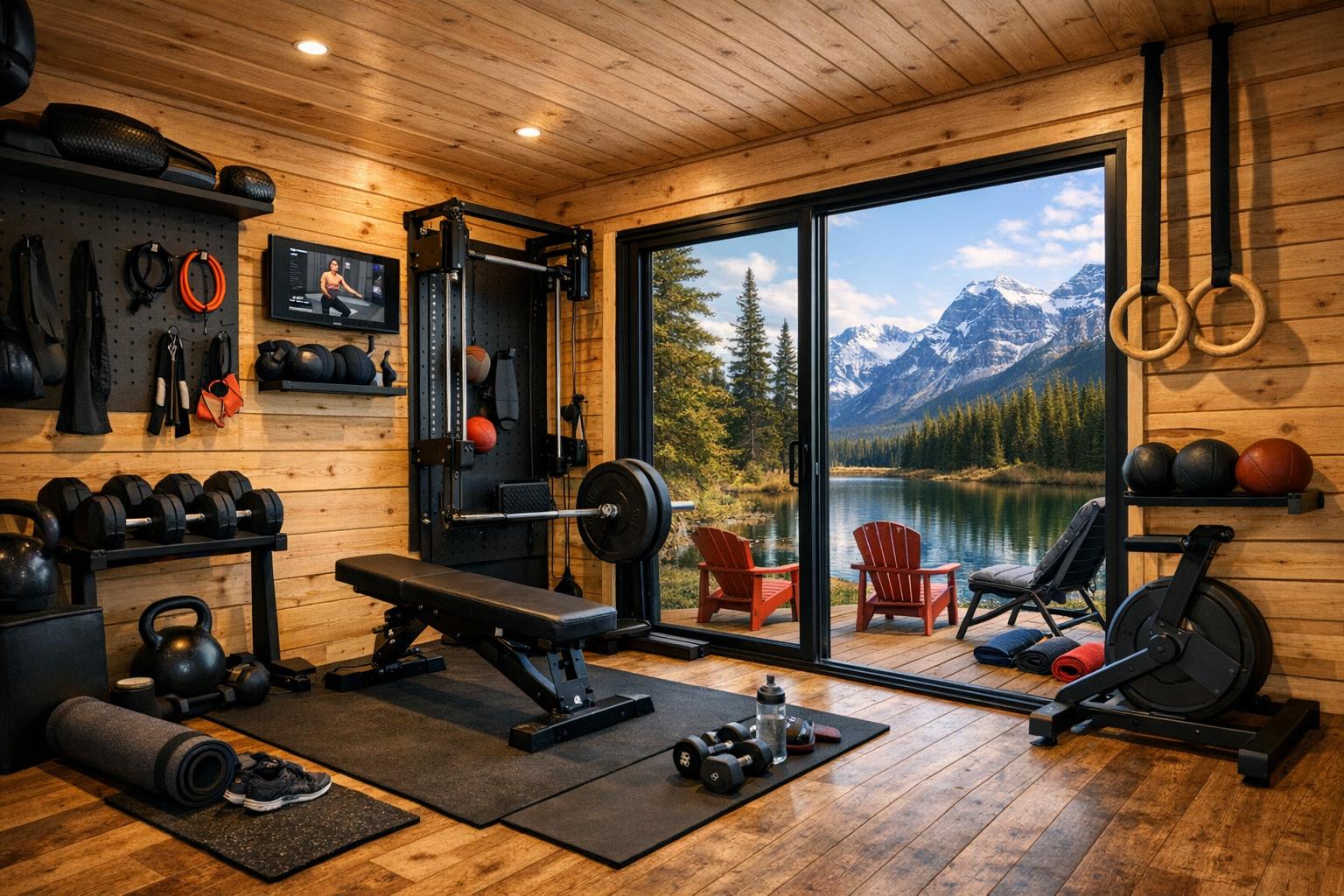
Tiny Home Gym in Canada 2026: Building Effective Fitness Spaces in Limited Areas
Estimated reading time: 7 minutes
Key Takeaways
- Tiny home gyms integrate smart, multifunctional equipment to maximize small spaces.
- Space-efficient design uses vertical storage, modular setups, and multifunctional furniture.
- Canadians are embracing compact fitness solutions driven by urban living and sustainability.
- Smart equipment and digital coaching are reshaping home workouts in 2026.
Table of contents
Welcome to our detailed guide on creating a tiny home gym in Canada 2026. With urban density on the rise and limited space a constant challenge, this post offers practical strategies to design a compact and efficient workout space that aligns with today’s sustainable lifestyle.
Small Space Fitness & Tiny Home Gym Motivation
What Is Small Space Fitness?
Small space fitness means designing workouts and selecting equipment that makes the most of every square foot. In today’s Canadian urban living and tiny home settings, the focus is on:
- Space-efficiency: Maximizing every inch of space.
- Multifunctional design: Equipment that serves multiple purposes.
- Aesthetic integration: Ensuring the gym blends with your home décor.
Why Is Space-Saving So Essential?
In tiny homes and accessory dwelling units (ADUs), every square foot counts. Key points include:
- Limited open floor space requires cleverly designed gear.
- Equipment must fit seamlessly into living areas—under beds, on shelves, or behind doors.
- Using strategies like vertical storage and modular equipment ensures a clutter-free home.
Check out more insights on small home gym ideas and tiny home living guides to learn about space-saving designs.
Motivations for Home Exercise in Canadian Tiny Homes
Canadians are turning to home exercise for:
- Convenience: Working out at home eliminates travel time.
- Cost efficiency: One-time investments in quality gear vs. recurring gym fees.
- Privacy & Flexibility: Enjoying workouts anytime without crowds.
- Urban lifestyle: Compact spaces demand innovative, multi-use solutions.
Learn more about these trends from York Barbell and Adustart.
Selecting Smart Equipment for Home Exercise
What Is Smart Equipment for Home Exercise?
Smart equipment refers to compact, multifunctional gear that is ideal for small spaces. Its features include:
- Multifunctional: One device can support various exercises.
- Space-efficient: Compact or foldable, perfect for tiny home gyms.
- Tech-enabled: Some offer digital tracking and connectivity.
- Durable and versatile: Suitable for both strength and cardio workouts.
Find more details on York Barbell and Gym Mikolo.
Recommended Equipment for a Tiny Home Gym
Here’s what works best for small Canadian living:
- Adjustable Dumbbells:
Replace multiple weights with one set that adjusts for different exercises. Explore more info. - Resistance Bands:
Portable and versatile for strength, stretching, or rehab. Get details from Gym Mikolo. - Foldable Cardio Machines:
Compact treadmills, ellipticals, and rowing machines that collapse after use. Read further at Halifax Chamber. - Wall-Mounted Racks and Pull-Up Bars:
Utilize vertical space effectively. More details available at York Barbell. - Compact Benches and Folding Platforms:
Multipurpose equipment that tucks away easily. See examples on Gym Mikolo. - Fitness Apps and Digital Coaching:
Enhance your workouts with guided programs. Discover more at Gym Mikolo.
Smart equipment ensures your tiny home gym remains a dynamic space for strength and cardio training without the clutter.
Tiny Home Gym Design Tips & Layout Ideas for Small Space Fitness
Create Designated Workout Zones without Overcrowding
Defining specific “zones” in your tiny home can boost motivation and prevent clutter. Consider:
- Strength Training Corner: A dedicated area with a rubber mat and adjustable dumbbells.
- Cardio Nook: A foldable treadmill or bike positioned near a window.
- Stretch and Mobility Space: An open area with easily stored mats and resistance bands.
This zoning helps to clearly separate living and workout areas, enhancing focus while preserving space. More ideas can be found at Home Gyms Design and Adustart.
Emphasize Vertical Storage and Modular Solutions
Maximize space with:
- Pegboards, Wall Hooks, and Floating Shelves: Keep gear accessible yet off the floor.
- Foldable or Stackable Equipment: Quick storage options after workouts.
Such solutions keep your space organized and safe. For more guidance, visit Gym Mikolo and Adustart.
Flexible Furniture and Multifunctional Living Zones
Integrate workout space with everyday living areas using furniture that serves dual purposes, such as:
- Fold-down Benches and Ottomans with Storage: Perfect for both seating and holding small workout gear.
- Murphy Beds or Convertible Tables: Easily transition between living and workout areas.
Environmental & Safety Considerations
- Lighting: Use bright and neutral lighting along with large mirrors to enhance space.
- Flooring: Protective mats or interlocking tiles that reduce noise and protect joints.
- Ventilation: Ensure your room has proper airflow with windows or compact fans.
For more inspiration on design, check out Gym Mikolo and Adustart.
Alternative Spaces: Garages & Basements
If you have access to a garage or basement, consider converting it into a dedicated gym area. Simple modifications like adding mats, improved lighting, and mobile storage can create a highly effective workout zone.
Discover ideas from Fitness Avenue and Adustart.
Market Trends & Equipment Availability in Canada 2026
2026 Canadian Trends for Tiny Home Gyms
- Resistance Training Popularity: A growing focus on weight training for health and longevity.
- Compact, High-Quality Gear: Demand for durable, space-saving equipment over bulky machines.
- Smart Equipment Integration: Devices that combine digital tracking with functionality.
- Sustainability: Eco-friendly choices with multi-use designs are on the rise.
Learn more from York Barbell and Halifax Chamber.
Where Canadians Can Find Tiny Home Gym Smart Equipment
- Major Suppliers:
- York Barbell Canada: Adjustable dumbbells, compact power racks, and more.
- Fitness Avenue: Foldable cardio and modular strength equipment.
- Adustart: Innovative solutions for tiny home gym setups.
- Online Platforms: Domestic e-commerce sites offer a range of compact workout equipment with easy returns.
- Sustainability & Minimalism: Canadians invest in quality, multifunctional gear designed to last.
Hybrid Digital Training Gains Momentum
- Virtual Personal Training: Access certified trainers and live-streamed classes.
- App-Based Programs: Follow tailored workouts using smart devices.
- AI Coaching: Benefit from AI-driven workout feedback customized to your goals.
These trends are reshaping home fitness, blending traditional exercise with digital innovation. Explore more at York Barbell.
Community and Government Wellness Programs
Canada’s public health initiatives and local wellness programs are beginning to support tiny home gyms by offering resources, subsidies, and digital fitness classes to encourage active living.
Conclusion: Tiny Home Gym Success in Canada 2026
Building a tiny home gym in Canada 2026 is more practical and rewarding than ever. By integrating smart equipment, strategic design, and efficient storage, you can transform even the smallest space into a powerhouse of fitness.
Key action points:
- Measure your space carefully and think vertically.
- Define your fitness goals—strength, cardio, or flexibility.
- Invest in quality, multifunctional gear.
- Plan dedicated workout zones that blend with your living space.
- Leverage digital training and community wellness programs for added support.
Start designing your compact, smart, and sustainable home gym today. Your future self—and your health—will thank you.
Frequently Asked Questions
What is a tiny home gym?
A tiny home gym is a purposely designed workout space adapted for limited living areas like apartments, tiny homes, or ADUs. It focuses on functionality, space efficiency, and multifunctional equipment.
How do I choose equipment for small spaces?
Focus on multifunctional, compact equipment that can be easily stored. Look for adjustable dumbbells, resistance bands, and foldable cardio machines, and consider vertical storage solutions to make the most of your space.
Can I integrate digital training with my home gym?
Absolutely. Many modern pieces of equipment are tech-enabled and can connect with fitness apps or virtual training programs, offering personalized feedback and live coaching.
Are there government programs to support home gyms in Canada?
While specific programs for tiny home gyms are still emerging, many municipal initiatives and public health efforts offer resources and digital fitness classes to encourage regular exercise at home.
Leave a Reply