
Multi-Unit Tiny Home Developments in 2026: Maximizing Land Use with Sustainable, Community-Oriented Housing
Estimated reading time: 10 minutes
Key Takeaways
- Sustainable Communities: Multi-unit tiny home developments foster community living and resource efficiency.
- Zoning Reforms: Updated zoning bylaws across Canadian cities are enabling higher density and innovative housing models.
- Regulatory Compliance: Adhering to Canadian building codes and regulations is essential for safe and legal development.
- Innovative Design: Modular construction, energy-efficient features, and smart use of space are transforming tiny home design.
- Financial Strategy: Thoughtful financial planning and incentives make these developments both viable and attractive.
Table of Contents
- Introduction: Multi-Unit Tiny Home Developments and Community Living
- What Are Multi-Unit Tiny Home Developments? Understanding Tiny Home Community Models
- Zoning Considerations for Multi-Unit Tiny Home Communities and Small-Scale Development
- Navigating Canadian Regulations for Multi-Unit Tiny Home Developments
- Design and Planning for Small-Scale Developments in a Tiny Home Community
- Financial and Development Considerations for Multi-Unit Tiny Home Developments
- Case Studies: Multi-Unit Tiny Home Developments and Tiny Home Community Success
- Conclusion: Key Lessons for Multi-Unit Tiny Home Developments in Canada
- Call to Action: Take the Next Step Toward Multi-Unit Tiny Home Developments
- Frequently Asked Questions
Introduction: Multi-Unit Tiny Home Developments and Community Living
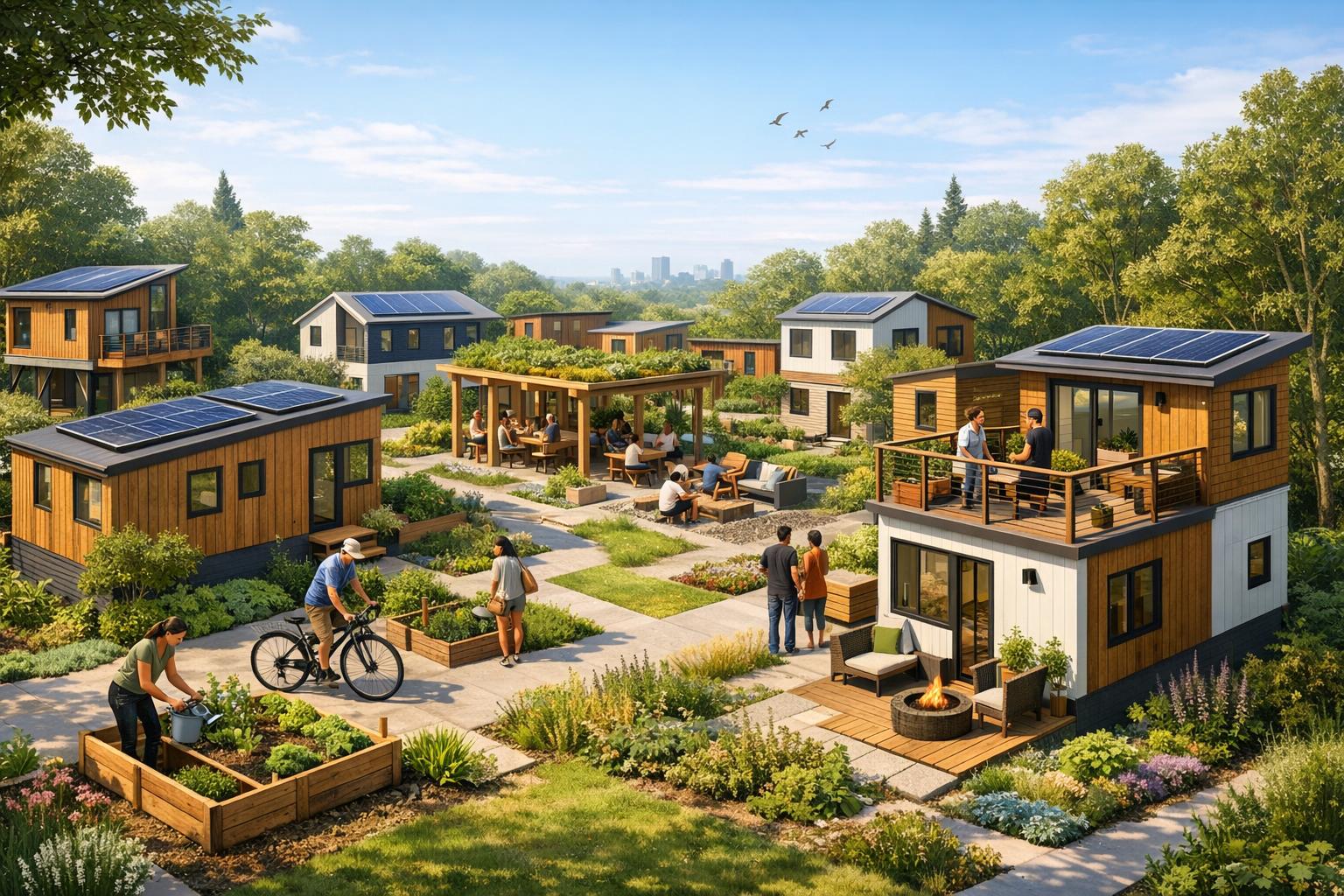
Multi-unit tiny home developments in Canada are quickly reshaping the way Canadians approach sustainable housing and community-building. These developments—often referred to as tiny home communities or micro-villages—consist of clusters of small, self-contained homes, each typically under 40 square metres, built on a single property with shared infrastructure and amenities.
Unlike standalone tiny homes, these communities integrate communal green spaces and shared pathways that foster a sense of belonging while maximizing land use. With cities like Edmonton, Kitchener, and Coquitlam revising zoning bylaws to allow multiple small dwellings, a new movement is emerging for sustainable, community-focused urban living.
Discover more about tiny living in our guide on Tiny Home Living: Your Complete Guide to Micro Homes, Sustainability, and Lifestyle Freedom.
What Are Multi-Unit Tiny Home Developments? Understanding Tiny Home Community Models
Multi-unit tiny home developments create compact neighbourhoods where several tiny homes share infrastructure on a single lot. These models include:
- Rows of tiny homes on foundations: Permanent, ground-oriented structures arranged in a row.
- Garden suites and coach houses: Secondary dwellings integrated in residential backyards.
- Micro-villages: Clusters built around shared amenities and green spaces.
Key differences from single-unit tiny homes include increased density, enhanced community orientation and shared infrastructure that reduce both costs and environmental impact. Explore further insights in our post on How Tiny Home Communities Are Redefining Affordable, Eco-Friendly, and Communal Living.
Zoning Considerations for Multi-Unit Tiny Home Communities and Small-Scale Development
Zoning regulations determine where tiny home communities can be built. They define:
- Land use designations: Residential, commercial, or mixed-use.
- Permitted building types: Such as single-family homes, duplexes, or row houses.
- Lot size minimums and setbacks: Ensuring homes maintain adequate separation.
Challenges include restrictive lot sizes and separation requirements, while opportunities lie in the emerging “missing middle” reforms. For example:
- BC (2026): Urban lots must allow 3-4 units, or up to six near transit.
- Ontario (Bill 23): Permits up to three residential units on most lots.
- Edmonton’s RF5 Row Housing Zone: Enables relaxed minimum widths for row clusters.
- Coquitlam (2025): Offers flexibility for multi-unit ground-oriented housing.
Learn more about zoning strategies in our articles Can I Have Multiple ADUs on One Property? Understanding Canadian Rules, Regulations, and Property Limits and Tiny Home Permits in British Columbia: Your Complete Guide to Municipal Permitting and Bylaws.
Navigating Canadian Regulations for Multi-Unit Tiny Home Developments
Canadian regulations provide a framework for safe construction:
- Building Codes: The National Building Code (NBC) and provincial adaptations (e.g., Ontario’s Building Code, BC Building Code).
- Tiny Homes on Foundations vs. Wheels: Permanent dwellings versus mobile classifications, each with distinct standards.
Tips for developers include engaging local planners early, preparing detailed applications, and ensuring permits are in order. For a comprehensive overview of compliance, check out Tiny Home Legal Requirements Canada: A Comprehensive Guide for Buyers to Navigate Laws, CSA Certification, Titles, and Insurance.
Design and Planning for Small-Scale Developments in a Tiny Home Community
Effective design balances compact functionality with livability. Consider these elements:
- Space-Efficient Housing: Modular, CSA-certified units with lofts, convertible furniture, and smart storage solutions.
- Community Integration: Shared green spaces, gardens, and recreational areas enhance social bonds.
- Sustainable Features: Energy-efficient construction, solar readiness, and rainwater collection promote eco-friendly living.
For more on innovative housing design, see our article on Modular Homes: Cost-Efficient, Sustainable, and Quick-Build Housing Solutions for Canada.
Financial and Development Considerations for Multi-Unit Tiny Home Developments
Successful projects hinge on sound financial planning and risk management. Key considerations include:
- Budgeting: Prefab construction, shed conversions, and shared infrastructure help cut costs.
- Financing: Rental income potential, municipal incentives, and low-cost entry options make these projects viable.
- Risk Management: Ensure code compliance and engage in proactive municipal negotiations.
For additional financial strategies, visit Affordable Housing: Innovative Solutions and Practical Strategies for Budget-Friendly Homes.
Case Studies: Multi-Unit Tiny Home Developments and Tiny Home Community Success
Real-world examples highlight best practices:
- Edmonton, AB: Zoning reforms have enabled row housing clusters and flexible lot usage. [Source]
- Kitchener, ON: Bylaw changes now permit three units per lot, boosting affordable housing. [Source]
- Coquitlam, BC: New bylaws support multi-unit tiny home clusters in residential areas. [Source]
- Winnipeg, MB: The Indigenous-led 22-unit healing village integrates cultural principles with affordable housing. [Source]
- Terrace, BC: An affordable micro-village that demonstrates cost-efficient, energy-smart design. [Source]
Conclusion: Key Lessons for Multi-Unit Tiny Home Developments in Canada
The evolution of multi-unit tiny home developments offers a promising path to sustainable, community-oriented housing. By understanding local zoning, adhering to stringent building codes, and embracing innovative design and financial strategies, developers can create vibrant communities that tackle affordability challenges.
Core Lessons:
- Know the Zoning: Review local bylaws to ensure compliance.
- Regulatory Adherence: Follow the National and provincial building codes meticulously.
- Innovative Design & Finance: Utilize modular construction and smart financial planning to maximize returns.
- Community Focus: Merging affordability with shared amenities creates lasting neighbourhoods.
To further guide your journey, explore our articles on ADU Permitting in Ontario: A Comprehensive Guide for Homeowners and How to Choose a Reliable Tiny Home Builder Canada: Expert Hiring Advice and Construction Tips for Your Project.
Call to Action: Take the Next Step Toward Multi-Unit Tiny Home Developments
If you’re inspired by the potential of multi-unit tiny home developments, now is the time to act. Review your local zoning laws, consult with planning professionals, and leverage sustainable construction methods to create thriving, community-oriented housing solutions across Canada.
Begin your journey towards building a better, more sustainable future today.
Frequently Asked Questions
Q1: What defines a multi-unit tiny home development?
A multi-unit tiny home development involves clusters of small, self-contained homes built on a shared property, offering communal amenities and efficient land use.
Q2: How do zoning laws impact these developments?
Zoning laws determine the density, permitted types of dwelling, and the required spacing between units, all critical factors for ensuring safety and community functionality.
Q3: Are there financial incentives available for developers?
Yes, many municipalities offer grants, low-cost loans, and other incentives to encourage affordable and sustainable housing developments.
Leave a Reply