

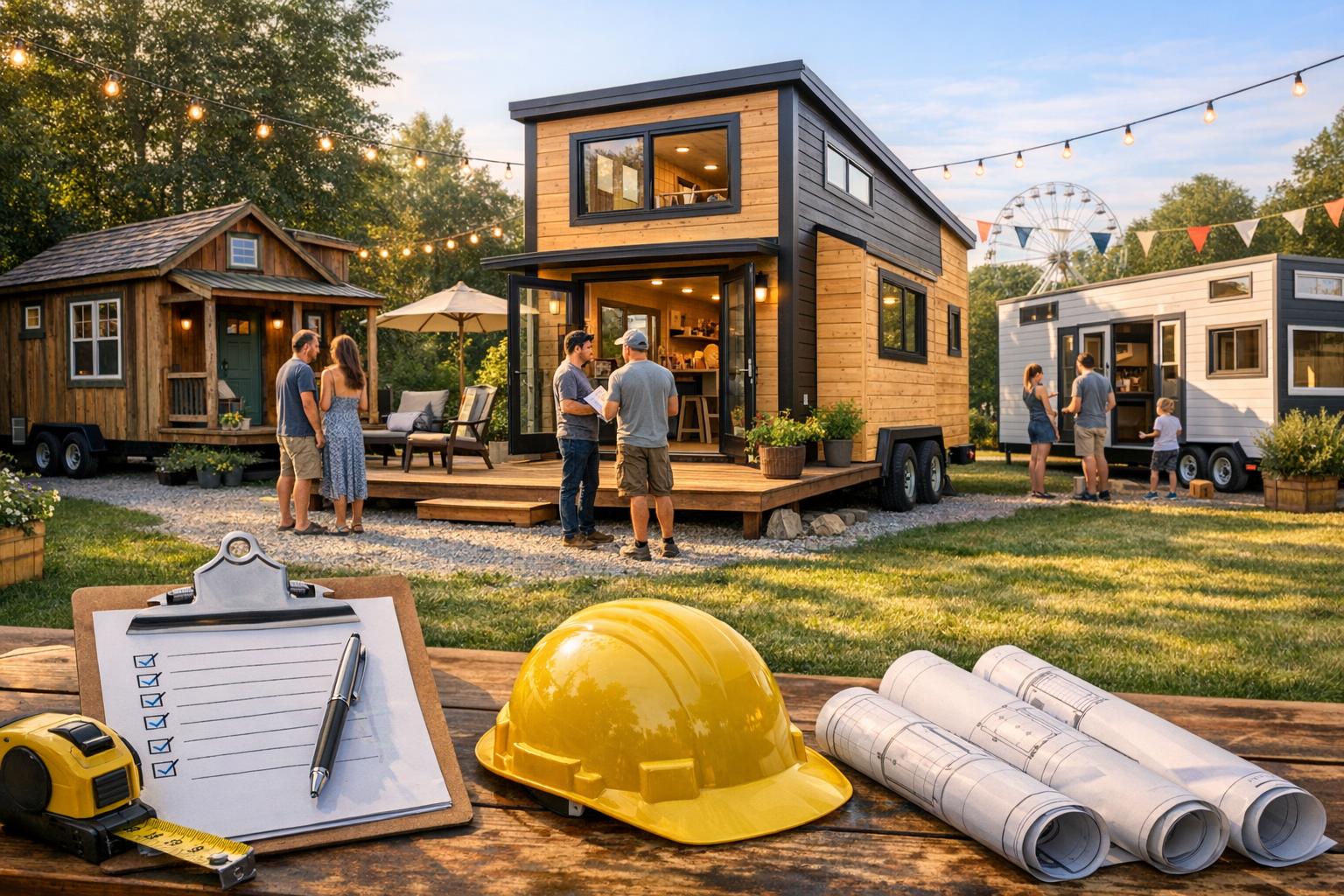
Tiny Home Showrooms in Canada (2026): Model Tours, Builder Consultations, and the Tiny House Experience
Estimated reading time: 8 minutes
Key Takeaways
- Showrooms let you test finishes, circulation, and build quality—you can spot issues photos often hide.
- Plan for a guided tour of 30–60 minutes per model and a 30–60 minute builder consultation when you’re ready.
- Check climate-specific details for Canada: insulation R‑values, draft-free windows, and appropriate heating systems.
- Bring a tape measure and a list of must-haves vs nice-to-haves to make tours efficient and productive.
Table of contents
- Intro: Why a tiny home showroom matters
- Why visit a tiny home showroom?
- What to expect during model tours
- The tiny house experience: living the space
- Preparing for a builder consultation
- Costs, timelines and next steps
- Virtual/remote options
- Testimonials & case studies
- Practical tips & etiquette
- Resources & next steps
- FAQ
In-person visits let you touch materials, test layouts, and spot details that photos can miss. For deeper dives on living in tiny homes, see Tiny Home Living: Your Complete Guide to Micro Homes, Sustainability, and Lifestyle Freedom.
Why visit a tiny home showroom?
A tiny home showroom visit lowers risk. You can see what you’re paying for, in real life, before a long build wait and a big deposit.
Here’s what to do while you’re there (and what to look for):
- Inspect build quality and finish
- Check corners, trim lines, and how cabinets meet the walls. Tight joints usually mean better long-term durability.
- Look closely at caulking in wet areas (shower, sink, backsplash). Messy or cracked caulk can lead to leaks.
- Touch materials and assess surface finishes
- Run your hand over counters, flooring, and wall panels—some finishes scratch or dent more easily than they look online.
- Open and close drawers. Soft-close hardware should feel smooth, not wobbly.
- Gauge spatial flow and circulation (the real tiny house experience)
- Walk the main path: entry → kitchen → seating → bath → bed/loft.
- Open doors fully. Make sure you can pass someone without bumping.
- Compare floorplans side-by-side
- Two homes can have the same length but feel totally different. A showroom makes trade-offs obvious (bigger kitchen vs bigger bathroom, loft vs main-floor bed).
- Understand climate-specific builds for Canada
- Ask about 4-season performance (built for year-round living). A practical minimum usually includes:
- Strong insulation (ask for R-values for walls/roof/floor)
- Draft-free windows and doors
- Efficient heating (like a mini-split heat pump or propane heat with proper ventilation)
- On a tour, you can often see weather sealing, window quality, and mechanical systems up close.
- Ask about 4-season performance (built for year-round living). A practical minimum usually includes:
Sources: Tiny Home Show, Teacup Tiny Homes, Minimaliste Houses
What to expect during model tours
Most model tours in a tiny home showroom (Canada-wide) follow a simple pattern. Knowing the flow helps you stay calm and get better answers.
Arrival & reception
- Check in at reception or at a welcome desk.
- You may be asked to sign a short waiver (especially at busy events).
- Have your appointment confirmation ready (email or text).
- A typical greeting sounds like: “What brought you in today—full-time living, a cabin, or a rental?”
Guided walk-through (typical sequence)
A good guide usually walks you through in this order:
- Exterior overview: trailer/chassis, siding, roofline, skirting (if any), and hookups
- Utilities: power inlet, water connection, propane storage (if used)
- Entry: coat space, shoe storage, door swing
- Main living area: seating, windows, headroom
- Kitchen: counters, appliances, pantry, vent fan
- Sleeping loft(s) or bedroom: access, guardrails, headroom
- Bathroom: shower size, toilet type, fan/venting
- Storage: stairs, benches, closets
- Mechanical closet: water heater, breaker panel, HVAC
In Canada, guides often point out cold-weather features during the tour, like insulation details and heating choices.
Q&A and floorplan review
Ask for documents you can take home or receive by email:
- Construction drawings or floorplans
- Spec sheets (finishes, windows, appliances)
- Insulation R-values
- Electrical and plumbing diagrams (even simplified ones)
- Estimated weight (important for towability)
Duration & pacing
Plan 30–60 minutes per model. If you’re touring several models, plan 2–3 hours.
Photo/video & accessibility policies
- Policies vary. Many places allow personal photos, but ask first (some builders limit close-ups of certain details).
- If you need step-free access, ask about ramps or alternate entry options before you arrive.
Sample 90-minute itinerary
- 0–10 min: arrival, check-in, goals (budget, use case)
- 10–55 min: guided tour (full walk-through)
- 55–70 min: spec sheet review + key measurements
- 70–90 min: quick builder consultation overview (options, lead times, next steps)
Sources: Tiny Home Show, MMRH, Teacup Tiny Homes
The tiny house experience: living the space
A showroom visit is more than looking. The tiny house experience is about pretending you live there for a few minutes, so you can spot daily annoyances early.
Use this checklist while you tour:
- Storage
- Open every drawer, closet, and under-stair space. Count usable space, not just how many doors you see.
- Why it matters: tiny homes fail when “hidden storage” is too small for real items (vacuum, coats, pantry food).
- Kitchen workflow
- Check clearances where you’ll cook. A practical target is about 30–36 inches of working room where people pass.
- Sit at the counter (if there is seating).
- Why it matters: tight kitchens feel fine for a quick tour but frustrating every day.
- Sleeping areas
- If allowed, lie down to test mattress fit and headroom.
- Try the ladder or stairs the way you’d use it at night.
- Why it matters: loft access can be a deal-breaker for kids, pets, or sore knees.
- Bathroom use
- Close the shower door/curtain and stand inside.
- Flush the toilet if demos are allowed.
- Check the fan and privacy.
- Heating & cooling
- Ask to see the HVAC system and where vents blow.
- Confirm it’s rated for cold climates and ask what “4-season” means for that model.
- Noise & acoustics
- Listen for creaks, fan noise, and cabinet rattles as you walk and open doors.
- Why it matters: small spaces amplify sounds.
Simulation tip (use this exactly):
“Sit on each seat for at least five minutes, open every cabinet and closet, stand at each doorway to measure headroom, and climb into any loft to test ladder/step use.”
Tiny house vs RV vs modular (quick differences)
- Many tiny houses focus on stronger insulation and more “home-like” finishes than typical RVs.
- Modular homes usually sit on foundations and often follow different delivery and permit paths than on-wheels tiny homes.
Sources: Minimaliste Houses, Teacup Tiny Homes, MMRH
Preparing for a builder consultation at the showroom
A builder consultation is a scheduled in-person meeting at the showroom where a builder reviews your timeline, budget, site constraints and customization needs, provides model-specific options and gives written estimates and next steps.
Booking logistics (what’s normal)
- Booking is often done through an online form or by phone.
- Book 1–2 weeks ahead when it’s quiet. In peak season, book 4–8 weeks ahead.
- Most consultations run 30–60 minutes and follow a simple agenda:
- your goals + site basics
- model fit and options
- price range and upgrades
- lead times and delivery plan
- next steps and documents
What to bring (use this checklist)
- Budget range and preferred financing method
- Desired timeline (move-in target date)
- Site address and photos (topography, access, utilities)
- Trailer specs or preferred mobility options (towable vs park model)
- Zoning/permit information if known
- A list of “must-haves” vs “nice-to-haves”
- Contractor/third-party contact (if bringing a contractor)
Key questions to ask builders
- What construction methods and materials do you use? (ask for spec sheet)
- What is included in base price vs customization costs?
- What warranties do you provide (structural, systems, workmanship) and what is the length/caveats?
- What are typical lead times and delivery schedules? (plan for 6+ months for 2026)
- Do you support permits and site setup? What does delivery/setup include?
- How is energy-efficiency achieved and what R-values do you use?
10-minute consultation script (copy/paste)
“Hi — thanks for meeting. We’re looking for a 4-season, towable model under $200K for a site near [city]. Can you walk me through your standard build process, typical lead times for 2026, warranty coverage, and what permitting support you offer? Also, what upgrades most affect long-term energy costs?”
For builder selection guidance, see How to Choose a Reliable Tiny Home Builder Canada: Expert Hiring Advice and Construction Tips.
Sources: MMRH, Teacup Tiny Homes, Minimaliste Houses
Costs, timelines and next steps after showroom visits
In 2026, common tiny home models in Canada often land in a broad range, and the final number depends on choices you make during your builder consultation.
Typical costs (estimates)
Many common models are roughly $135,000–$235,000 CAD, depending on size, finish level, and systems.
Sources: MMRH, Teacup Tiny Homes
What changes the price fastest
- Bigger footprint and heavier-duty trailers
- Off-grid systems (solar, batteries, tanks, composting toilet options)
- High-end finishes and custom cabinetry
- HVAC upgrades and higher insulation targets
- Delivery distance and setup complexity
Timelines (what to plan for)
Lead times can be 6+ months for 2026 deliveries, so early planning matters.
Source: MMRH
Sample timeline checklist
- 0–2 weeks: choose model, request itemized quote, confirm site basics
- 2–6 weeks: finalize plans, options, and permit path
- 12–24 weeks: production window (varies by builder and complexity)
- Up to ~2 weeks: delivery + setup + final checks (site dependent)
Sources: MMRH, Teacup Tiny Homes
Virtual/remote options
If you can’t get to a tiny home showroom, remote steps can still move you forward.
Virtual model tours
- Live video walk-throughs and 360/VR can help you shortlist models.
- Builders known for strong online model info include Minimaliste and Teacup.
Remote builder consultation
- Ask for high-res spec sheets, close-up videos of joinery, and written weight/size details.
- If buying sight-unseen, consider an independent inspection plan.
Pros: convenient and easy to repeat.
Cons: you miss touch, noise, and real circulation—the core tiny house experience.
For deeper dives on model inventories and space optimization, see Tiny Home Living: The Ultimate Guide to Affordable, Sustainable, and Stylish Compact Living.
Sources: Minimaliste Houses, Teacup Tiny Homes, Tiny Home Show
Testimonials & case studies
These short stories show why model tours and a builder consultation can change your decision. (Quotes and photos should only be published with written permission.)
- Teacup buyer story (example):
“Teacup delivered from Alberta to Ontario sight-unseen—quality shone in updates. Warranty issues fixed no hassle.” Source: Teacup Tiny Homes - MMRH buyer story (example):
“MMRH’s Ottawa-area lot and tours made the tiny house experience real; compliant and refined.” (Anonymous, Ontario) Source: MMRH - Minimaliste buyer story (optional example):
A buyer who expected “cabin simple” but chose higher 4‑season features after seeing insulation and finish details in person. Source: Minimaliste Houses
Practical tips & etiquette for visiting a showroom
- Book appointments 1–2 weeks ahead (longer in peak season).
- Arrive 10–15 minutes early and check in with reception.
- Ask the policy for children/pets before you show up.
- Ask before taking photos or video; many allow personal use but restrict close-ups or commercial use.
- Bring a tape measure, and ask permission before taking detailed measurements.
- Health/safety rules are usually light in 2026, but confirm what the site expects.
- If you have one, bring a contractor or designer to your builder consultation for technical questions.
Sources: Tiny Home Show, MMRH
Resources & next steps
Use these links to plan your Canada showroom route, compare models, and prepare for a builder consultation:
External resources:
- Ecohome tiny house manufacturer listings
- Tiny Home Show (events and expo listings)
- Minimaliste Houses
- Teacup Tiny Homes
- MMRH Tiny Homes
- Tiny Homes in Canada directory
Sources: Ecohome, Tiny Home Show, Minimaliste, Teacup, MMRH, TinyHomesInCanada
FAQ
Do showrooms allow overnight stays?
Rarely. Most demo homes are for daytime tours only. Source: Tiny Home Show
Are showrooms free to visit?
Usually yes, but expos may charge entry. Source: Tiny Home Show
Can I bring a contractor?
Yes. Many builders are fine with it, especially for a builder consultation. Source: Minimaliste Houses
How long do model tours take?
About 30–60 minutes per model, or 2–3 hours if you tour several. Sources: Tiny Home Show, MMRH
Will a showroom visit cost me anything?
Usually no. Ask about rare consultation fees and any expo ticket costs before you go. Source: Tiny Home Show
Leave a Reply