

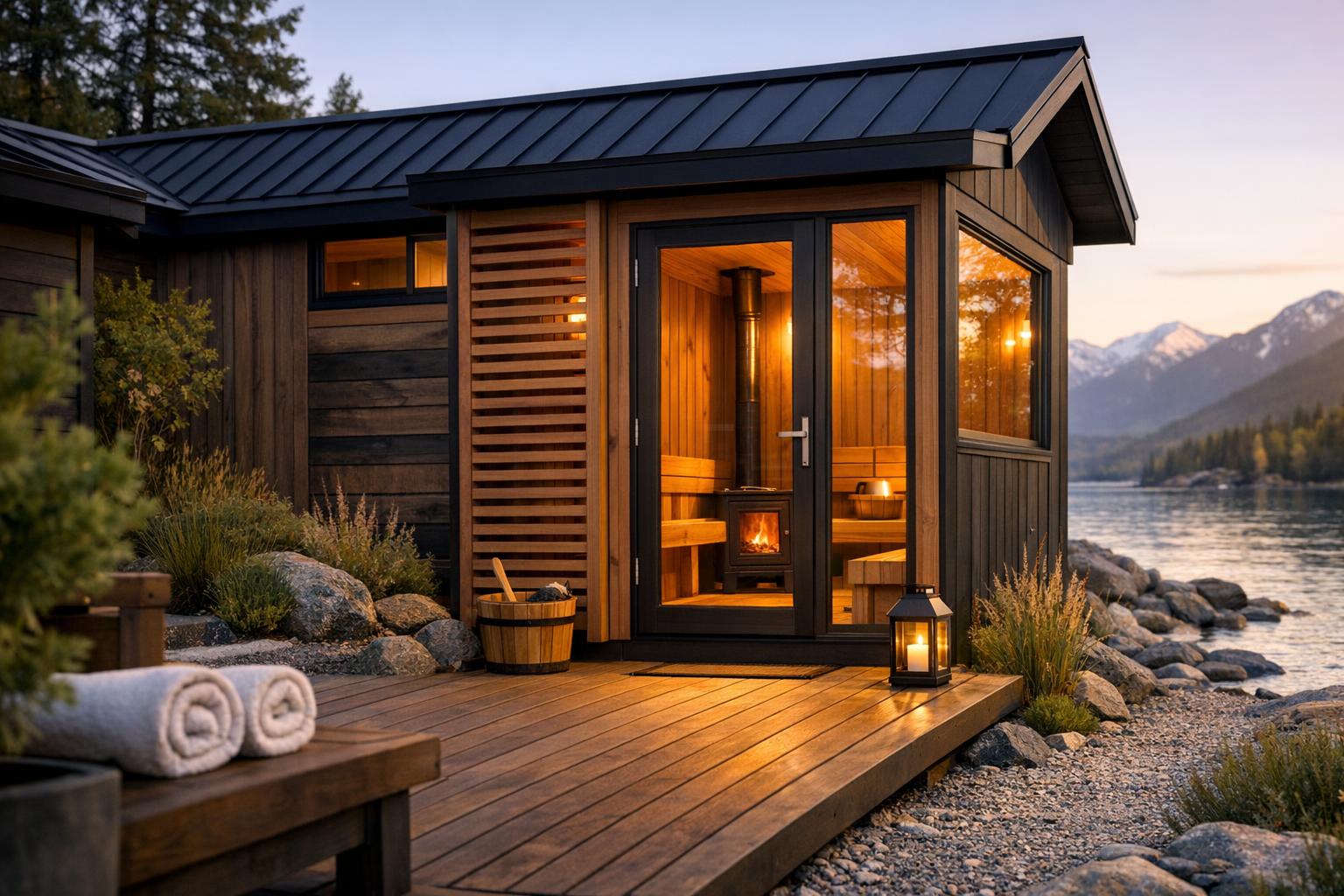
Tiny Home Sauna in Canada: Design, Codes, DIY Build Steps, and Small-Space Planning
Estimated reading time: 14 minutes
Key Takeaways
- A tiny home sauna is a compact sauna built to fit within or beside a small-footprint dwelling while still delivering meaningful heat therapy and comfort.
- For many owners, it adds a dedicated wellness zone that supports relaxation, recovery, and routine-building in a space where every square foot matters.
- Traditional electric, wood-fired, and infrared are the three main sauna types, and each comes with different space, power, ventilation, and code implications.
- In Canada, planning must account for cold weather, moisture control, electrical load, fire safety, and local permit rules.
- The biggest mistakes are usually not aesthetic. They involve vapor barrier errors, weak ventilation, poor heater clearances, and underplanned electrical work.
- DIY construction can be realistic for framing, insulation, cladding, and benches, but licensed professionals are often needed for fixed wiring, structural review, and wood-fired systems.
Table of contents
- Why add a tiny home sauna?
- Which type of tiny home sauna is right for your space?
- Tiny home sauna design fundamentals for Canadian spaces
- Meeting Canadian building codes and permit requirements in 2026
- Step-by-step DIY construction plan for a tiny home sauna
- Safety, health precautions, and code-driven operating limits
- Materials, Canadian sourcing, cost ranges, and timeline
- Common mistakes, troubleshooting, and when to hire a pro
- Checklists, diagrams, and planning resources
- Frequently Asked Questions
A tiny home sauna is a compact sauna designed to fit within or alongside a small-footprint dwelling, while still delivering real heat therapy, comfort, and space-efficient design.
Most people researching one want the wellness and relaxation benefits of sauna use without making a costly layout, moisture, or Canadian code mistake in a very small space.
This guide explains the benefits of sauna use, how to choose the right sauna type, how to plan for Canadian weather and small-space living, what to know about building codes, and how to follow a practical DIY path. If you want to turn a spare corner, a bump-out, or a nearby outdoor structure into a sauna retreat, this Canada-focused guide will help you plan carefully.
One important note: rules can differ by province and municipality, so always verify local requirements in 2026 before building.
Why add a tiny home sauna? Health, wellness, and relaxation benefits
Sauna bathing means regular exposure to controlled dry or humid heat that raises skin temperature, increases circulation, and encourages a recovery response. In simple terms, it helps your body warm up, slow down, and reset.
For many tiny-home owners, that matters because a sauna can do more than add heat. It can create a dedicated wellness space inside a home where every square foot needs a clear purpose. That idea fits naturally with wellness design ideas, biophilic design for tiny homes in Canada, and the psychology of tiny homes.
Key wellness benefits of a tiny home sauna
- Cardiovascular response: Sauna heat can raise heart rate in a way that feels similar to light or moderate exercise. This may support blood flow and long-term cardiovascular health.
- Recovery support: Better circulation may help muscles feel less stiff after exercise and may support post-workout comfort.
- Stress reduction: Warm, quiet heat encourages relaxation, mental decompression, and a break from screens and noise.
- Sleep support: Many people find an evening sauna helps the body unwind and feel more ready for sleep.
- Routine building: In a tiny home, a sauna can become a simple self-care ritual instead of just another feature.
A balanced note matters here: sauna use is not a medical treatment, and results vary from person to person. It can support wellness, but it does not replace medical advice or care.
For example, a couple in a rural Ontario off-grid tiny home used a 4×6-foot hemlock sauna to create a repeatable evening relaxation routine and noticed better sleep and easier workout recovery. That kind of result is anecdotal, not proof, but it matches how many people describe sauna therapy when used safely and consistently, as reflected in guides from Cedar Sense, Haven of Heat, Finnmark Sauna, and Shoreline Outdoor Living.
Quick relaxation checklist
Hydrate, keep sessions moderate, cool down gradually, and stop if dizzy.
Which type of tiny home sauna is right for your space?
There are three realistic categories for a tiny home sauna:
- Traditional sauna with electric heater
- Traditional sauna with wood-fired heater
- Infrared sauna
Your best fit depends on power access, footprint, heat preference, and how much complexity you can handle. For utility planning, it helps to review a tiny home utilities guide for Canada and practical advice about off-grid living in Canadian tiny homes.
Sauna type comparison table
| Type | Temperature | Heat-up time | Space impact | Ventilation complexity | Best use case |
|---|---|---|---|---|---|
| Traditional electric | 70–100°C | 30–45 min | Moderate | Moderate | On-grid tiny homes wanting classic sauna heat |
| Traditional wood-fired | High traditional range, varies by stove | Varies | Moderate to high | High | Remote or rustic off-grid setups |
| Infrared | 45–60°C | 10–20 min | Low | Lower | Minimal space, lower energy demand, simple installs |
Traditional sauna with electric heater
This is a sauna room heated by an electric sauna stove, usually with stones that can create steam when water is added in moderation.
Typical conditions: about 70–100°C.
Pros
- Reliable, steady heat
- Familiar real sauna feel
- Easier to control than wood-fired for many serviced sites
Cons
- Usually needs a dedicated 240V circuit
- Needs more planning under Canadian building codes
- Higher electrical demand than infrared
This type often heats up in about 30–45 minutes. For many on-grid tiny homes, it is the most practical balance of authentic heat and manageable operation. See examples in the best saunas of 2026 guide.
Traditional sauna with wood-fired heater
This type uses a stove that burns wood to heat the sauna. It is often chosen for off-grid or rural settings.
Pros
- Strong, authentic sauna feel
- Can work where electrical supply is limited
- Good fit for remote tiny homes
Cons
- Needs careful chimney, clearance, combustion-air, and fire-safety planning
- Harder permit and insurance path
- More ash, monitoring, and upkeep
This is often the most complex choice from a safety and compliance point of view. Review self-build sauna instructions and Canadian guidance on tiny home fire safety before considering it.
Infrared sauna
An infrared sauna uses emitters or panels to heat the body more directly instead of heating the whole room to traditional sauna temperatures.
Typical conditions: about 45–60°C, with lower humidity and faster startup.
Pros
- Compact footprint
- Lower energy use
- Quick heat-up, often 10–20 minutes
- Usually simpler to install
Cons
- Different heat feeling from a classic sauna
- Less steam and humidity
- Quality varies by manufacturer
If your tiny home has very limited space or power, infrared is often the easiest place to start. Helpful references include infrared sauna picks for cozy spaces and this Canadian utility planning guide.
Quick recommendation matrix
- On-grid tiny home: electric sauna often makes the most sense
- Off-grid tiny home: infrared may be easiest; wood-fired can work but needs stricter safety planning
- Minimal space: infrared or compact cube-style electric sauna
- Most authentic sauna feel: traditional electric or wood-fired
Compact products can help with layout ideas. For example, a 2-person cube-style sauna around 4×4 feet can fit many tiny-home plans. These are design references, not endorsements, and comparison browsing through Cedar Sense or Haven of Heat can be useful early on.
Tiny home sauna design fundamentals for Canadian spaces
A good sauna layout balances heat performance, safe circulation, comfortable seating, and protection of the tiny home’s building envelope. In Canada, that also means designing for cold weather, moisture control, and efficient use of small interior volume, especially in conditions discussed in guides to a winter-proof tiny home in Canada and cold-climate tiny home construction.
Recommended sizes and footprints
Many compact saunas fall between 4×6 feet and 6×8 feet. In practice, 24–48 square feet is often enough for 1–4 users depending on the bench plan.
Try to aim for roughly 7 feet or 2.1 metres of internal headroom where possible. This helps heat stratify properly, so the upper bench sits in the warmer zone while the room still feels usable. For reference layouts, see The Sauna floor plan and Finnmark’s build guide.
Tiny home sauna size guide
– 4×4 ft: very compact, often 1–2 users
– 4×6 ft: common 2-person layout
– 6×8 ft: more comfort, often 3–4 users
– Best target headroom: about 2.1 m
Bench layout and ergonomics
The upper bench is the hotter seating level. The lower bench is the cooler support and step level.
Practical dimensions:
- Upper bench: about 1050 mm high
- Lower bench: about 600 mm high
- Step rise: about 300 mm
- Bench depth: about 20–24 inches
These numbers matter because people need to sit with feet supported and with the body high enough to enjoy the warmer air. Use slatted benches and leave enough air movement around the structure. For accessibility-minded planning, review accessible tiny home design guidance.
Door, glazing, and access
Use an outward-swing door for safety and easier exit. If you add glazing, use tempered glass.
A door width around 24–30 inches works in many compact layouts. If you want a more open feel, low-E glazing can help reduce heat loss. For accessibility-minded design, aim for about 36-inch clearances where possible. Trend references and examples can be seen in sauna design trends for 2026, plus notes from Cedar Sense and accessible design guidance.
Interior and exterior materials
Ideal sauna interior wood is:
- Non-resinous
- Stable in heat
- Comfortable to touch
Cedar and hemlock are common interior choices because they handle heat well and are widely used in sauna builds. For the outside, thermo-spruce or other durable cladding can work well where weather exposure matters.
Avoid interior finishes that may off-gas when heated. Raw or sauna-appropriate materials are safer. For general material thinking, compare sauna product references with broader advice on eco-friendly building materials in Canada.
Ventilation and humidity management
A sauna needs controlled fresh air, not random leaks. A common small-build approach is:
- Intake vent: low near the heater
- Exhaust vent: high on the opposite side, or where the heater maker specifies
A 4–6 inch vent is a common planning guideline in small builds. Good ventilation helps with:
- Oxygen supply
- Temperature balance
- Moisture removal
- Odour control
Relaxation-focused finishing touches
The small details shape the experience.
- Dimmable warm LED strip lighting rated for sauna use
- Ergonomic cedar or hemlock backrests
- Bucket and ladle storage
- Towel hooks outside the hot room
- Optional aromatherapy holder if the setup allows it
These features are not just visual. They help the room feel calm, usable, and easy to enjoy. For broader inspiration, see ideas on tiny home lighting design.
Annotated floor plan to include: a simple 2-person 4×6-foot sauna showing door swing, heater location, intake and exhaust vents, and bench heights.
Meeting Canadian building codes and permit requirements in 2026
Code and permit requirements vary by province, municipality, and whether the sauna is attached, detached, mobile, or installed on a trailer-based tiny home.
In 2026, check the latest adopted rules for:
- National Building Code of Canada (NBC) 2020 or later, if adopted locally
- Provincial code amendments
- Municipal zoning, setbacks, and permit policies
- Tiny-home park, campground, strata, or insurance rules where relevant
Good starting references include self-build sauna instructions and this guide to tiny home legal requirements in Canada.
What Canadian building codes affect
Canadian building codes may affect:
- Structural loads
- Fire separation and clearances
- Ventilation and moisture control
- Electrical service and wiring
- Door safety and egress
- Foundation or trailer support needs
Attached or permanent saunas usually face more review than plug-in prefabricated infrared units. This is especially relevant when considering broader Canadian ADU regulations and tiny home fire safety.
Common permit triggers
Permits are more likely if the sauna:
- Is attached to the dwelling
- Uses a permanent foundation
- Adds a new heater or major electrical load
- Changes the building envelope
- Adds plumbing or drainage
These are common triggers, not universal rules. Local authorities decide.
Electrical requirements
A traditional electric heater often needs a dedicated 240V circuit. The amperage depends on heater size.
The Canadian Electrical Code, CSA C22.1, applies. Licensed electrical work is often required for fixed 240V sauna heaters. In some cases, 15–30A dedicated circuits and GFCI protection may be relevant depending on the installation and local interpretation.
Always follow the heater manufacturer’s instructions and local electrical authority requirements. Practical planning starts with heater installation guidance and a Canadian utility planning overview.
Fire safety and heater clearances
A clearance is the minimum safe distance between a heater or flue and combustible materials.
Key rules:
- Manufacturer clearances override generic rules where they apply
- Some setups use clearance examples in the 18–36 inch range to combustibles
- Heat shields or cement board may be required
- Smoke detectors should normally be outside the sauna room, not in the hot room unless specifically rated and permitted
For examples and cautionary notes, compare sauna product guidance, build instructions, and Canadian fire-safety planning.
Ventilation, moisture, and envelope protection
The biggest hidden risk in a tiny home sauna is moisture damage to the structure around it. Hot, moist air can get into wall cavities and cause rot, mould, and poor insulation performance.
A general planning reference sometimes points to 20–50 CFM airflow prevention targets, but this is only a rough planning number. Always defer to heater instructions and local code guidance.
The main goal is a continuous interior vapor-control strategy that keeps moisture out of the wall assembly. For related reading, see Finnmark’s build notes and advice on air quality in tiny homes.
Foundation and frost
If the sauna is detached or built on a permanent foundation, frost depth matters. In many Canadian areas, the frost line can exceed 4 feet, but local rules control the actual requirement. Use self-build reference material alongside guidance on tiny home foundation options in Canada.
Insurance and special-use property rules
Also check:
- Tiny-home community rules
- Insurance limits for solid-fuel appliances
- Off-grid accessory structure classification
- Municipal rules for trailer-based structures
Canadian code tip: confirm local interpretation before you buy your heater.
Pre-build permit checklist
| Item needed | Why it matters | Who to confirm with |
|---|---|---|
| Site plan showing sauna location | Checks setbacks and placement | Municipality or park operator |
| Dimensioned floor plan and elevation | Shows size, height, and door details | Building department |
| Foundation or support details | Confirms frost and load approach | Building department or engineer |
| Heater specifications and manual | Checks clearances and install rules | Building department and supplier |
| Electrical plan and load information | Confirms service capacity and circuit needs | Electrical authority and electrician |
| Ventilation notes | Helps review moisture and airflow planning | Building department |
| Product certifications | Confirms approved components | Inspector, supplier, insurer |
| Permit timeline estimate: 2–4 weeks | Helps schedule the project | Local authority |
Reference: self-build sauna instructions.
Step-by-step DIY construction plan for a tiny home sauna
For an intermediate DIYer, a small sauna can take roughly 40–60 hours over 5–10 days, depending on whether the site, electrical work, and foundation are already prepared. Time expectations are broadly consistent with Finnmark’s build guide and general advice on self-build tiny homes in Canada.
Phase A: Planning and legal checks
First, decide whether the tiny home sauna will be:
- Inside the home
- In an attached addition
- In a detached structure
Then:
- Measure the space
- Confirm walking paths and door swing
- Mark heater clearance zones
- Check structural loading, especially on trailer-based tiny homes
- Confirm permits, drainage, and utility access before ordering materials
A reference load-planning figure around 200 kg/m² can help early thinking, but your actual structural needs must be confirmed for your build. For broader planning, see sauna instructions and a tiny home builder guide for Canada.
Phase B: Materials and tools
For a basic 2-person DIY construction project, you will usually need:
Lumber
- 2×4 framing lumber for walls and benches
- Cedar or hemlock boards for interior finish
- Cedar bench slats
Insulation
- Rockwool around R-20 for walls and ceiling as a practical compact-build target
R-value means a material’s resistance to heat flow. Higher values resist heat transfer better.
Vapor control
- Foil-faced vapor retarder with the reflective side facing the sauna interior where the product calls for it
A vapor retarder slows moisture movement into the wall assembly.
Heater
- A 4.5 kW electric heater is a common small-room example
- Or infrared panels for compact builds
Other materials
- Tempered glass door
- High-temperature-rated wire
- Vent grilles
- Fasteners suited to heat and humidity
- Thermometer and hygrometer
Tools
- Circular saw
- Drill/driver
- Level
- Tape measure
- Stud finder for retrofit work
- Multimeter for electrical verification by qualified personnel
A basic 2-person build often lands around CAD $3,000–$5,000, depending on heater type and finish level. Budget context can be compared with self-build costs and broader budget tiny home tips in Canada.
Phase C: Foundation and subfloor
The base must handle moisture, heat, and body weight without flexing.
For detached builds, possible approaches include:
- Trailer skid systems
- Frost-protected shallow foundation concepts
One planning example uses 12-inch gravel plus R-10 foam, but local engineering and code review may require something different.
Use a moisture barrier below and a durable subfloor such as marine-grade or moisture-resistant plywood where suitable. Layout references like Wind River Built’s sauna plan and Canadian foundation guidance are helpful early on.
Phase D: Framing and insulation
A common wall framing approach is 16 inches on centre, unless engineering says otherwise.
Sauna walls and ceilings need full, neat insulation coverage. Gaps create uneven heating and raise condensation risk.
A thermal break is a material or detail that reduces direct heat transfer through structural parts. Where practical, add thermal separation at the floor edge to reduce heat loss.
Phase E: Vapor barrier and interior cladding
This is one of the most important steps in DIY construction.
Do the following:
- Install the foil-faced vapor barrier continuously on the warm side of the wall assembly
- Tape all seams well
- Minimize penetrations
- Keep the reflective face toward the sauna interior if the product requires it
Why it matters: if hot moist air enters hidden cavities, it can cause mould, rot, and poor insulation performance.
After that, install tongue-and-groove cedar or hemlock interior cladding. This is one of the biggest areas where poor DIY construction leads to failure. For material selection, review eco-friendly building materials in Canada and, if relevant, ideas around reclaimed materials for tiny homes.
Phase F: Benches and interior finish
Build bench frames from stable dimensional lumber.
Use cedar slats with about 1/2-inch gaps for airflow and drying. Sand edges smooth so there are no splinters or hot pressure points. Hide fasteners where possible so metal does not get too hot.
Use the same ergonomic dimensions from the design stage:
- Upper bench about 1050 mm high
- Lower bench about 600 mm high
- Step rise about 300 mm
- Bench depth about 20–24 inches
Optional backrests and headrests can improve relaxation and comfort. Accessibility planning can also inform these decisions, as shown in accessible tiny home guidance.
Phase G: Heater installation and electrical
Fixed wiring and final connections for most electric heaters should be handled by a licensed electrician.
Important reminders:
- Follow manufacturer clearance diagrams exactly
- Place controls as required by the manual
- Use CSA-certified components
- Verify circuit capacity first
A wire size such as 6/3 may be correct in some projects, but it is not universal. It depends on heater demand and code requirements.
If you choose infrared, installation is often simpler, but you still need proper load planning and safe spacing from combustibles. If you plan to throw water on stones or use any water near the heater, think about splash and condensation management instead of assuming you will have a floor drain. Utility planning is easier when cross-checking a tiny home utilities guide and, for off-grid cases, solar-ready design guidance.
When to call a pro
– Licensed electrician for fixed heater wiring
– Structural engineer if trailer loads or framing changes are involved
– Contractor if the sauna ties into the main tiny-home envelope
– Solid-fuel specialist where wood-fired systems apply
Phase H: Ventilation, testing, and commissioning
Install intake and exhaust vents as designed. Then test the room.
Check that:
- Heat builds evenly
- Air does not feel stale
- The door closes properly
- There are no odd smells, smoke, or overheating signs
Use a thermometer and hygrometer to confirm performance. A sample target for a dry sauna might be around 80°C and 10% RH, but that is only one example, not a universal rule.
Use a fan only if the design includes one and it is approved for sauna conditions. For broader moisture and comfort planning, see air quality in tiny homes.
Phase I: Inspection and documentation
Keep:
- Manufacturer manuals
- Circuit labels
- Inspection records
- Permit paperwork
Good documentation helps with municipal inspection, future maintenance, and insurance questions. It also supports certification-related discussions, such as those covered in tiny home certification guidance.
Photo sequence to include: a 6–8 step strip showing either bench construction or vapor barrier installation.
Safety, health precautions, and code-driven operating limits
Safe use matters as much as good design.
Many adults use saunas for about 15–20 minutes at 70–90°C, but tolerance varies. Lower temperatures may be better for new users, infrared users, or shorter sessions.
People who are pregnant, have cardiovascular concerns, get dizzy easily, or have other medical conditions should speak with a physician before regular sauna use.
Always hydrate before and after sessions. Stop right away if you feel:
- Dizzy
- Nauseous
- Headachy
- Short of breath
- Faint
Reference: Finnmark Sauna safety notes.
Fire and emergency safety
- Keep smoke detection outside the sauna room
- Maintain heater clearances
- Use heat shields and floor protection where required
- Keep emergency exit paths clear
- Aim for about 36-inch egress clearance where layout allows
Maintenance routine
Weekly
- Wipe benches and high-touch surfaces
- Air out the room after use
- Check for standing water or trapped moisture
Monthly
- Inspect vents and door seals
- Check fasteners and bench stability
Annually
- Inspect heater, stones, and wiring condition
- Check shield assemblies
- Look for mould, wood warping, or hidden moisture problems
Consistent maintenance protects both your wellness goals and the tiny home itself. For broader upkeep planning, see an ADU maintenance checklist and notes on warranty, builder contracts, and maintenance.
Materials, Canadian sourcing, cost ranges, and timeline
Budgeting early makes the project easier to manage.
Common cost categories
- Framing and insulation
- Interior cladding and benches
- Heater and controls
- Door and glazing
- Electrical work
- Ventilation parts
- Permit fees
Typical cost ranges
Typical small-build ranges vary by heater choice and scope.
- Basic DIY infrared setup: usually starts lower
- Traditional electric sauna: often costs more once the heater and electrical work are added
- Small DIY build: often falls around CAD $2,500–$4,500 or CAD $3,000–$5,000, depending on finish quality and system type
Timeline
- Planning and permits: variable, often the longest step
- Build time: about 1 week of focused work or 5–10 build days for an intermediate DIYer
Where Canadian readers can source materials
- Local lumberyards: cedar, hemlock, and better cladding choices
- Big-box stores like Home Depot or RONA: framing lumber, insulation, basic hardware, CSA-rated components
- Sauna-specialty suppliers: heaters, doors, controls, benches, and sauna-specific accessories
Sustainability ideas
- FSC-certified cedar where available
- Durable, low-maintenance wood species
- Efficient infrared units for lower energy demand
- Solar-compatible planning for off-grid electric systems where feasible
For sourcing and sustainability comparisons, review sauna product examples, infrared unit picks, eco-friendly Canadian materials, and solar-ready design ideas.
Common mistakes, troubleshooting, and when to hire a pro
A tiny home sauna fails most often because of moisture errors, poor electrical planning, or weak layout thinking.
Common mistakes
- Incomplete vapor barrier: leads to hidden moisture damage and mould
- Undersized electrical supply: causes nuisance tripping or unsafe retrofits
- Poor ventilation: creates stale air, uneven heat, and excess moisture
- Wrong wood choice: can cause resin bleed, hot surfaces, or poor durability
- Ignoring heater clearances: creates serious fire risk
- Designing only around product size: forgets bench comfort, door swing, and body clearance
Troubleshooting examples
- Sauna not heating evenly → check insulation gaps, vent placement, and heater size
- Condensation on nearby walls → inspect vapor barrier continuity and exhaust path
- Musty smell → improve drying and post-use ventilation; inspect for trapped moisture
- Breaker trips → stop use and have an electrician check load and wiring
DIY vs hire a pro table
| Task | DIY-friendly | Professional required |
|---|---|---|
| Measuring and layout | Yes | No |
| Basic framing | Yes, for experienced DIYers | Sometimes |
| Insulation and cladding | Yes | No |
| Vapor barrier installation | Yes, with care | No |
| Fixed heater wiring | No | Yes, licensed electrician |
| Structural review on trailer-based tiny home | No | Yes |
| Wood-fired chimney and fire-safety setup | No | Yes |
| Envelope integration into main home | Limited | Usually yes |
When to call a pro
- Licensed electrician for fixed heater wiring
- Structural engineer if adding loads to a trailer or changing framing
- Contractor if tying the sauna into the main tiny-home shell
- WETT-related or local solid-fuel specialist where wood-fired systems are involved
Checklists, diagrams, and planning resources
To make this guide useful as a planning tool, keep these resources with your project notes:
- Permit checklist for Canadian municipalities
Helps gather drawings, specs, and heater details before applying - Materials and shopping checklist
Helps prevent missing items that stall DIY construction - 1–2 person floor plan template
Helps compare compact tiny home sauna layouts - 3–4 person floor plan template
Useful if you want more seating or a detached build - Ventilation schematic
Explains safe airflow in plain language - Bench-height and layout cheat sheet
Helps connect ergonomics to final build choices
These planning tools work best when used during the relevant stage, not only at the end. For example, floor plans belong beside the design section, while the permit checklist belongs beside the code section.
Final planning order:
- Measure your available space
- Choose electric, wood-fired, or infrared
- Verify local code and permit rules
- Build a full materials list
- Book an electrician if needed
- Review your floor plan and permit checklist carefully
Good sauna design is not just about the heater. Ventilation, vapor control, moisture protection, and bench layout matter just as much.
Frequently Asked Questions
How much space do I need for a tiny home sauna?
Many workable layouts fit within 24–48 square feet, and 4×6 feet is a common compact footprint. See examples from Wind River Built and Finnmark Sauna.
Is a wood stove allowed in a tiny home sauna in Canada?
Sometimes yes, but it depends on local rules, venting, clearances, insurance, and whether the sauna is attached or detached. Canadian building codes and local fire-safety rules must be checked carefully. Review tiny home fire safety and tiny home legal requirements in Canada.
Do I need a permit for a sauna in Canada?
Often yes if the sauna is attached, permanently founded, or involves new fixed electrical or heating work. Always confirm local authority requirements. A useful starting point is this guide to Canadian ADU regulations.
What is the easiest sauna type for a tiny home?
Infrared is often the simplest in compact spaces. For on-grid users who want a more classic sauna feel, a traditional electric unit is often the stronger option.
Can I build a tiny home sauna myself?
Many parts of the carpentry are suitable for intermediate DIY construction, but fixed electrical work and some code-sensitive parts should be done by licensed professionals. For DIY context, see self-build tiny homes in Canada.
What wood is best for a tiny home sauna?
Cedar and hemlock are common choices because they are stable, comfortable in heat, and widely used in sauna interiors. Product comparisons from Cedar Sense can help with material expectations.
A tiny home sauna can deliver real wellness and relaxation benefits when it is planned well. The right type depends on your space, power source, and the kind of sauna experience you want.
Canadian building codes and permit rules should always be checked before construction starts. Smart DIY construction means knowing what you can build yourself and where licensed help is the safer choice.
Leave a Reply