

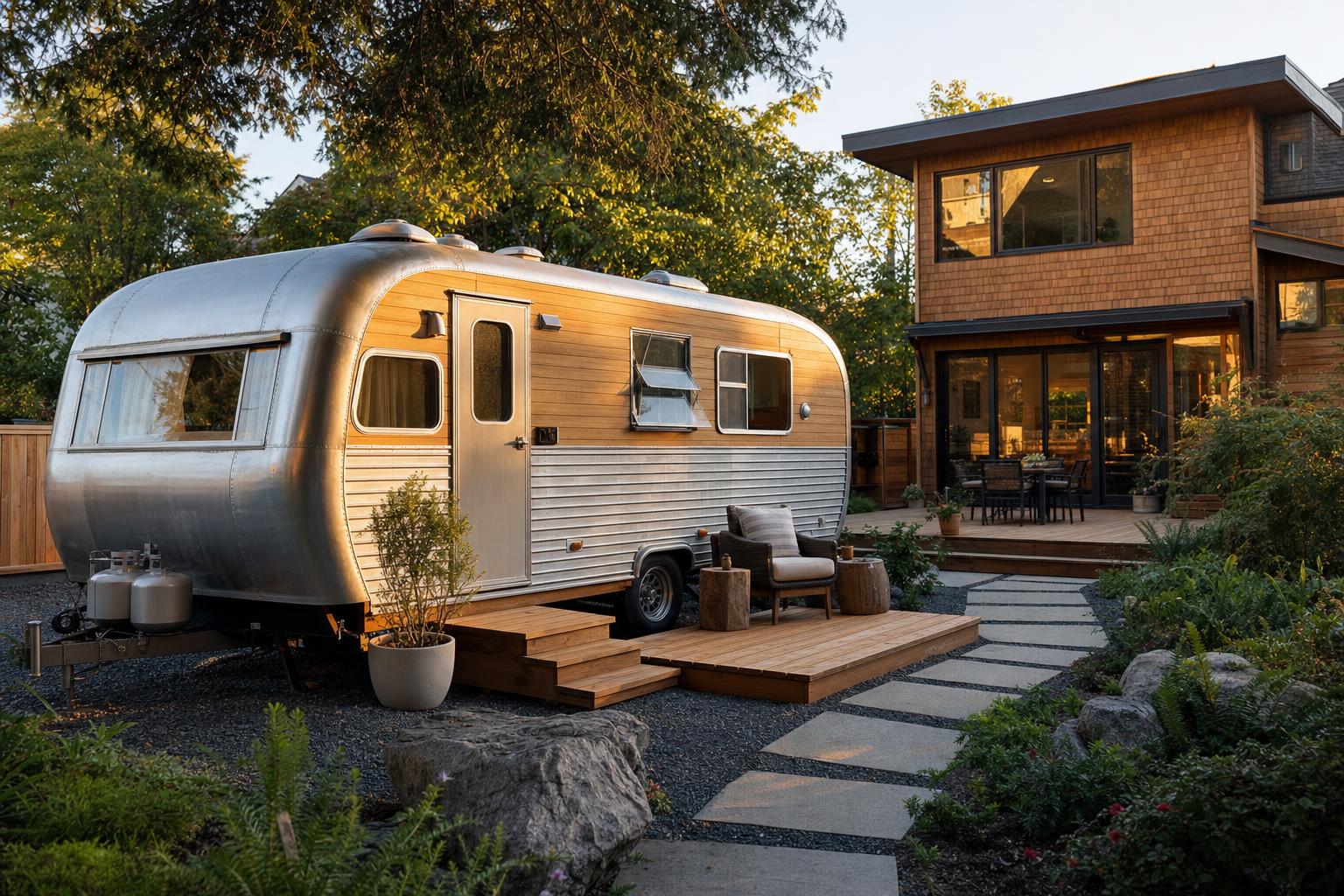
Vintage RV Conversion in Canada for 2026: Permits, Costs, Build Steps, and DIY Small Living
Estimated reading time: 17 minutes
Key Takeaways
- A vintage RV conversion can turn an older motorhome, camper, or bus into a safer, more functional tiny home on wheels for modern Canadian living.
- Planning before purchase is critical. Rust, water damage, weak payload, and unclear registration status can derail an otherwise promising build.
- Canadian permits are not one single permit. They involve federal standards, provincial registration and inspection rules, municipal occupancy rules, and trade sign-offs where required.
- A bus tiny home often offers more interior space and a strong shell, but it can be heavier, more complex, and harder to reclassify than a vintage RV conversion.
- Road legality and occupancy legality are not the same thing. A rig can be legal to drive but not legal to live in full-time on certain land.
- For safety, insurance, and compliance, 120V, propane, and structural changes should usually be professionally installed, reviewed, or inspected.
- DIY small living works best when the design, storage, weight balance, parking plan, and daily habits all support one another.
Table of contents
- Why choose a vintage RV conversion in 2026?
- Planning your build before you buy anything
- Choosing the right vehicle for a vintage RV conversion
- Canadian permits, registrations, and legal framework
- Mobile home retrofits vs vehicle conversion
- Structural and mechanical retrofits that come before interior design
- Electrical, plumbing, propane, and HVAC systems for Canadian living
- Interior build ideas and DIY small living strategies
- Safety, inspections, and certification before first use
- Insurance, parking, and legal day-to-day use in Canada
- Real-world case studies
- Step-by-step quick roadmap for a vintage RV conversion
- Resources, checklists, and templates
- Frequently Asked Questions
A vintage RV conversion can turn an old motorhome, camper, or bus into a safe, modern tiny home on wheels for 2026 living in Canada.
In simple terms, a vintage RV conversion means taking an older RV, motorhome, or even a bus tiny home base and rebuilding it so it works for real life today: better layout, safer systems, stronger insulation, and a legal path for road use.
This guide is for DIYers, adventure-seekers, future full-timers, seasonal travellers, and anyone comparing a bus tiny home with other small-home options. It covers planning, budgeting, build steps, Canadian permits, inspections, insurance, and practical DIY small living choices.
One important note before you start: rules can change by province, territory, city, and even by neighbourhood. Always confirm local requirements with your vehicle registry, municipality, insurer, and licensed trades before making structural, electrical, or gas changes.
Why choose a vintage RV conversion in 2026?
A vintage RV conversion appeals to people who want more than a standard factory unit. Older rigs often have classic body lines, retro details, and far more character than new models. Restoring one can feel personal in a way that buying new often does not.
There is also a cost reason. Older buses and RVs can sometimes be bought for much less than a newer motorhome or custom tiny house. That lower entry price is a real benefit, but it is only the beginning. Hidden repairs can quickly reshape the total budget.
Main advantages of a vintage RV conversion:
- You control the layout.
- You choose the materials.
- You can improve insulation, storage, and systems.
- You may be able to keep or gain motorhome classification, which can help with road use, insurance, and campground access.
There is also a sustainability angle. Reusing an old shell or chassis can be a smart way to avoid commissioning a new build from scratch.
But there are real drawbacks too:
- Rust may be hidden under flooring or body panels.
- Water damage can spread behind walls.
- Old brakes, tires, and steering parts may need major work.
- DIY builds can be harder to insure without clear records.
- Modern safety expectations still apply, even if the base vehicle is old.
A simple comparison helps:
- Vintage RV conversion: best for custom road-legal living with a one-of-a-kind feel.
- Bus tiny home: best for more interior space and strong structure, but often heavier, thirstier on fuel, and more complex to convert.
- Mobile home retrofits: best for stationary or semi-stationary use, not regular road travel.
If your goal is flexible travel plus custom living space, a vintage RV conversion often makes more sense than older mobile home retrofits. For a deeper look at bus builds, see this school bus conversion guide and this comparison of a tiny home on wheels with other options.
Planning your build before you buy anything
Good planning saves money. It also stops you from buying the wrong rig.
Define the use case first
Ask how you will actually use it:
- Full-time home
- Weekend travel rig
- Summer camper
- Ski-season basecamp
- Guest suite
- Backyard setup moved only now and then
Next, decide between off-grid and hookup-based living.
Off-grid builds need:
- Larger battery bank
- Solar panels
- Bigger water storage
- Better heat planning
Hookup-focused builds may need less battery and water capacity, but they still need safe wiring, plumbing, and weather protection.
Then decide if the build will be mostly mobile or mostly parked.
- A road-trip rig must focus on weight, handling, braking, and legal registration.
- A mostly parked unit may still need registration if moved, but zoning rules become a bigger issue.
Budget planning
A vintage RV conversion budget should include more than the purchase price.
Key budget lines:
- Vehicle purchase
- Mechanical repairs: brakes, tires, steering, engine, transmission, suspension
- Structural repairs: rust, floor replacement, roof sealing, windows
- Interior build: framing, insulation, cabinets, bed, furniture
- Systems: batteries, inverter, solar, shore power, tanks, plumbing, HVAC, propane appliances
- Professional services: inspections, welding, engineering review, gas fitter, electrician
- Admin costs: registration, title changes, weight tickets, insurance
Add a contingency fund. Older rigs often hide expensive surprises, especially water damage and rust. This breakdown becomes even more important when you consider the hidden costs that can appear in compact-home projects.
Timeline planning
A first-time DIY vintage RV conversion often takes about 6 to 18 months part-time. That depends on your skill, free time, and the condition of the vehicle.
A common sequence looks like this:
- Research
- Buy the vehicle
- Demolition
- Structural and mechanical repairs
- Systems rough-in
- Insulation
- Interior build
- Inspections
- Registration
- Move-in
Skills and tools checklist
Beginners can usually handle:
- Demolition
- Measuring and layout
- Basic carpentry
- Painting
- Insulation
- Some simple 12V tasks if well researched
Work that usually needs a pro or at least a professional inspection:
- 120V AC shore power
- Propane lines and appliance hookups
- Structural welding
- Frame changes
Useful tools include:
- Drill and driver
- Circular saw or jigsaw
- Angle grinder
- Multimeter
- PEX tools
- Wire crimpers
- Tape measure and level
- Safety glasses, gloves, respirator, hearing protection
Layout planning for DIY small living
DIY small living means choosing to live well in a compact space through smart design, useful storage, and simple routines.
Plan your layout in zones:
- Sleep
- Cook
- Wash
- Work
- Lounge
- Store gear
Start with a scaled floorplan. Mark doors, windows, wheel wells, tanks, and fixed obstacles before you plan furniture.
Basic weight rule: heavy items like batteries and tanks should sit low and close to the middle of the vehicle, ideally between the axles. Bad weight balance can hurt braking, steering, and axle compliance.
Useful small-space ideas:
- Dinette that becomes a bed
- Raised bed with storage under it
- Fold-down desk
- Pull-out pantry
- Bench storage
If you are buying across the border or from auction, ask early about title documents, import status, and reclassification rules. That is part of the Canadian permits path, not an afterthought. Confirm details with your registry before purchase using resources like this school bus conversion guide and this overview of tiny home legal requirements in Canada.
Choosing the right vehicle for a vintage RV conversion
The right base vehicle can make the whole project easier. The wrong one can swallow your budget.
How to assess an older RV
Check the structure first.
Look for:
- Frame rust
- Undercarriage corrosion
- Roof leaks
- Failed window seals
- Soft floors
- Wall rot
- Body delamination
Water damage is one of the worst problems in a vintage RV conversion. It can hide behind walls and under flooring, weaken the body, create mould risk, and cost more to fix than buyers expect.
Then inspect the mechanical side:
- Brake condition
- Tire age
- Steering play
- Engine cold start
- Transmission shifting
- Service records
- Odometer logic
Many builders remove and rebuild old coach wiring and plumbing, but road systems like headlights, signals, and brake lights must stay reliable.
How to assess a bus tiny home candidate
A bus tiny home is a converted school bus or coach bus rebuilt as a compact home.
Common bus types:
- School bus: strong steel structure, straight walls, simple shape, popular for DIY work
- Coach bus: smoother highway ride and useful luggage bays, but more complex systems and body shapes
Shopping checks:
- Ceiling height
- Overall length
- Wheelbase
- Drivetrain access
- Local parts supply
- Mechanics familiar with the platform
Also think about real ownership issues:
- Ferry costs
- Campground size limits
- Urban parking
- Turning radius
Understand the critical specs
Before you buy, learn these weight terms:
- GVWR: Gross Vehicle Weight Rating, the most the whole vehicle can safely weigh when loaded
- GAWR: Gross Axle Weight Rating, the most each axle can safely carry
- Curb weight: empty vehicle weight before your build
- Payload: how much weight you can add before hitting GVWR
Payload matters because your finished build includes much more than cabinets. It also includes water, batteries, people, pets, food, gear, tools, and fuel.
Red flags: when to walk away
Walk away if you find:
- Severe rust in load-bearing areas
- Salvage title with unresolved damage
- Very low remaining payload
- Engine or transmission problems bigger than the project value
- No clear path from registry or insurer on reclassification
School buses are popular because they often offer strong structure and simple layouts, but even a strong shell is not worth buying if the legal or mechanical path is poor. Confirm local rules before purchase, especially if you are also reviewing financing realities for a school bus conversion or comparing them with broader small-home funding options such as tiny home financing in Canada.
Canadian permits, registrations, and legal framework
In this context, Canadian permits means the mix of federal standards, provincial or territorial registration and inspection rules, municipal zoning and parking rules, plus trade certifications that may apply to a converted RV or bus tiny home.
How the legal framework works in Canada
The system works at three levels:
- Federal: Transport Canada handles national vehicle standards and imports.
- Provincial or territorial: vehicle registration, classification, safety inspections, and road-use rules.
- Municipal: zoning, parking duration, private-land occupancy, and whether living in a vehicle is allowed at a site.
This matters because road legal does not always mean legal to live in on private land. That distinction is central to understanding tiny home legal requirements in Canada.
Typical approvals and certifications you may need
Depending on the project, you may need:
- Reclassification from school bus, commercial vehicle, or other category to motorhome or RV
- Provincial safety inspection
- Electrical inspection or review for 120V shore power systems
- Propane inspection by a licensed gas fitter
- Engineering review for roof raises, major cut-outs, axle changes, or frame work
- Weight verification to show the build stays within GVWR and axle limits
High-level legal pitfalls
Watch for these common problems:
- DIY 120V or propane work with no sign-off
- Structural changes done without engineering review
- Overweight builds
- Assuming an RV plate allows full-time living anywhere
Where to find certified trades
Look for help through:
- Provincial skilled trades directories
- Technical safety authorities
- RV inspectors
- Provincial gas and electrical safety organizations
For school bus builds, reclassification often means removing stop arms, flashing lights, and other school-bus-specific equipment, while adding clear living amenities. Always confirm your exact pathway with the registry and local inspectors. Helpful primers include what to know before buying a tiny home in Canada, this tiny home ultimate guide, and a practical school bus conversion guide.
Province-by-province Canadian permits checklist
Use this as a starting list. Rules can change, so contact and confirm.
- Ontario
- Ask ServiceOntario how to reclassify a vintage RV conversion or bus tiny home as a motorhome/RV.
- Ask what photos, receipts, weight tickets, and inspection records are needed.
- Confirm whether school-bus identifiers like stop arms and flashers must be removed.
- Ask your municipality about full-time or seasonal occupancy on private land.
- Ask an approved inspection facility whether propane or 120V sign-off is needed.
- If the build is part of a bigger property plan, review ADU rules too through this Ontario ADU permitting guide.
- British Columbia
- Ask ICBC about motorhome reclassification and inspection steps.
- Confirm municipal rules for long-term living in RVs.
- Ask an inspection facility what safety checks and trade approvals apply.
- If you are comparing this with tiny-home or secondary-suite options, check this guide to tiny home permits in British Columbia.
- Alberta
- Ask registry agents about reclassification and required records.
- Contact your county or municipal planning office about land-use rules.
- Confirm inspection and trade sign-off requirements.
- If you are also exploring backyard or accessory units, compare the route using this Alberta ADU permitting guide.
- Quebec
- Ask SAAQ about registration changes and required proof.
- Review local bylaws for occupancy and parking.
- Confirm inspection and gas/electrical review needs.
- Manitoba
- Ask the vehicle registry how to reclassify and what documents are required.
- Ask your municipality about seasonal or full-time parking and occupancy.
- Confirm post-conversion safety checks.
- Saskatchewan
- Ask the registry about motorhome status and evidence needed.
- Review rural or municipal zoning for long-term use.
- Confirm propane and 120V sign-off rules.
- Nova Scotia
- Ask about reclassification and safety inspection requirements.
- Check municipal occupancy and parking bylaws.
- Confirm approved inspection points.
- New Brunswick
- Ask the registry what a converted vehicle needs for legal road use.
- Ask municipalities about private-land living limits.
- Confirm system inspections.
- Prince Edward Island
- Ask about reclassification documents and safety checks.
- Check local land-use rules before planning year-round use.
- Confirm propane and electrical approval needs.
- Newfoundland & Labrador
- Ask how to register a converted RV or bus tiny home.
- Check town rules on parking and occupancy.
- Confirm inspection steps and trade certifications.
- Yukon
- Ask territorial registry staff about motorhome classification.
- Confirm local occupancy and parking rules.
- Ask approved inspectors about safety sign-off.
- Northwest Territories
- Ask about registration and inspection requirements for a conversion.
- Check municipal land-use rules where applicable.
- Confirm propane and electrical review expectations.
- Nunavut
- Ask territorial authorities about registration and road-use conditions.
- Confirm community-level occupancy rules.
- Ask what inspection records are needed before approval.
Always confirm current Canadian permits requirements before building or buying. Good starting points include this school bus conversion guide, this overview of tiny home ownership in Canada, the tiny home ultimate guide, and provincial permit resources for Ontario, British Columbia, and Alberta.
Mobile home retrofits vs vehicle conversion
Many people mix these up, but they follow different legal paths.
Mobile home retrofits are upgrades to older manufactured homes, park models, or similar units that are usually treated more like buildings than road vehicles.
A vintage RV conversion is still a vehicle project. That means it usually falls under motor vehicle registration, roadworthiness checks, and insurance rules, along with local occupancy rules.
Practical differences:
- Mobile home retrofits often involve building permits, utility hookups, tie-down or foundation rules, and park or land-use requirements.
- Vehicle conversions involve registration category, inspection, licensing, insurance, and road-safe weight and systems.
Mobile home retrofits may make more sense if:
- You want stationary living
- You need more room for the money
- You already have legal land or park access
- You do not need to drive the home
A vehicle conversion makes more sense if:
- You want mobility
- You want travel flexibility
- You want campground access
- You want a drivable tiny home
Road legality and occupancy legality are not the same in either case. Confirm both before you spend money. For broader context, review what to know before buying a tiny home in Canada, this tiny home ultimate guide, and this comparison of a tiny home on wheels with other routes.
Structural and mechanical retrofits that come before interior design
Pretty finishes come last. Safety comes first.
Demolition and inspection
Strip enough of the interior to inspect:
- Floor edges
- Wall framing
- Window areas
- Roof penetrations
- Mounting points
Hidden damage often sits behind cabinets, under windows, and around old roof openings.
Rot and rust remediation
Do the hard repairs early:
- Replace rotten floor sections
- Clean and treat repairable rust
- Replace badly weakened metal instead of covering it
Structural modifications
If you plan a roof raise, large new windows, or major wall changes, get an engineer to review the load path and reinforcement plan. Keep photos and receipts of all work.
Mechanical stabilization
Before spending on cabinetry and finishes, make the vehicle roadworthy:
- Full brake service
- Safe tires
- Steering check
- Suspension review
- Wheel bearing or axle review where needed
Lighting and compliance items
Make sure all road equipment works:
- Headlights
- Brake lights
- Turn signals
- Marker lights
- Reflectors
For a school bus conversion, remove or deactivate school-bus-specific items as required for motorhome use.
Windows and weatherproofing
Replace failed seals and damaged windows. Better windows can make a big difference in Canadian weather.
This stage is not glamorous, but it is what makes a vintage RV conversion safe and durable. For additional safety context, see this school bus conversion guide and this resource on tiny home fire safety in Canada.
Electrical, plumbing, propane, and HVAC systems for Canadian living
Good systems design is what makes a small rig usable in real Canadian weather.
Electrical system design
There are two main power types:
- 12V DC: lights, fans, water pump, USB ports, some fridges
- 120V AC: regular outlets and larger appliances through shore power or an inverter
Basic parts often include:
- Battery bank
- Charge controller
- Inverter/charger
- Shore power inlet
- Breakers and fuses
- Solar panels if used
Keep sizing simple: estimate your daily power use first, then size batteries and solar to match.
Code-sensitive 120V work should follow the Canadian Electrical Code and should be designed, installed, or checked by a qualified professional. For rough sizing, this guide on how much solar you need offers a useful starting point.
Plumbing system design
Know the three water types:
- Fresh water: clean water for sinks and showers
- Grey water: used sink and shower water
- Black water: toilet waste
Tank placement matters:
- Interior tanks help prevent freezing
- Underbody tanks save space but need protection in winter
Grey and black water must be dumped at approved dump stations.
Common toilet options:
- RV toilet with black tank
- Cassette toilet
- Composting toilet, with proper use and legal waste handling
Propane and gas safety
Propane works well for cooking, heat, and hot water, but it must be handled properly.
Use appliances certified for Canada. Have piping and connections installed or inspected by a licensed gas fitter. Store cylinders in proper vented exterior-ready compartments, not loose inside the living area.
Install both propane and carbon monoxide detectors.
Heating, cooling, insulation, and ventilation
Canadian builds need stronger insulation and better ventilation than many stock RVs.
Focus on:
- Reducing heat loss
- Limiting condensation
- Managing thermal bridging
- Repairing leaks fast
Common heat sources include:
- Propane furnace
- Diesel heater
- Electric heater on shore power
- Mini-split in suitable builds
- Wood stove only where clearances and insurance allow
If you plan hookup-based living on land, remember that utility access does not automatically make occupancy legal. Confirm both the technical and legal side through resources like what to know before buying a tiny home in Canada, the tiny home ultimate guide, and practical design references on energy efficiency for tiny homes in Canada and choosing a heat pump for a tiny home.
Interior build ideas and DIY small living strategies
The goal is simple: build a space that is durable, lightweight, moisture-aware, and secure when the vehicle moves.
Layout ideas
Common layouts include:
- Front lounge with rear bed
- Raised rear bed with gear garage below
- Side-galley kitchen
- Wet bath or dry bath
A bus tiny home often gives you a more open floor plan. Many RV shells have curves and fixed shapes that require more compromise.
Weight-conscious material selection
Choose lighter materials where possible:
- Lightweight plywood
- Aluminum framing in some areas
- Durable finishes that handle vibration
Be careful with:
- Residential tile
- Stone
- Heavy furniture
- Oversized home appliances
Only use heavy items if your weight math supports them.
Storage and multifunction design
Good DIY small living depends on storage that works hard.
Helpful ideas:
- Bench storage
- Toe-kick drawers
- Under-bed garage
- Overhead cabinets with strong latches
- Fold-down table
- Convertible seating
Moisture and ventilation details
Vent your kitchen and bath well. Watch for condensation around windows and cold metal surfaces. Moisture problems can undo a great interior.
Lighting and comfort
Layer LED lighting:
- Ambient light for general use
- Task light for cooking and working
- Accent light for comfort
Warm, bright zones make a small space feel bigger.
DIY small living mindset
A great vintage RV conversion also needs good habits.
- Reset the space each day
- Rotate seasonal gear
- Use one-in, one-out buying
- Build for your real life, not social media
Start with a scaled layout before you build furniture. That step prevents many costly mistakes. For inspiration, see this school bus conversion guide, plus practical references on tiny home storage solutions and a modular furniture guide.
Safety, inspections, and certification before first use
Before the first trip, prepare for inspection like a builder, not just an owner.
Pre-inspection checklist
- Mechanical: brakes, lights, horn, tires, steering
- Structural: secure furniture, no sharp exposed edges, safe passenger seating if any remain
- Electrical: protected circuits, labeled wiring, accessible components
- Propane: leak-tested, signed off where required
- Plumbing: no leaks, secure tanks, correct venting
Documentation to keep
Save:
- Receipts for major parts
- Wiring diagrams
- Plumbing diagrams
- Photos of hidden work before walls closed
- Inspection tags
- Trade certificates
- Weight tickets
Final reclassification
The usual path is:
- Finish required work
- Pass inspections
- Submit forms, photos, receipts, and supporting records
- Receive motorhome or RV registration if approved
Insurers often want final classification and proof that certain work was professionally done or inspected. This is where documentation helps, especially when navigating tiny home certification in Canada.
Common failure points
- Missing receipts
- Undocumented propane work
- Exposed wiring
- Overweight build
- Incomplete school-bus decommissioning
- Unclear use category
For a bus tiny home, decommissioning school-bus features is often a key step before approval. Confirm the exact checklist in your province with a school bus conversion guide and resources on fire safety.
Insurance, parking, and legal day-to-day use in Canada
Building it is only half the story. Using it legally is the other half.
Insurance
Insurers often ask for:
- Photos
- Build details
- Valuation support
- Proof of trade work
- Inspection results
- Final registration class
What affects approval or price:
- Age of vehicle
- Custom work
- Full-time use
- Storage location
- Claims history
A broker who knows converted motorhomes can help. Start with guides on tiny home insurance in Canada and insurance for remote Canada.
Parking and living rules
- Campgrounds and RV parks: often the easiest legal short-term option
- Private property: may be limited by zoning or bylaws
- Public or Crown land: rules vary by province, location, and stay length
For many people, the hardest issue is not driving a bus tiny home. It is living in it full-time on a residential lot.
Residency and administration
Full-time living can affect:
- Mailing address
- Driver licensing
- Residency
- Taxes
If the rig is used for business or full-time living, professional tax advice is wise.
Lifestyle realism
DIY small living works best when the build, parking plan, and daily routines fit together. A legal build in the wrong location can still create problems. For a wider view, see what to know before buying a tiny home in Canada, the tiny home ultimate guide, and this practical guide to tiny home parking in Canada.
Real-world case studies
Case study 1: vintage RV conversion
A buyer picked up an older Class C at a low price. The plan was simple: gut it, repair rot, add better insulation, refresh the electrical system, install a propane furnace, rebuild the kitchen, and replace the flooring.
- Budget: about $32,000 total
- Timeline: 10 months part-time
- Legal path: safety review and continued motorhome registration
- Key challenge: hidden water damage behind the cab-over bed
- Lesson learned: cheap purchase prices can hide costly repairs, and insurance was easier once receipts and photos were organized
Case study 2: bus tiny home
A retired school bus was turned into a bus tiny home with a fixed bed, full kitchen, solar, water tanks, and off-grid electrical. The builder removed school-bus-specific equipment and worked toward motorhome reclassification.
- Budget: about $58,000 total
- Timeline: 14 months part-time
- Legal path: decommissioning, inspections, reclassification request
- Key challenge: weight control and added complexity from structural changes
- Lesson learned: roof raises and major cut-outs increase engineering, inspection, and budget pressure
Case study 3: mobile home retrofits
An older park model was upgraded with better insulation, new windows, updated plumbing, and electric heat for year-round use.
- Budget: about $45,000 total
- Timeline: 6 months
- Legal path: building and utility route, not motor vehicle route
- Key challenge: site rules and utility coordination
- Lesson learned: mobile home retrofits can be simpler for permanent living, but they are a different legal category than vehicle builds
School-bus decommissioning and clear records helped the bus project move forward more smoothly. See this school bus conversion guide for a useful baseline.
Step-by-step quick roadmap for a vintage RV conversion
Phase 0: Research and rules
- Define your use case, climate needs, and budget
- Decide where in Canada you plan to register and park
- Contact the registry, municipality, and insurer before buying
- Compare vintage RV conversion and bus tiny home options using this tiny home on wheels comparison
Phase 1: Buy and inspect
- Buy the vehicle
- Inspect structure and mechanics fully
- Weigh it if needed to estimate payload
Phase 2: Stabilize the shell
- Remove damaged materials
- Repair rust, rot, leaks, roof openings, windows, and floor
- Service brakes, tires, steering, and suspension
Phase 3: Plan and rough-in systems
- Finalize the layout
- Rough in wiring, plumbing, HVAC, and propane
- Bring in licensed trades where needed
Phase 4: Insulate and build interior
- Install insulation and moisture control
- Build cabinets, bed, seating, and storage
- Secure all items for travel
Phase 5: Inspect and register
- Complete safety checks
- Gather diagrams, receipts, and trade records
- Finish inspections and reclassification through the right Canadian permits path
Phase 6: Move in and refine
- Test daily routines
- Adjust storage and systems
- Improve the setup over time for real DIY small living
Start with layout planning and the reclassification path early, not after the build is done. Helpful references include this school bus conversion guide and this overview of legal requirements in Canada.
Resources, checklists, and templates
Keep these tools together before you start your project:
- Canadian Permits & Inspection Checklist (2026)
- Step-by-step Vintage RV Conversion Timeline
- Budget spreadsheet template
- Pro-vs-DIY decision checklist
- Question list for hiring a licensed gas fitter
- Question list for hiring a qualified electrician
Useful directories and reference points:
- Transport Canada
- Provincial vehicle registries
- Municipal planning and building departments
- CSA standards overview pages
- Provincial gas and electrical safety authorities
This kind of simple resource pack makes a vintage RV conversion easier to manage because it keeps your Canadian permits, inspection notes, and build records in one place.
Frequently Asked Questions
Is a vintage RV conversion legal for full-time living in Canada?
Sometimes, but it depends on two separate issues: road legality and occupancy legality. Your rig may be legal to drive yet not legal to live in full-time on private land under local bylaws. See what to know before buying a tiny home in Canada, the tiny home ultimate guide, and this page on tiny home legal requirements in Canada.
How much does a bus tiny home conversion usually cost in 2026?
A basic build may start in the tens of thousands, while a more complete off-grid or four-season build can go much higher. The final cost depends on purchase price, rust or rot repairs, systems, and how much work you hire out. Helpful references include guides on tiny home budgeting in Canada and overall build costs in Canada.
What Canadian permits do I need to convert an old RV or bus?
You may need vehicle reclassification, safety inspection, propane sign-off, electrical review, engineering review for structural changes, and municipal approval for where you park or live in it. The exact mix varies by province and municipality. Start with permit guides for Ontario, British Columbia, and Alberta.
How long does a first-time conversion usually take?
Many first-time builders need 6 to 18 months part-time. Very simple refreshes can be faster, while major structural work can take longer.
Can I do my own electrical and propane work?
You may be able to do some work yourself, but 120V and propane systems are high risk and often need professional installation or inspection. This is important for safety, compliance, and insurance. Review this guidance on tiny home safety in Canada and fire safety.
What is the difference between mobile home retrofits and vehicle-based conversions?
Mobile home retrofits usually follow building and land-use rules. A vehicle-based conversion follows registration, inspection, roadworthiness, and insurance rules as well as local occupancy rules. For context, see what to know before buying a tiny home in Canada and this tiny home on wheels comparison.
Can I insure a DIY conversion in Canada?
Often yes, but insurers may want photos, receipts, inspection records, final registration class, and proof of professional work on some systems. Some insurers are more open to custom builds than others. Learn more from guides on tiny home insurance in Canada and insurance innovations.
Do I need to reclassify a school bus before driving it as a camper?
In many cases, yes, especially if you want it treated as a motorhome rather than a school or commercial vehicle. Builders often need to remove school-bus-specific equipment and show clear living amenities. This school bus conversion guide is a strong starting point.
Can I park my converted RV on family land year-round?
Maybe, but many municipalities limit long-term RV living on private residential land. Always confirm zoning and occupancy rules first through resources like what to know before buying a tiny home in Canada, the tiny home ultimate guide, and this guide to tiny home parking in Canada.
How do I know whether I’m over GVWR?
Weigh the finished vehicle, ideally axle by axle if possible, and compare the numbers to the GVWR and GAWR on the data plate. Include water, fuel, people, pets, and gear in your real-world weight.
Is DIY small living practical in winter?
Yes, if the build is planned for winter. Good insulation, ventilation, moisture control, heat, and freeze protection matter much more in Canada than in mild climates. These guides on winter-proofing a tiny home in Canada and cold-climate tiny home construction are useful starting points.
Is buying an already-converted unit safer than starting from scratch?
Sometimes, but only if the work was done well and documented. A poor-quality old conversion can be harder to fix than a clean shell.
A vintage RV conversion can become a safe, legal, and highly personal home on wheels in Canada when the build starts with the right priorities. Roadworthiness comes first. Documentation matters. Gas, electrical, and structural work should be professionally done or inspected where required. And good DIY small living depends on smart design, sensible weight control, and daily habits that match the space.
The biggest lesson for 2026 is simple: Canadian permits, inspections, insurance, and parking rules all matter just as much as paint colours and floor plans. Whether you choose a classic motorhome or a bus tiny home, success comes from planning the legal path, the safety path, and the lifestyle path together.
Leave a Reply