

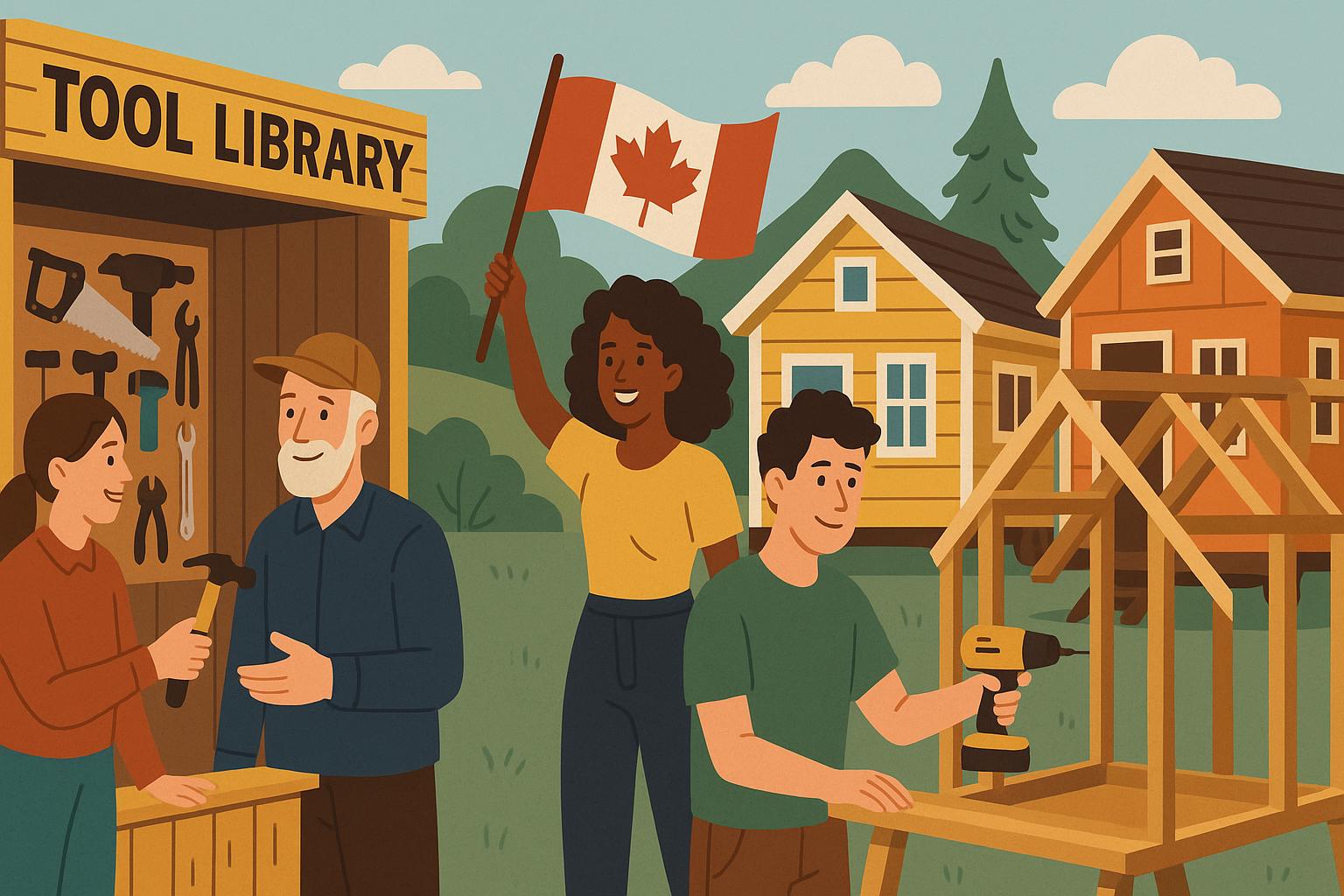
Building a Tool Library for Tiny Home Developments: Community Sharing, DIY Resources, and Canadian Community Success
Estimated reading time: 7 minutes
Key Takeaways
- Tool libraries maximize resource use, reduce individual costs, and free valuable storage space in tiny home settings.
- Community sharing and DIY resources empower residents by providing access to quality tools and skill-building workshops.
- Successful examples in the Canadian community demonstrate sustainability, innovative collaborations, and practical benefits.
- Clear guidelines, digital management, and local partnerships are essential for the efficient operation of a tool library.
- Tool libraries foster sustainable lifestyles by reducing waste through shared use and community engagement.
Table of contents
- Introduction: Tool Library, Community Sharing, and DIY Resources
- Exploring the Need for a Tool Library in Tiny Home and ADU Communities
- Steps to Start a Tool Library
- Sustaining and Growing the Tool Library
- Case Examples and Best Practices from Canadian Communities
- Conclusion
- Frequently Asked Questions
Introduction: Tool Library, Community Sharing, and DIY Resources in the Canadian Community
A tool library is a community space where residents borrow tools and equipment on a membership basis, instead of owning them individually. Rather than every person buying and storing their own tools, neighbours share a common pool that they can access when needed. The idea of the tool library comes from the sharing economy—where communities maximize resource use, cut down on waste, and lower costs for everyone. The concept dates back decades, but its current version has gained momentum as people look for sustainable, practical solutions for community needs. The Ellen MacArthur Foundation describes a tool library as an example of how tool-sharing could become a public utility, emphasizing the efficient use of resources and community empowerment (source).
Community sharing through a tool library offers big benefits, especially if you live in a tiny home development or an accessory dwelling unit (ADU). These communities usually have less space, which makes owning a full suite of tools hard to justify. By sharing, residents cut down on clutter, save money, and reduce their overall environmental impact.
The focus of this article is on how tool libraries help foster sustainable habits, strengthen collaboration, and empower people within a Canadian community. Having access to a range of DIY resources—from hand tools to educational workshops—allows residents to handle basic home repairs and improvement projects themselves, making compact living easier and more affordable than ever.
Read more about the definition and origin of tool libraries
Explore the benefits of tiny home living and sustainable lifestyle choices
Discover how tiny home communities foster affordable living and smart community building
Learn about community-led housing development and affordable solutions in Canada
Find insights on minimalism and decluttering for better small space living
Exploring the Need for a Tool Library in Tiny Home and ADU Communities
Tiny Home Development: Space, Cost, and Sustainability
Unique Space and Resource Challenges
Living in a tiny home development or ADU is great for saving money and the environment, but storage space is always tight. Most residents don’t have attics, garages, or sheds where traditional homeowners store infrequently used, high-cost tools. This makes it tough to buy bigger equipment—even though having access to tools is still important for maintenance and personalization.
- Tools like power drills and circular saws typically get used once or twice a year, leading to valuable space being taken up by items that rarely leave the shelf.
- The Ellen MacArthur Foundation underscores that many tools have a very low frequency of use but are present in almost every home. This creates a pattern of unnecessary spending and wasted storage (source).
For related ideas on space optimization and cost-effective living in tiny homes, see Tiny Homes: Space Optimization, Cost-Effective Living, and Sustainable Design Explained and Tiny Home Design in Canada: Expert Tips for Maximizing Small Living Spaces.
Cost Reduction and Sustainability
Tool libraries help tiny home and ADU residents save money and protect the environment.
- Buying a quality mitre saw can cost over $800, plus you need to find a place to keep it. Renting the same tool for one day might be $44, plus a deposit. In contrast, a yearly tool library membership is usually far less expensive and allows for unlimited borrowing (source).
- Sharing reduces the need for manufacturing, transporting, and throwing away individual tools, lowering everyone’s carbon footprint.
- The Toronto Tool Library demonstrates how pooling resources in a community leads to less waste, as 15 jigsaws serve hundreds of people instead of everyone needing to buy their own (source; source).
Toronto is also a great example of urban infill and gentle density solutions that complement tiny home community efforts (Urban Infill: How Tiny Homes and ADUs Drive Gentle Density Solutions in Canadian Cities).
Empowerment Through DIY Resources
DIY resources aren’t just about borrowing a tool. They’re about learning, too.
- Many tool libraries in Canada, like the London Tool Library, now offer hands-on training and workshops. Residents learn to use equipment safely and handle their own repairs—with lasting benefits for their confidence and skill level (source).
- DIY training means residents are less likely to depend on contractors for small fixes, keeping more money and control within the Canadian community.
Learning DIY skills supports independent living within tiny homes and ADUs, closely linked with Downsizing: A Complete Guide to Decluttering, Minimalism, and Tiny Homes for a Simpler, Better Life and How to Create Effective Tiny Home Community Workshops: A Step-by-Step Guide for Canadian Neighborhoods.
Explore more about the unique benefits and environmental impact of tool libraries
Steps to Start a Tool Library
Tool Library & Tiny Home Development: Assessing Community Needs and Building Interest
Getting a tool library started begins with understanding exactly what your community wants and needs, especially in a tiny home development or cluster of ADUs.
Steps to Launch
-
Community Surveys: Create a short survey for residents asking:
- Which tools would you borrow if available?
- What kinds of workshops would be useful?
- Would you want daily, weekly, or project-based borrowing?
Surveys can be run online or with paper copies at community meetings, making the process accessible to everyone.
- Host Community Meetings: Discuss key pain points such as storage shortages, project wish-lists, and safety concerns. These meetings help gain commitment and identify local champions.
- Build Commitment: Share the benefits of a tool library for reducing clutter, saving money, and contributing to community sharing. Highlight examples from the Canadian community where neighborhood collaboration has led to success.
If you want to understand more about tiny home communities and their sustainable aspects, please see Living in a Tiny Home: Your Complete Guide to Tiny Home Communities, Affordable Living, and Sustainable Housing in Canada and Co-living ADU Developments: How Community Living and Shared Spaces Are Transforming Canadian Neighbourhoods.
DIY Resources & Tool Library: Sourcing Tools Strategically
How do you fill the shelves? Successful tool libraries use a combination of donations, partnerships, and targeted purchases.
Sourcing Tools
- Donations from Residents: Ask neighbours to donate excess or duplicate tools. Downsizers and longtime residents are often happy to contribute.
- Local Estate Sales: Large tool collections may become available from estate liquidations or families moving away.
- Partnerships with Local Businesses: Hardware stores, construction companies, and building supply stores may donate older stock or sponsor the library in exchange for community recognition.
- Setting a Modest Budget: Gather funds for in-demand essentials, like drills and saws that cannot be sourced for free.
Case Examples:
- The Guelph Tool Library has a thriving network of donors, especially from people downsizing or businesses updating equipment (source).
- The Calgary Tool Library operates with over 1,000 items through successful local partnerships.
- Toronto shows how matching supply to local demand ensures tools are actively circulating (source).
For insights on sourcing and partnerships in Canadian communities, visit Affordable Housing: Innovative Solutions and Practical Strategies for Budget-Friendly Homes.
Read successful sourcing stories in Canada
See Toronto’s tool stocking methods
Tool Library: Organizing and Cataloging Tools for Accessibility
A well-organized tool library saves time, prevents loss, and makes borrowing easy.
- Sort Tools by Category: Designate areas for hand tools, power tools, gardening equipment, and specialty tools.
- Label Tools Clearly: Each item should have a unique number and maintenance status tag.
- Create an Inventory System:
- Use a simple Google Sheet or Excel file for small libraries.
- For larger libraries, opt for lending software (like myTurn or Lend Engine) to manage check-in/out and reservations.
- Digital Access for Members: Allow members to browse inventory online, check tool availability, and reserve equipment in advance.
For organizing digital inventories and tool management, check out Tiny Home Smart Tech Transformations: Automation and ADU Upgrades in 2025.
Sustaining and Growing the Tool Library
Tool Library & DIY Resources: Establishing Community Guidelines
Strong community guidelines prevent conflict and keep everyone accountable.
- Lending Periods: Standardize borrowing times (7–14 days) and include clear renewal policies.
- Late Fees and Damage Reporting: Implement late fees to encourage punctual returns and have members complete a quick condition report upon tool return.
- Orientation and Training: New members should complete an introductory safety session, especially for advanced tools, with periodic refreshers.
These measures—as practiced at the London Tool Library among others—help maintain equipment in optimal condition for the entire Canadian community (source).
Community Sharing and Canadian Community: Fostering Engagement
- Host Regular Events: Organize potlucks, group projects, and “show & tell” sessions where members share their projects and repairs.
- Celebrate Contributions: Recognize volunteers, workshop leaders, and significant donors in community newsletters or public displays.
- Encourage Mentorship: Pair experienced DIYers with newcomers to build skills and community ties.
For further ideas on engagement and community building, see ADU Community Events: How Canadian Small Space Gatherings Build Connection and Resilience and Community Services in Canada: Powering Urban Development with Tiny Homes and ADU Programs in Canadian Communities.
Read about the power of community sharing in tool libraries
DIY Resources: Implementing Workshops and Skill-Building Sessions
- Schedule Workshops: Offer sessions on skills such as basic carpentry, furniture repair, plumbing, or garden planning.
- Local Partnerships: Invite tradespeople, knowledgeable neighbours, or retired experts to lead sessions.
- Canadian Case Topics: Many tool libraries in London and Toronto offer training ranging from safe tool use to bicycle repair based on member demand (source).
Workshops provide lasting DIY skills that benefit both the individual and the community. For more details, see How to Create Effective Tiny Home Community Workshops: A Step-by-Step Guide for Canadian Neighborhoods.
Tool Library and Community Sharing: Communication and Tracking Systems
Communication
- Email Newsletters or Bulletin Boards: Share updates on new tool arrivals, event schedules, and volunteer opportunities.
- Digital Scheduling Calendars: Enable members to view booking schedules and reserve tools ahead of time.
Tracking Systems
- Online Spreadsheets: Useful for small libraries to track inventory and return dates.
- Lending Software: Automates reminders, logs tool check-outs/in, and flags tools needing maintenance.
Case Examples and Best Practices from Canadian Communities
Tool Library and Canadian Community: Toronto Tool Library
The Toronto Tool Library is a leading example of a successful, scalable operation in Canada. Starting in 2012 with just a few shelves of tools, it now boasts a collection of between 7,000 to 10,000 items, ranging from hammers and saws to 3D printers (source; source).
Notable Practices
- Using Existing Spaces: In 2015, the Toronto Tool Library moved into a public library building, eliminating the need for a separate facility while tapping into established community infrastructure.
- Balancing Inventory: Rather than stocking dozens of the same tool, Toronto regularly monitors usage and rotates or retires underused items to better serve community demand.
- Maximizing Engagement: Beyond lending, the library runs Maker spaces and innovation hubs, connecting patrons with training and networking opportunities.
Tool Library and Canadian Community: Diverse Canadian Examples
Vancouver
Canada’s first modern tool library, opening in 2011, paved the way for other cities like Toronto and Guelph. It was built on community-driven inventory, featuring hand tools, woodworking equipment, and parcel pick-ups.
Guelph
A smaller library with a strong emphasis on education, relying heavily on donations and hosting repair cafés and skill-building sessions.
Calgary
A large urban library with over 1,000 items that uses advanced lending software to efficiently track and distribute tools based on user needs.
Challenges and Solutions
- Sourcing Tools: Every Canadian tool library emphasizes the importance of reliable donation channels and local partnerships.
- Maintaining Tools: Comprehensive guidelines and training sessions help prolong tool life and ensure safe use.
- Organizing Inventory: Feedback and usage data drive purchasing decisions, minimizing waste on seldom-used items.
Conclusion
Key Benefits of a Tool Library for Tiny Home Development and Community Sharing
- Cut individual costs by borrowing expensive tools rather than purchasing them outright.
- Free up valuable storage space in compact homes.
- Reduce waste and lower environmental impact by sharing resources.
- Gain practical DIY skills through accessible training and workshops.
- Foster strong bonds within the Canadian community through collaboration and resource sharing.
Practical Next Steps: Building Your Tool Library and Canadian Community
- Gather a group of 5–10 interested neighbours.
- Survey your community to identify needed tools and resources.
- Connect with existing Canadian tool libraries for inspiration and advice.
- Select a convenient shared space for your tool collection.
- Recruit volunteers for cataloging, organization, and maintenance.
- Collect donations and build partnerships with local businesses.
- Establish a simple inventory and communication system.
- Host your first tool-sharing event and gather member feedback.
The synergy of sustainable living, community engagement, and empowerment makes tool libraries an ideal complement to modern tiny home lifestyles. Embracing this model empowers you to build a stronger, more resilient Canadian community where shared skills, savings, and sustainable values enhance every home.
Explore the sustainability and success of tool libraries
Get practical advice and real-world examples
Discover more about tiny home benefits and sustainable community living
Learn about community building and collaboration in tiny home neighborhoods
Understand minimalism and decluttering for better tiny living
Frequently Asked Questions
What is a tool library?
A tool library is a community resource where members can borrow tools and equipment instead of buying them. It promotes sustainable resource use and community sharing.
How does a tool library benefit tiny home communities?
In tiny home environments where space is limited, a tool library helps residents avoid clutter, save money, and reduce environmental impact while providing access to a wide range of tools and DIY workshops.
Are there any costs associated with joining a tool library?
While many tool libraries operate on a membership basis with low annual fees, some may also have fees for late returns or damage. This system ensures accountability and sustainability.
How are tools maintained and tracked?
Tools are typically organized by category, labelled, and managed through either simple spreadsheets or dedicated lending software, ensuring efficient tracking and maintenance.
Can anyone join a tool library?
Yes, most tool libraries are open to community members. Some may require a brief orientation or training session to ensure safe and proper use of the tools.
Leave a Reply