

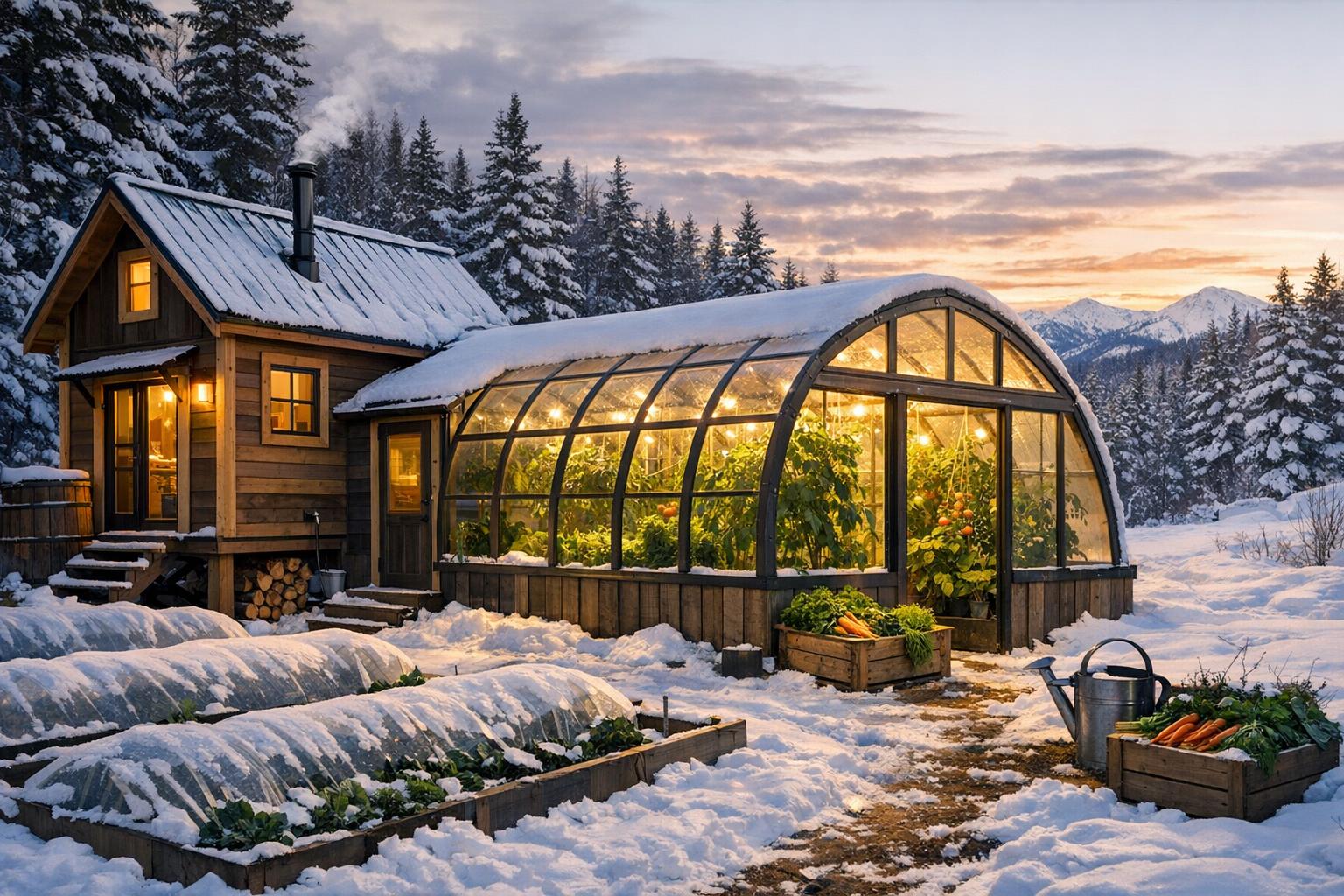
Cold-Climate Gardening in Canada: How to Integrate Insulated Greenhouses with Tiny Homes for Year‑Round Food
Estimated reading time: 10 minutes
Key Takeaways
- Year‑Round Food: Insulated greenhouses enable consistent gardening even in harsh Canadian winters.
- Smart Integration: Pairing greenhouses with tiny homes maximizes natural heat and sunlight while reducing energy costs.
- Sustainability & Self‑Sufficiency: Grow fresh produce, reduce dependence on imported food, and lower your carbon footprint.
- Versatile Designs: From double‑wall polycarbonate models to passive solar greenhouses, multiple options suit diverse climates.
Table of contents
- Understanding Cold‑Climate Gardening in Canada
- Tiny Home Greenhouse: The Perfect Pairing
- Types of Insulated Greenhouses for Canadian Tiny Homes
- How to Grow Year‑Round Food
- Benefits of Integrating Greenhouses with Canadian Tiny Homes
- Practical Steps for Building and Retrofitting
- Case Studies
- Conclusion
- Frequently Asked Questions
Canada’s winters are long and harsh, making traditional gardening nearly impossible without innovative solutions. By integrating insulated greenhouses with tiny homes, you can extend growing seasons and enjoy fresh produce even when temperatures plummet. This guide reveals practical designs, recommended crops, and energy‑saving techniques to turn your backyard into a four‑season oasis.
Understanding Cold‑Climate Gardening in Canada
Cold‑climate gardening is about overcoming challenges such as short frost‑free periods, low winter sunlight, and extreme temperature swings. In many regions—especially climate zones 0 to 5—frozen soil and brief summers make food gardening a tall order. For more background on these challenges, visit this resource.
- Key challenges:
- Frozen, inhospitable soil during winter
- Limited daily sunlight in the colder months
- Short growing seasons that restrict crop choices
- Sudden temperature drops and wind exposure
By incorporating tools like cold frames, low tunnels, and insulated systems, gardeners can significantly extend the growing period. Insulated greenhouses offer the promise of maintaining a productive garden nearly all year long.
Tiny Home Greenhouse: The Perfect Pairing for Canadian Tiny Homes
A tiny home greenhouse is a compact, integrated space designed to bring the benefits of indoor and outdoor living together. Whether it’s built as an attached sunroom or connected via a breezeway, this pairing lets you harness natural light and heat. For smart layout ideas, explore tiny home design strategies.
- Essential design tips:
- Position on the south or southeast wall to capture maximal winter sunlight.
- Create a buffer zone that reduces heat loss from your home.
- Ensure interior connectivity to facilitate warm air transfer and ease of use.
Types of Insulated Greenhouses for Canadian Tiny Homes
Several insulated greenhouse designs meet the challenges of Canadian winters. Consider these popular options:
- Double‑ or Multi‑Wall Polycarbonate Greenhouses: Utilize layered materials with air gaps for enhanced insulation.
- Passive Solar Greenhouses (PSGs): Feature south‑facing glazing, solid insulated walls, and thermal mass elements like water barrels.
- Thermal Curtains & Insulated Night Covers: Removable treatments designed to trap heat during the cold nights.
For a deeper dive into these designs, check out this comprehensive guide.
How to Grow Year‑Round Food in Canadian Tiny Home Greenhouses
Growing food year‑round in a tiny home greenhouse relies on choosing crops suited to cold, low‑light conditions. Ideal options include:
- Leafy greens – kale, spinach, and arugula
- Root crops – carrots, beets, radishes, and turnips (select fast‑maturing varieties)
- Hardy herbs – parsley, cilantro, and chives
- Microgreens – perfect for quick yields and dense nutrition
Additionally, designing raised beds with rich, well‑draining soil and instituting careful watering regimes can keep your garden thriving. Learn more from this article.
Benefits of Integrating Greenhouses with Canadian Tiny Homes
Integrating a greenhouse with your tiny home offers numerous benefits:
- Energy Efficiency: Passive solar gain and heat recycling lower your heating costs. See winter-proofing tips for more.
- Enhanced Food Security: Enjoy fresh produce year‑round and reduce reliance on imported groceries.
- Improved Wellbeing: Increased exposure to greenery and natural light can boost mental health and overall lifestyle.
Practical Steps for Building and Retrofitting a Tiny Home with an Insulated Greenhouse
Begin by evaluating your local climate and deciding between a foundation‑based or mobile tiny home setup. Thorough planning and consultation are critical. For expert guidance on choosing builders, visit this guide.
- Construction tips:
- Use sturdy lumber and multi‑wall glazing for superior insulation.
- Select high‑quality insulation materials and weatherproof roofing to combat heavy snowfall.
- Seal all connection points with weatherstripping to prevent drafts.
- Regulatory considerations: Always check your local bylaws and permit requirements. More information is available here.
Case Studies: Canadian Tiny Home Greenhouse Success Stories
Real-world examples demonstrate the viability of these designs:
- Prairie Tiny Home (Saskatoon, SK): A south‑facing double‑wall polycarbonate greenhouse supports kale, spinach, and Asian greens through the coldest months.
- Off‑Grid Northern Homestead (Yukon/NWT): A standalone greenhouse connected by a heated breezeway produces fresh vegetables even at -40 °C.
- BC Coastal Tiny Home: An attached greenhouse leverages passive solar heating and stone floor thermal mass to extend the growing season in milder winters.
Conclusion
Though Canadian winters are challenging, integrating insulated greenhouses with tiny homes makes year‑round gardening achievable. With expanded growing seasons, lower energy costs, and improved food security, this innovative approach transforms harsh climates into opportunities for sustainable living.
Take Action: Begin designing your greenhouse and tiny home integration today and reap the rewards of fresh, home‑grown food even in the deepest winter.
Frequently Asked Questions
Q1: Can I really grow vegetables during extreme Canadian winters?
A1: Yes – with proper insulation, passive solar design, and careful crop selection, many hardy vegetables can grow even in sub‑zero temperatures.
Q2: Which insulation methods are most effective for greenhouses?
A2: Options such as double‑wall polycarbonate, passive solar designs with thermal mass, and insulated thermal curtains offer excellent protection against heat loss.
Q3: Do I need professional help for the integration?
A3: It often helps to consult with local builders or designers familiar with Canadian climates to ensure your structure meets zoning laws and insulation needs.
Q4: Are permits required for adding an insulated greenhouse?
A4: Permit requirements vary by municipality, so always check local regulations before beginning construction.
For additional insights and detailed guidelines, refer to the linked resources throughout this guide.
Leave a Reply