

Managing Extreme Heat in Canadian Tiny Homes: The Role of Passive Cooling and Heat-Resistant Design
Estimated reading time: 10 minutes
Key Takeaways
- Passive Cooling & Heat-Resistant Design offer sustainable solutions to keep tiny homes comfortable during Canadian heat waves.
- Smart design strategies such as strategic shading, natural ventilation, and advanced insulation are essential.
- Combining DIY approaches with professional techniques reduces energy usage and reliance on air conditioning.
- Real-world examples from British Columbia, Ontario, and Vancouver demonstrate proven results.
Table of contents
- Introduction: Extreme Heat, Canadian Summers, and Tiny Homes
- Understanding Extreme Heat in Canadian Summers
- What Is Passive Cooling?
- Key Passive Cooling Techniques for Tiny Homes
- Heat-Resistant Design for Tiny Homes
- How Passive Cooling and Heat-Resistant Design Work Together
- Practical Tips for Homeowners and Builders
- Addressing Limits and Maintenance
- Conclusion
- Frequently Asked Questions
Introduction: Extreme Heat, Canadian Summers, and Tiny Homes
Extreme heat is rapidly becoming a serious issue in Canada, with climate change making Canadian summers hotter and more unpredictable each year. For many, tiny homes and accessory dwelling units (ADUs) are appealing choices—they’re affordable, sustainable, and growing in popularity across the country. But the small size of these homes makes staying comfortable during heat waves a real challenge.
This blog post explores how Canadian tiny homes and ADUs can stay cool even in the toughest summer conditions. We’ll look at smart ways to use passive cooling and incorporate heat-resistant design. These approaches help keep indoor temperatures down without relying heavily on air conditioning.
Research from the University of British Columbia highlights the urgent need for energy-efficient, practical cooling solutions for tiny spaces as summers become hotter and heat waves last longer.
UBC Research PDF
Understanding Extreme Heat in Canadian Summers
What Does “Extreme Heat” Mean in Canada?
- Extreme heat refers to periods when outdoor temperatures rise much higher than normal for several days.
- Canadian summers are historically mild, but recent years have brought longer, more intense heat waves across many provinces.
- Climate change is making these episodes more frequent. Forecasts say it will only get worse.
Why Tiny Homes Face Unique Heat Challenges
- Limited thermal mass: Tiny homes have less material to absorb and buffer changes in temperature.
- High surface-area-to-volume ratios: More of the building’s shell is exposed compared to the indoor space, leading to rapid heat gain.
- Insulation constraints: Walls and roofs can’t be too thick without taking away precious living space.
- Few options for big cooling systems: There’s rarely enough room for standard air conditioners or complicated ductwork.
Example: In places like Vancouver’s Downtown Eastside, residents living in compact units suffer when temperatures spike, showing how crucial effective cooling in small homes can be for health and wellbeing.
(source: UBC DIY Passive Cooling Techniques)
What Is Passive Cooling? (Passive Cooling for Tiny Homes)
Passive cooling is a design approach that naturally cools indoor spaces without relying on air conditioners. This method uses smart building design and natural forces (like wind, shade, and thermal mass) to reduce heat. It’s efficient, eco-friendly, and perfect for spaces with limited room and budgets.
Key Passive Cooling Techniques for Tiny Homes
Strategic Shading and Window Management
- Window orientation: Place windows to minimize summer sun exposure and maximize winter warmth.
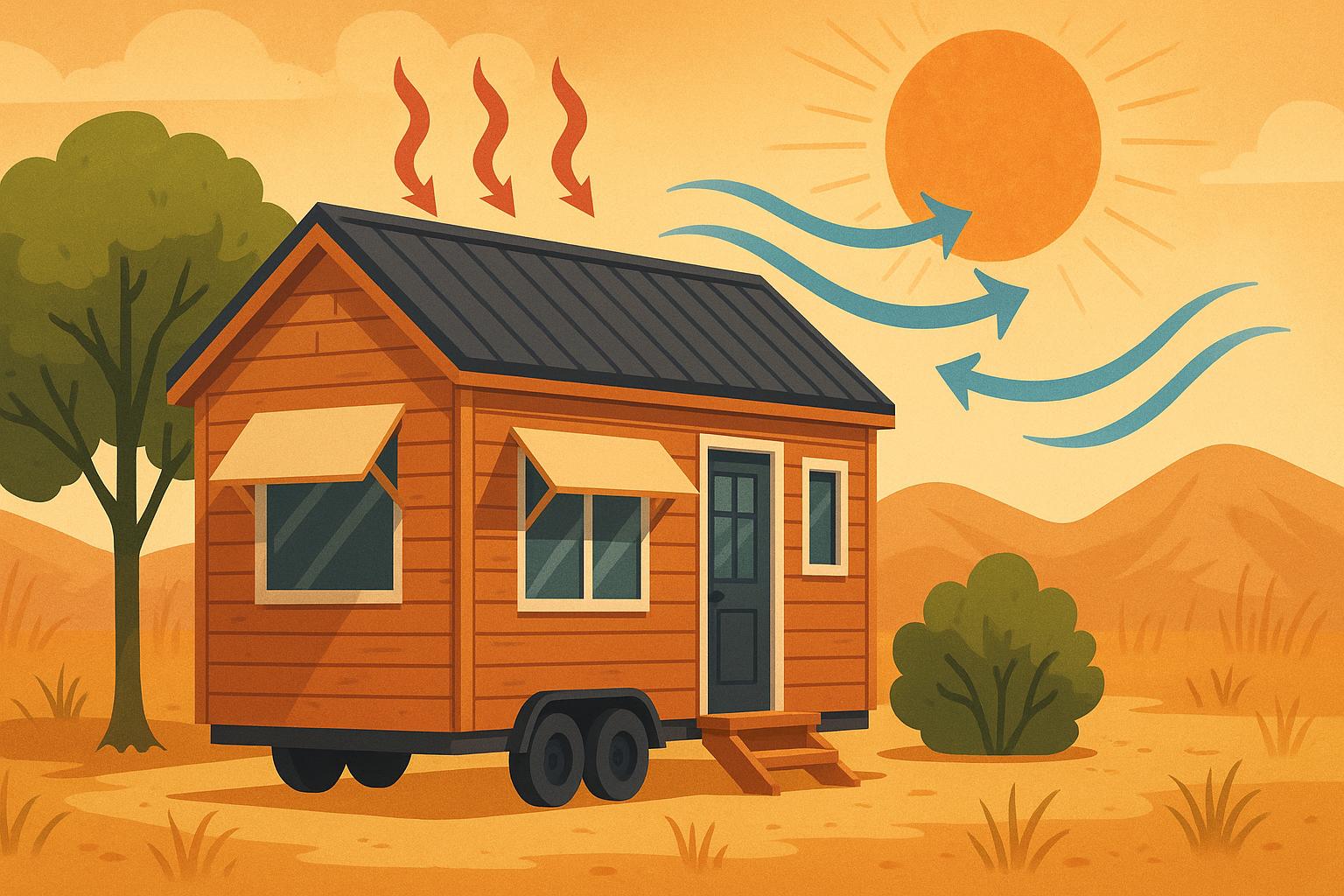
- External shading: Use awnings, shutters, and strategically placed trees to block harsh sunlight before it enters the home.
- High-performance windows: Double or triple-glazed windows with low-E coatings reduce unwanted heat transfer.
Shading is critical—unshaded windows are the number one source of heat gain in summer.
Read More: RMI Passive Cooling in a Tiny House
Discover Tiny Home Design Tips
Natural Ventilation and Airflow
- Cross-ventilation: Place windows or vents on opposite sides to flush out hot air and let in cooler breezes.
- Night cooling: Open windows at night when the air is cooler; close them during the day to trap the coolness.
- Ceiling fans: These use little energy but help circulate air, making temperatures feel up to 4°C cooler.
Learn More: RMI Passive Cooling
Explore Tiny Home Living Benefits
Thermal Mass Integration
Thermal mass involves using materials like concrete, stone, or water tanks that absorb heat during the day and release it when it’s cooler at night. However, balance is key—as too much can lead to overheating.
Reflective Surfaces and Cool Roofs
- Cool roofing materials: Light-coloured or reflective coatings on roofs reduce heat absorption.
- Reflective paint or membranes: Applying these to exterior walls or roofs can significantly lower indoor temperatures.
More on Cool Roofs: RMI Passive Cooling
DIY and Low-Cost Passive Cooling Solutions
- Recycled Tetra Pak insulation boards: Create homemade insulation for windows or walls by taping cleaned Tetra Paks together.
- Evaporative cooling with wet cloths: Hanging wet towels or sheets in a breeze cools air as water evaporates.
- Reflective window coverings: Use aluminum foil or reflective film on windows to block solar heat.
Advanced Passive Systems
- Energy Recovery Ventilators (ERVs): Exchange stale indoor air with fresh outdoor air, transferring cooling (or heating) between airflows to save energy.
- Earth tube heat exchangers: Use underground ventilation pipes to pre-cool incoming air in summer, with proven examples achieving up to 6.8°C cooling.
Heat-Resistant Design for Tiny Homes
What Is Heat-Resistant Design?
In a nutshell, heat-resistant design means using materials and construction details that keep heat out during Canadian summers. This is achieved by improving the building “envelope” – the walls, roof, windows, and doors that separate the indoors from the outdoors.
Important Principles for Heat-Resistant Tiny Homes
Advanced Insulation Systems
- Recycled denim insulation: A sustainable option that fits well in narrow wall cavities.
- Cork insulation: A carbon-negative option that compresses well and acts as a natural insulator.
- Maximize thickness: Focus extra insulation in the roof area to deflect the summer sun.
More on Insulation Types: RMI Passive Cooling
Passive Homes and Tiny Dwellings in Ontario
Reducing Thermal Bridging
- Thermal bridging: Heat infiltration through structural elements like studs and frames.
- Counter it by using continuous insulation, air-sealing joints, and avoiding metal framing where possible.
Metal Framed Tiny Homes Canada: Durability and Climate Adaptation
Window and Door Upgrades
- Triple-glazed or high-performance double-glazed units: Prevent heat from easily penetrating through windows.
- Insulated frames: Fiberglass or composite frames reduce heat transmission.
- Exterior shading: Overhangs, shutters, or exterior blinds protect windows from direct sunlight.
Discover Tiny Home Living Guides
Material Choices and Attractive Finishes
- Cedar or reclaimed wood siding: Provides insulation and an attractive finish.
- Green roofs and living walls: Vegetation insulates and reduces surface temperature.
- Light-colored materials: High-albedo surfaces reflect sunlight rather than absorb it.
Passive House Inspiration
The Passive House standard sets the benchmark for energy-efficient, heat-resistant design by requiring ultra-efficient insulation, air-tight construction, and high-performance windows. Examples like Ontario’s “Tiny Beaches Passive House” demonstrate these principles in action.
How Passive Cooling and Heat-Resistant Design Work Together
The most effective strategy combines both passive cooling and heat-resistant design for optimum comfort. Here’s how to beat extreme heat in tiny homes:
- Build a tight, insulated envelope: Use advanced insulation, high-performance windows, and effective shading to block the majority of outdoor heat.
- Apply passive cooling techniques: Enhance ventilation, manage thermal mass, and use reflective surfaces to minimize indoor heat.
- Minimize reliance on mechanical cooling: Proper design can reduce energy use by up to 70–90%, often eliminating the need for air conditioning.
Real-World Canadian Success Stories: Tiny homes in British Columbia, Ontario ADUs, and even community projects in Vancouver demonstrate that these strategies work effectively in diverse climates.
More Successes: RMI Passive Cooling
Earth Tube Story: Natural Resources Canada
Practical Tips for Homeowners and Builders (Passive Cooling & Heat-Resistant Design in Canadian Summers)
For New Construction: Tiny Homes & ADUs
- Site orientation: Build to minimize summer sun exposure and maximize winter warmth.
- High-performance windows: Choose triple-glazed units with insulated frames and built-in shading.
- Large roof overhangs: Ideally 1–2 metres to shield from the summer sun.
- Mechanical ventilation planning: Incorporate ERVs or earth tubes during construction for easier installation.
- Continuous insulation: Wrap exterior walls, roofs, and floors with seamless insulation to prevent heat bridges.
- Reduce thermal bridging: Use insulation tapes or thermal break products at structural junctions.
Construction Tips: RMI Passive Cooling
More on Ventilation: Natural Resources Canada
Explore Tiny Home Construction Advice
For Retrofitting Existing Tiny Homes or ADUs
- Improved window treatments: Add awnings, shade cloths, or roll-down shutters.
- Reflective roof coatings: Apply white or silver paints to reflect sunlight.
- DIY insulation: Use recycled Tetra Pak boards behind windows or on walls.
- Seal air leaks: Weatherstrip and caulk openings to keep hot air out.
- Install ceiling fans: Low-energy fans improve air circulation effectively.
- Landscaping adjustments: Plant shade trees, install trellises, or explore green roofing options.
DIY Cooling: UBC Passive Cooling Guide
Landscaping for Heat Relief
- Deciduous trees: Provide shade in summer and allow sunlight in winter after leaf fall.
- Green roofs: Use drought-hardy sedum or grass for natural insulation.
- Permeable surfaces: Gravel or pavers help reduce urban heat island effects.
Landscaping Ideas for ADUs in Canada
Appliance Tips for Tiny Homes
- Switch to LED lighting: Reduces heat emission while saving energy.
- Energy-efficient appliances: Choose fridges and devices that generate less heat.
- Proper venting: Ensure range hoods and dryer vents efficiently expel heat and moisture.
Addressing Limits and Maintenance
What Passive Cooling and Heat-Resistant Design Can—and Can’t—Do
- Extreme, prolonged heat waves: While these strategies work well, week-long record highs might require supplemental cooling.
- Scale of application: DIY strategies are ideal for small spaces; larger buildings may need comprehensive upgrades.
- Maintenance: Regular upkeep such as cleaning fans, checking seals, and maintaining vegetation is vital for optimal performance.
Conclusion: Ensuring Comfort in Canadian Tiny Homes Amid Extreme Heat
Extreme heat is becoming a permanent part of Canadian summers, posing new challenges for tiny homes and ADUs across the country. Despite the unique issues posed by small living spaces, modern strategies—especially passive cooling and heat-resistant design—offer effective, sustainable solutions.
By combining these methods, homeowners can achieve:
- Reduced energy consumption: With triple-glazing, smart shading, cool roofs, and efficient insulation, the need for air conditioning can drop dramatically.
- Enhanced comfort: Techniques like cross-ventilation, night cooling, reflective surfaces, and ceiling fans provide constant relief from the heat.
- Lower maintenance: Once in place, these systems require minimal upkeep compared to conventional cooling systems.
Real-world examples from British Columbia, Ontario, and community housing projects prove that passive strategies work across Canada’s diverse climates. Whether starting with small upgrades or pursuing full Passive House standards, every improvement goes a long way toward a comfortable, sustainable future.
For further details, explore the original research and resources:
Frequently Asked Questions
What is passive cooling and why is it important for tiny homes?
Passive cooling is a design strategy that uses natural forces—such as wind, shading, and thermal mass—to regulate indoor temperatures without relying heavily on mechanical air conditioning. In tiny homes, limited space makes traditional cooling methods impractical, so integrating passive techniques is crucial for energy efficiency and comfort.
How does heat-resistant design complement passive cooling?
Heat-resistant design focuses on building materials and techniques that limit heat absorption—like high-performance insulation, reflective surfaces, and advanced glazing. When combined with passive cooling methods, these strategies work together to create a more resilient and energy-efficient living space.
Are DIY passive cooling methods effective for long-term extreme heat situations?
DIY methods such as recycled insulation, reflective window coverings, and evaporative cooling work well for moderate heat conditions. However, during prolonged extreme heat waves, combining these with professional-grade strategies—like advanced insulation and mechanical ventilation—ensures optimal indoor comfort.
Leave a Reply