

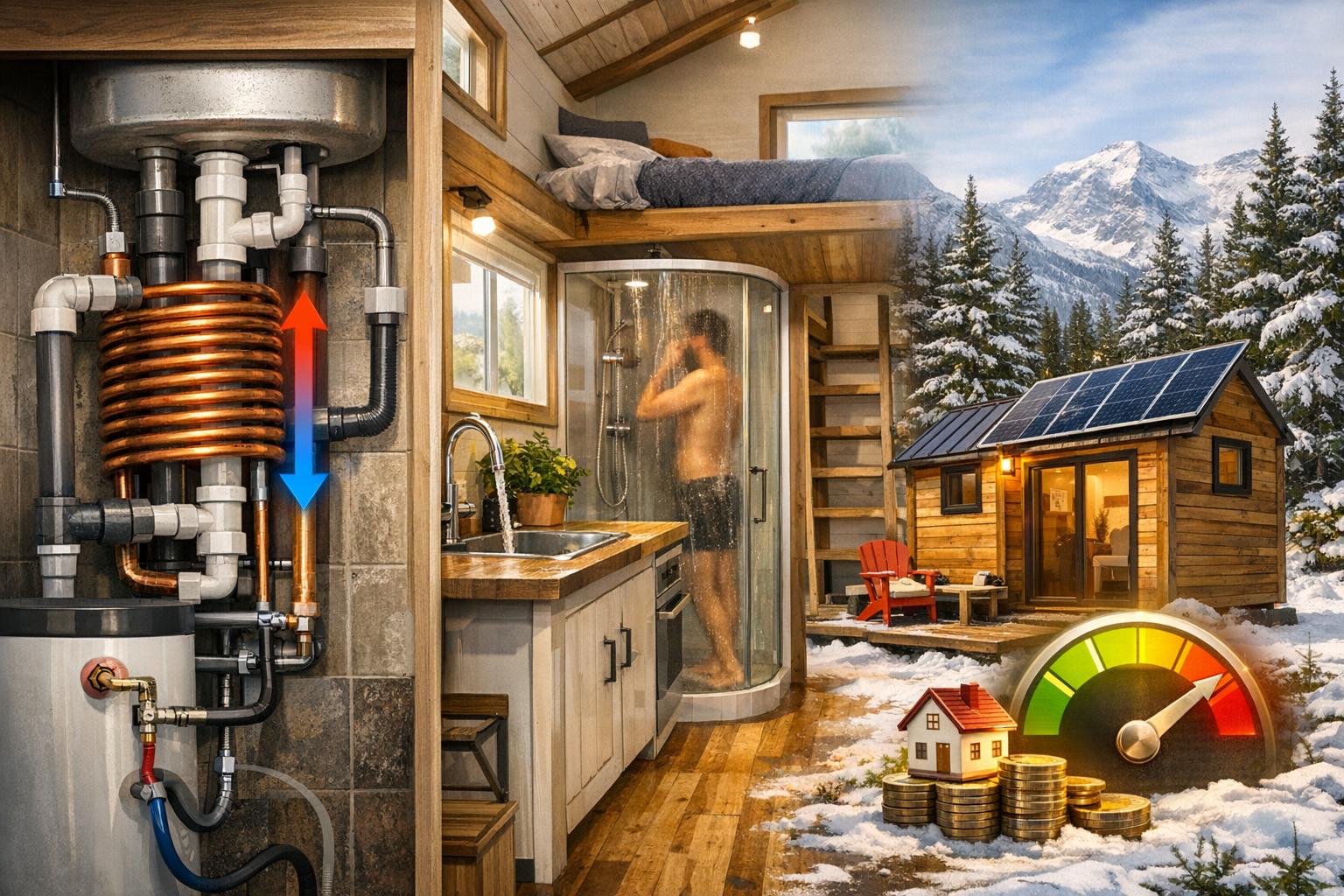
Greywater Heat Recovery: A Smart Solution for Canadian Tiny Homes
Estimated reading time: 8 minutes
Key Takeaways
- Energy Efficiency: Significantly reduces water heating energy.
- Cost Savings: Typically achieves a 7-10 year payback period.
- Sustainability: Ideal for tiny homes and ADUs in harsh Canadian climates.
- Compact Integration: Designed for both retrofits and new builds.
- Environmental Impact: Conserves water and reduces your carbon footprint.
Table of Contents
- Introduction: Greywater Heat Recovery for Canadian Tiny Homes
- What is Greywater Heat Recovery?
- Why Greywater Heat Recovery is Ideal for Canadian Tiny Homes
- Benefits of Greywater Heat Recovery Systems
- Practical Considerations for Installation in Tiny Homes and ADUs
- Case Studies / Examples
- Additional Tips for Maximizing Efficiency
- Conclusion
- Frequently Asked Questions
Introduction: Greywater Heat Recovery for Canadian Tiny Homes
If you own a Canadian tiny home or are passionate about ADUs in cold climates, you know how challenging it is to juggle rising utility bills and harsh winters. That’s why greywater heat recovery is quickly becoming a must-have technology for energy-smart Canadian tiny homes.
Greywater heat recovery captures heat from used shower and sink water (greywater) and uses it to preheat incoming cold water. The system transfers warmth from water running down the drain to the fresh cold water entering your hot water heater—all without the two water streams mixing. In tiny homes and ADUs across Canada, especially in provinces like Ontario, Quebec, and Manitoba, this technology maximizes energy efficiency and water conservation, saving valuable dollars.
Not only does this system reduce your energy use for water heating, but sources report paybacks of 7-10 years or even faster in high-cost regions. For more insights, visit Ecotime, Natural Resources Canada, and Adustart.
What is Greywater Heat Recovery?
Greywater heat recovery uses a specialized heat exchanger to transfer warmth from used water (such as from showers and sinks) to fresh, incoming cold water without mixing the two. This ingenious setup dramatically boosts hot water efficiency.
Technical How-To:
- The System: Cold water runs through coiled pipes or a jacket surrounding your drainpipe.
- The Process: When you use hot water, the used (greywater) transfers its heat to the fresh water moving in the opposite direction.
- No Mixing: The two streams remain separate, ensuring only heat is transferred.
- Efficiency: High-quality units can recover up to 60% of the heat from shower water.
This system is ideal for Canadian tiny homes, where consistent shower and sink use creates a steady flow of heat to be recovered. Learn more at Ecohome and Natural Resources Canada.
Why Greywater Heat Recovery is Ideal for Canadian Tiny Homes
Canadian tiny homes and ADUs face unique challenges: limited space, extreme winter loads, and the need for sustainable solutions. Greywater heat recovery addresses these challenges effectively.
Three Key Challenges:
- Space is Scarce: Tiny homes often have under 1,000 sq ft, making bulky systems impractical.
- Winter Loads: Extreme cold increases heating demands, stressing both your wallet and power grid.
- Sustainability Needs: A focus on eco-friendly living necessitates passive, energy-saving solutions.
How Greywater Heat Recovery Helps:
- Compact Design: Systems are available in both vertical and horizontal configurations, perfect for small spaces.
- Energy Capture: Reclaims wasted “free” heat to reduce peak energy demand.
- Climate Smart: Endorsed by Natural Resources Canada, these systems support high-efficiency building initiatives.
Benefits of Greywater Heat Recovery Systems
1. Enhanced Energy Efficiency
- Preheats water to reduce the demand on your water heater.
- Capable of reclaiming 40-60% of wasted heat, lowering energy consumption.
2. Water Conservation
- Often paired with greywater reuse systems, reducing overall water bills significantly.
- Helps save thousands of gallons of water annually.
3. Cost Savings
- Lower energy demand translates into tangible monthly savings.
- Typically demonstrates a payback period of 7-10 years.
4. Environmental Benefits
- Reduces fossil fuel consumption and lowers your carbon footprint.
- Fewer moving parts mean a near maintenance-free solution.
For more details, check out Natural Resources Canada and Waterwise Group.
Practical Considerations for Installation in Tiny Homes and ADUs
Greywater heat recovery can be integrated into both new builds and retrofitted into existing homes. Consider the following points for installation and maintenance:
Retrofitting vs. New Builds
- Retrofitting: Horizontal systems like EcoDrain are ideal for limited vertical space, achieving about 33% efficiency.
- New Builds: Vertical units can be seamlessly integrated into the design for optimal performance.
System Options for Small Dwellings
- Geyser by Ecotime: A compact, passive system that attaches directly to a shower drain.
- ThermoDrain with PEX Integration: Enables rapid installation and works with standard plumbing systems.
Placement and Climate Adaptation
- In cold climates, install the unit indoors and insulate exposed pipes to prevent freezing.
- Always follow local building codes and best practices for freeze protection.
Maintenance and Lifespan
Greywater heat recovery systems are nearly maintenance-free due to their robust, corrosion-resistant design and absence of moving parts. Their longevity often matches or exceeds that of your water heater.
For installation tips and community insights, refer to resources like Permies and Ecoinnovation.
Case Studies / Examples of Canadian Tiny Homes Using Greywater Heat Recovery
Manitoba Advanced House Prototype
This demonstration home in one of Canada’s coldest provinces featured a greywater heat recovery system as part of its innovative green tech package. Testing confirmed significant energy savings even in harsh winter conditions.
Ecohome’s Analysis of EcoDrain in Slab Homes
In scenarios where vertical pipe runs were not feasible, horizontal systems like EcoDrain were retrofitted into slab-on-grade homes, delivering about 33% heat recovery and reducing monthly utility costs.
Small Home Communities
Communities such as Toronto Healthy House and Quayside Village integrate greywater heat recovery with non-potable water reuse systems, enhancing overall water and energy savings in communal living setups.
Learn more from Build It Solar, Oasis Design, and Permies.
Additional Tips for Maximizing Energy Efficiency and Water Conservation in Tiny Homes
1. Integrate Greywater Diversion Products
- Use systems like Aqua2use to divert filtered greywater to irrigation or toilet flushing, potentially saving up to 40% on water bills.
2. Optimize Plumbing with PEX-Integrated ThermoDrain
- ThermoDrain’s PEX-ready options streamline installation and maximize heat recovery while in use.
3. Cold-Climate Best Practices
- Insulate all water lines and recovery units, particularly those near exterior walls, to avoid freezing.
- Consider smart controls and high-efficiency fixtures to further optimize energy use during peak times.
Combining these strategies with greywater heat recovery sets a high bar for sustainable living. Explore more at Waterwise Group and Natural Resources Canada.
Conclusion: Greywater Heat Recovery—A Sustainable Upgrade for Canadian Tiny Homes
Greywater heat recovery offers Canadian tiny homes a practical solution to increase energy efficiency, conserve water, and reduce operating costs—even in the harshest winter conditions. By reclaiming heat from showers and sinks, these systems lower your bills, ease demand on the grid, and minimize your environmental footprint.
Whether you are retrofitting an existing home or constructing a new build, solutions like Geyser, EcoDrain, and ThermoDrain help create a greener, more cost-effective living space. For more information, visit Ecotime, Ecohome, and Ecoinnovation.
Frequently Asked Questions
Q1: What is greywater heat recovery?
A: It is a system that captures waste heat from used shower and sink water and transfers it to incoming cold water without mixing the two, thereby reducing water heating energy.
Q2: Is greywater heat recovery suitable for Canadian tiny homes?
A: Yes. Its compact design and energy-efficient performance make it ideal for tiny homes and ADUs, especially in cold climates.
Q3: How long is the typical payback period?
A: Most systems show a payback period of 7-10 years, with faster returns in regions with higher utility costs.
Q4: Can greywater heat recovery systems be retrofitted into older homes?
A: Absolutely. Horizontal systems are specifically designed for retrofitting into existing homes with limited space.
Leave a Reply