

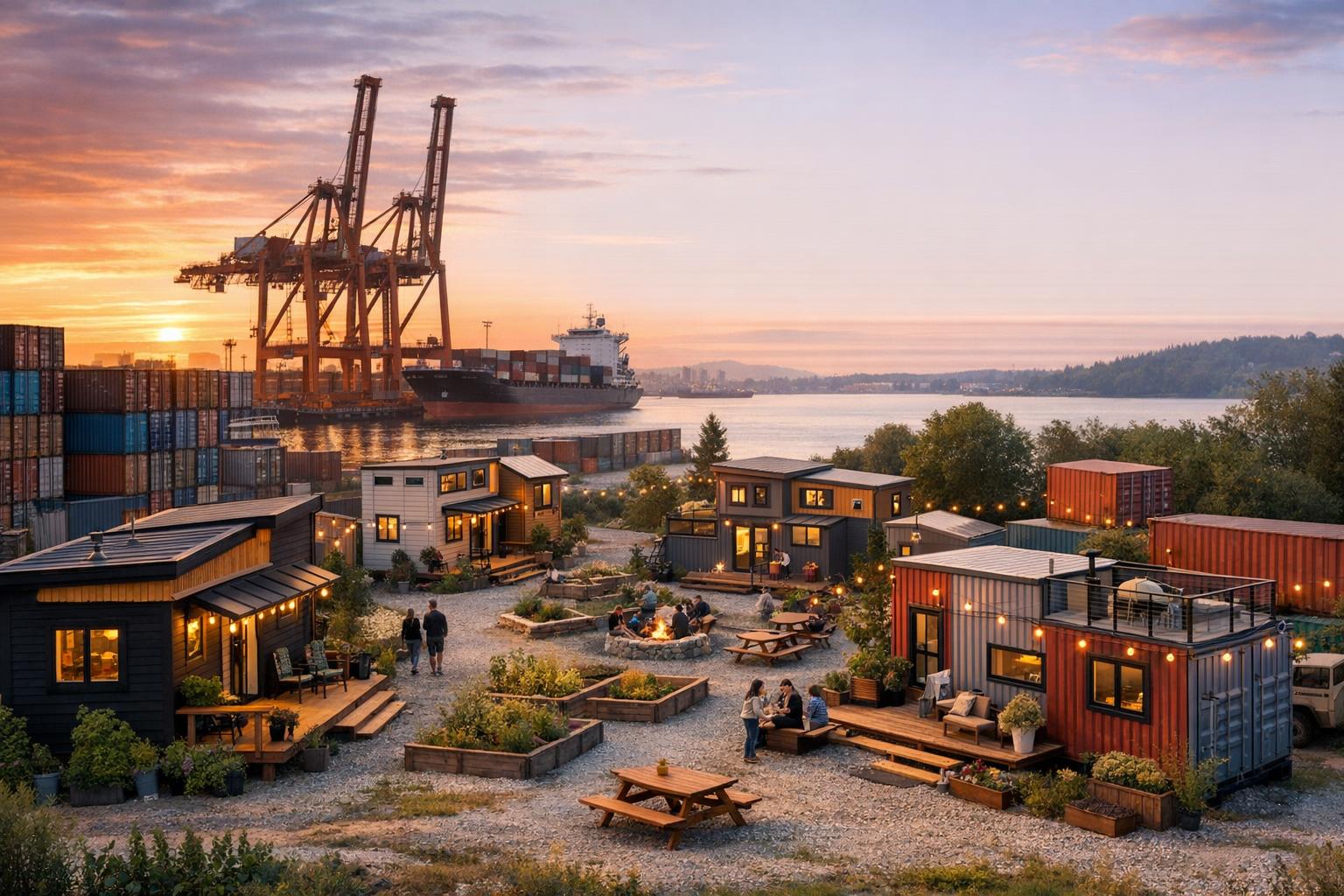
Repurposing Industrial Land: Transforming Canadian Shipping Yards into Tiny Home Communities
Estimated reading time: 8 minutes
Key Takeaways
- Industrial land repurposing transforms underused shipping yards and factories into vibrant urban spaces.
- Adaptive reuse is key to converting these sites into innovative, affordable, and eco-friendly tiny home communities.
- Strategic urban infill and supportive policies are accelerating changes in Canadian cities.
- Community engagement, environmental remediation, and flexible zoning are essential for success.
Table of contents
- State of Industrial Land and Shipping Yards in Canada
- Adaptive Reuse: Giving New Purpose to Shipping Yards
- Tiny Home Communities as Practical Urban Infill
- Real-World Canadian Examples: Bringing Concepts to Life
- Benefits of Repurposing Industrial Land for Tiny Home Communities
- Challenges and Considerations in Industrial Land Repurposing
- The Future of Canadian Urban Infill and Industrial Land Repurposing
- Conclusion: Reimagining Canadian Cities with Repurposed Industrial Land
- Frequently Asked Questions
State of Industrial Land and Shipping Yards in Canada
Industrial land repurposing is a pressing issue for many Canadian cities, especially in Ontario and the Atlantic provinces. Economic shifts—including the decline of manufacturing and the relocation of job centres to suburbs—have left shipping yards and factories empty. These dormant sites occupy valuable urban space while incurring high maintenance costs.
Short summary of the current landscape:
- In cities like Toronto and Halifax, once-busy shipping yards now lie dormant due to industry downsizing and automation.
- Former heavy industry sites often become contaminated and costly, risking further disrepair.
- The underuse of these spaces creates urban “holes” that can hinder downtown vibrancy and economic revitalization.
However, given their proximity to key infrastructure and city centres, these sites hold huge potential for adaptive reuse. For more details, see
urban planning research and
commercial real estate insights.
Adaptive Reuse: Giving New Purpose to Shipping Yards
Adaptive reuse involves transforming existing industrial spaces—like shipping yards—into new, sustainable uses without demolishing them completely. This method is central to sustainable urban planning as it preserves historical and architectural values while minimizing waste and carbon emissions.
Key characteristics include:
- Repurposing warehouses, depots, and docks into community facilities or residential areas.
- Reducing demolition waste and lowering carbon footprints.
- Preserving the unique heritage of industrial sites.
A prime example is Toronto’s Distillery District, which transformed an old whiskey distillery into a bustling mixed-use neighbourhood. For additional insights, refer to
urban planning literature and
World Economic Forum articles.
Tiny Home Communities as Practical Urban Infill
Tiny home communities feature highly compact living spaces—typically less than 400 square feet—designed for efficient, affordable, and eco-friendly living. They offer a clever solution for urban infill, especially when converting small or irregularly shaped industrial parcels.
How they integrate with urban infill:
- They enable productive residential use of underutilized land.
- They boost housing density without the need for towering apartment blocks.
- They capitalize on existing infrastructures in repurposed shipping yards.
Advantages include: Social benefits via shared community spaces; economic benefits through lower construction and operational costs; and environmental benefits with reduced carbon footprints. See more details at
Adustart on tiny home communities and
their guide for living in a tiny home.
Real-World Canadian Examples: Bringing Concepts to Life
While the conversion of shipping yards into tiny home communities is emerging, several Canadian initiatives illustrate the potential of industrial land repurposing.
Highlighted trends:
- Ontario is updating zoning regulations for affordable housing developments on brownfield sites.
- Toronto’s Distillery District serves as a model for mixed-use industrial transformation.
- Federal initiatives like the Public Land Bank are earmarking numerous unused sites for affordable housing.
- Local design competitions and community workshops foster innovation in redeveloping warehouses and depots.
Find further examples and supporting data from sources such as
The New Urban Order and
Adustart projects.
Benefits of Repurposing Industrial Land for Tiny Home Communities
Urban Revitalization
Repurposed sites boost city centres by:
- Increasing housing supply near jobs and amenities.
- Filling vacant urban spaces to deter illegal dumping and crime.
- Reducing the pressure for urban sprawl and protecting greenfields.
Learn more from
academic research and
urban infill case studies.
Environmental Sustainability
Adaptive reuse and tiny home construction help overcome environmental challenges by:
- Utilizing recycled materials and existing infrastructure.
- Lowering greenhouse gas emissions compared to new construction.
- Supporting municipal and federal net-zero targets.
For further details, check out
World Economic Forum insights and
remediation reports.
Housing Affordability and Diversity
Tiny home communities contribute by:
- Enhancing housing diversity in cities facing affordability crises.
- Providing entry-level, rental, co-op, and accessible housing options.
- Efficiently using land and materials to lower overall costs.
Additional insights are available at
Adustart on affordable housing solutions.
Community and Economic Boost
By promoting mixed-use environments, repurposed industrial sites can:
- Create vibrant neighbourhoods where people live, work, and socialize together.
- Attract new businesses, tourism, and jobs by revitalizing urban cores.
- Support local economies with increased property values and dynamic street life.
See further studies at
Turner Drake.
Challenges and Considerations in Industrial Land Repurposing
Zoning and Regulatory Hurdles
Outdated zoning rules and strict planning codes can hinder repurposing. Overcoming these obstacles requires:
- Streamlined planning approvals and adaptable codes.
- Incentives and grants to offset redevelopment costs.
- Flexible municipal policies allowing mixed-use and residential adaptations in traditional industrial zones.
For more information, see
zoning guides and
permit overviews.
Infrastructure Upgrades and Environmental Remediation
Old shipping yards may be contaminated due to past industrial use. Solutions include:
- Government clean-up grants and loans.
- Using Community Improvement Plans for phased remediation and infrastructure upgrades.
- Phased development strategies to spread costs over time.
Learn more at
remediation reports and
grant information.
Community Acceptance
Gaining community support is crucial. This involves:
- Hosting public workshops that include local input.
- Offering a mix of affordable and market-rate units to demonstrate equity.
- Ensuring projects are accessible and culturally sensitive.
Additional perspectives can be found at
community workshop guides and
community-led development stories.
The Future of Canadian Urban Infill and Industrial Land Repurposing
Repurposing industrial sites into tiny home communities is set to accelerate in Canada. Emerging trends include:
- Expansion of federal and provincial land banks for adaptive reuse opportunities.
- Streamlined zoning and Official Plan updates in cities like Ontario.
- Innovative public-private partnerships and tech-driven modular designs.
- Ongoing community collaboration to ensure equitable project outcomes.
For more insight, read articles from
The New Urban Order and
commercial adaptation trends.
Conclusion: Reimagining Canadian Cities with Repurposed Industrial Land
Industrial land repurposing holds transformative potential for Canadian cities. Converting abandoned shipping yards and derelict sites into sustainable tiny home communities can revitalize urban cores, preserve industrial heritage, and contribute to modern urban infill strategies.
The future depends on overcoming regulatory hurdles, investing in remediation, and engaging communities to ensure equitable and innovative outcomes. With thoughtful policies and shared vision, Canada’s underutilized industrial lands can become engines of urban renewal for generations to come.
For further research, explore resources like
urban planning studies,
World Economic Forum insights, and
comprehensive reuse reports.
Frequently Asked Questions
-
What is industrial land repurposing?
It involves transforming underused industrial spaces, such as shipping yards and factories, into new, productive assets for urban areas.
-
How does adaptive reuse differ from renovation?
Adaptive reuse repurposes existing structures for entirely new functions while preserving historical or architectural elements, rather than simply renovating them for the same purpose.
-
Why are tiny home communities important in urban settings?
They offer affordable, environmentally friendly living options that efficiently utilize limited urban land, helping to ease housing shortages in cities.
-
What challenges must be overcome for successful repurposing?
Challenges include outdated zoning laws, environmental remediation needs, infrastructure upgrades, and securing community support.
Leave a Reply