

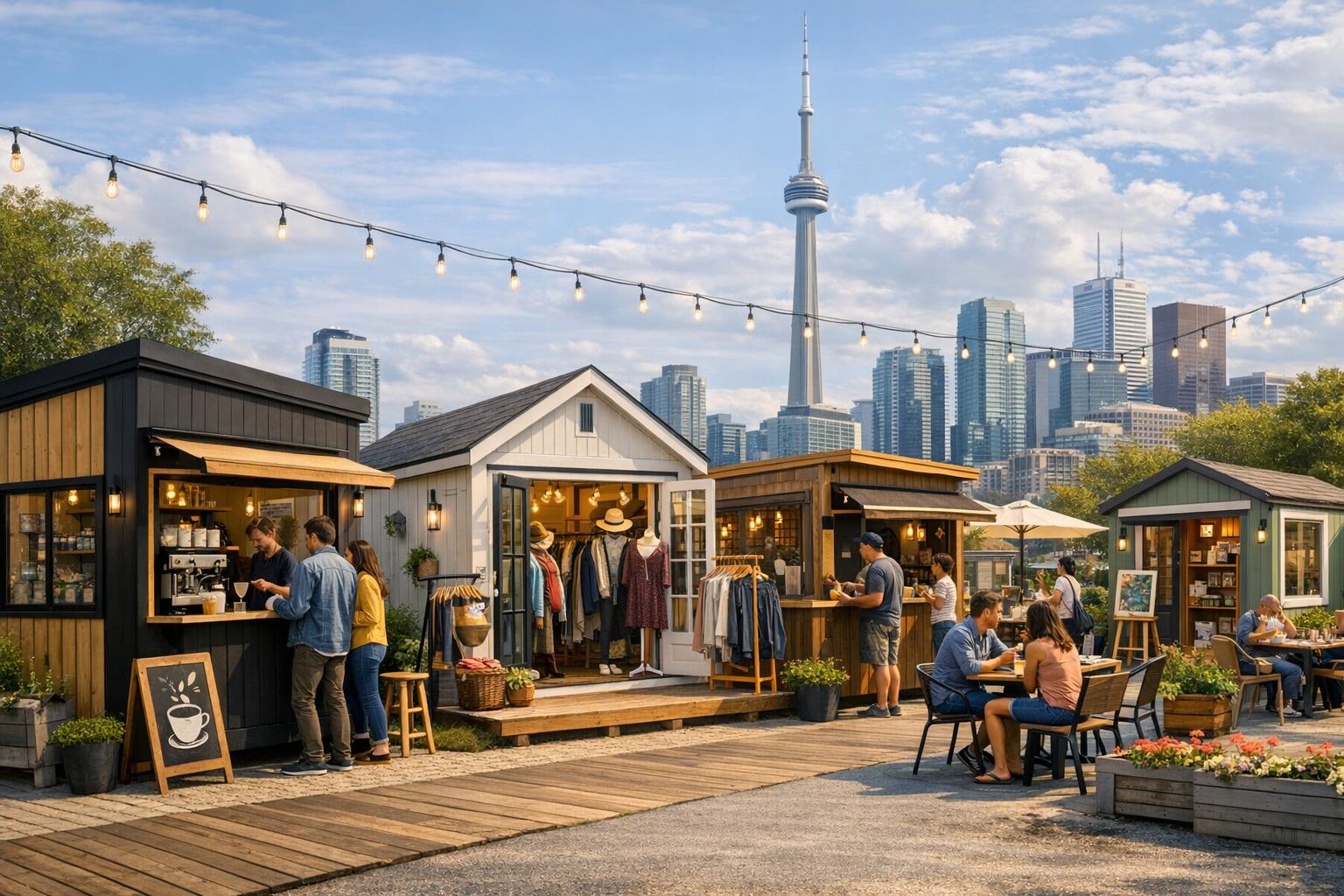
Micro-Retail Tiny Homes: Innovative Small-Space Business Solutions for Canadian Cities
Estimated reading time: 8 minutes
Key Takeaways
- Tiny homes and ADUs offer affordable, flexible, and innovative retail solutions in Canadian cities.
- Micro-retail provides low-cost, minimalistic business models ideal for niche markets and pop-up events.
- Zoning reforms and supportive municipal policies enable entrepreneurs to navigate challenges with ADU-based ventures.
- The fusion of mobility, sustainability, and community engagement drives success in the micro-retail space.
Table of contents
- Introduction: Embracing Micro-Retail Tiny Homes in Canadian Cities
- What is Micro-Retail and Why Tiny Homes?
- Exploring ADU Business Opportunities in Canada
- Pop-Up Shops: The Temporary Micro-Retail Solution
- Advantages of Utilizing Tiny Homes and ADUs
- Tips for Entrepreneurs
- Conclusion
- Frequently Asked Questions
Introduction: Embracing Micro-Retail Tiny Homes in Canadian Cities
Micro-retail tiny homes are pioneering a new wave of small-space entrepreneurship in Canadian cities. These innovative solutions allow business owners to transform compact tiny homes or accessory dwelling units (ADUs) into dynamic retail, service, or pop-up outlets. By offering flexibility and significant savings compared to traditional storefronts, micro-retail spaces are giving entrepreneurs in places like Edmonton and Terrace, B.C., a unique way to reach customers.
Micro-retail refers to small-scale, low-cost retail operations, while tiny homes and ADUs provide modular, mobile platforms to host these businesses. As Canadian cities face rising real estate prices and shifting consumer habits, these models offer a creative and scalable answer.
In this post, you will learn:
- What defines micro-retail and why tiny homes are an ideal fit
- How ADU business models are evolving in Canada
- The benefits and strategies of pop-up shops
- Actionable tips for entrepreneurs exploring these ventures
Sources: Coherent Market Insights, Tiny House Alliance Canada News
What is Micro-Retail and Why Tiny Homes?
Understanding Micro-Retail for Entrepreneurs
Micro-retail is all about conducting business on a small scale. It’s designed for efficiency, low overhead, and minimalism—perfect for testing new products, servicing niche markets, or offering unique experiences. Unlike traditional retail, micro-retail keeps costs down while allowing flexibility and rapid market adaptation.
- Ideal for entrepreneurs testing new markets
- Niche or artisanal product launches
- Creative and mobile sales efforts
This approach reduces the barrier to entry for new business owners and lets established companies experiment with expansion at a low risk. Source: Coherent Market Insights
The Rise of Tiny Homes as Creative Retail Spaces
Tiny homes are compact structures, often under 130 sq. ft., designed to maximize usability and ease of movement. With features like solar panels, energy-efficient fixtures, and customizable interiors, they offer:
- Flexible layouts for creative pop-up displays
- Modern utilities for minimal operating costs
- Mobility for seasonal or event-based sales
- Environmental sustainability through modular and prefab designs
For detailed insights, visit Tiny Home Living: Your Complete Guide to Micro Homes, Sustainability, and Lifestyle Freedom.
Introducing ADUs: Accessory Dwelling Units as Small-Business Venues
Accessory Dwelling Units (ADUs) are secondary, self-contained housing units on residential lots. They can be standalone, above garages, or attached to primary homes. ADUs are increasingly repurposed as business venues that blend residential simplicity with business opportunity, adapting well to urban demand.
- Blends residential ease with business functions
- Supports semi-permanent retail operations
- Adapts to evolving zoning and urban design
Source: ADU Start: Tiny Home Trends – also see Home Office Solutions: How ADU Offices and Backyard Workspaces Boost Remote Work Productivity.
Exploring ADU Business Opportunities in Canada
Defining ADUs in the Canadian Urban Landscape
ADU businesses are built around self-contained dwellings, usually under 40 square meters, that can be foundation-based or mobile. They have grown in popularity in urban and suburban markets, particularly in places like B.C.’s Sunshine Coast and Terrace, as zoning rules evolve.
- Self-sufficiency with kitchenettes, baths, and sleeping areas
- Foundation-based or mobile designs suitable for varied lots
- Benefiting from progressive zoning reforms
Sources: Tiny House Alliance Canada News, ADU Start – also, for regulatory insights, see Canadian ADU Regulations: A Comprehensive Provincial Guide.
Business Benefits of Running an ADU Operation
Launching an ADU business in Canada brings many advantages:
- Low Overhead: Prefab construction and modular designs minimize start-up costs.
- Versatility: Ideal for artisanal products, coffee kiosks, and creative retail setups.
- Zoning Advantages: Progressive municipal policies streamline the permit process for ADUs.
In Terrace, B.C., for instance, micro-villages with multiple tiny homes have been created to support local retail hubs. Source examples include Coherent Market Insights and Tiny House Alliance Canada News. For more on prefab benefits, check Prefab House Revolution: How Modular Design is Redefining Modern Housing with Cost Savings, Fast Construction, and Sustainability.
Pop-Up Shops: The Temporary Micro-Retail Solution
Defining Pop-Up Shops for Small-Space Retail
Pop-up shops are event-driven retail outlets opened temporarily. They generate buzz with their exclusive, limited-time offerings and are perfect for product launches, seasonal sales, or collaborations.
- Test new product lines without long-term commitments
- Create brand awareness through unique experiences
- Foster exciting collaborations with local businesses
Source: Coherent Market Insights
Using Tiny Homes and ADUs for Pop-Up Shops
Tiny homes and ADUs are excellent venues for pop-up shops with compact, customizable spaces—often under 500 sq. ft.—that can be quickly set up and dismantled. Their mobility and eco-friendly features make them ideal for temporary retail, be it a pop-up café, boutique outlet, or artisan display.
Sources: Coherent Market Insights, Building Canada: Micro-Unit Moment and for further inspiration, read Pop-Up Retail in ADUs: A Comprehensive Canadian Business Guide to Launching and Succeeding.
Advantages of Utilizing Tiny Homes and ADUs for Micro-Retail in Canadian Cities
Affordability and Cost-Effectiveness for Entrepreneurs
Tiny homes and ADUs offer an affordable entry point compared to traditional storefronts, reducing costs with prefab solutions and reclaimed materials. This economic efficiency is vital in rising Canadian real estate markets.
- Significantly lower build and operational costs
- Economical prefab and DIY material options
- Flexibility to adapt to seasonal or niche markets
Sources: Coherent Market Insights, Technavio Tiny Homes Industry Report, and Reclaimed Materials: The Eco-Friendly and Budget-Friendly Guide to Building Canadian Tiny Homes.
Zoning Flexibility and Municipal Policy Support in Canadian Cities
Supportive zoning reforms and municipal incentives in cities such as Edmonton and Toronto make it easier to launch tiny home or ADU businesses. Simplified application processes and incentives like tax breaks assist entrepreneurs in navigating local regulations.
Sources: Coherent Market Insights, Tiny House Alliance Canada News, and Canadian ADU Regulations: A Comprehensive Provincial Guide.
Mobility, Sustainability, and Community Appeal
Beyond cost savings, tiny homes and ADUs provide excellent mobility, energy efficiency, and community-centric setups. Their portable design allows businesses to move where opportunities arise, while green features attract eco-conscious consumers.
| Advantage | Canadian Relevance | Challenge & Solution |
|---|---|---|
| Affordability | Prefab tiny homes lower overall costs | Use reclaimed materials to offset rising prices |
| Zoning Flexibility | Progressive reforms open up business options | Consult local planners to navigate approvals |
| Mobility/Sustainability | Mobile units support eco-friendly pop-up operations | Incorporate insulated modular builds for year-round use |
| Community Appeal | Micro-villages strengthen local engagement | Create experiential events to build customer loyalty |
Additional sources include Coherent Market Insights, Technavio Tiny Homes Industry Report, and Building Canada: Micro-Unit Moment.
Tips for Entrepreneurs Interested in Micro-Retail Tiny Homes or ADU Ventures
Location Selection: Target the Best Markets in Canadian Cities
Choosing the right location is critical. Focus on areas with high foot traffic such as downtown cores, arts districts, and markets in progressive neighborhoods like those in Edmonton or Terrace. Consider local events and zoning requirements for temporary or mobile units.
Source: Tiny House Alliance Canada News
Permits and Compliance: Navigating Canadian Regulation
Ensure you have the correct permits for mobile RV certifications, zoning approvals, and business licenses. Verify that your unit meets all local building codes and take advantage of Canada’s supportive regulatory frameworks.
Sources: Coherent Market Insights, Tiny House Alliance Canada News, and Navigating ADU Permits in Canadian Cities: A Complete Guide.
Marketing Strategies: Make Your Micro-Retail Business Stand Out
Use social media platforms, highlight your eco-friendly features, and partner with local influencers to create buzz. Effective marketing strategies include showcasing multi-functional interiors and thematic pop-ups tailored to seasonal trends.
Source: Technavio Tiny Homes Industry Analysis
Customer Engagement & Creative Business Models
Innovate with interior layouts like foldable shelves and convertible counters. Experiment with seasonal themes to keep your offerings fresh and engaging. Creating experiential spaces can transform a simple shop into a memorable destination.
Sources: Coherent Market Insights and Technavio Tiny Homes Market Report
Conclusion: Micro-Retail Tiny Homes and ADU Business Opportunities in Canadian Cities
Micro-retail tiny homes and ADU businesses are reshaping the Canadian urban landscape. They combine affordability, mobility, and sustainability to offer entrepreneurs a cost-effective entry into retail. With flexible configurations, lower overheads, and community-focused designs, these ventures open up a world of innovative business opportunities.
As zoning reforms and market demand continue to evolve, micro-retail solutions provide a robust platform for launching pop-up shops and sustainable retail outlets. If you’re ready to invest or start a new venture, explore the dynamic potential of tiny homes and ADU-based business models.
Sources: Coherent Market Insights, Tiny House Alliance Canada News
Frequently Asked Questions
Q1: What defines micro-retail tiny homes?
A1: Micro-retail tiny homes are compact living or business spaces that transform traditional retail by offering minimalistic, low-overhead solutions. They enable entrepreneurs to test markets and operate pop-up or seasonal businesses with ease.
Q2: How do ADUs support business operations in Canadian cities?
A2: ADUs provide self-contained, adaptable spaces on existing residential lots. With simplified zoning and modular design features, they allow businesses to run live-work operations or retail outlets at a fraction of the cost of conventional storefronts.
Q3: What are the benefits of using pop-up shops in tiny homes or ADUs?
A3: Pop-up shops in tiny homes or ADUs offer flexibility, lower startup costs, and the ability to create exclusive, temporary retail experiences. These setups are perfect for seasonal events, niche product launches, and engaging community initiatives.
Leave a Reply