

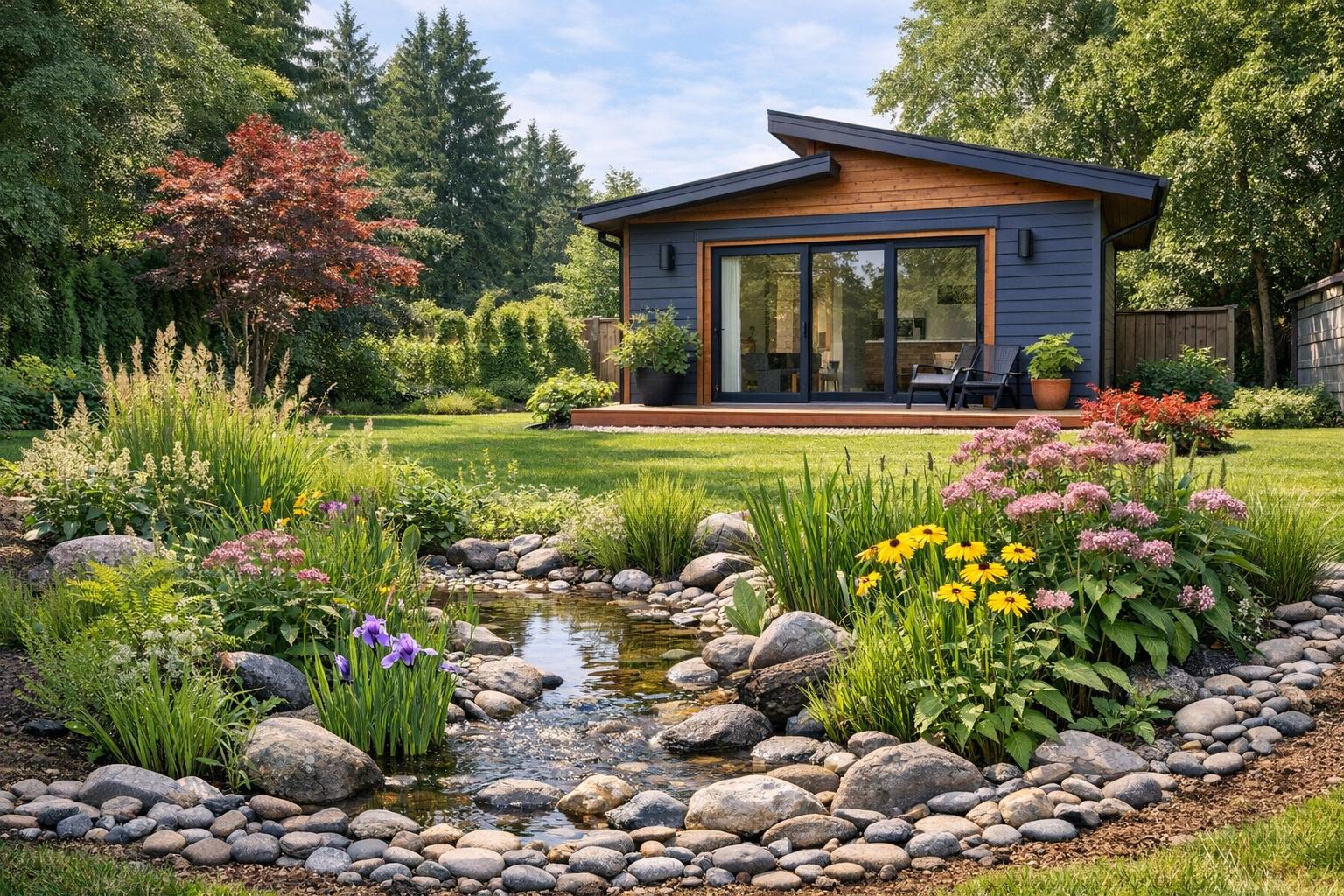
Rain Garden Integration for ADUs in Canada: Sustainable Stormwater Solutions for 2026
Estimated reading time: 5 minutes
Key Takeaways
- Eco-Friendly Solution: Rain gardens efficiently manage stormwater while reducing flood risks.
- Enhanced Property Value: Integrating a rain garden with ADU landscaping supports sustainable development and increases market appeal.
- Canadian Climate Adaptation: Tailored plant selection and design meet the varied weather conditions across Canada.
- Compliance and Incentives: Following federal, provincial, and municipal guidelines ensures smoother permitting and potential funding benefits.
Table of contents
- Introduction: Rain Garden Integration for ADUs in Canada
- Understanding Rain Gardens: Stormwater Sustainability and Environmental Benefits
- The Importance of Stormwater Management for Homeowners
- Integrating Rain Gardens with ADU Landscaping: Step-by-Step Canadian Guidance
- Sustainability Benefits of Rain Garden Integration
- Stormwater Compliance and Incentives in Canada
- Maintenance Tips for Rain Gardens and ADU Landscaping
- Conclusion: Advancing Sustainability with Rain Garden Integration
- Frequently Asked Questions
Introduction: Rain Garden Integration for ADUs in Canada
Rain garden integration for ADUs is emerging as a practical, eco-friendly solution that Canadian homeowners can use to manage stormwater, boost sustainability, and improve ADU landscaping. A rain garden is a shallow, planted depression designed to capture, filter, and infiltrate stormwater runoff. These gardens reduce flooding, prevent excess water from overwhelming municipal systems, and improve water quality.
ADUs (Accessory Dwelling Units)—including garden suites and laneway homes—are secondary housing structures growing in popularity as a response to Canada’s housing needs. Integrating a rain garden with your ADU landscaping offers a smart, sustainable way to handle stormwater and enhance urban resilience.
For comprehensive ADU guidance, check out this resource.
Sources:
Understanding Rain Gardens: Stormwater Sustainability and Environmental Benefits
A rain garden is more than a garden bed—it’s a vegetated basin engineered for stormwater management. By using native plants and specialty soils, these gardens capture and absorb water, reducing runoff and filtering pollutants.
How Rain Gardens Work:
- Collect rooftop and surface runoff in a shallow, bowl-shaped area.
- Allow water to soak into specialized soils, filtering pollutants like oil and heavy metals.
- Reduce the water volume entering municipal stormwater systems.
- Facilitate gradual infiltration and groundwater recharge.
Environmental Benefits:
- Improved Water Quality: Native plants and microorganisms help trap contaminants.
- Flood Reduction: They mitigate overflow and lessen municipal drain strain.
- Pollinator Habitat: Supports local bees, butterflies, and birds.
- Urban Biodiversity: Enhances local ecological networks.
- Heat Island Reduction: Shading and transpiration cool urban areas.
For insights on urban stormwater solutions, visit this webinar.
Sources:
The Importance of Stormwater Management for Homeowners: ADU Landscaping and Canadian Conditions
With increasing rainfall, snowmelt, and extreme weather, proper stormwater management is essential for Canadian homeowners. Issues such as heavy precipitation and extensive impervious surfaces exacerbate drainage challenges, particularly in urban settings.
Common Canadian Drainage Issues:
- Heavy Rain and Snowmelt: Rapid water flow can overwhelm landscapes.
- Impervious Surfaces: Concrete, driveways, and ADU roofs hinder water absorption.
- Urban Flooding: Overloaded systems can cause localized flooding.
- Increased Runoff from ADUs: Additional hard surfaces intensify drainage problems.
For more on ADU permitting and local regulations, consult this guide.
Sources:
Integrating Rain Gardens with ADU Landscaping: Step-by-Step Canadian Guidance
Effective ADU landscaping in Canada requires thoughtful planning that considers local climate and site conditions. Integrating a rain garden complements ADU designs by enhancing stormwater management while boosting aesthetics and property value.
What is ADU Landscaping?
ADU landscaping encompasses the design, planting, and drainage planning for garden suites, coach homes, or laneway houses. For creative ideas, visit ADU Landscaping Ideas.
Step-by-Step Integration:
- Location Planning: Position the rain garden downslope of ADU roofs to capture maximum runoff while directing water away from both the main house and the ADU.
-
Combine Features: Link the rain garden with additional stormwater controls such as:
- Bioswales: Shallow, vegetated channels to safely direct overflow.
- Permeable Pavements: Use pervious materials for driveways and walkways.
- Choose Native Plant Species: Select region-appropriate plants including canopy trees, shrubs, and groundcovers that can tolerate wet and dry conditions.
- Create Visual and Environmental Value: Design the landscape with blooming plants, native grasses, and natural stone for both curb appeal and erosion control.
- Adapt to Regional Conditions: For example, in BC focus on rain-tolerant species, while in Ontario add winter protections for freeze-thaw cycles.
Vancouver’s Rain City Strategy and projects like those at the Cheakamus Centre serve as excellent examples of adapting public green stormwater solutions for private ADU use.
Sources:
Sustainability Benefits of Rain Garden Integration: Long-Term Gains for Homeowners
Integrating rain gardens with ADU landscaping not only addresses drainage but also enhances overall sustainability. These green solutions support water conservation efforts, reduce flood risks, and mitigate urban heat.
- Water Conservation: Captures and filters runoff, reducing demand on municipal water systems.
- Flood and Runoff Reduction: Decreases erosion risk by gradually releasing and cleaning stormwater.
- Lower Urban Heat: Increased plant cover cools the environment and lessens the urban heat island effect.
- Biodiversity and Habitat: Native plantings provide shelter and food for local wildlife.
- Community Benefits: Enhances green space in urban settings, promoting wellness and resilience.
Learn more about sustainable housing initiatives at Tiny Sustainable Living Homes.
Sources:
Stormwater Compliance and Incentives in Canada: Policy and Funding for ADU Landscaping
Government support for rain gardens and stormwater solutions is increasing in Canada. Federal, provincial, and municipal guidelines encourage the integration of green infrastructure with ADU projects.
Federal and Provincial Guidelines:
- Canada’s Natural Infrastructure Fund: Supports projects like rain gardens with financial backing.
- Ontario’s Provincial Planning Statement: Advocates low-impact development techniques including rain gardens and permeable surfaces.
- Blueprint for More and Better Housing: Recommends green retrofits alongside ADU installations.
Municipal Initiatives:
- Hamilton, ON: Offers incentives linking ADU permits with stormwater solutions.
- Vancouver, BC: Integrates ADU approvals with stormwater mitigation requirements.
For more details on Hamilton programs, visit Hamilton ADU Programs and for policy insights, refer to Blueprint for More and Better Housing. Also, check out this rain garden program.
Sources:
Maintenance Tips for Rain Gardens and ADU Landscaping: Sustaining Stormwater Performance
Regular upkeep is key to ensuring that your rain garden and ADU landscape continue to perform optimally. A well-maintained system enhances stormwater function and extends the lifespan of your green infrastructure.
Essential Maintenance Checklist:
- Quarterly Inspections: Check for sediment, debris, erosion, and any signs of poor drainage.
- Soil Care: Aerate the soil annually and replenish specialized rain garden soil if necessary.
Seasonal Maintenance Tips:
- Spring: Remove winter debris and replant perennials to reduce overcrowding.
- Summer: Water new plantings and monitor for pests or signs of stress.
- Fall: Reapply mulch for insulation and remove annual weeds before seed formation.
- Winter: Keep channels clear to prevent ice dams and monitor for heavy buildup.
For community care models and additional maintenance advice, read more at this resource.
Sources:
Conclusion: Advancing Sustainability with Rain Garden Integration for ADUs in Canada
Rain garden integration for ADUs offers Canadian homeowners a reliable, sustainable method for managing stormwater and reducing flood risks. By utilizing green infrastructure and thoughtful landscaping, properties become climate-resilient while adhering to current local and federal policies.
Take action today:
- Research your municipality’s requirements for ADU and rain garden installations.
- Plan with professionals or community groups to choose the right design and plant selection. For inspiration, visit this ADU landscaping guide.
- Apply for available government funding and incentives to reduce upfront costs.
Rain gardens are a practical investment that not only beautify your property but also ensure a sustainable future for your community.
For further reading:
Frequently Asked Questions
Q1: What is a rain garden?
A rain garden is a shallow, planted depression designed to capture, filter, and infiltrate stormwater runoff, reducing flooding and improving water quality.
Q2: How do rain gardens benefit ADU landscaping?
Integrating a rain garden with ADU landscaping helps manage runoff effectively, enhances property value, meets regulatory requirements, and supports overall sustainability with native plants.
Q3: What maintenance is required for a rain garden?
Regular inspections, seasonal care (e.g., debris removal in spring, mulching in fall), and annual soil aeration are essential to maintain optimal performance.
Q4: Are there any funding or incentive programs available?
Yes, federal, provincial, and municipal programs offer grants, rebates, and technical support for integrated rain garden and ADU landscaping projects.
Leave a Reply