

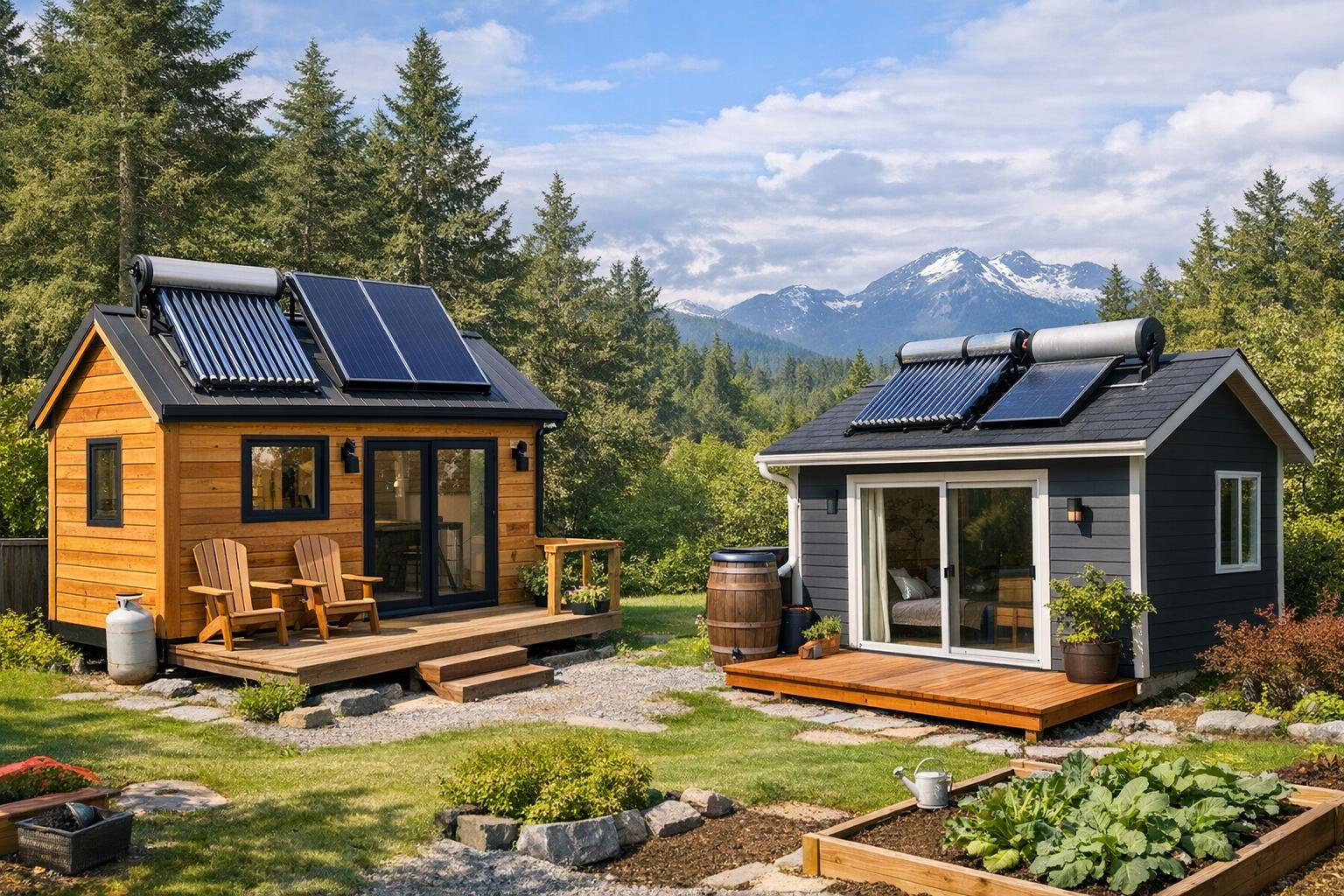
Solar Water Heating: Efficient Energy for Tiny Home Energy and ADU Utilities in Canada
Estimated reading time: 8 minutes
Key Takeaways
- Renewable Efficiency: Solar water heating provides an eco-friendly and cost-effective solution for tiny homes and ADUs in Canada.
- Climate-Adapted Designs: Systems like glazed and unglazed collectors are tailored to handle harsh Canadian winters, ensuring optimal performance.
- Space-Saving Utility: Compact installations meet strict space and design requirements while reducing reliance on traditional energy sources.
- Incentives & Innovations: Numerous government programs and community projects promote the adoption of solar water heating, driving local innovation.
Table of contents
Overview of Solar Water Heating Systems
How Solar Water Heating Works
Solar water heating systems capture sunlight using either glazed collectors (with glass insulation ideal for cold climates) or unglazed collectors (a more affordable option frequently used for seasonal needs). The process involves:
- Capturing sunlight via solar collectors.
- Heating a fluid which is then used to warm water stored in an insulated tank.
Benefits: Lower Emissions and High Savings
By offsetting approximately 220 kg of CO2e per year and reducing water heating bills by 20–40%, solar water heating stands as a sustainable alternative to traditional water heating methods.
Main Types of Systems in Canada
- Solar Air Heating Systems: Widely adopted, especially in Quebec, with robust performance in winter.
- Liquid-Based Systems with Drainback Tanks: Ideal for compact homes, using freeze-resistant fluids and self-draining designs.
- Emerging Technologies: Such as custom parabolic troughs gaining traction in regions like Alberta.
Learn more at Natural Resources Canada and Solar Thermal World.
Tiny Home Energy and ADU Utilities: Unique Challenges and Needs
Tiny Home Energy Obstacles
Tiny homes and ADUs face several challenges, including:
- Limited roof space: Careful planning is essential for installing solar collectors and ventilation systems.
- Moisture management: Small spaces require solutions like HRV/ERV systems to combat humidity.
- Snow load concerns: Roofs must support both heavy snowfall and rooftop equipment.
- Zoning and legal hurdles: Varied provincial and municipal regulations require careful navigation.
Why Scalable and Efficient Solutions Are Needed
Solar water heating reduces grid dependency by providing direct hot water supply, can integrate with off-grid setups, and requires minimal electrical input.
For legal and off-grid insights, visit Adustart Tiny Home Legal Requirements and Off-Grid Living in Canadian Tiny Homes.
Installing Solar Water Heating in Tiny Homes and ADUs in Canada
Step 1: Assess Site Conditions
- Climate suitability: Use guides (e.g., from NRCan) to choose the right system for your region.
- Roof strength and snow load: Ensure your roof can bear the added weight.
- Space and orientation: A south-facing, unobstructed area maximizes solar gain.
Refer to this Ontario guide for detailed permitting steps.
Step 2: System Selection
- Compact glazed collectors: Designed for efficiency in cold climates, with drainback features for freeze protection.
- Accurate sizing: Tailor the system to the needs of 1-3 person households common in tiny homes.
- Cold-climate components: Choose antifreeze-based fluids or drainback designs to handle extreme temperatures.
Explore more DIY and system details at NRCan’s solar water heating initiatives and Adustart’s utilities guide.
Step 3: Permitting and Regulations
- In Ontario, file an ESA notification for electrical connections.
- For British Columbia, obtain approval from Technical Safety BC.
- Review specific zoning and building bylaws for ADUs or laneway suites in your area.
More regulation details can be found in this guide.
Step 4: Installation Process
- Hire licensed professionals: Engage certified electricians and plumbers as needed.
- System connections: Securely link the solar heating loop to your home’s water and electrical systems.
- Inspections and metering: Ensure all work is inspected and, if grid-tied, coordinate for net metering.
Read more about legal requirements at Adustart Legal Requirements and NRCan’s initiatives.
Step 5: Regional Climate Considerations
- Cold-climate adaptations: Drainback tanks and collectors rated for -40°C are essential in harsh winters.
- Provincial specifics: For instance, Quebec’s codes favor robust air collectors; other regions may offer unique rebates and requirements.
Additional insights are available at Solar Thermal World and this winterization checklist.
Energy Savings and ROI of Solar Water Heating in Small Canadian Homes
Cutting Utility Costs
Pilot systems have demonstrated significant energy savings, such as delivering 1,193 kWh in just nine months, while lowering heating bills and reducing reliance on fossil fuels.
Return on Investment (ROI)
- Longevity: Systems typically last around 25 years with minimal maintenance.
- Cost Savings: Annual savings range from $200 to $600, while installation costs are generally between $5,000 and $15,000.
- Value Proposition: A $10,000 system may pay for itself in 8–12 years through reduced utility bills.
Incentives, Rebates, and Policy Factors
Provincial initiatives, such as Quebec subsidies and CleanBC rebates, offer additional financial incentives, although federal grants currently exclude solar thermal systems.
Further comparisons and cost details can be found at NRCan and Adustart Energy Efficiency.
Sustainable Living in Canada: The Role of Solar Water Heating and Renewable Energy
Reducing Carbon Footprints and Advancing Sustainability
Integrating solar water heating into tiny homes and ADUs directly reduces fossil fuel use, aligns with net-zero goals, and supports local innovation.
Supporting Community and Indigenous Initiatives
Community projects and Indigenous-led initiatives not only drive sustainable manufacturing but also create skilled job opportunities. This approach embodies the long-term vision of “Seven Generations” stewardship.
Market Growth and Complementary Solutions
With a 27% growth in the Canadian solar thermal market in 2023, solar water heating is emerging as an essential component of a diversified renewable energy portfolio—complementing solar PV and modern heat pumps.
For further reading, visit Off-Grid Living in Canadian Tiny Homes and Eco-Tourism Tiny Homes in Canada.
Conclusion
Solar water heating is revolutionizing energy solutions for tiny homes and ADUs across Canada. It cuts utility bills, lowers emissions by over 200 kg CO2e annually, and provides a reliable source of hot water even in extreme winter conditions.
The immediate benefits include:
- Up to a 40% reduction in water heating costs.
- Long-term reliability with low maintenance needs.
- A sustainable pathway towards renewable energy adoption.
For more information, explore NRCan’s guides and local subsidy programs. With solar water heating, you join thousands of Canadians driving a shift toward sustainable, efficient living.
Frequently Asked Questions
What is the typical lifespan of a solar water heating system?
Most systems are designed to last around 25 years with proper maintenance.
Can solar water heating systems be used in extremely cold climates?
Yes, with the use of cold-climate adaptations such as drainback tanks and freeze-resistant components, these systems are well suited for Canadian winters.
What permits are needed for installation?
Permitting requirements vary by province. For example, Ontario requires an Electrical Safety Authority notification while British Columbia mandates approval from Technical Safety BC. Always consult local regulations.
Are there financial incentives available?
Yes, provincial rebates and subsidies, such as those in Quebec and CleanBC incentives, can help offset installation costs.
Leave a Reply