

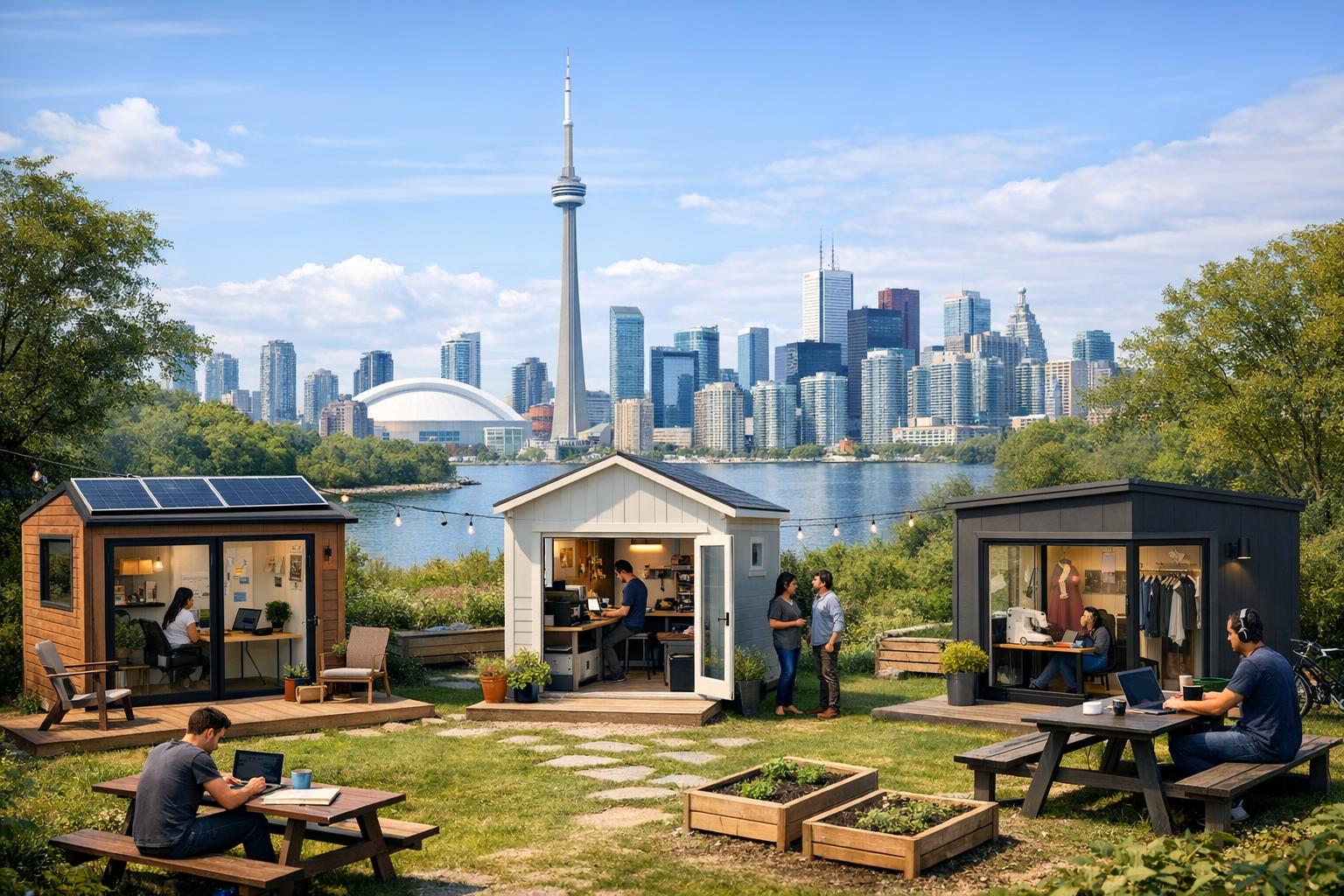
Revolutionizing Canadian Entrepreneurship: The Rise of the Tiny Home Business Incubator
Estimated reading time: 7 minutes
Key Takeaways
- Affordability & Flexibility: Tiny home and ADU office incubators offer cost-effective workspaces with adaptable layouts.
- Innovative Work Environments: They leverage modular design and shared amenities to foster collaboration and creativity.
- Community & Mentorship: These incubators nurture Canadian startups with critical mentorship, networking, and community-building opportunities.
- Scalable Solutions: Incremental growth is supported through flexible configurations ideal for evolving business needs.
- Policy & Growth: Municipal and provincial reforms are paving the way for sustainable, affordable workspaces.
Table of Contents
- Understanding Tiny Homes and ADU Offices
- The Role of Business Incubators in Supporting Startups
- The Power of Coworking Spaces in Tiny Home Incubators
- Supporting Tiny Home Startups through Innovative Spaces
- Paving the Way for Canadian Entrepreneurship
- Practical Steps for Municipal Leaders and Property Owners
- Conclusion
- Frequently Asked Questions
Understanding Tiny Homes and ADU Offices
Canada’s evolving business landscape meets its match with tiny home business incubators. These innovative setups integrate tiny homes – compact dwellings typically under 400 square feet – with ADU offices, also known as Accessory Dwelling Unit offices, to create shared workspaces perfect for startups. They are designed for minimalism, portability, efficiency, and smart space utilization.
Tiny Homes are known for their:
- Minimalism: They reduce life’s clutter. Read more at Tiny Home Living: A Comprehensive Guide to Minimalist, Sustainable, and Affordable Living in 2025.
- Portability: Built on trailers, they can be relocated easily. Discover innovative concepts in Portable Homes: Exploring Mobile Living, Affordability, and Sustainable Housing Solutions.
- Efficiency: Optimized insulation and storage make every inch count. Learn more at Tiny Homes: Space Optimization, Cost-Effective Living, and Sustainable Design Explained.
ADU Offices include backyard cottages, converted basements, or above-garage suites repurposed into functional workspaces. They address housing affordability, urban density, and evolving zoning rules. For comprehensive insights, visit Accessory Dwelling Units: The Ultimate Guide to ADUs for Canadian Property Investment and Canadian ADU Regulations: A Comprehensive Provincial Guide to Secondary Suites, Zoning Laws, and Building Permits.
Key features making these setups ideal include:
- Affordability: Costs can be 50–70% less than standard commercial properties. More details can be found in Affordable Housing: Innovative Solutions and Practical Strategies for Budget-Friendly Homes.
- Flexibility: Modular designs allow quick reconfiguration. Explore this further at Prefab House Revolution: How Modular Design is Redefining Modern Housing with Cost Savings, Fast Construction, and Sustainability.
- Adaptability: With technology like solar power, these units work year-round. See How to Build a Winter-Proof Tiny Home Designed for the Harsh Canadian Climate and The Ultimate Guide to Energy Efficiency Tiny Homes: Smart Strategies for Sustainable Canadian Living.
- Convertibility: Simple additions transform them into dynamic business hubs. Read about practical setups at Home Office Solutions: How ADU Offices and Backyard Workspaces Boost Remote Work Productivity.
The Role of Business Incubators in Supporting Startups
Traditional business incubators provide essential support in the form of mentorship, shared office spaces, technical resources, and access to investors. They guide startups from a nascent idea to a tangible market presence.
Tiny home business incubators build on this model by clustering several units to form a vibrant campus where founders benefit from peer-to-peer learning and community engagement. Resources like BDC: Business Incubators and Innovation Cluster – What is a Startup Incubator offer deep insights into their operations.
Canadian examples: Organizations such as Velocity in Kitchener and RIC Centre in Mississauga demonstrate the potent mix of innovation and structured support.
The Power of Coworking Spaces in Tiny Home Incubators
Coworking spaces promote flexible work arrangements and collaborative community dynamics. By integrating tiny homes and ADU offices, entrepreneurs enjoy private pods alongside communal areas.
These spaces offer benefits including reduced isolation, hot-desking, regular networking events, and access to amenities like high-speed internet and meeting rooms. For further reading on coworking benefits, see Innovation Cluster – What is a Startup Incubator and insights from BDC: Business Incubators.
Supporting Tiny Home Startups through Innovative Spaces
A growing niche of tiny home startups in Canada is harnessing modular construction, green energy, and tech-enabled housing solutions. Incubators provide dedicated spaces for prototyping, testing, and refining designs.
Key supports include:
- Prototyping and Testing: Onsite units allow rapid experimentation. Learn about innovative building techniques in Prefab ADU vs. Custom Build: A Comprehensive Guide on Construction Cost, Build Timeline, and Sustainable Materials.
- Mentorship Pathways: Industry experts help navigate zoning and municipal codes. Detailed guidance is available at Canadian ADU Regulations: A Comprehensive Provincial Guide to Secondary Suites, Zoning Laws, and Building Permits.
- Cost-efficient Scaling: Shared infrastructure reduces prototype-to-market timelines.
- Shared Maker Tools: Workshops equipped with 3D printers and CNC routers catalyze product development.
Collaborative events such as hackathons and demo days further fuel innovation. For insights on sustainable, net-zero designs, see Building Net-Zero Tiny Homes in Canada: A Complete Guide to Sustainable Living and Energy Efficiency.
Paving the Way for Canadian Entrepreneurship
The tiny home business incubator model uniquely addresses the challenges of unused land, soaring commercial rents, and the need for affordable workspaces. Municipalities are repurposing vacant lots and backyards while reforming zoning laws to facilitate these innovative hubs.
Policy considerations include:
- Zoning Reforms: Simplifying the approval process for converting tiny homes into commercial spaces. Read more at Ontario ADU Zoning: A Comprehensive Guide to Accessory Dwelling Unit Requirements and Regulations.
- Grants and Incentives: Provincial and federal support for green building projects are crucial, as detailed in ADU Grants Canada: How to Unlock Municipal Incentives and Build Affordable Secondary Suites.
Economic benefits include job creation, accessible workspaces, and strengthened local networks, setting the stage for a resilient entrepreneurial ecosystem.
Practical Steps for Municipal Leaders and Property Owners
Transforming ideas into reality involves a strategic approach. Municipal leaders and property owners can begin by assessing potential sites, partnering with incubator networks, securing funding, and building community infrastructure.
Steps to implement include:
- Assess Potential Sites: Identify vacant corridors, empty lots, or large backyards. Confirm zoning compliance using guidelines from Backyard Cottage: The Practical Canadian Guide to Design, Value, Zoning, DIY Building, and More.
- Partner with Incubator Networks: Collaborate with organizations like Velocity or Innovation Cluster. Learn more at Canada’s top business incubators and Innovation Cluster – What is a Startup Incubator.
- Secure Funding: Explore federal and provincial grants. Additional details are provided at Canadian business incubator and accelerator programs.
- Build Community Infrastructure: Install shared amenities like fibre-optic internet, communal kitchens, and meeting areas. For design inspirations, visit BDC: Business Incubators.
- Learn from Pilot Projects: Study successful models seen in cities like Peterborough and Vancouver for adapting traditional workspaces to tiny home configurations.
Conclusion: Why Invest in Tiny Home Business Incubators?
Tiny home business incubators merge the benefits of traditional incubators with the affordability and adaptability of ADU offices and coworking spaces. This model delivers cost-effective solutions, scalable designs, and vibrant communities, fueling Canadian entrepreneurship.
By embracing these innovative workspaces, municipalities and property owners can unlock economic growth, empower startups, and foster community resilience for generations to come.
Frequently Asked Questions
Q: What makes tiny home business incubators unique?
A: They blend affordable, modular tiny homes or ADU offices with mentorship, shared resources, and a strong entrepreneurial community.
Q: How can municipalities support these incubators?
A: By reforming zoning laws, offering grants for sustainable projects, and leveraging underused urban spaces, local governments can foster growth and innovation.
Q: Where can I learn more about building or converting these units?
A: Resources and detailed guides are available through links such as Accessory Dwelling Units: The Ultimate Guide and industry insights at BDC: Business Incubators.
Leave a Reply