

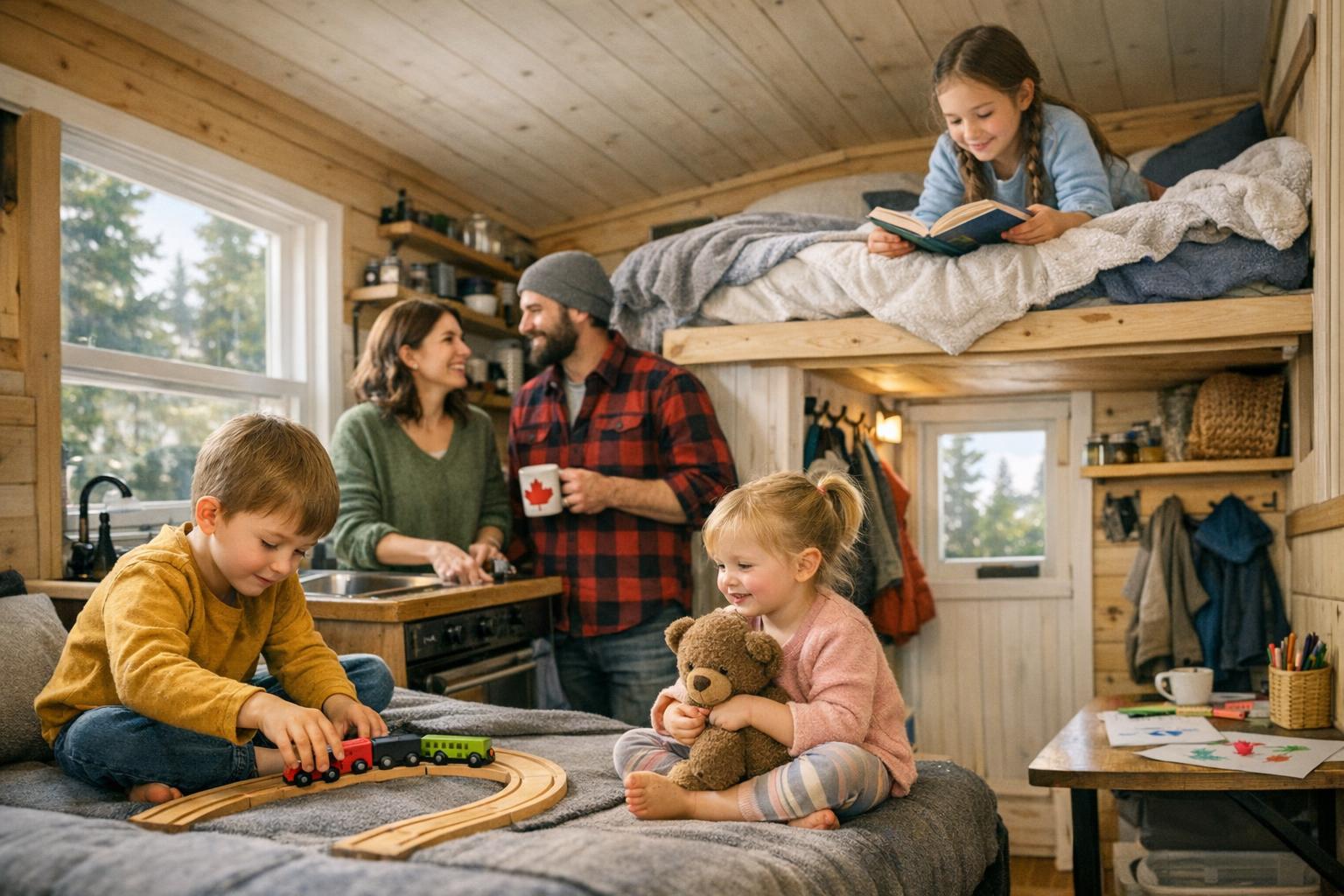
Raising Kids in Tiny Homes – Family Living Solutions in Canada
Estimated reading time: 7 minutes
Key Takeaways
- Affordability and Sustainability: Tiny homes offer Canadian families an affordable, eco-friendly alternative to traditional housing.
- Innovative Family Living: Clever design and multi-functional spaces help maintain privacy, foster community, and support child development.
- Regulatory Considerations: Local zoning rules and building codes are key when transitioning to a tiny home lifestyle.
- Real-Life Adaptations: Canadian families share inspiring stories of how they create safe, engaging small spaces for kids.
Table of Contents
- Introduction: Tiny Homes Kids Family Living in Canada
- Exploring the Tiny Home Lifestyle for Families in Canada
- Real-Life Stories of Canadian Families Living with Kids in Tiny Homes
- Design Tips for Making Tiny Homes Kid-Friendly
- Child-Focused Solutions for Family Living in Tiny Homes
- Navigating Tiny Home Family Living in the Canadian Context
- Conclusion: Tiny Homes Kids Family Living in Canada’s Small Spaces
- Frequently Asked Questions
Tiny homes are transforming how Canadian families view living, parenting, and sharing space. Originally seen as a trend, they now represent a practical solution to soaring housing costs while unlocking new opportunities for family bonding. These compact dwellings, ranging from 130 to 500 square feet, are not without challenges – especially when you have children. Yet, they pave the way for affordable and sustainable living.
In Canada, the tiny homes market is booming. For example, the Canadian market reached a value of USD 352.85 billion in 2024, with projections rising to USD 432.53 billion by 2032. This surge is fuelled by a demand for economical housing alternatives as urban real estate continues to be out of reach for many families. Read more on this trend at Canada Tiny Homes Market.
Families embracing tiny home living experience both minimalist parenting and tighter family bonds. Despite the challenge of limited space, many parents see these homes as a unique opportunity to foster creativity, sustainability, and nuanced approaches to everyday life.
Additional insights can be found at Coherent Market Insights and through guides like Adustart Tiny Home Living Guide as well as the benefits detailed on Adustart Tiny Home Living Benefits.
The move to tiny homes is a response to some of Canada’s most pressing housing challenges. Families are adopting these compact dwellings to counter high real estate prices, economic uncertainties, and to pursue a more sustainable lifestyle, all while retaining comfort and community spirit.
Key driving forces include:
- Economic Pressures: With traditional homes becoming expensive, tiny homes present a cost-effective alternative.
- Sustainability and Minimalism: Families are increasingly focused on reducing their ecological footprint and simplifying life.
- Cultural Shifts: There is a growing movement towards owning less and emphasizing shared experiences.
Unlike the confined spaces of urban micro-condos, tiny homes in provinces with expansive lands allow families room to customize their living areas. For example, innovators in Saskatchewan, Manitoba, and Alberta are offering adaptable and community-friendly designs. Explore more at Data Bridge Market Research and Real Economy Canada Housing Data.
While data and builder stories provide insights, real-life profiles of Canadian families in tiny homes bring a personal touch. Consider the following examples:
Family A: Everyday Adaptations in a 300 sq ft Tiny Home
- Multi-purpose Furniture: A table that serves as a workspace, dining area, and play zone.
- Daily Routines: Activities like hiking or biking in nearby trails foster physical health and sibling bonding.
- Community Connection: Interaction through shared community gardens and local playgrounds enriches their daily life.
Family B: Outdoor Lifestyles in a 400 sq ft Home
- Flexible Spaces: Use of curtains to create privacy between sleeping areas.
- Seasonal Adaptation: In warmer months, family activities move outdoors to embrace nature.
- Shared Community Resources: Local parks and libraries offer essential spaces for play and learning.
These authentic stories highlight resourcefulness and adaptability. For further readings on family-friendly tiny homes, visit Adustart Family-Friendly Designs.
Adapting a tiny home for kids involves balancing creative design with practical functionality. Here are some strategies:
Space-Saving Solutions
- Multi-functional Furniture: Loft beds with built-in storage or desks underneath maximize dual use.
- Vertical Storage: Wall-mounted shelves and ceiling racks keep belongings off the limited floor space.
- Sliding Partitions: These create instant private zones for studying or resting.
- Stackable Seating: Nesting chairs or foldable stools adapt easily for different activities.
Safety in Tiny Homes with Kids
- Childproofing: Pad sharp edges and secure furniture to prevent accidents.
- Stable Loft Areas: Ensure sturdy railings and secure gates on loft beds and stairs.
- Secure Stairways: Use non-slip surfaces and handrails to boost safety.
These design tips help ensure that tiny homes remain safe, functional, and engaging for all family members. More ideas can be found at Adustart Kid-Friendly ADU Design.
Designing a tiny home that supports child development requires innovative planning to meet both educational and play needs:
Built-In Creativity and Play
- Creative Nooks: Window benches with storage or foldaway art tables create inspiring spaces.
- Dedicated Zones: Use color, rugs, or shelving to delineate play areas from rest zones.
- Compact Study Areas: Wall-mounted desks with built-in shelves provide space for homework and crafts.
Outdoor and Community Resources
- Local Parks: Extend play and learning into outdoor environments.
- Community Engagement: Libraries, community centres, and recreational programs offer vital extra space for kids.
Such strategies help balance togetherness and individuality while fostering a nurturing environment. Learn more about these approaches at Adustart Tiny Home Living Guide.
Tiny homes provide Canadian families with a unique opportunity to combine affordability, sustainability, and creative living in compact spaces. With forecasted market growth reaching USD 432.53 billion by 2032, innovative design and resilient parenting continue to drive this housing revolution.
Key takeaways:
- Sustainability and affordability: Tiny homes help families save money while reducing their environmental impact.
- Family bonds and challenges: Living in a small space encourages creative routines to balance privacy and togetherness.
- Child-friendly solutions: Innovative, multi-functional designs ensure that kids have ample room to learn and play.
- Regulatory navigation: Understanding local zoning and building codes is crucial for a successful tiny home lifestyle.
For more details and ongoing insights into this lifestyle, visit Canada Tiny Homes Market, check out Coherent Market Insights, or read guides on tiny home living and family-friendly designs.
If you’re ready to join the tiny home revolution, begin by connecting with local groups, researching your province’s regulations, and envisioning a future of sustainable, resilient family living.
Frequently Asked Questions
Q1: Are tiny homes a practical solution for families with children?
A: Yes, many Canadian families find that with creative design and smart space-saving solutions, tiny homes offer a practical, cost-effective environment that also fosters closer family bonding.
Q2: What are the main challenges of living in a tiny home?
A: Key challenges include limited space for play and privacy, the need for multi-functional furniture, and navigating local building codes and zoning regulations.
Q3: How can families ensure their tiny home is safe for kids?
A: By installing childproof features, using stable loft designs, and ensuring that safety measures like padded furniture edges and non-slip surfaces are in place, families can create a secure environment for children.
Q4: Where can I find reliable resources on tiny home living in Canada?
A: You can refer to resources such as Data Bridge Market Research and Coherent Market Insights for market data, as well as guides on tiny home living for practical advice.
Leave a Reply