

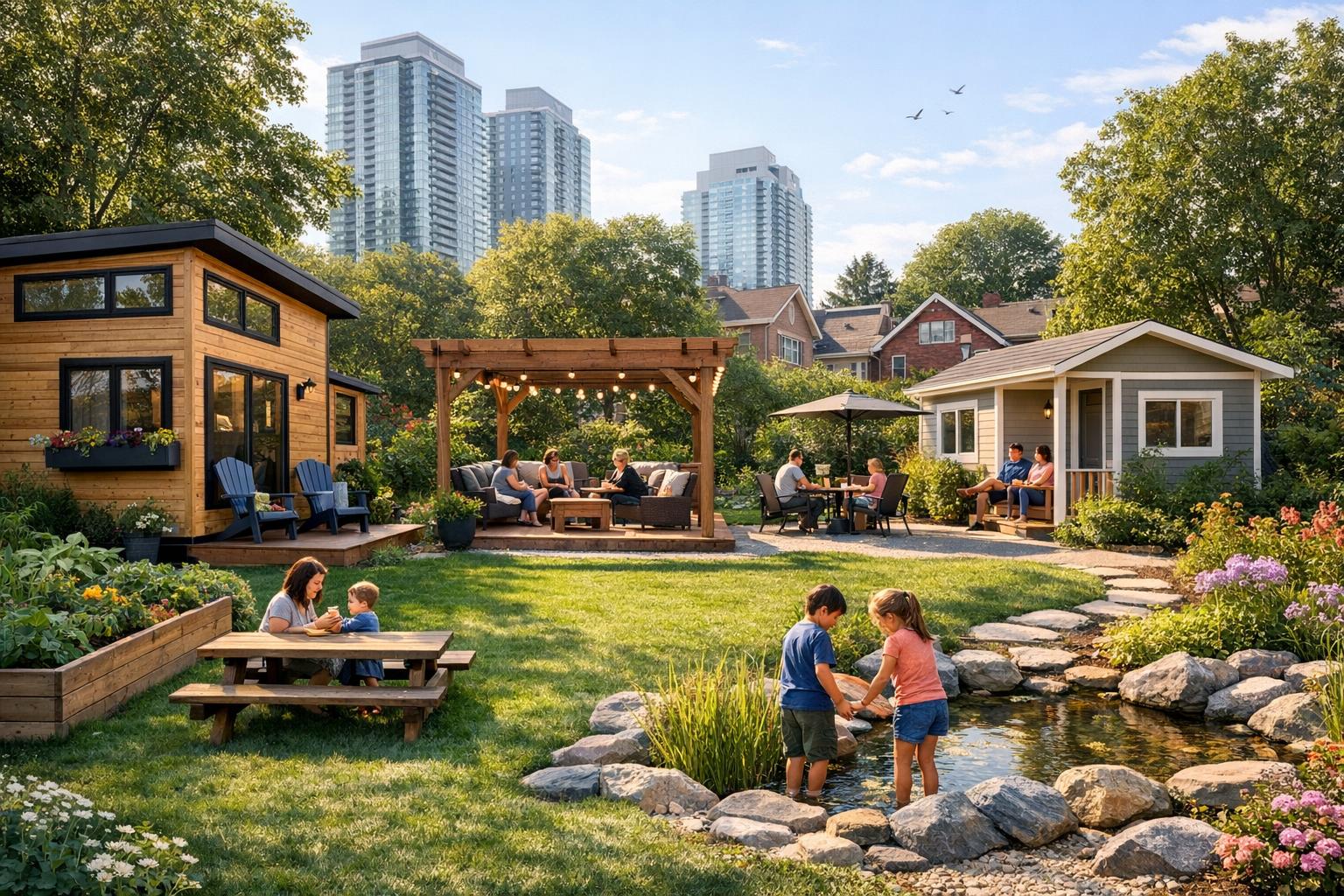
Urban Pocket Parks: Integrating Tiny Homes, ADUs, and Shared Greenspace in Canadian Neighbourhoods
Estimated reading time: 8 minutes
Key Takeaways
- Urban Pocket Parks provide essential greenspace in dense urban environments, transforming underused lots into community havens.
- Tiny Homes and ADUs offer sustainable, affordable living options that relieve housing shortages while fostering community ties.
- Shared Greenspaces promote mental and physical well-being by offering recreational and social opportunities for residents.
- Urban Planning strategies including flexible zoning and mixed-use developments are essential to successfully integrate housing with nature.
Table of Contents
- Introduction: Urban Pocket Parks, Tiny Homes, and Shared Greenspace
- Tiny Homes and ADUs in Canadian Urban Contexts
- Role of Urban Pocket Parks in Enhancing Livability
- Integrating Urban Pocket Parks with Tiny Homes and ADUs
- Benefits of Incorporating Urban Pocket Parks in Tiny Home Communities
- Practical Tips for Homeowners and City Planners
- Conclusion
- Frequently Asked Questions
Urban pocket parks are small, accessible greenspaces created from vacant city lots or underused parcels of land. In dense urban areas, these parks offer rare, neighbourhood-level access to nature, providing proximity to trees, grass, and fresh air for residents living in urban apartments or homes.
Modern housing options such as tiny homes—compact dwellings under 400 square feet—and Accessory Dwelling Units (ADUs), including backyard suites and garden suites, are addressing Canada’s housing crunch. These alternatives enable affordable living in desirable city areas while enhancing community life.
When combined with shared greenspace, which serves as a communal outdoor area, these elements deliver recreational, environmental, and social benefits. Policies and design strategies across Canadian cities now promote higher-density neighbourhoods that maintain access to nature and community amenities. Research confirms the benefits of urban pocket parks on well-being, as noted by source and source. Similarly, integrating tiny homes and ADUs helps mitigate housing shortages while fostering community, as seen in studies by source.
Tiny Homes, ADUs, and Their Appeal
Tiny homes are minimalist, highly efficient dwellings that emphasize sustainable and affordable living. Typically under 400 square feet, these homes use fewer materials and consume less energy, reducing both costs and environmental impact.
Accessory Dwelling Units (ADUs) are secondary homes situated on the same property as a primary residence—examples include backyard suites and garage apartments. ADUs provide housing flexibility in urban neighborhoods and support multigenerational living, rental opportunities, and affordable spaces for young adults and seniors.
Why Tiny Homes and ADUs Work in Cities:
- Sustainability: Lower material requirements and energy consumption.
- Affordability: More people can reside in high-demand city cores.
- Reduced Footprint: They contribute to walkable, resilient neighbourhoods.
- Housing Crisis Response: Increased housing units on existing land mitigate shortages and rising rents.
However, challenges remain. Zoning regulations, traditionally designed for detached houses, can obstruct or delay tiny home and ADU projects. For deeper insights on related zoning and permits, visit this guide and refer to data from source and source.
Opportunities: Connecting Housing to Greenspace
- Enhances resident well-being by alleviating urban stress and promoting outdoor activities.
- Strengthens community ties through shared gardens and parklets.
- Supports urban planning trends that prioritize density, health, and livability.
For practical perspectives on tiny home living, including insights into affordability and sustainability, refer to this resource.
Role of Urban Pocket Parks in Enhancing Livability
What Are Urban Pocket Parks?
Urban pocket parks are small, walkable greenspaces—often less than an acre—created within dense neighbourhoods. Repurposing vacant lots, road spaces, or other underused lands, these parks deliver outsized benefits by fostering community engagement, recreation, and beautification.
- Community Gathering: They serve as social hubs for events and casual meetups.
- Recreation: Enable small-scale sports, picnics, and playground activities.
- Aesthetic Value: Transform neglected urban spaces into vibrant community focal points.
Psychological and Environmental Benefits
- Restoration: Access to nature aids in stress reduction and mental health improvement.
- Air Quality: Vegetation helps cleanse urban air and cool city areas.
- Physical Well-being: Walkable and accessible parks encourage exercise and outdoor recreation, as supported by source and source.
For insights on how tiny living can influence mental health, visit this detailed discussion.
Why Shared Greenspace Matters for Tiny Homes and ADUs
- Promotes neighborly interactions, reducing isolation in urban settings.
- Provides safe, local outdoor spaces for families and children.
- Complements the smaller private spaces of tiny homes and ADUs, enhancing overall livability.
- Strengthens community sentiment as evidenced by initiatives from Parks Canada.
Integrating Urban Pocket Parks with Tiny Homes and ADUs: Urban Planning Strategies
Planning for Mixed-Use and Healthy Communities
Zoning and Land Use
- Mixed-Use Zoning: Allows residential developments that integrate public greenspace for a variety of uses.
- Flexible Land Policies: Simplify the process to convert vacant lots into parks or develop tiny home clusters with adjoining communal gardens.
- Greenspace Mandates: Require new high-density projects to include shared outdoor areas.
For detailed zoning and permitting insights, visit this zoning guide.
Design Strategies for Pocket Parks and Housing
- Low-Cost Conversions: Transform unused parking lots or derelict properties into multi-use parks.
- Integrative Site Design: Arrange tiny homes and ADUs around a central greenspace to form cohesive courtyard communities or micro-villages.
- Accessibility: Ensure parks are easily reachable from nearby residences, designed for all ages and abilities.
Real-World Examples
- London’s Lot Transformation: Successful conversion of small, derelict plots into valuable parks highlighted by source.
- Canadian Policy Models: National urban parks initiatives by Parks Canada support pocket park concepts through inclusive policies and conservation efforts.
Learn more about innovative approaches to urban infill and gentle density at this resource.
Benefits of Incorporating Urban Pocket Parks in Tiny Home Communities
Social and Community Benefits
- Social Cohesion: Pocket parks facilitate casual interactions, community events, and block parties.
- Community Events: Enable outdoor movie nights, cultural activities, and group gatherings.
- Mental Well-Being: Numerous studies, including source and source, associate proximity to greenspace with reduced stress and increased happiness.
Recreational and Economic Benefits
- Active Lifestyle: Shared greenspaces encourage walking, jogging, and outdoor play irrespective of housing type.
- Rising Property Values: Attractive parks can significantly boost local property values, as noted by economic analyses from Parks Canada.
- Local Business Boosts: Vibrant pocket parks often attract local cafés, food trucks, and small retail businesses.
Environmental Benefits
- Urban Biodiversity: Even small greenspaces support pollinators, birds, and native flora.
- Air Quality and Cooling: Vegetation in parks helps reduce urban heat and purify air.
- Resilience: Greenspaces offer buffers against flooding and heat waves, a benefit increasingly important under climate change, as shown by source and supported by source.
For additional environmental strategies and sustainable design practices for tiny homes, visit this resource.
Practical Tips for Homeowners and City Planners: Making Urban Pocket Parks Work
For Homeowners in Tiny Home and ADU Projects
- Advocate for Pocket Parks: Organize with neighbours, share research on the benefits of greenspace (source and source), and engage local authorities.
- Understand Zoning Laws: Review local bylaws and participate in public consultations to support park conversions.
- Support Community-Led Projects: Volunteer for park programming, clean-up, or planting initiatives. More insights on community engagement can be found here.
For City Planners: Building with Shared Greenspace in Mind
- Policy and Zoning Reforms: Implement mixed-use zoning strategies that require shared greenspaces in new developments.
- Design and Mapping Tools: Utilize GIS to identify potential micro-park locations and incorporate community feedback early.
- Maintenance and Programming: Establish community associations or local funding initiatives to sustain park maintenance and programming, as suggested by source and source.
For further homeowner and community-oriented insights related to tiny home development, check out this resource.
Conclusion: Urban Pocket Parks, Tiny Homes, and Shared Greenspace for Canadian Neighbourhoods
Integrating urban pocket parks with tiny homes and ADUs offers a transformative blueprint for modern urban planning in Canada. This synergy drives:
- Community Cohesion: Shared greenspaces anchor vibrant, friendly neighbourhoods.
- Recreational Opportunity: Immediate access to nature enhances quality of life for all residents.
- Economic and Environmental Gains: Attractive parks bolster local economies and promote ecological resilience.
- Enhanced Livability: Combining housing innovations with greenspace cultivates healthier, more engaging urban communities.
Canadian cities are evolving with innovative policies and design practices. By collaborating across residents, homeowners, and city planners, these integrated developments pave the way for a sustainable and resilient urban future. Explore more on this topic via Parks Canada and related insights from policy information and research.
Frequently Asked Questions
Q1: What are urban pocket parks and why are they important?
A: Urban pocket parks are small greenspaces created from underused urban land. They are essential for providing accessible nature, encouraging social interaction, and improving both mental and physical well-being.
Q2: How do tiny homes and ADUs contribute to urban living?
A: Tiny homes and ADUs offer affordable, sustainable housing options that can alleviate pressure on urban areas. Their compact design not only lowers environmental impact but also promotes community by integrating shared spaces.
Q3: What challenges exist in integrating pocket parks with tiny homes and ADUs?
A: One major challenge is navigating existing zoning regulations which were designed for traditional detached houses. Overcoming these challenges often requires policy reforms and community advocacy to support innovative, flexible urban planning strategies.
Leave a Reply