

Estimated reading time: 12 minutes
Key Takeaways
- Modular furniture is designed to be rearranged, expanded, or reduced as your needs change.
- For Canadian small spaces, it offers a smart mix of style, storage, and flexibility.
- Furniture subscription can reduce upfront costs and make moving, upgrading, or returning items easier.
- Small homes, remote work, and mobile lifestyles are driving more interest in adaptable interiors and flexible payment models.
- The best results come from measuring carefully, choosing multifunctional anchor pieces, and comparing provider terms before signing.
Table of contents
- Why Modular Furniture and Subscription Matter in 2026
- What Is Modular Furniture?
- Why Modular Furniture and Furniture Subscription Are Trending in 2026
- How Furniture Subscription Works
- Practical Advantages of Modular Furniture for Tiny Home Interiors
- Design Tips for Making Modular Furniture Work
- Cost, Value, and Environmental Impact
- How to Choose the Right Provider in Canada
- Real-Life Examples and Mini Case Studies
- Common Concerns and Objections
- Step-by-Step Plan for Implementing a Furniture Subscription Strategy
- Frequently Asked Questions
Modular Furniture for Small Homes in 2026: Why Subscription Is Changing Canadian Small Spaces
Modular furniture has become one of the smartest ways to furnish small homes in 2026, especially for people in Canadian small spaces who need style, storage, and flexible living without a major upfront cost.
Smaller homes, higher housing costs, remote work, and more mobile lifestyles are changing how people shop for interiors. At the same time, furniture subscription is becoming a practical option for renters, downsizers, and frequent movers who want monthly payments, easier swaps, and less long-term commitment.
This guide explains what modular furniture is, why it matters now, how subscription models work, what they cost, how to design better tiny home interiors, and how to choose the right provider in Canada using references such as CORT Canada, modular sofa comparisons from Made in CA, and compact-living resources from ADU Start small homes, tiny home living benefits, and minimalist declutter guide.
What Is Modular Furniture?
Modular furniture is furniture made from separate parts that work together.
Those parts can be moved, removed, added, or rearranged as your needs change. That is what makes modular furniture different from regular furniture. It is not just smaller. It is more adaptable.
This makes it a strong fit for:
- apartments
- condos
- studios
- tiny houses
- guest rooms
- multi-use family spaces
Common examples include:
- modular sofas with separate seats, arms, chaises, and ottomans
- modular storage units that stack up or spread across a wall
- sofa-beds and daybeds that change use
- modular kitchens and movable islands in compact homes
The main benefit is flexibility over time. You can start with a simple setup, then change it later if you move, begin working from home, need guest space, or add another person to the household.
A clear example is the Cozey Altus modular sofa highlighted in this modular sofa guide. A buyer can begin with four seats, then expand into a larger sectional by adding matching pieces later. The full look stays consistent, so the room does not feel patched together.
Modular design also gives people more control over shape, layout, and customization. That matters in small homes, where one wrong piece can make the whole room feel cramped.
For more background, see this overview of modular furniture, along with ADU Start resources on smart storage design and tiny home furniture in Canada.
Why Modular Furniture and Furniture Subscription Are Trending in 2026
Modular furniture and furniture subscription are rising for a simple reason: homes and lifestyles are changing faster than traditional furniture can keep up with.
Smaller homes and denser cities
Many people now live in smaller apartments, compact condos, laneway homes, and micro-units. In Canadian small spaces, every item has to earn its place.
In cities such as Toronto, Vancouver, and Montreal, high rents and limited housing supply are pushing more residents into smaller floorplans. Research-backed trend reporting also suggests average apartment sizes in major urban areas have dipped below 700 square feet in some markets. That makes space-saving and adaptable furniture much more important.
Remote and hybrid work
A living room may also need to be:
- a work zone
- a guest room
- a reading space
- a storage area
A modular sofa can divide a room, create a meeting backdrop, or open up floor space when needed. Storage benches and movable units help one room switch roles during the day.
Mobility and changing lifestyles
Many households do not want to buy large, fixed furniture sets anymore.
This includes:
- younger renters
- newcomers to Canada
- professionals moving for work
- students
- downsizers
- separated households setting up new homes
These groups often need flexible living options that can be returned, upgraded, or resized.
Sustainability and lower waste
People are also thinking more about waste. Instead of replacing full furniture sets every few years, modular systems let users repair one part, replace one section, or reconfigure what they already own. Subscription services can also support reuse and refurbishment.
People are placing more value on flexibility, easier moving, and lower commitment than on permanent ownership alone.
Together, these trends are making furniture subscription more normal in 2026. Helpful references include CORT Canada, Canadian modular sofa comparisons, and ADU Start guides on tiny home living benefits, minimalist living in Canada, and tiny home financing.
How Furniture Subscription Works
Furniture subscription is a service where you pay a monthly fee to use furniture for a set period. Many providers include delivery, setup, pickup, and sometimes swaps or upgrades.
It helps to separate three common models.
Rental
Rental is short-term access to furniture.
Best for:
- temporary housing
- staging
- relocations
- short leases
- corporate stays
Main benefit: easy service with delivery and pickup.
Main drawback: you usually do not build ownership.
Subscription
Subscription is a monthly plan built around flexibility.
Best for:
- renters
- people testing a new city
- people who want style updates
- households with changing needs
Main benefit: swaps, upgrades, or changes may be available after a minimum term.
Main drawback: total long-term cost may exceed buying if you keep the same pieces for many years.
Rent-to-own
Rent-to-own uses monthly payments that may lead to ownership.
Best for:
- people who may want to keep the furniture later
- shoppers who need to spread costs over time
Main benefit: possible path to ownership.
Main drawback: often less flexible than a true subscription or pure rental model.
Simple comparison table
| Model | Key features | Ideal user | Main advantage | Main drawback |
|---|---|---|---|---|
| Rental | Short-term use, serviced delivery and pickup | Temporary residents | Fast and easy | No ownership |
| Subscription | Monthly plan, possible swaps or upgrades | Flexible households | Adaptability | Can cost more long term |
| Rent-to-own | Monthly payments toward ownership | Budget-conscious long-term users | Ownership path | Less flexible |
What the process often looks like
- Choose your pieces or package
- Review minimum term
- Confirm delivery area
- Book delivery and setup
- Use the furniture for the agreed period
- Swap, extend, return, or purchase depending on the provider
Typical terms can range from a few months to several years. Some providers include professional installation. Some charge extra for early cancellation, premium swaps, or damage beyond normal wear.
Providers in the CORT Canadian network may also help with profile assessment, delivery, installation, and pickup. That can be especially helpful for newcomers or people moving often.
For people choosing modular furniture, subscription can make the process easier. You can begin with a smaller setup, then add pieces later instead of buying a full room all at once.
Additional provider references include Sitra Furniture Rentals, Divine Furniture Rental, and ADU Start reading on rental contracts for tiny homes and tiny home co-ownership.
Practical Advantages of Modular Furniture for Tiny Home Interiors and Other Small Spaces
Modular furniture works well in tiny home interiors because it solves real daily problems.
1. Space optimization
In tiny home interiors, one zone often needs to do three jobs.
Useful pieces include:
- sofa-beds
- storage ottomans
- stackable seating modules
- movable benches
- vertical modular storage
That means a living area can become a sleeping space or a work area without major renovation.
2. Lower upfront cost
Buying furniture all at once can be expensive. Furniture subscription spreads costs into monthly payments instead.
Some setups may fall roughly in the $100 to $300 monthly range, while purchased pieces can easily cost $1,000 or more upfront for just one main item. The exact amount depends on size, quality, and provider.
3. Easier upgrades as life changes
Modular furniture is built for change.
You can:
- add a seat for a partner
- create guest space with an ottoman
- remove sections before a move
- rework the layout for a baby or roommate
- expand storage when work gear increases
That makes it a natural fit for flexible living.
4. Less friction when moving or renovating
Large one-piece sofas can be hard to move through:
- tight hallways
- condo elevators
- narrow stairs
- small doorways
Modular pieces usually separate into smaller units. That reduces stress on moving day. Some furniture subscription providers also handle pickup and delivery, which removes another layer of hassle.
5. Maintenance and support
Some subscription services include support for wear and minor issues. That can lower the risk of paying full replacement cost if something goes wrong.
6. Easier style refreshes
In small rooms, clutter shows fast. A simple swap of covers, modules, or one major piece can make the whole home feel fresher. You do not always need a full redesign.
These benefits matter even more in Canadian small spaces, where square footage is often tight and renters may move more often than owners. See modular sofa options in Canada, subscription and rental support, and ADU Start resources on compact living storage design and downsizing and decluttering.
Design Tips for Making Modular Furniture Work in Tiny Home Interiors and Canadian Small Spaces
Good small-space design starts with planning, not shopping.
Measure first
Before choosing modular furniture, measure:
- room length and width
- doorways
- hallways
- corners
- stair turns
- elevator depth
- window clearances
In tiny home interiors under 400 square feet, modules under about 30 inches wide are often easier to fit, move, and rearrange.
Build around functions, not rooms
Instead of asking, “What goes in my living room?” ask, “What does this area need to do?”
It may need to support:
- lounging
- sleeping
- remote work
- dining
- storage
- hosting
This mindset leads to better layouts.
Use one main anchor piece
Start with one strong anchor, such as:
- a modular sofa
- a modular storage wall
- a daybed with storage
Then build around it. This keeps the room from feeling crowded.
Think vertically
Use modular storage towers and wall-based systems to save floor area.
A good mix is:
- closed storage for visual calm
- open shelving for lighter sightlines
This is especially useful in Canadian small spaces where coats, boots, and winter gear take up extra room.
Plan day-to-night transitions
A compact room should change easily.
Example:
- daytime: sofa against the wall, ottoman tucked away
- evening: ottoman moves out for extra seating
- night: chaise creates a lounge zone or the sofa converts for sleep
Use colour and texture carefully
Neutral base fabrics usually make a small space feel calmer.
Then add interest with:
- cushions
- throws
- removable covers
Too many strong colours can make a compact room feel busy.
Prioritize durable materials for Canada
Look for:
- kiln-dried wood frames
- durable polyester or performance fabrics
- washable covers
- sealed storage for boots and winter accessories
These choices handle humidity, daily use, and seasonal mess better.
Best modular furniture checklist for a small Canadian home
- right scale for the room
- easy-clean fabric
- simple access to storage
- pieces light enough to move
- modules that fit doors and elevators
- layouts that can change later
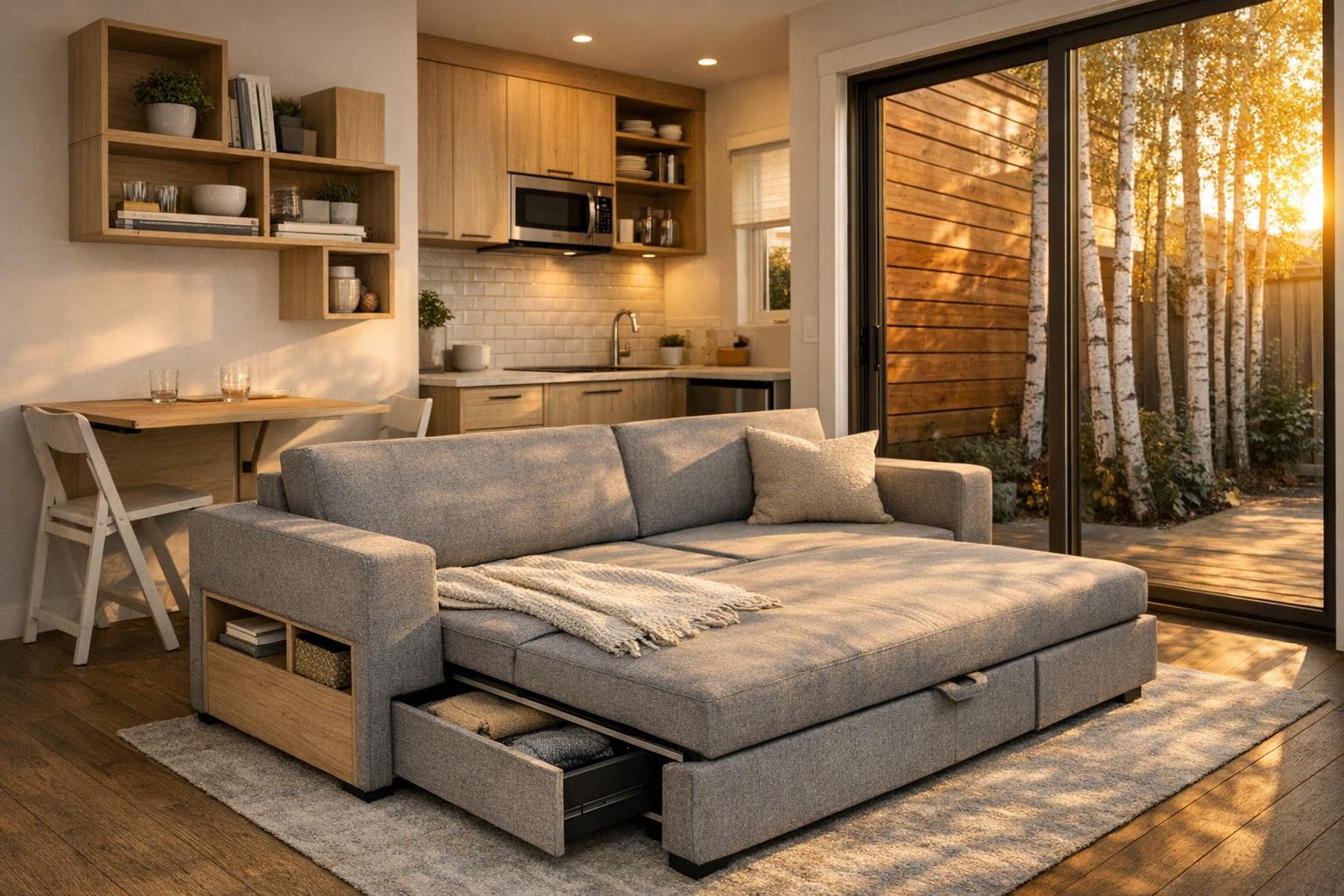
A useful visual for this section would show a modular furniture layout for tiny home interiors with sofa-to-bed conversion.
Supporting references include best modular sofas in Canada, modular furniture design ideas, tiny home storage solutions, and tiny home lighting design.
Cost, Value, and Environmental Impact
The real question is not only “What costs less?” It is also “What gives better value for my lifestyle?”
What you pay upfront
Buying furniture often means a large one-time payment.
Furniture subscription may start at zero upfront or with a small setup fee, depending on the provider. That can make a big difference for people setting up a home after a move, breakup, relocation, or downsizing.
What you pay over time
As a rough guide, a full living-room style subscription setup may cost about $150 to $400 per month. Buying comparable furniture outright may cost around $2,000 to $5,000, depending on materials, brand, and configuration.
A useful way to compare is this:
Buy
- upfront cost
- maintenance cost
- moving cost
- replacement risk
- resale effort
Subscribe
- monthly fee
- possible swap fees
- possible damage charges
- less moving logistics
- easier returns
When subscription makes more sense
Furniture subscription often gives better value if you:
- expect to move within 12 to 24 months
- want flexibility to upgrade
- are furnishing a temporary home
- want delivery and setup handled
- do not want resale stress
Buying may make more sense if you:
- love one specific piece
- plan to stay put for years
- want full ownership
- want resale control later
An illustrative two-year example
This is only an example, not a universal rule.
A purchased modular sofa may cost well over $1,000 upfront, with extra costs for delivery, moving, and possible replacement if your next space is too small. A CORT-style subscription setup may spread cost over two years and include service, pickup, and easier change options. In a short stay, that flexibility may offset the higher monthly spend.
Environmental impact
Modular furniture and subscription systems can also reduce waste.
Why?
- one damaged part may be replaced instead of the whole item
- products can be repaired and refurbished
- returned furniture may be reused by the next customer
- longer product life means less waste heading to landfill
Some cited claims suggest prolonged product life may lower embodied carbon by roughly 30 to 50 percent compared with shorter-use furniture that is discarded sooner. This should be treated as a cited sustainability claim, not a fixed rule for every product.
For flexible living, modular furniture often offers the best mix of budget flexibility and longer product use. More context is available from Canadian modular furniture examples, plus ADU Start resources on zero-waste tiny home living and eco-friendly materials in Canada.
How to Choose the Right Provider in Canada
Not every provider is equally suited to small homes, apartment living, or province-to-province moves.
When comparing furniture subscription options, use this checklist.
Provider checklist
- Delivery area: Do they serve your city or region?
- Setup and pickup: Is full-service installation included?
- Minimum term: How long are you locked in?
- Swap policy: Can you exchange items later?
- Damage policy: What counts as normal wear?
- Product range: Do they offer true modular furniture?
- Customization: Can you choose fabrics or configurations?
- Reviews and support: Is customer service responsive?
- Moving flexibility: What if you move cities or provinces?
- Small-space suitability: Are dimensions right for Canadian small spaces?
Provider snapshots
CORT Global Network
A broad-service option with furniture, relocation, and logistics support. Strong fit for corporate moves, newcomers, and people who need a wider service network.
https://www.cortglobal.com/canada/
Sitra Furniture Rentals
A Toronto-based full-service option that suits urban renters, temporary setups, and city living.
https://sitrafurniturerentals.com
Divine Furniture Rental
Another Toronto-area provider with furniture and décor selection for home setups.
https://divinefr.com/shop/
BOXX Modular
A modular space and package-oriented provider relevant to flexible setup needs and compact living solutions.
https://www.boxxmodular.ca
Cozey
Best viewed as a buy-and-expand modular furniture brand rather than a pure furniture subscription service. Still highly relevant for people comparing ownership-style modular options through this Canadian modular sofa review.
Provider terms, service areas, and availability can change, so current details should always be verified before choosing.
Real-Life Examples and Mini Case Studies
Examples help show how modular furniture works in real homes.
Example 1: Tiny home setup in Vancouver
In one illustrative tiny home example, a Vancouver trailer owner replaced a cramped futon with an L-shaped sectional built from a Cozey Altus modular sofa.
Before
- cramped seating
- weak support for hosting
- less comfortable remote work
- limited organization
After
- more usable seating
- better hosting layout
- improved work-from-home comfort
- storage ottomans for better organization
“It adapts perfectly as I host or work remotely.”
This example is best treated as an illustrative use case unless all details are independently verified. See the source context in Made in CA’s modular sofa roundup and ADU Start’s guide to a remote work retreat in Canada.
Example 2: Urban renter in Toronto
A Toronto renter using a service tied to Sitra replaced a bulky couch with a setup focused more on modular storage and a flexible layout that could change mid-lease.
The result was better use of floor space during a job change and less stress around resale or moving logistics.
“Enabled flexible living during my job switch—no resale hassle.”
Again, this works best as an example of how furniture subscription can support changing urban life. Related reading: creating an ADU home office.
These examples make one point clear: in tiny home interiors and Canadian small spaces, the right setup is rarely the biggest one. It is the one that can change with daily life.
Common Concerns and Objections About Modular Furniture and Furniture Subscription
People often like the idea, but still have valid concerns.
“Will rented or subscribed furniture be hygienic?”
Many providers clean and inspect items between uses. If hygiene matters most to you, choose washable covers, removable upholstery, and easy-clean materials.
“What about hidden fees?”
This is a fair concern.
Read contracts for:
- delivery fees
- swap fees
- early cancellation charges
- excess damage fees
- pickup fees
If swap charges seem unusually high, especially above about 10 percent of the fee, review the terms carefully.
“Will the selection feel limited?”
Not always. Some brands now offer broad modular furniture systems with many layouts, fabric options, and add-on pieces.
“Will it fit awkward nooks or tight entries?”
It can, but only if you measure first. Check module dimensions, not just total product size. Trial modules or planner tools can help.
“Is subscription always cheaper?”
No. Furniture subscription is often better for short-to-medium-term flexibility. It is not always the cheapest lifetime option for someone who plans to keep the same furniture for many years.
Red flags to watch for
- no clear damage definition
- unclear return window
- missing photos or dimensions
- slow or vague customer support
- poor explanation of provincial move policies
Helpful references include modular furniture comparisons, modular design guidance, and ADU Start resources on permit questions for secondary suites and tiny home legal requirements in Canada.
Step-by-Step Plan for Implementing a Furniture Subscription Strategy in a Small Space
A good small-space setup should be simple, not overwhelming.
Step 1: Audit the space
Measure everything that affects delivery and layout.
List the functions your room must handle:
- sleep
- lounge
- eat
- work
- store
- host
Step 2: Prioritize the anchor pieces
Choose one or two items that need the most flexibility.
Usually that means:
- one modular furniture seating piece
- one storage system
Step 3: Compare providers
Look at:
- service area
- minimum term
- swap options
- delivery and pickup
- damage policy
- ability to move with the service
Step 4: Start with fewer modules
In a small home, less is often better. Begin with the smallest useful configuration. Add more only if daily life shows you need it.
Step 5: Budget realistically
Build around a monthly target. For many households, something around $200 per month may be a useful starting point, plus possible service or swap costs.
Step 6: Stage upgrades intentionally
Do not upgrade because you are bored. Upgrade when life changes.
Good reasons include:
- moving
- starting remote work
- hosting more often
- needing more storage
- sharing the space with someone new
Step 7: Plan for moving day early
Before signing, confirm:
- pickup windows
- move clauses
- transfer rules
- service across cities or provinces
Use a 30/60/90-day review
Day 30
- check comfort
- test traffic flow
- note unused pieces
- spot missing functions
Day 60
- request a swap or add-on if the layout is not working
Day 90
- decide whether to keep, expand, reduce, or switch
This review system is especially useful in tiny home interiors and Canadian small spaces because layout problems show up quickly when every square foot matters.
For planning support, review CORT Canada, modular sofa comparisons, and ADU Start resources on tiny home staging and storage solutions.
Frequently Asked Questions
Is furniture subscription cheaper than buying?
It can be cheaper over one to two years if you want flexibility, low upfront cost, and easier swaps. Over a much longer period, buying may still cost less overall. See CORT Canada, modular sofa pricing comparisons, and ADU Start’s notes on Canadian property value and resale.
Can I customize modular furniture?
Yes. Many modular furniture systems let you choose seat count, chaise side, ottomans, fabrics, and layout changes over time. References: modular sofas in Canada and tiny home furniture in Canada.
Do furniture subscription companies deliver across Canada?
Some larger providers do, often through networks or local partners. Coverage varies by provider and city, so always check your postal code or region first. A starting point is CORT Canada.
Is modular furniture durable enough for tiny home use?
Yes, if you choose sturdy materials. Look for kiln-dried wood frames, durable fabrics, and washable covers designed for frequent use and reconfiguration. See modular furniture examples and ADU Start’s guide to tiny home efficiency in Canada.
What should I check before signing a furniture subscription contract?
Check delivery fees, cancellation terms, swap fees, damage policy, and what happens if you move. Make sure all dimensions and service terms are clearly listed. Related reading: rental contracts for tiny homes and tiny home legal clinic guide.
Conclusion
Modular furniture is a practical answer to small-space living in 2026 because it combines adaptability, multi-use design, and easier movement. Furniture subscription adds another layer of flexibility by lowering upfront cost and making upgrades or returns easier.
For people living in Canadian small spaces, this combination supports flexible living in a way traditional furniture often cannot. It can adapt to remote work, new relationships, tighter budgets, moves, and changing room layouts.
The best setup is not the biggest or most expensive one. It is the one that fits your life now and still leaves room for change.
Leave a Reply