

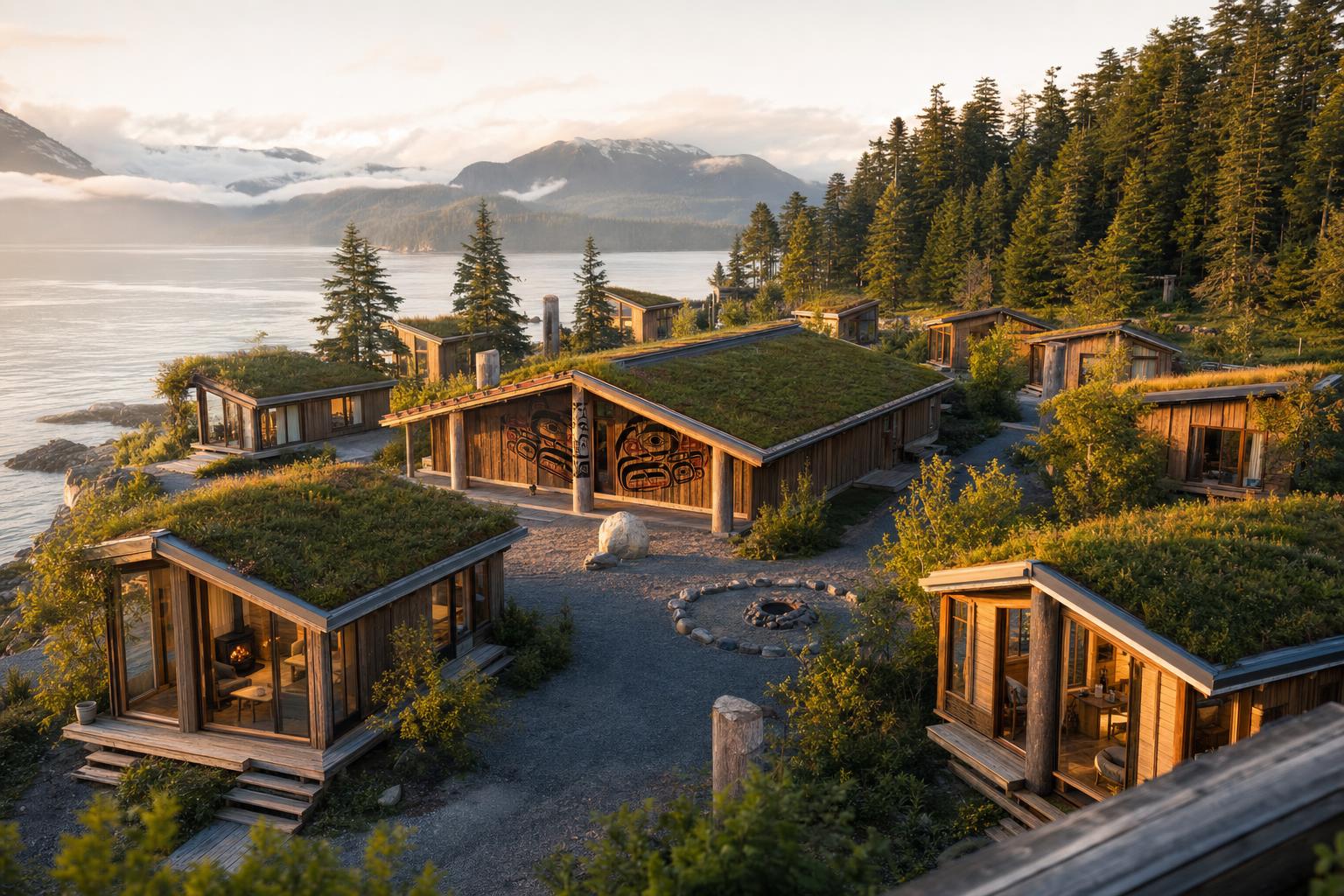
Indigenous Tiny Home Villages in Canada: Legal Pathways, Governance, and Land Stewardship in 2026
Estimated reading time: 14 minutes
Key Takeaways
- Indigenous tiny home villages are gaining attention because Canada’s Indigenous housing shortage is severe, with major needs in both on-reserve and urban contexts.
- These villages are not just small dwellings. The strongest models combine housing with governance, shared services, cultural design, and land stewardship.
- Legal approval depends on land status, jurisdiction, servicing, building code compliance, and governance structure.
- On-reserve and off-reserve projects follow very different legal routes under Canadian law.
- Many projects work best when framed as code-compliant small homes or modular homes, rather than novelty tiny houses.
- Any pathway used in 2025 should be rechecked in 2026 because zoning, funding, code interpretation, and inspection practices can change.
Table of Contents
- Why This Matters in 2026: The Indigenous Housing Context
- What Indigenous Tiny Home Villages Are
- Why Communities Are Choosing Tiny Home Villages
- Community-Led Governance Models
- Cultural Design and Operations Features
- Land Stewardship as a Core Principle
- Legal Framework Overview Under Canadian Law
- Quick Legal Glossary
- Legal Pathways Available in 2025
- Annotated 2025 Approvals Timeline
- Common Legal and Project Risks Seen in 2025
- 2025 to 2026 Update: What Must Be Rechecked Now
- Practical Step-by-Step Implementation Checklist
- Funding, Financing, and Partnerships
- Case Studies and Examples
- Policy Recommendations
- Resources and Tools
- FAQ
- Conclusion
Indigenous tiny home villages are getting more attention because Canada’s housing gap is severe, and many communities need practical options now. In the Indigenous housing context, the need is not only about building more units. It is also about safety, affordability, cultural fit, governance, services, and land stewardship under changing Canadian law in 2025 and now into 2026.
Across Canada, more than 100,000 Indigenous households face overcrowding or housing that is inadequate, and the national shortage has been estimated at 342,000 Indigenous homes. That scale helps explain why Indigenous tiny home villages are emerging as community-led responses to urgent housing needs. These villages are not just small dwellings. They can be full housing systems that support sovereignty, culture, shared services, and long-term care for land and water.
This guide is for Indigenous leaders, planners, housing practitioners, municipal staff, legal advisors, funders, and researchers. Legal requirements vary by land status, province, territory, and community governance, so this article is educational and not legal advice. For broader housing data and policy context, see CMHC.
Why This Matters in 2026: The Indigenous Housing Context
The Indigenous housing crisis has deep roots. Its causes include:
- historical dispossession
- chronic underfunding
- fast population growth
- high remote construction costs
- limited water, wastewater, road, and power infrastructure
- housing forms that do not reflect cultural or multigenerational living
In this article, Indigenous housing means housing that is:
- safe
- affordable
- culturally appropriate
- community-governed
- aligned with the rights and needs of First Nations, Inuit, and Métis peoples
The problem is not just unit count. It is also about:
- suitability
- governance
- tenure
- servicing
- cultural fit
On-reserve and urban contexts both matter. On reserve, the legal route often turns on federal frameworks, band governance, and local infrastructure limits. Off reserve, especially in cities, municipal zoning and provincial building rules usually shape what tiny home villages can be approved.
The need is urgent. First Nations on-reserve waitlists exceed 17,000 homes. Urban Indigenous people also face major barriers, and they make up a very large share of people experiencing homelessness in many systems. Alongside that, the broader shortage of 342,000 Indigenous homes shows why 2025 pathways are still being studied in 2026. See Indigenous Services Canada, CMHC, and Indigenous-led tiny home communities.
What Indigenous Tiny Home Villages Are
Indigenous tiny home villages are clustered small-footprint homes planned as a community, not as isolated units. They usually include:
- shared governance
- shared or nearby services
- culturally informed design
- legal and servicing structures matched to the land and jurisdiction
This is different from the mainstream tiny house trend. These villages are usually not about minimalist lifestyle branding. They are not always wheeled units. They are often built as foundation-based small homes, modular homes, or clustered cabins that are easier to permit and insure.
Most importantly, Indigenous tiny home villages are designed around community needs, such as:
- kinship networks
- ceremony
- elders’ access
- youth support
- shared outdoor space
- land stewardship plans
Size alone does not decide the legal category. A home under 400 square feet may still be treated differently depending on:
- provincial or territorial building code
- occupancy type
- servicing
- whether it sits on a foundation
- whether it is factory-built
A simple way to distinguish the options:
- Wheeled tiny houses: often face zoning and classification barriers and may be treated more like RVs or temporary structures
- Foundation-based small homes: often easier to permit as dwellings
- Modular factory-built units: may make inspections, certification, and financing easier
Under Canadian law, many successful projects become possible when they are framed as code-compliant small homes rather than novelty tiny houses. That legal framing matters. See the Indian Act for reserve jurisdiction context and this guide on tiny home certification in Canada.
Why Communities Are Choosing Tiny Home Villages
Indigenous tiny home villages can be attractive for practical reasons.
They may allow:
- faster deployment than a full subdivision
- lower material use per unit in some settings
- easier phased growth
- use of smaller sites
- housing for elders, youth, families, workers, or transitional residents
- shared kitchens, gathering buildings, laundry, childcare, gardens, and cultural spaces
They can also support community control. Where the community sets the rules for siting, occupancy, stewardship, and operations, the housing model can reinforce sovereignty rather than weaken it.
The strongest projects treat small homes as one tool inside a larger Indigenous housing strategy.
That said, tiny home villages are not a universal solution. They should not be used to excuse underinvestment in:
- larger family homes
- infrastructure upgrades
- long-term planning
- permanent community housing systems
Research and policy discussion in this area increasingly connect these villages to scalable, stewardship-focused design and, where relevant, reserve-based control or off-reserve partnerships that align with the principles behind UNDRIP implementation in Canada. For practical development ideas, see community-led tiny home development.
Community-Led Governance Models
There is no single template for Indigenous tiny home villages. Governance depends on land status, politics, funding, and whether the project is on reserve, off reserve, urban, rural, or on unceded territory.
Band council-led model
In this model, chief and council, or the equivalent First Nation governance body, leads approvals, land allocation, service planning, and occupancy policy. This is often strongest on reserve, where federal reserve land frameworks apply and municipal zoning does not usually control.
Strengths:
- easier alignment with community plans
- direct land control
- stronger fit with Indigenous housing governance
Limits:
- funding constraints
- federal approval bottlenecks
- local capacity pressures
This model often works best when the community already has a housing department, service planning capacity, and a clear land-use process under Canadian law. See the Indian Act.
Community-owned co-operative model
Here, a co-op or community housing body owns or manages the village for members.
Benefits:
- local ownership
- resident voice
- affordability controls
- flexible operating structure
Challenges:
- financing
- governance complexity
- legal incorporation
- long-term maintenance systems
This model can work well for tiny home villages that need strong member accountability and a stable community operating body. See tiny home co-op models.
Urban Indigenous non-profit partnership model
In this model, an Indigenous non-profit works with a municipality, landowner, developer, or philanthropy partner. This matters off reserve, where zoning, permits, and servicing are often municipal.
Benefits:
- access to transit and services
- ability to combine housing with supports
- stronger fit for urban Indigenous housing delivery in 2025 and beyond
Risks:
- dependence on partner land
- temporary permits
- policy shifts
Mixed-governance model
This combines community authority with outside partners such as legal advisors, development managers, funders, and service providers. It is common where projects are larger or more complex, or where land stewardship obligations need to be built into multiple agreements.
Useful reference points include the Squamish Nation’s Sen̓áḵw project as a band-led legal example and community governance approaches for tiny homes in Canada.
Cultural Design and Operations Features
Culturally grounded design is not an add-on. It is a defining feature of strong Indigenous housing.
Common design features include:
- communal gathering buildings
- ceremony areas
- elder cabins or elder-accessible units
- language signage
- materials chosen for climate and cultural relevance
- landscapes that support teaching, medicine gathering, and food growing
Operations matter just as much as design. A village may need:
- shared kitchens
- family support space
- childcare areas
- maintenance systems
- local jobs
- trades training
- resident governance circles
Planning operations after construction is a common mistake. Village success often depends as much on governance, maintenance, and resident support as on the homes themselves. For additional discussion, see communal kitchens in tiny home communities.
Land Stewardship as a Core Principle
In this article, land stewardship means Indigenous-led care for land and waters that protects ecological health, sacred relationships, future generations, and community governance over place.
For Indigenous tiny home villages, land stewardship should shape:
- site selection
- layout
- landscaping
- operations
- occupancy rules
- legal agreements
Practical examples include:
- native plantings
- food gardens
- riparian buffers
- erosion control
- habitat protection
- stormwater planning
- low-impact site design
- ecological restoration
- seasonal land care protocols
This approach improves housing outcomes too. It can support healthier living conditions, lower environmental risk, stronger cultural continuity, and deeper community support.
Stewardship is also a governance tool. It can be written into policies, covenants, maintenance agreements, and occupancy expectations. Depending on the province and the site, conservation easements or stewardship covenants may be relevant. Those tools are highly jurisdiction-specific and should be checked through local legal research and counsel. Useful starting points include CanLII, Environment and Climate Change Canada, and this guide on greywater and sustainable landscaping.
Legal Framework Overview Under Canadian Law
This is a high-level map of Canadian law, not a substitute for local legal advice.
On-reserve
Reserve land is under federal jurisdiction through the Indian Act and related governance frameworks. Municipal zoning generally does not apply on reserve. Instead, the key issues are often:
- community approvals
- band bylaws or local laws
- federal program rules
- servicing standards
- safety and inspection pathways
Off-reserve fee simple or leased land
Provincial or territorial building rules and municipal planning rules usually apply. Key issues often include:
- zoning and permitted use
- rezoning or variances
- development permits
- health approvals
- water and wastewater servicing
- roads and fire access
Unceded territory or Indigenous-led assertion contexts
These projects can involve added legal and political issues. They should be discussed with counsel and community leadership early. It is important not to overstate certainty here.
Across all settings, legal layers may include:
- federal law
- provincial or territorial law
- municipal bylaws
- Indigenous governance and community law
Common constraints for tiny home villages include:
- permitted use
- minimum size or form standards
- setbacks and density
- parking
- fire access
- building code compliance
- modular certification
- water, wastewater, septic, and power
- public health rules
- insurance
- lender requirements
- tenure and occupancy rules
A project may be legal in principle but still fail if servicing, insurance, or occupancy systems are not solved. For code context, see Codes Canada and this overview of tiny home legal requirements in Canada.
Quick Legal Glossary
- Reserve land: land set apart for a First Nation under federal jurisdiction.
- Land tenure: the legal arrangement for holding or using land, such as fee simple, lease, certificate of possession, or licence of occupation.
- Band Council Resolution (BCR): a formal council decision used for certain First Nation approvals.
- Temporary use permit: municipal permission for a time-limited use not fully allowed by regular zoning.
- Variance: permission to depart from a zoning or development standard.
- Modular home: a factory-built home assembled on site and often easier to certify than a custom tiny house.
- UNDRIP: the United Nations Declaration on the Rights of Indigenous Peoples, implemented federally in Canada through legislation.
Legal Pathways Available in 2025
These were practical pathways used or considered in 2025. Every one of them should be revalidated in 2026 before land acquisition, permit filing, or construction.
1. On-reserve development approvals
What it is: development on reserve land using First Nation governance processes and applicable federal frameworks.
Best for: First Nations with community land control and a clear housing mandate.
Pros:
- stronger community control
- no municipal zoning barrier in most cases
- strong sovereignty alignment
Cons:
- infrastructure bottlenecks
- federal program interface
- variable inspection and insurance pathways
Likely timeline: about 6 to 12 months
Typical documents: Band Council Resolution, site plan, servicing plan, environmental screening, building drawings, occupancy policy.
Biggest risks: unclear servicing, funding delays, uncertain inspection route.
Mitigation: confirm service capacity early, line up engineering and insurer input before procurement, and document occupancy and maintenance rules before move-in.
General references to Indian Act sections 81 and 83 may signal governance authority, but local legal review is still needed. See ISC.
2. Municipal pilot programs, temporary use permits, or variances
What it is: using local planning tools to allow clustered small homes off reserve.
Best for: urban Indigenous housing providers and projects on fee simple or leased land.
Pros:
- access to services and transit
- easier integration with urban supports
Cons:
- political risk
- discretionary approvals
- temporary permit expiry risk
Likely timeline: about 4 to 8 months
Typical documents: planning rationale, site plan, variance or temporary use application, servicing studies, fire access plan, engagement materials if required.
Biggest risks: local opposition, changing council priorities, insecure tenure if approvals are temporary.
Mitigation: get written planning interpretations, negotiate longer land control, and use pilots only if there is a route to permanent approval.
Examples sometimes cited in this space should always be confirmed through the municipality before relying on them. See urban infill tiny homes and ADUs.
3. Building-code pathway for foundation-based or modular small homes
What it is: treating units as small detached dwellings or modular homes instead of novelty tiny houses.
Best for: projects that want clearer compliance, financing, and insurance.
Pros:
- clearer code pathway
- easier insurability
- stronger lender and funder acceptance
Cons:
- extra engineering cost
- inspection variability
- foundation and servicing requirements
Typical documents: engineered plans, manufacturer certifications, energy compliance documents, foundation details, inspection schedule.
Biggest risks: mismatch between design and code category, uncertified factory builds, local inspector concerns.
Mitigation: choose certified modular systems where possible, confirm the code path before ordering units, and design for full utility servicing from the start.
Many projects become feasible only after shifting from a “tiny house” frame to a standard small-home frame under codes. See Codes Canada.
4. Partnership agreements and land-use agreements
What it is: agreements with municipalities, churches, universities, landowners, non-profits, or philanthropy partners.
Best for: off-reserve or urban projects that need land access, infrastructure, or capital.
Pros:
- access to strategic land
- easier service connections
- stronger funding options
Cons:
- dependence on partner priorities
- risk of short leases
- governance tensions
Typical documents: memorandum of understanding, lease or land-use agreement, service agreement, operations agreement, insurance allocation, governance protocol.
Biggest risks: weak long-term tenure, unclear occupancy control, poor division of responsibilities.
Mitigation: protect Indigenous governance in writing, define decision rights clearly, and avoid short land terms where possible. See tiny home land lease guidance.
5. Indigenous-led land trusts or stewardship-centred tenure models
What it is: legal structures that hold land for community benefit and long-term stewardship.
Best for: projects seeking anti-displacement protection and a strong link between housing and land care.
Pros:
- long-term control
- stewardship protection
- community benefit focus
Cons:
- legal complexity
- setup time
- need for specialized counsel
Typical documents: trust or governance documents, stewardship covenant where available, land management policy, long-term lease, occupancy rules.
Biggest risks: unclear provincial tools, weak drafting, mismatch between trust goals and funding rules.
Mitigation: use province-specific legal research, align land documents with operating plans, and confirm funder acceptance early. See CanLII.
Annotated 2025 Approvals Timeline
A typical 2025 pathway looked like this:
- Months 1 to 2: community mandate, land verification, early land stewardship plan, concept design, rough budget
- Months 3 to 6: choose legal pathway, prepare BCR or municipal applications, complete environmental and servicing reviews, start funding applications
- Months 4 to 7: negotiate lease, MoU, and service agreements; finalize occupancy framework; secure insurer and inspection route
- Months 7 to 9: construction or modular delivery, site servicing, inspection sign-offs
- Month 10 onward: occupancy, governance rollout, maintenance program, stewardship monitoring
Actual timing varies with weather, remote logistics, permit backlogs, and whether infrastructure already exists. For project delay context, see construction delay solutions in Canada.
Common Legal and Project Risks Seen in 2025
Recurring risks included:
- jurisdictional conflict
- unclear unit classification
- servicing delays
- insurance limits
- lender discomfort
- permit expiry
- weak consultation
- unstable operations after construction
Good mitigation steps include:
- confirm jurisdiction at the start
- get written planning interpretations
- use engineered plans
- choose code-compliant foundations where possible
- resolve insurance early
- negotiate long-term land tenure
- adopt occupancy and governance policies before move-in
- connect land stewardship work to the operating budget
Memoranda of understanding and pre-approved utility planning were often useful ways to reduce delays and disputes. See utility connections for Canadian small-home projects.
2025 to 2026 Update: What Must Be Rechecked Now
A pathway that worked in 2025 may need review in 2026. Reasons include:
- changing municipal pilot programs
- provincial code amendments
- updated CMHC or ISC funding rules
- different inspection practices
- changing land and infrastructure costs
Communities should keep a rolling legal and policy scan before:
- buying or leasing land
- filing permits
- signing construction contracts
The National Indigenous Housing Centre and other federal Indigenous housing initiatives may also affect implementation conditions and support over time. Local planning rules should always be confirmed through official municipal or provincial sources, and legal questions should be checked with Indigenous law counsel before action is taken. For additional updates, see this 2026 legal clinic resource.
Practical Step-by-Step Implementation Checklist
Phase 1: Pre-project
- verify land status: reserve, fee simple, lease, trust-held, or other
- confirm community mandate through resolution, board approval, or engagement
- draft a land stewardship outline
- prepare a concept plan and rough budget
- identify target residents such as elders, youth, families, workers, or transitional residents
Phase 2: Permitting and approvals
- identify the governing jurisdiction
- confirm the zoning or reserve approval route
- choose the code path: modular, Part 9 small home, alternative solution, or variance
- complete environmental, septic, water, road, and fire access reviews
Phase 3: Agreements
- prepare lease, licence of occupation, MoU, service, and funding agreements
- draft occupancy policies that reflect community values
- define maintenance, stewardship, and dispute resolution duties
Phase 4: Construction and commissioning
- finalize procurement
- secure inspection schedule and utility connections
- complete health and safety planning
- confirm insurance before occupancy
Phase 5: Operations and stewardship
- launch governance processes
- set maintenance schedules
- establish stewardship monitoring and seasonal care
- define how repairs, disputes, and shared spaces will be managed
A village is only as strong as its long-term operating system.
Funding, Financing, and Partnerships
Most projects need stacked funding, not a single source.
A common funding stack may include:
- capital grants
- operating subsidies
- low-interest loans
- philanthropic grants
- in-kind land, design, or labour contributions
The funding structure must match the legal structure. Some programs require:
- ownership or long-term site control
- code-compliant permanent housing
- supportive or transitional housing models rather than ownership
Common support categories may include:
- CMHC housing programs
- Indigenous Services Canada supports
- Reaching Home or other homelessness streams
- provincial bilateral housing programs
- philanthropy and social finance
Funders often want to see:
- governance clarity
- legal site control
- realistic servicing costs
- an operations plan
Examples discussed in the 2025 period included the Reaching Home program, Impact Canada, CMHC supports, and ISC-related funding channels. Figures cited in public discussion should still be verified in 2026 before applications are built around them. For financing strategies, see financing tiny home villages in Canada.
Case Studies and Examples
Squamish Nation Sen̓áḵw
This is not a tiny home village. It is a major Indigenous-led housing development and a useful legal and governance reference point. Its key lesson is that reserve land jurisdiction can change municipal planning constraints in major ways. For readers studying Indigenous housing and Canadian law, it shows how governance authority on reserve can shape development pathways. Caution: do not treat it as a direct size-model example for small-home villages. See Sen̓áḵw.
Secwepemc Tiny House Warriors
This is a sovereignty-centred, land-based example with strong territorial and political meaning. It is useful when discussing land stewardship, community mobilization, and the limits of standard planning categories. The key lesson is that tiny housing can be tied to land protection and jurisdictional assertion. Caution: it is not a standard municipal development model, so it should not be presented as a routine permitting template. See this related discussion.
Edmonton zoning or tiny home cluster examples
Urban off-reserve examples show why local zoning reform and Indigenous organization partnerships matter. The lesson is practical: municipal permissions can make or block tiny home villages, even when the social need is clear. Caution: bylaw rules change, so city-specific references must be confirmed through official Edmonton planning sources before relying on them.
Tay Valley or Ontario tiny home permitting example
This is not Indigenous-specific, but it is useful as a comparative legal example for primary-dwelling tiny homes and flexible local planning. The lesson is that small-home legality often improves when municipalities create clear rules for permanent dwellings. Caution: comparative examples can inform pathway design, but they should not be assumed to transfer directly into Indigenous housing settings without legal review. See Ontario tiny home permitting guidance.
Policy Recommendations
Several practical reforms would make Indigenous housing delivery easier and safer.
- Streamline municipal pilot and temporary use approvals for Indigenous-led housing. This reduces delay and uncertainty for urban projects.
- Recognize code-compliant modular and small-home forms more consistently. This helps with permitting, insurance, and financing.
- Fund enabling infrastructure, not just units. Water, wastewater, roads, and power often decide whether a project works.
- Support Indigenous-led land trusts and long-term leases. Secure tenure supports both housing stability and land stewardship.
- Tie funding to long-term operations and stewardship, not only construction. Villages succeed when care systems are funded.
- Create clear guidance for urban Indigenous providers navigating local approvals. Many groups lose time on avoidable planning confusion.
Policy language matters too. These villages should be framed as community-led housing infrastructure, not novelty developments. Safety, code compliance, stewardship, and affordability should stay at the centre. For more, see Indigenous-led housing innovation.
Resources and Tools
Useful resources for Indigenous tiny home villages include:
- CMHC: housing need data, funding context, and program information
- Indigenous Services Canada: community support and housing program context
- Reaching Home / Infrastructure Canada: homelessness and supportive housing context
- Impact Canada: innovation and social finance context
- Justice Canada UNDRIP page: rights framework context
- CanLII: province-specific legal research on covenants, trusts, easements, and case law
Helpful practical tools for project teams include:
- a 2025 legal pathway checklist
- sample lease and MoU clauses
- a permitting timeline template
- a stewardship plan outline
FAQ
Are tiny home villages legal in Canada?
Sometimes, yes. Legality depends on land status, zoning, building code, servicing, and occupancy rules under Canadian law.
Are on-reserve projects easier to approve than off-reserve ones?
They can be easier in one sense because municipal zoning usually does not apply, but they may still face infrastructure, funding, and federal process issues.
Do tiny homes have to meet the building code?
In most cases, homes used for housing should meet the applicable building and safety rules. Code-compliant modular or foundation-based homes are often easier to approve.
Can Indigenous organizations use temporary use permits for housing?
Sometimes, especially off reserve. But temporary permits can create insecurity if there is no plan for permanent approval.
How can land stewardship be written into legal agreements?
Through leases, occupancy rules, maintenance agreements, policies, covenants, or stewardship protocols, depending on the jurisdiction.
What should be rechecked from 2025 to 2026?
Local zoning, code amendments, funding rules, inspection practices, utility requirements, and insurance assumptions.
Conclusion
Indigenous tiny home villages can be strong, community-led responses to Indigenous housing needs when they are grounded in sovereignty, realistic operations, legal compliance, and land stewardship. The best projects are not only about building small units. They bring together governance, tenure, servicing, funding, and care for place into one clear plan.
That is the core lesson from the 2025 pathways reviewed here. A village may look simple on paper, but success depends on careful work across Canadian law, community decision-making, and long-term operations. In 2026, every pathway still needs to be checked again before action is taken.
When communities lead the design, approvals, stewardship, and daily operations, Indigenous tiny home villages can become practical housing infrastructure rather than temporary experiments.
Leave a Reply