

Estimated reading time: 12 minutes
Key Takeaways
- An ADU recording studio is a detached, small-footprint studio built in a laneway house, garden suite, backyard suite, or similar secondary structure.
- In 2026, more Canadian musicians are choosing this setup because commercial studio time is expensive, commuting wastes creative energy, and home environments can be distracting.
- A successful ADU conversion depends on structure, layout, permits, ventilation, electrical planning, and realistic soundproofing expectations.
- Soundproofing and acoustic treatment are not the same thing. One controls sound transfer; the other improves how the room sounds inside.
- Many workable studios fit into 200 to 500 sq ft, but even smaller ADUs can function well with smart layout choices.
- Before building, review the National Building Code framework and then verify local city rules.
Table of contents
- Why the ADU Recording Studio Is Booming in 2026
- Planning an ADU Recording Studio Before You Convert
- Permits, Zoning, and Legal Considerations for an ADU Conversion in Canada
- How Much an ADU Recording Studio Costs in 2026
- The Professionals Worth Hiring for a Studio-Grade ADU Conversion
- How to Design the Best Layout for an ADU Music Studio
- Turning an ADU Into a Comfortable Year-Round Creative Space
- Soundproofing an ADU Recording Studio: What Actually Works
- Acoustic Treatment vs. Soundproofing: The Difference Every Studio Build Must Understand
- Gear and Power Essentials for a Pro-Grade ADU Music Studio
- Case Studies: How Canadian Musicians Are Converting ADUs Into Studios
- ADU Recording Studio ROI: When the Investment Makes Sense
- Insurance, Noise Complaints, and Neighbour Relations
- Sustainable ADU Studio Design for Canadian Climates
- Your Next Steps for Building an ADU Recording Studio
- FAQ: ADU Recording Studio Questions Canadian Musicians Ask
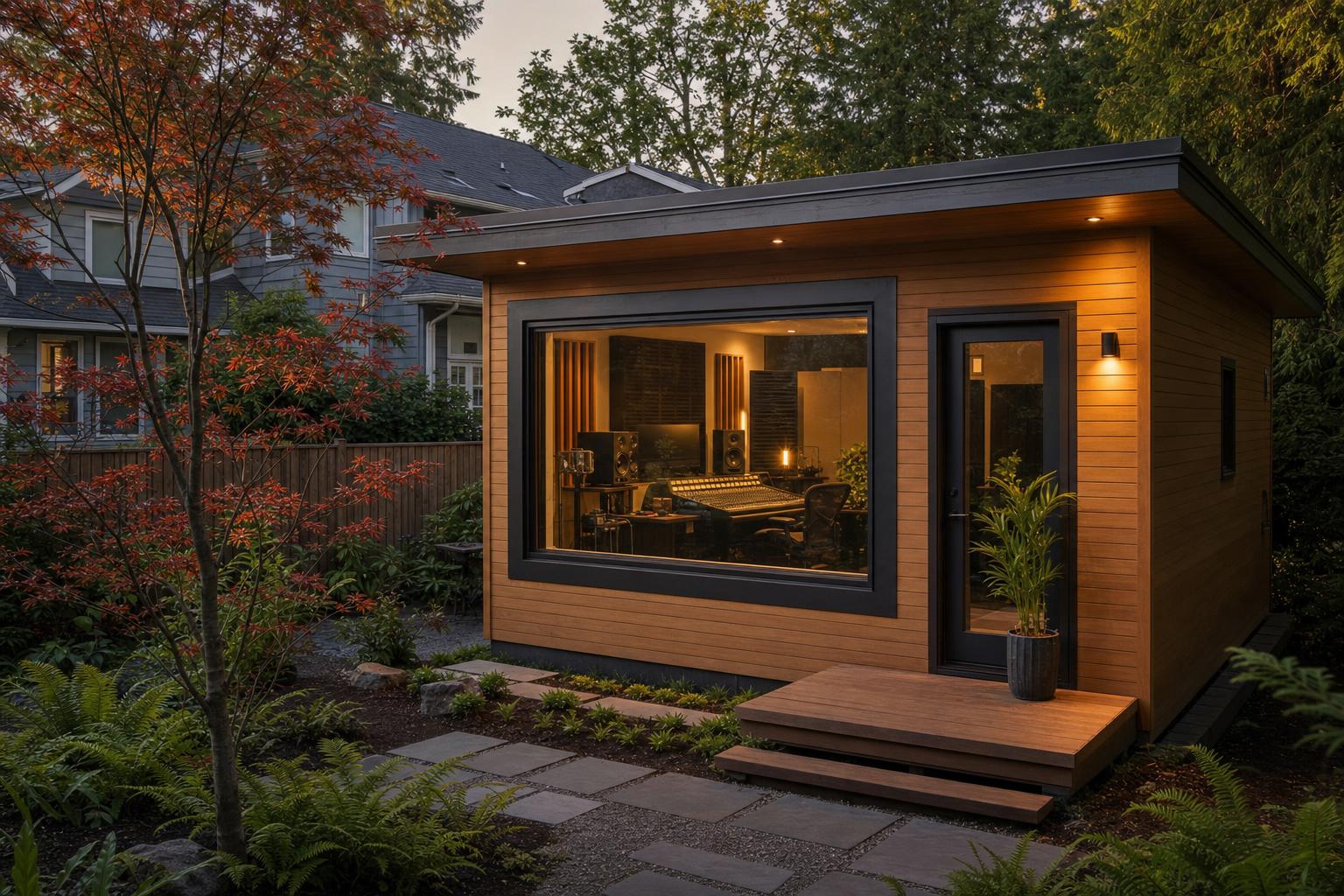
An ADU recording studio is a recording, production, mixing, or rehearsal setup built inside an accessory dwelling unit such as a laneway house, garden suite, backyard suite, or other detached secondary structure. In 2026, more Canadian musicians are turning these compact buildings into a private music studio and daily creative space because commercial studio time is expensive, commutes eat into productive hours, and home life can make focused work difficult.
This guide explains what it really takes to plan an ADU conversion for music: how to assess the structure, design a practical layout, handle soundproofing, budget in realistic ranges, check permits, and learn from Canadian-style examples. As a starting point, review the National Building Code framework, then confirm the exact local requirements in your municipality.
Why the ADU Recording Studio Is Booming in 2026
The trend is growing because ADUs themselves are growing. Across Canada, cities are using laneway homes, garden suites, and secondary units to add gentle density without dramatically changing existing neighbourhoods. That wider shift makes an ADU conversion more common, and it also gives Canadian musicians a practical way to build a serious music studio close to home.
Why this matters for artists:
- Better separation from family and household noise
- Fewer interruptions during takes, editing, and mixing
- Easier late-night work
- A more professional feel than a basement setup
- Separate access for collaborators or paying clients
- A flexible creative space that may also support side income
Modern software, compact interfaces, nearfield monitors, and portable acoustic tools mean a detached studio no longer needs a huge footprint. Many producers can now do serious work in a 200 to 500 sq ft ADU.
Compared with a basement or spare garage, an ADU recording studio often gives you:
- Less sound transfer into the main house
- Better privacy for clients
- Easier branding as a bookable studio
- Potential use as an artist residency, writing room, or content studio
- Long-term property value upside if the unit is compliant
Some owners also use the space for bookings when local rules allow it. As a rough example only, a small studio may charge about $50 to $100 per hour depending on the market, the room, the gear, and whether business use is permitted.
Interest is also rising because municipal ADU activity is rising. Directional research examples point to stronger permit activity in Toronto, Vancouver, and Montreal, which helps explain why ADU interest is accelerating in 2026. Some property-value commentary has also been discussed by Reno Quotes, though readers should verify local market realities for themselves.
“A detached studio is not just extra space. For many artists, it is the difference between occasional creativity and a consistent working practice.”
Planning an ADU Recording Studio Before You Convert
Not every detached unit is ready to become a studio. Before you buy gear or pick finishes, do a site assessment.
Here is what to inspect first:
Square footage
A practical working range for many setups is about 200 to 500 sq ft. That is enough for a compact control area, a recording corner, storage, and basic treatment. Smaller rooms can still work, but they demand tighter planning.
Structure
Check which walls hold up the building. These are called load-bearing walls. You may not be able to remove or move them without engineering and permits.
Windows and doors
Openings affect both daylight and sound leakage. Big windows can improve comfort, but they can also let in traffic noise and let music escape.
Mechanical systems
This means HVAC, plumbing, and electrical. Mechanical noise from ducts, fans, condensers, or pipes can ruin a quiet studio.
External noise
Listen for traffic, alley movement, barking dogs, neighbour patios, nearby heat pumps, and even rain on the roof. Good studio design starts with the noise outside.
Ceiling height
Higher ceilings usually help comfort, treatment placement, and ventilation routes. Very low ceilings can feel cramped and create harder acoustic problems.
Moisture risk
Older garden suites and backyard structures may need insulation, air sealing, or envelope repairs before any studio work begins. Moisture problems can damage gear, finishes, and acoustic panels.
A normal renovation often focuses on surfaces. A studio-first inspection focuses on low noise, isolation, and workflow. That difference matters. For broader background, see the NRC, renovation references from Reno Quotes, and examples related to detached conversions such as this basement ADU conversion guide.
Permits, Zoning, and Legal Considerations for an ADU Conversion in Canada
There is no single Canadian rulebook for every ADU. The National Building Code sets broad code direction, but municipalities control many of the practical rules. That means your ADU conversion must be checked city by city.
Common approvals may include:
- Building permit
- Electrical permit
- Plumbing permit
- HVAC or mechanical permit
- Occupancy or use-related approvals, depending on the project
A music-focused ADU recording studio can draw more attention because it may affect:
- Fire separation
- Ventilation
- Exits
- Electrical load
- Neighbour noise concerns
Simple permit checklist:
- Confirm the unit is already a legal ADU, or can legally become one.
- Check max size, height, and setbacks.
- Confirm what windows and entrances are allowed.
- Review fire-rated wall and ceiling needs.
- Ask if you need a separate panel or upgraded electrical service.
- Ask whether a private studio is treated differently from a client-facing commercial use.
Inspectors may look for fire-rated assemblies, safe electrical work, proper ventilation, and code-compliant exits. In plain terms, they want to see that people can get out safely, fresh air can get in, and the build is safe to use.
The local differences can be big. Research notes examples of Toronto allowing ADUs up to 120 sq m, while Vancouver examples may cap ADUs at 70 sq m with height limits. Always verify the latest code and bylaw wording through the National Building Code resources, city portals, and region-specific permit guides such as the Ontario ADU permitting guide or the British Columbia ADU permitting guide.
How Much an ADU Recording Studio Costs in 2026
Costs vary a lot, but a clear framework helps.
Main budget buckets:
- Construction shell changes
- Soundproofing
- Acoustic treatment
- HVAC and ventilation
- Electrical upgrades
- Door and window upgrades
- Studio gear
- Permit fees
- Professional fees
Planning ranges in CAD:
- DIY/basic: $5,000 to $15,000
- Mid-range: $15,000 to $50,000
- High-end/pro: $50,000+
DIY/basic
Good for simple production, vocals, or editing.
- Sealing gaps
- Weatherstripping
- Window plugs
- Basic acoustic panels
- Entry-level gear
- Limited isolation
Mid-range
A strong fit for many solo producers and singer-songwriters.
- Contractor-built wall upgrades
- Better doors
- More complete treatment
- Cleaner power
- Pro-level nearfield monitors
- Better ventilation
High-end/pro
Built for higher isolation targets and client-facing work.
- Room-within-a-room details
- Floating floor or stronger decoupling
- Acoustician input
- Advanced HVAC silencing
- Better monitoring and immersive-ready options
Research planning example:
- Construction and soundproofing: about $3k basic / $20k mid / $30k high
- Treatment and gear: about $2k basic / $15k mid / $25k high
- Permits and fees: about $1k basic / $3k mid / $5k high
- Total example: about $6k basic / $38k mid / $60k high
Sample timeline:
- Planning and permit prep: 2 to 4 weeks
- Construction and soundproofing: 8 to 12 weeks
- Acoustic tuning and commissioning: 1 to 2 weeks
Local labour rates, structural repairs, utility upgrades, weather delays, and permit turnaround can all push costs and time higher. Treat these as planning ranges, not fixed quotes. For broader budgeting context, see Reno Quotes and this ADU cost guide.
The Professionals Worth Hiring for a Studio-Grade ADU Conversion
A studio build is part renovation and part performance engineering. That is why the right team matters.
Acoustician or sound consultant
This person designs isolation details, treatment placement, and performance targets. If you want serious drum tracking, low noise floors, or urban isolation, this is often worth it.
General contractor with studio experience
A normal contractor may build a nice room. A studio-aware contractor understands sealing, decoupling, layer order, and why tiny gaps matter.
Electrician
Studios often need dedicated circuits, clean grounding, safe panel work, and reliable power for computers and audio gear.
HVAC specialist
Quiet airflow is essential. A loud duct or fan can undo expensive wall work.
Building inspector or permit consultant
Helpful when the project has structural changes, code questions, or mixed private and client use.
DIY is reasonable for:
- Sealing small gaps
- Hanging panels
- Cosmetic work
- Storage and furniture installs
Professional help is strongly advised for:
- Wall decoupling
- Floating floors
- Dedicated power
- Quiet ventilation
- Fire-rated assemblies
For non-experts, that is the best rule: DIY the easy surface work, hire out the parts that affect code, safety, and isolation performance. Helpful references include RP Acoustics, Reno Quotes, and this guide to special skills needed to build an ADU.
How to Design the Best Layout for an ADU Music Studio
A good layout makes a small room feel bigger and work faster.
Core room types:
- Control room: where you mix and listen on speakers
- Live room: open recording area for vocals, amps, or instruments
- Vocal booth: small isolated space for cleaner vocal takes
- Mixing nook: compact production-focused setup
- Storage closet: keeps cases, stands, and noisy extras out of the way
Layout priorities:
- Clear sightlines between people
- Short cable runs
- Easy gear access
- Doors placed to reduce sound leaks
- Enough room to move around stands and instruments
- Symmetry around the listening position
Micro-ADU under 200 sq ft
Best for one-room production.
- Combine control and live area
- Use a closet or curtained corner for vocals
- Focus on desk placement and treatment first
Standard ADU from 200 to 500 sq ft
Best fit for most readers.
- Split between control zone and flexible live area
- Add a gear wall or storage bench
- Keep the room adaptable
Large ADU over 500 sq ft
Best for clients or small ensembles.
- Separate control room and booth
- Add lounge or writing area
- Better for co-writing and rehearsals
Small-space tricks:
- Wall-mounted desks
- Folding furniture
- Hidden storage benches
- Convertible iso booth
- Multi-use lounge/live room
Larger concept examples visible through Toronto city resources and compact-space ideas like these tiny home storage solutions can help illustrate what different footprints allow.
Turning an ADU Into a Comfortable Year-Round Creative Space
A high-functioning creative space is not just quiet. It also supports long sessions without fatigue.
What matters most in Canada:
- Natural light helps mood and reduces eye strain
- Quiet heating and cooling help both comfort and recording
- Fresh air matters during long sessions
- Good ergonomics protect your back, neck, and ears
Practical ideas:
- Use triple-pane windows where possible for better insulation and less noise transfer
- Choose a desk and chair height that fit long editing sessions
- Keep screens at eye level
- Use humidity-aware ventilation to protect instruments and electronics
- Add winter boot storage, a coat zone, and a place for wet gear if the ADU is detached
An HRV, or heat recovery ventilator, can help manage stale air and humidity while reducing energy loss. That is especially useful in a Canadian music studio used year-round. See the NRC and livability-focused upgrades such as these tiny home livability improvements.
Soundproofing an ADU Recording Studio: What Actually Works
Soundproofing means reducing sound transmission into or out of a room. It is different from making the room sound better inside.
Five simple principles matter most:
- Mass: heavier layers block more sound
- Damping: special materials reduce vibration between layers
- Decoupling: separating surfaces reduces vibration transfer
- Absorption: insulation in cavities helps control resonance
- Ventilation control: air must move quietly without acting like a sound tunnel
Walls
A common pro move is double 5/8-inch drywall with damping compound between layers, plus mineral wool in the cavity. Staggered studs or resilient channels can help decouple the wall from the structure.
Doors
Use solid-core doors with full perimeter seals and an automatic door bottom. A weak door can ruin a strong wall.
Windows
Use sealed units, laminated glass, or removable window plugs when full replacement is not possible.
Floors
Depending on the structure, you may use underlay, isolation pads, or floating floor details.
Ceilings
If roof impact noise, aircraft, or nearby upstairs noise is an issue, add mass and resilient mounting.
Penetrations
Seal every gap around outlets, ducts, frames, conduits, and pipes. Tiny leaks matter.
Low-cost vs pro-grade:
- Low-cost: seal gaps, use weatherstripping, heavy curtains, rugs, window plugs, simple door upgrades
- Pro-grade: decoupled walls, multi-layer assemblies, isolated floors and ceilings, acoustically planned HVAC
Expected results should be framed carefully. Basic DIY fixes may improve isolation by roughly 20 to 30 dB in limited cases. Full retrofits can target 50+ dB when properly designed and built, though actual results depend on the weakest link, low-frequency energy, and workmanship. See guidance from the NRC, professional insight from RP Acoustics, and this Canadian guide to noise reduction in housing.
Top 5 practical tips:
- Seal all gaps
- Decouple walls from the structure where possible
- Upgrade to double-mass doors and windows
- Isolate HVAC runs
- Test the room before and after with simple phone apps
If your goal is loud drums, late-night monitoring, or urban noise isolation above 40 dB, hire an acoustician.
Don’t Forget HVAC and Plumbing Noise
Many studio builds fail here. The walls are quiet, but the ducts and pipes still carry noise.
Common fixes:
- Acoustic silencers or lined ductwork
- Flexible mounts for vibrating equipment
- Longer duct paths with bends
- Quiet HRV or MVHR systems sized properly
- Isolated pipes and fewer shared noisy runs
Do not just seal the room shut. Small detached studios heat up fast, and stale air harms both recordings and comfort. Bad ventilation can make a room unusable even if the soundproofing is good. For more on healthy airflow, see the NRC and this guide to air quality in tiny homes.
Acoustic Treatment vs. Soundproofing: The Difference Every Studio Build Must Understand
This is the big myth to fix: foam does not soundproof a room.
- Soundproofing stops sound from leaving or entering
- Acoustic treatment shapes how sound behaves inside the room
Treatment checklist:
- Bass traps: absorb low frequencies, usually in corners
- Broadband absorbers: reduce reflections over a wide range
- Diffusion panels: scatter reflections so the room stays alive
- Ceiling cloud: panel above the listening area
- First reflection points: the first wall or ceiling spots where speaker sound bounces to your ears
Placement basics:
- Keep the setup symmetrical
- Treat early reflections first
- Use lots of bass trapping in small rooms
- Do not over-treat until the room sounds dead
Measurement helps. Tools like REW can show what the room is doing, and systems like SoundID Reference can help tune monitoring. For more studio-specific design context, see this guide to acoustic design in Canadian tiny homes.
Gear and Power Essentials for a Pro-Grade ADU Music Studio
A room is only useful if the setup inside it works well.
Core gear list:
- Audio interface
- Studio monitors
- Headphones
- Microphones
- Mic stands
- DAW software
- Cabling and cable management
- Surge protection or UPS
- Backup storage
Illustrative gear examples from research include a Universal Audio Apollo Solo, Yamaha HS8 monitors, a Neumann TLM103 microphone, Beyerdynamic DT 990 headphones, Reaper or Luna, and a modern computer such as a 32GB RAM M3 Mac. These are examples, not the only good choices.
Setup logic matters more than the brand:
- Nearfield monitors are usually best in compact ADUs
- Midfields make more sense in larger treated spaces
- Form an equilateral triangle between you and the speakers
- Keep the desk and speakers symmetrical
- Avoid untreated corners
Power and networking basics:
- Dedicated 20A circuits if possible
- Clean grounding
- Surge protection or UPS
- Reliable internet for remote sessions and file transfers
- Organized routing if the room is also used for streaming or rehearsal
That is what makes the music studio feel dependable day after day. For broader ADU work-use context, see this guide to a remote work ADU.
Case Studies: How Canadian Musicians Are Converting ADUs Into Studios
The examples below are model profiles based on the research framing. They show how an ADU recording studio can work in different Canadian conditions.
Case Study 1: Vancouver Producer Turns a Laneway Suite Into a Live/Production Hub
An indie producer in a dense Vancouver neighbourhood had a 300 sq ft laneway suite with traffic and outdoor noise. The goal was a flexible music studio for writing, production, and occasional paid sessions.
The solution:
- Production desk on the quiet side of the unit
- Flexible live corner for amps, vocals, and overdubs
- Staggered stud wall approach
- Sealed envelope and careful urban noise control
- Bass traps and targeted treatment
Research framing points to about 55 dB reduction in the build strategy, with a roughly 30 dB drop in measured noise floor before and after. The project took around 10 weeks and cost about $35,000. Biggest lesson: tell neighbours early and prioritize airtightness. Local context can be checked through Vancouver.
Case Study 2: Toronto Singer-Songwriter Builds a Backyard Vocal-Focused Studio
A Toronto solo artist wanted a bright, calm creative space for vocals, acoustic instruments, and songwriting. The ADU was about 250 sq ft.
The solution:
- Compact control position
- Multi-use vocal booth
- Natural light kept through controlled window treatment
- Window plugs and strategic sealing
- Targeted treatment instead of a full heavy build
The total cost was about $25,000. The artist estimated savings of around $15,000 per year by reducing outside studio rentals. This case shows how a small ADU conversion can work when the main goal is better vocals and daily writing, not loud full-band tracking. Latest permitting should still be checked through Toronto and the Ontario permitting guide.
Case Study 3: Halifax Electronic Artist Creates a Hybrid Rehearsal and Streaming Studio
A Halifax electronic artist needed a 400 sq ft garden suite for production, rehearsal, streaming, and occasional collaboration.
The solution:
- Main production desk
- Performance zone for live electronic sets
- Camera-friendly background
- Built-in storage
- Quiet HVAC and strong thermal comfort
- Treatment tuned for both music and spoken voice
The owner reported about $10,000 in bookings plus extra value from content and occasional residency-style use. Main lesson: in colder maritime climates, ventilation and warmth matter as much as acoustics. See local civic context through Halifax.
ADU Recording Studio ROI: When the Investment Makes Sense
ROI is not only about direct cash.
Three kinds of return matter:
- Financial return: rentals, sessions, content work
- Operational return: faster workflow, no commuting, more output
- Property/use return: a flexible detached room that can serve future needs
Example logic:
- A studio charging $75/hour for 20 hours/week could create meaningful revenue, if demand exists and local rules allow client use.
- A musician who spends heavily on outside studio rental may recover costs through savings alone.
- Some owners may see payback in 1 to 2 years through a mix of productivity and bookings, though this is never guaranteed.
ROI depends on local demand, bylaws, noise performance, equipment quality, reputation, and whether the space can legally host clients. Property value commentary is often discussed carefully by sources such as Reno Quotes, while planning logic is explored further in this ADU investment guide.
Insurance, Noise Complaints, and Neighbour Relations
After the build, real life starts.
Insurance basics:
- Standard home policies may not fully cover studio gear
- Business use may need endorsement
- Liability becomes more important if others visit
- Loss-of-income questions matter if the studio is rented out
Research framing gives an example rider range of about $500 to $1,000 per year.
Neighbour strategies that help:
- Tell neighbours about the project before work starts
- Share expected hours for louder sessions
- Run test sessions before full use
- Manage parking and access
- Use written driveway agreements if access is shared
This is practical risk management. Good soundproofing helps, but so does good communication. Relevant city context and community-focused planning can be explored through Toronto, Vancouver, and this guide to building strong neighbour relations.
Sustainable ADU Studio Design for Canadian Climates
A Canadian studio has to perform in winter, shoulder seasons, and summer humidity.
Key priorities:
- Strong insulation
- Less thermal bridging
- Air sealing
- Moisture control
- Efficient ventilation
Research examples mention R-40 insulation in suitable assemblies, lower-impact acoustic materials such as recycled PET panels, and HRV systems that can reduce wasted energy. Why this matters:
- Better comfort during long sessions
- Less condensation and mold risk
- More stable conditions for instruments and electronics
- Lower operating costs
- A more durable creative space
Insulation targets always depend on wall, roof, floor, province, and code path, so use local design advice. Helpful references include the NRC, this guide to a winter-proof tiny home, and a passive-house-inspired ADU guide.
Your Next Steps for Building an ADU Recording Studio
If you want a clear roadmap, use this order:
- Confirm local ADU rules
- Assess structure, noise, and utilities
- Set a realistic budget tier
- Decide if the room is for mixing, tracking, streaming, or multi-use
- Plan soundproofing before finishes
- Add acoustic treatment after the room shell is complete
- Test and tune the room
- Review insurance and neighbour plans before others use the space
Useful Canadian resources include municipal ADU guides, acousticians such as RP Acoustics, gear retailers such as Long & McQuade, local city portals like Toronto, and term explainers such as this Canadian ADU glossary.
FAQ: ADU Recording Studio Questions Canadian Musicians Ask
Can an ADU really work as a professional music studio?
Yes. A detached unit can work very well if the layout, soundproofing, acoustic treatment, ventilation, electrical setup, and code issues are handled properly.
What is the difference between acoustic treatment and soundproofing?
Soundproofing controls sound transmission into and out of the room. Acoustic treatment controls reflections, bass build-up, and decay inside the room.
How much does an ADU conversion for a recording studio cost in Canada in 2026?
A basic build may start around $5,000 to $15,000, a mid-range build often lands around $15,000 to $50,000, and a high-end studio-grade build can exceed $50,000.
Do I need permits for an ADU recording studio?
Often yes, especially if your ADU conversion includes structural work, electrical changes, plumbing, HVAC updates, fire separation work, or a change in use.
What size ADU is best for a studio?
For many solo and small-team setups, 200 to 500 sq ft is a strong range. Smaller rooms can still work, and larger rooms allow better separation and client use.
Is an ADU better than a basement studio?
Often, yes. An ADU usually gives better separation, privacy, access, and less disruption to the main home. For many Canadian musicians, that is the biggest advantage of all.
Leave a Reply