

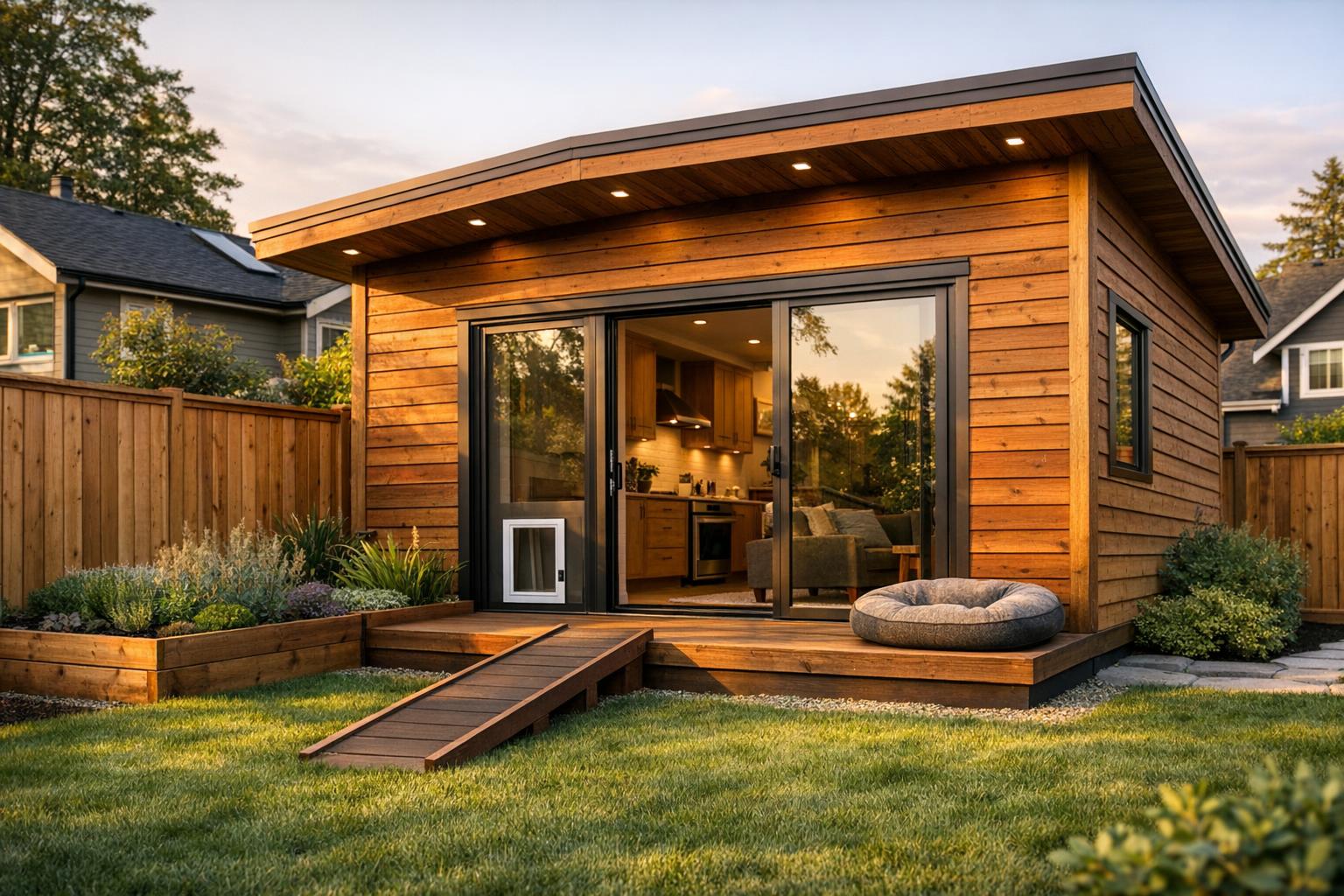
Pet-Friendly ADU in Canada 2026: Animal Bylaws, 2025 Regulations, and Pet Safety Design
Estimated reading time: 12 minutes
Key Takeaways
- A pet-friendly ADU is not just about comfort. It also needs to support legal compliance, hygiene, and long-term livability.
- In Canada, pet rules usually come from municipal animal bylaws and local ADU processes, not from one nationwide household pet law.
- Most 2025 regulations changed zoning, permits, and ADU approval pathways rather than introducing national pet caps.
- Canada tiny homes and backyard suites need stronger planning for ventilation, containment, waste, materials, and temperature control.
- Good pet safety design can help reduce odours, neighbour complaints, property damage, and permit issues.
Table of Contents
- Why the Pet-Friendly ADU Is Growing Across Canada
- What the 2025 Regulations Mean for Pet-Friendly ADU Planning
- How Animal Bylaws Work for ADUs and Tiny Homes
- Provincial Snapshot: What ADU Owners Should Check in Major Provinces
- Design Requirements for a Comfortable and Compliant Pet-Friendly ADU
- Pet Safety Essentials for Small-Space Living in Canadian Climates
- Operational Best Practices for Pets in an ADU
- Canada Tiny Homes, Mobile ADUs, and Pet Rules: What Changes?
- How to Get a Pet-Friendly ADU Approved Without Missing a Compliance Step
- Real-World Pet-Friendly ADU Examples Across Canada
- Pre-Build Checklist for a Pet-Friendly ADU
- FAQs About Pet-Friendly ADUs in Canada
- Final Thoughts: Building a Safer, Smarter Pet-Friendly ADU in 2026
Planning a pet-friendly ADU in 2026 means more than adding a dog bed or a litter box. In Canada, homeowners need to think about animal bylaws, evolving 2025 regulations, and real pet safety needs before they build or renovate.
That matters even more in compact spaces like backyard suites and Canada tiny homes, where one weak design choice can affect comfort, hygiene, and legal compliance.
A pet-friendly ADU is a small secondary home designed so people and pets can live there safely, comfortably, and legally. That sounds simple, but the rules are not all in one place. Canada does not have one national law that sets everyday household pet limits for every home. Instead, homeowners usually need to follow municipal animal bylaws, provincial building rules, and local permit processes.
It is also important to separate pet myths from real code changes. In most cases, 2025 regulations changed the ADU landscape through zoning, permits, and building-code pathways, not through a new Canada-wide pet cap. This guide explains how to avoid common mistakes, such as assuming pet rules are province-wide, skipping ventilation and containment planning, or forgetting that pet-related design choices can affect permits and neighbour complaints. See this Ontario ADU regulations overview for a useful example of how local ADU rules shape planning.
Why the Pet-Friendly ADU Is Growing Across Canada
The rise of the pet-friendly ADU is tied to bigger housing changes across Canada. Homes cost more. Lots are smaller. Families are living together longer. More people also want housing that supports aging in place, rental income, or care for relatives.
That is why ADUs and Canada tiny homes are getting more attention in 2026.
Common reasons homeowners build them include:
- housing an adult child
- creating space for an aging parent
- adding a caregiver suite
- earning rental income
- creating flexible family housing without moving
Pets are part of that picture. Many people do not want to choose between affordable housing and keeping a dog or cat. As a result, more homeowners want secondary suites that work for both humans and animals.
In Ontario, 2025 regulations made some ADU pathways more flexible, including the removal of owner-occupancy requirements in some cases. That opened more options for family use and rentals. But more flexibility for ADUs does not mean fewer checks on local pet rules. You still need to verify local animal bylaws before making design decisions. Learn more through this Ontario ADU regulations guide, along with insights on backyard home value in Canada and secondary unit benefits in Canada.
Another reason this trend is growing is better design. Streamlined zoning and more efficient building standards can support stronger ventilation, better hygiene, and improved indoor comfort. Those upgrades help people, and they help pets too. Resources on ADU regulation changes, broader pet best practices in Canada, and pre-approved detached ADU designs in St. Catharines all show how planning and livability now go hand in hand.
What the 2025 Regulations Mean for Pet-Friendly ADU Planning
The biggest thing to know about 2025 regulations is this: most changes were about ADU approvals, not national pet rules.
In practice, that means updates focused on things like:
- zoning permissions
- lot eligibility
- size and height rules
- permit pathways
- inspections
- building performance and sustainability
They did not create one national system for pet occupancy, pet caps, or pet types in ADUs.
Pet-specific rules still usually sit under municipal animal bylaws. Those bylaws may control:
- number of dogs or cats
- pet licensing
- nuisance complaints
- leash requirements
- yard containment
- dangerous dog rules
It also helps to split legal requirements from best practices.
Regulatory requirements
- zoning compliance
- permit approval
- building code standards
- allowed size and height
- required inspections
Best practices
- microchipping
- stronger ventilation
- pet washing area
- acoustic upgrades
- sealed litter zone
- extra storage for food and medicine
Many homeowners assume every “pet-friendly” feature is legally required. That is not true. A lot of these features are smart design choices that reduce smells, damage, and complaints.
Another point is timing. If an ADU permit was filed before newer rules took effect, some projects may be grandfathered. But if you are building now, your project should be reviewed against current expectations.
Better building performance also helps pets. Improved insulation, stronger indoor air quality, and more durable finishes make compact living healthier and easier to manage.
Myth: 2025 regulations introduced national pet caps for ADUs.
Fact: Pet caps usually remain municipal bylaw matters.
For context, review this Ontario ADU regulations explainer, the St. Catharines pre-approved ADU designs page, a broader Canada pet guide for 2025, and this overview of tiny home legal requirements in Canada.
How Animal Bylaws Work for ADUs and Tiny Homes
Animal bylaws are local rules made by a city or town to control pet ownership and animal behaviour. They are not the same across Canada. They can change from one municipality to the next.
These bylaws often cover:
- how many animals a household can keep
- dog and cat licensing
- leash rules
- barking and nuisance issues
- waste cleanup
- dangerous dog controls
- breed-specific limits in some places
- enclosure and yard standards
- access to public spaces
For a pet-friendly ADU, the key issue is how the municipality defines the unit. Some cities may apply limits by household. Others may apply them by property or dwelling type. That detail matters if you already have pets in the main home.
Federal agencies are usually more relevant to pet import, movement, and health frameworks than to everyday residential pet limits. So if you are asking, “How many dogs can I have in my backyard suite?” the answer will usually come from the city, not from a federal page.
Before building or renting out an ADU, check:
- your municipal bylaw page
- local animal control office
- zoning and building department
- landlord, strata, or condo rules if they apply
Bylaw interpretation can vary by city. This article is educational, not legal advice. Always confirm the exact rule where your property is located. Helpful references include this pet movement and planning guide, the federal Health of Animals Regulations page, the St. Catharines ADU design page, and the CFIA pets page.
Provincial Snapshot: What ADU Owners Should Check in Major Provinces
| Province | Typical pet ownership limits in secondary units/households | Leash/containment expectations for ADU yards and balconies | Licensing / microchipping / breed restrictions | Municipal variation and permit notes |
|---|---|---|---|---|
| Ontario | Often around 2–3 dogs or cats in many cities, but rules vary by municipality | Leash control off property; secure fencing and enclosed yards are important | Licensing may be required in some cities; microchipping is often recommended | Detached ADUs must still meet local zoning and permit rules; some cities offer pre-approved ADU designs |
| British Columbia | Municipality-driven; no province-wide household standard for all cities | Strong focus on leash control and secure balconies or decks | Microchipping is good practice; some local rules may be stricter | Local bylaw updates can change expectations quickly, as seen in places like Golden |
| Alberta | Often modest household limits in urban areas, but city-specific | Do not assume an ADU yard is off-leash space; containment matters | Licensing may apply; some municipalities add restrictions | Always confirm with your city before design or occupancy decisions |
| Quebec | Can vary a lot, especially in rental settings | Secure enclosure and public leash control are important | Microchipping is common as a best practice | Rules may differ by municipality and by housing arrangement |
| Manitoba | Often household-level limits with local detail | Strong expectations for leash control and balcony safety | Licensing rules depend on the municipality | Local bylaws set the practical limits and enforcement approach |
| Nova Scotia | Pet counts may be modest and city-controlled | Containment and nuisance control are key | Many places use breed-neutral approaches, but local rules still matter | Local enforcement and local wording are what matter most |
What does this table mean in real life?
It means the province gives context, but the city usually gives the real answer. Animal bylaws are locally enforced and can differ even inside the same province. Before finalizing plans for a pet-friendly ADU or one of the growing Canada tiny homes, search:
- “[City Name] animal bylaw”
- “[City Name] ADU permit”
That is the fastest way to avoid bad assumptions. Useful starting points include the St. Catharines ADU page, this Ontario ADU regulations resource, a broader Canada pet guide, the Golden bylaw update article, and the CFIA pets page.
Design Requirements for a Comfortable and Compliant Pet-Friendly ADU
A good pet-friendly ADU starts with layout, not décor. In small homes, every zone matters. For inspiration, review this guide to tiny home design in Canada.
Space planning for pets in Canada tiny homes
Compact living needs clear zones so pets do not interfere with sleep, food prep, hygiene, and movement. Planning guidance often suggests:
- about 10–15 sqm for small dogs or cats
- 20+ sqm for medium breeds in compact dwellings
These are planning guidelines, not universal legal minimums.
Useful pet zones include:
- a sleeping nook
- a feeding station
- a litter or hygiene area
- storage for leashes, food, medicine, and cleaners
- a clear circulation path that keeps pets out of the kitchen work zone
This kind of layout makes the unit easier to clean and easier to live in. See more in this pet planning guide and these tiny home storage solutions.
Ventilation, natural light, and odour control for pet safety
Small homes trap heat, moisture, dander, and smells faster than larger homes. Good pet safety design should include:
- operable windows for cross-ventilation
- HRV or ERV systems where possible
- strong bathroom and kitchen exhaust
- a dedicated strategy for litter or waste odour
- access to daylight
This helps reduce moisture, improve indoor air quality, lower nuisance complaints, and support animal welfare. Explore more through this ADU regulations resource, the St. Catharines ADU page, and this guide to air quality in tiny homes.
Flooring, finishes, and durable materials
Choose materials that are:
- scratch-resistant
- easy to sanitize
- moisture-resistant
- slip-resistant enough for older pets
Vinyl plank is a common choice because it is durable and easy to wipe down. Absorbent carpet is usually harder to manage in tiny homes because it holds odours, allergens, and stains. This guide to pet-friendly flooring for tiny homes is a helpful starting point.
Use non-toxic and low-VOC finishes where possible. That lowers health risks for both people and pets. Consider these eco-friendly building materials in Canada.
Safe access to outdoor areas
Outdoor access is one of the biggest design issues in compact homes. Good options include:
- micro-yards with 1.8 m escape-proof fencing
- self-closing gates
- secure balcony rail infill or pet-safe mesh
- catios or enclosed outdoor platforms
- covered entries to manage snow and mud
These choices support both pet safety and local animal bylaws about containment and nuisance control. See more in this ADU planning guide and these ideas for pet-friendly tiny home design.
Plumbing and waste management
Waste planning matters more in a small home.
Build in space for:
- a ventilated litter cabinet or niche
- sealed outdoor dog-waste bins
- a utility sink if space allows
- a washable entry area or floor drain in snowy regions
- practical greywater planning where relevant in tiny home setups
Lidded litter stations and filters can help control smells in compact units. Learn more from this Ontario ADU regulations explainer and this guide to composting toilets in Canadian tiny homes.
Pet Safety Essentials for Small-Space Living in Canadian Climates
This section works best as a pet safety checklist.
Temperature control and insulation
Small units can heat up or cool down fast. Pets may be at greater risk because they cannot always move away from heat or cold.
Plan for:
- strong insulation suited to climate, such as R-40 walls in colder contexts
- fans or air conditioning for summer
- shaded windows
- insulated doors
- air sealing
- heated floors or safe warming zones where useful
- backup power planning for temperature-sensitive pets
Fire safety and emergency egress
A compact unit still needs clear escape routes.
Include:
- egress-compliant windows
- smoke alarms
- carbon monoxide alarms
- visible leash or carrier storage
- an emergency sticker showing pets are inside
- a pet first-aid kit
- an emergency vet contact list
Avoid layouts that trap pets behind appliances or in lofts with poor exit options. This guide to tiny home fire safety in Canada is worth reviewing.
Window, balcony, and glazing safety
Pets can push through weak screens or jump from furniture.
Reduce risk with:
- reinforced screens
- pet-safe barriers
- tempered glass
- safe railing spacing
- furniture placement that does not create a jump path
Toxins and secure storage
In small homes, cleaners, food, and medicine are often close together. That raises poisoning risk.
Use:
- non-toxic paints and sealants
- locked cleaning storage
- a secure medicine cabinet
- pet-safe pest control methods
Electrical and appliance safety
Compact kitchens and tight storage can create new hazards.
Helpful upgrades include:
- chew-proof cord covers
- outlet protection
- appliance guards
- induction or safer stove options where possible
- keeping litter, bedding, and food away from hot appliances
These steps improve daily safety without taking much space. Additional context is available on the Health of Animals Regulations page and in this guide to tiny home safety in Canada.
Operational Best Practices for Pets in an ADU
Design matters, but daily habits matter too. A well-designed unit can still fail if the routine is poor.
Exercise and enrichment
Small square footage means pets need more planned activity.
Try:
- scheduled daily walks
- puzzle feeders
- vertical climbing shelves or cat trees
- rotating toys
- a small but clear play zone
Enrichment helps reduce anxiety, damage, and nuisance behaviour.
Noise control
Barking, scratching, and pacing can trigger complaints and animal bylaws enforcement.
Helpful steps include:
- sound-insulated walls where possible
- rugs, curtains, and acoustic panels
- white noise machines
- visual barriers for reactive pets
- exercise before leaving pets alone
Cleaning and hygiene routines
Keep a simple routine:
- daily spot-cleaning
- weekly deep cleaning
- enzyme cleaners for accidents
- regular bedding washing
- fixed litter and waste schedules
Clean homes smell better, feel healthier, and create fewer issues with neighbours or tenants.
Move-in or move-out pet-proofing checklist
Before occupancy, check that you:
- anchor tall furniture
- gate stairs or loft access
- close gaps behind cabinetry
- secure balcony and window points
- label pet supply storage
- verify ID tags and microchip details
Canada Tiny Homes, Mobile ADUs, and Pet Rules: What Changes?
Not every small dwelling is regulated the same way.
A fixed, permanent-foundation ADU usually fits more clearly into local zoning and building permit systems. A tiny home on wheels or mobile unit may trigger extra issues such as:
- transport safety
- parking rules
- occupancy restrictions
- road requirements
That means Canada tiny homes can involve more layers than a fixed backyard suite. For comparison, see this guide to tiny homes on wheels versus other options and this resource on moving a tiny home in Canada.
For pets, there is good news: ordinary inter-provincial movement does not usually involve the kind of federal inspections some owners worry about. But transport safety still matters.
Best practices for moving pets in a mobile unit include:
- secure crates or restraints
- temperature-safe travel planning
- water access during trips
- no loose pets during towing or movement
Season also matters:
- Prairie and Alberta winters need stronger winterization
- snow and ice need safe entry details
- small units can overheat quickly in summer
- coastal climates need better moisture control
If your unit is permanent, local ADU zoning and pre-approved pathways may help. If it is mobile, check parking and occupancy rules early. For more, review this pet movement guide and the St. Catharines pre-approved ADU page.
How to Get a Pet-Friendly ADU Approved Without Missing a Compliance Step
Use this process for a smoother approval path.
- Confirm zoning
Check whether your property allows the ADU type you want. - Review current 2025 regulations and 2026 guidance
Read your municipality’s ADU rules, permit documents, and current building notes. Start with this Ontario ADU permitting guide and this broader Canadian ADU regulations guide. - Check local animal bylaws
Confirm pet count, licensing, noise, waste, fencing, and containment rules. This resource on permits for secondary suites can help frame the process. - Add pet-specific features to your plans
Include:- fenced or enclosed outdoor space
- ventilation strategy
- washable materials
- emergency egress
- pet storage and waste zone
- Submit annotated drawings
Show how the design supports pet safety and reduces nuisance risk. - Speak to the right people early
That may include:- building department
- animal control office
- veterinarian
- pet behaviour professional
- Keep records
Save approvals, licences, and inspection records for future rentals, resale, or complaints.
Good permit drawings should label:
- pet sleeping and feeding areas
- fencing height
- enclosure details
- waste storage location
- ventilation features
- sound control
- temperature-control elements
Proactive planning can reduce delays and neighbour disputes. See more in this Ontario ADU regulations guide and the St. Catharines ADU design page.
Real-World Pet-Friendly ADU Examples Across Canada
Ontario: St. Catharines detached ADU
A homeowner uses a pre-approved or streamlined detached ADU pathway. The design includes vinyl flooring, insulated walls, a clear feeding-storage zone, and a secure enclosed balcony for a cat. This works because zoning flexibility and pet-conscious design are handled together. See the St. Catharines detached ADU page.
British Columbia: Golden-area compact setup
A small backyard unit includes an upgraded fenced dog yard and stronger containment details. The owner reviews local bylaw updates before finalizing the fence. Microchipping and control measures are added as best practice. This shows why local checks matter before building outdoor pet space. Read more in this Golden bylaw update article.
Alberta: mobile tiny home scenario
A family uses a mobile tiny home for life with a dog. The setup adds winter insulation, a mud zone near the entry, and a leash-compliant patio area. The result is a practical example of how Canada tiny homes need both climate planning and transport-safe pet design. See this guide on moving a tiny home in Canada.
Pre-Build Checklist for a Pet-Friendly ADU
- [ ] Confirm local animal bylaws for pet limits, licensing, leash rules, and containment.
- [ ] Review current 2025 regulations and 2026 municipal ADU guidance for zoning and permits.
- [ ] Verify whether your unit is a fixed ADU or one of the Canada tiny homes or mobile structures subject to extra rules.
- [ ] Design enough indoor space for your pet’s size and energy level.
- [ ] Add ventilation, natural light, washable flooring, and secure storage.
- [ ] Plan safe outdoor access with escape-proof barriers.
- [ ] Include temperature control, emergency egress, smoke and CO alarms, and non-toxic finishes for pet safety.
- [ ] Prepare annotated permit drawings showing pet zones and safety features.
- [ ] Consult municipal staff, a vet, and a designer before construction starts.
Helpful resources:
- CFIA pet-related page
- Ontario ADU regulation explainer
- St. Catharines ADU design page
- Pet movement and best-practice guide
FAQs About Pet-Friendly ADUs in Canada
Will I be allowed to keep my dog or cat in an ADU?
Usually yes, if your municipality allows that number and type of pets and the unit follows local rules. In most cases, this depends more on local animal bylaws and property rules than on one national law for ADUs. See the Health of Animals Regulations for broader federal context.
How much indoor and outdoor space does a pet need in a tiny home?
As a planning guide, small dogs or cats may need about 10–15 sqm, while medium breeds may need 20+ sqm in compact homes. But floor area is only part of the answer. Exercise, enrichment, and safe outdoor access matter just as much. This pet guide for 2025 offers more practical context.
Do 2025 regulations limit the number or type of pets in ADUs?
No broad national limit came from 2025 regulations. Pet limits still usually come from municipal bylaws, not from a single Canada-wide ADU rule. Review this Ontario ADU regulations guide for an example.
Who enforces animal bylaws and how strict are penalties?
Municipal bylaw officers or animal control teams usually enforce these rules. Penalties can include warnings, fines, or orders to comply, depending on the city and the issue. For additional context, see the federal regulations page and this local bylaw update example.
Are rules different for Canada tiny homes on wheels?
Yes. Mobile tiny homes may face different transport, parking, occupancy, and safety rules than permanent ADUs. You still need to plan for pet safety, but the approval path can be different. Learn more in this guide to tiny homes on wheels.
Final Thoughts: Building a Safer, Smarter Pet-Friendly ADU in 2026
A successful pet-friendly ADU is not just a small home that allows pets. It is a compact dwelling that blends legal compliance, humane design, and daily management.
The main lesson from the 2025 regulations is that ADU zoning and building pathways changed more than pet laws did. Local animal bylaws still shape the real rules around pet numbers, containment, licensing, waste, and nuisance control. For more, review this Ontario ADU permitting guide and this overview of tiny home legal requirements in Canada.
That is why design matters so much. In Canada tiny homes and backyard suites, strong ventilation, good insulation, durable finishes, safe outdoor access, and emergency planning all have a direct impact on pet safety and long-term livability. See these guides on livability upgrades for tiny homes and soundproofing tiny homes for privacy.
Homeowners should verify local rules with their municipality, local bylaw or animal control office, a veterinarian, and an ADU design professional before finalizing plans. When compliance and good design work together, a pet-friendly compact home can be safe, practical, and comfortable for everyone. A strong place to begin is this Ontario ADU regulations resource.
Leave a Reply