

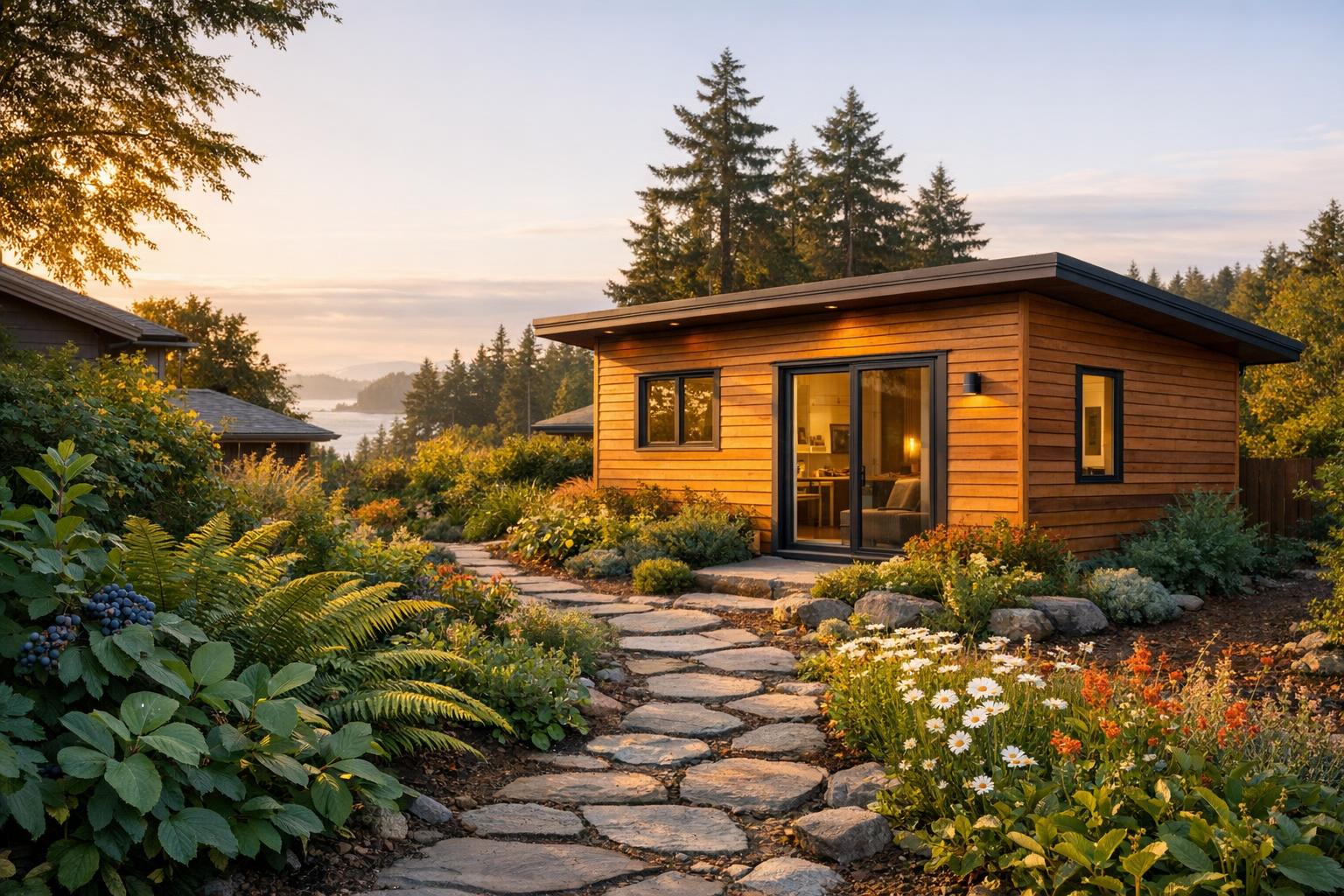
Estimated reading time: 11 minutes
Key Takeaways
- Native plant landscaping for ADUs is a practical way to reduce lawn, lower upkeep, and improve biodiversity in small Canadian yards.
- Native plants are adapted to local ecosystems and often need less water, fertilizer, and mowing once established.
- Rewilding a small ADU yard does not mean neglect; it means restoring habitat function with intentional design.
- Good results depend on matching plants to region, hardiness zone, soil, light, and moisture.
- Even narrow side yards and compact backyard strips can support pollinators, birds, and healthier stormwater absorption.
- Across Canada, region-specific planting palettes are far more effective than one-size-fits-all landscaping advice.
Table of contents
- Key Takeaways
- Native Plant Landscaping for ADUs in 2026
- Why Native Plants Make Sense for an ADU Yard
- What Rewilding Means in a Small ADU Yard
- Canadian Landscaping Basics Before You Plant
- Regional Native Plant Palettes for Canadian ADU Yards
- How to Design an ADU Yard for Biodiversity Without Losing Function
- Plant Selection Rules for Native Plant Landscaping for ADUs
- Sample Planting Plans for Small and Medium ADU Yards
- Rewilding Timeline and 2026 Seasonal Planting Calendar
- Low-Maintenance Care, Costs, and Ecological Management
- What Wildlife Habitat Results Can Readers Expect?
- Regulations, Landlord-Tenant Concerns, and Neighbour Buy-In
- Resources, Suppliers, and Practical Next Steps
- Frequently Asked Questions
Native Plant Landscaping for ADUs in 2026
Native plant landscaping for ADUs is one of the smartest ways to improve a small outdoor space in 2026. Across Canada, more homeowners are moving away from lawn-heavy yards and choosing native plants that need less water, less mowing, and give back real wildlife habitat.
This guide is a practical look at how to turn an ADU yard into a biodiverse, good-looking space through rewilding and smart Canadian landscaping. It covers what native plants are, how rewilding works in small spaces, region-specific plant ideas across Canada, design layouts for ADU-scale lots, planting timelines, and what to expect for maintenance and cost.
You do not need a large property to support pollinators, birds, and local biodiversity. Even a narrow side yard or small backyard strip can become useful habitat when planted with species that belong in your region and fit local conditions. Native plants are adapted to local ecosystems and help support wildlife while also improving climate resilience, a point echoed by WWF Canada’s native plant guidance and practical ADU-focused examples like this pollinator garden for ADUs in Canada.
A small yard planted well can do far more ecological work than a large yard dominated by turf.
Why Native Plants Make Sense for an ADU Yard
Native plants are plant species that occur naturally in a region. They have co-evolved with local soils, weather, insects, birds, and other wildlife over a long time. That is why they usually perform better than imported ornamentals in the right local conditions.
Native plant landscaping for ADUs means designing a small detached-home or backyard-suite landscape around regionally suitable native plants instead of relying mostly on turf grass and non-native shrubs. In an ADU yard, that approach makes strong practical sense.
Small yards need plants that can handle local rainfall, cold, heat, and seasonal shifts without constant attention. Native plants often need less irrigation once established. They also reduce mowing, cut back on fertilizer use, and can be more resilient to local pests and weather swings.
They also build wildlife habitat in clear, useful ways:
- Native flowers provide nectar and pollen for bees and butterflies
- Native shrubs offer berries, cover, and nesting shelter
- Host plants feed caterpillars and other beneficial insects
- Deep roots help water soak into the soil and reduce runoff
This matters in compact spaces with shared yards, narrow side strips, privacy needs, and tenant turnover. Owners often want a landscape that looks attractive but does not demand weekly heavy care. A native planting can do that. It can look intentional, tidy, and well designed with the right layout and plant grouping.
In many parts of Canadian landscaping, native plants are one of the best fits for small residential lots because they support biodiversity while staying grounded in local growing conditions, as shown by the Canadian Wildlife Federation, regional pollinator guidance from David Suzuki Foundation, Ontario-focused examples from Carroll Property Services, and broader biodiversity benefits noted by WWF Canada. For small-scale yard planning, this also aligns with wildlife-friendly landscaping for tiny homes and ADUs.
What Rewilding Means in a Small ADU Yard
Rewilding in a small ADU yard does not mean neglect. It means restoring natural habitat functions on a residential scale.
In practice, rewilding usually means:
- Reducing lawn area
- Planting layers of native vegetation
- Keeping leaf litter or mulch on the soil
- Making space for pollinators, birds, and beneficial insects
- Cutting back on unnecessary trimming and chemical use
A conventional yard often has a large lawn, a few isolated shrubs, and frequent mowing. A rewilded yard looks different. It has layers, texture, seasonal change, and more life. Over time, it often needs less work, not more.
This is good news for people with limited budgets. Rewilding can happen in phases:
- Start with one fence line
- Convert one planting bed
- Replace one turf strip with a pollinator border
- Add habitat features bit by bit
A rewilded space can still look neat. Use crisp bed edges, a simple path, mulch, and repeated plant groupings. Those design moves tell people the yard is cared for. Native plants in layers support wildlife habitat far better than simplified landscapes with little food or shelter value, a principle reinforced by Canadian Wildlife Federation resources, habitat-based planting advice from Grow Native, and small-space design ideas for ADU outdoor design in Canada.
Canadian Landscaping Basics Before You Plant
Good Canadian landscaping starts with local facts, not generic advice from another climate. Canada has huge differences in cold, moisture, wind, and growing season. A plant that works in coastal British Columbia may fail in Manitoba or northern Ontario.
Before planting, understand these basics:
- Hardiness zone: the range of cold a plant can survive
- Frost date: the usual last spring frost and first fall frost
- Local provenance: plant material sourced from the same or a similar region
Hardiness zones vary across Canada. Frost dates change planting windows. Rainfall patterns are different on the coast, in the Prairies, in Central Canada, and in Atlantic regions. Soil texture matters too. Sandy soil drains fast. Clay holds moisture longer. Urban ADU yard spaces can also create microclimates. Walls, paving, fences, and nearby buildings can make a site hotter, windier, or shadier than expected.
For native plant landscaping for ADUs, match native plants to both region and site condition. A plant must fit the local ecosystem and the actual yard conditions, such as full sun, dry soil, part shade, or wet ground.
Use native plant databases and regional groups instead of trusting broad labels at big-box stores. Native plant resources are much better for accurate species and region checks, including the Canadian Wildlife Federation’s overview, the Native Plant Encyclopedia, and practical guidance for small-space ADU landscaping in Canada.
Regional Native Plant Palettes for Canadian ADU Yards
There is no single best plant list for all of Canada. Good Canadian landscaping depends on province, local habitat, and site conditions. These starter palettes are meant for compact ADU yard projects and wildlife habitat goals. Always confirm exact species with local nurseries, native plant groups, and regional sources before buying.
Pacific / Coastal British Columbia
This region often has mild, wet winters and drier summer periods, with woodland and coastal influences. In many ADU yard spaces, the main goals are evergreen structure, erosion control, bird and pollinator support, and strong performance in shade or part shade.
Useful native plants include:
- Sword fern (Polystichum munitum)
- Salal (Gaultheria shallon)
- Oregon grape (Mahonia aquifolium)
- Red flowering currant (Ribes sanguineum)
- Nootka lupine (Lupinus nootkatensis)
- Western bleeding heart (Dicentra formosa)
- Douglas aster (Symphyotrichum subspicatum)
- Oceanspray (Holodiscus discolor)
A simple BC palette might use salal and Oregon grape for year-round structure and wildlife food. Sword fern and western bleeding heart work well in shady beds. Red flowering currant and oceanspray help pollinators and add seasonal bloom. Douglas aster extends late-season interest. This mix creates layered wildlife habitat without needing a large footprint. For inspiration, see these native flowering plant ideas.
Prairies — Alberta, Saskatchewan, Manitoba
Prairie conditions often mean strong wind, full sun, drought risk, cold winters, and soils that may be alkaline or fast draining. In this region, rewilding often works best with meadow-style planting and deep-rooted species that need little irrigation once established.
Starter species include:
- Prairie smoke (Geum triflorum)
- Blanketflower (Gaillardia aristata)
- Purple coneflower (Echinacea purpurea)
- Big bluestem (Andropogon gerardii)
- Wild bergamot (Monarda fistulosa)
- Pasqueflower (Pulsatilla patens)
- Harebell (Campanula rotundifolia)
- Leadplant (Amorpha canescens)
For a Prairie ADU yard, combine grasses with flowering perennials. Big bluestem gives structure and movement. Prairie smoke, pasqueflower, and harebell extend seasonal interest. Wild bergamot and blanketflower support pollinators. Leadplant adds shrub-like form and deep-root strength. Together, these plants help reduce erosion and keep the yard attractive through the season. Pair plant choice with broader site resilience planning such as wildfire-conscious design for small homes.
Ontario / Quebec Mixed Woodlands
This region has humid summers, cold winters, woodland edges, urban-suburban soils, and big seasonal contrast. For many native plants in this zone, the goal is a layered but tidy border with bloom succession from spring through fall.
Good choices include:
- Foam flower (Tiarella cordifolia)
- Wild columbine (Aquilegia canadensis)
- Swamp milkweed (Asclepias incarnata)
- New England aster (Symphyotrichum novae-angliae)
- Joe Pye weed (Eutrochium purpureum)
- Canada goldenrod (Solidago canadensis)
- Serviceberry (Amelanchier spp.)
- Ostrich fern (Matteuccia struthiopteris)
Foam flower and wild columbine help early pollinators in spring. Swamp milkweed supports monarch life cycle needs. New England aster and Canada goldenrod feed late-season insects. Serviceberry adds fruit, spring bloom, and bird value. Ostrich fern helps fill shadier spots. This kind of layered planting supports wildlife habitat while still fitting urban Canadian landscaping, supported by regional examples from the David Suzuki Foundation, Ontario-native wildlife plant suggestions, WWF Canada, and this ADU pollinator garden guide.
Atlantic Canada
Atlantic Canada often has coastal influence, acidic soils in many places, variable moisture, and strong pollinator potential. In a small ADU yard, a good palette combines flowering succession with berry shrubs and low woodland species.
Starter species include:
- Canada goldenrod (Solidago canadensis)
- Fireweed (Chamerion angustifolium)
- Joe Pye weed (Eutrochium purpureum)
- New England aster (Symphyotrichum novae-angliae)
- Swamp milkweed (Asclepias incarnata)
- Bunchberry (Cornus canadensis)
- Lowbush blueberry (Vaccinium angustifolium)
- Wild raisin (Viburnum nudum)
This mix supports bees and butterflies while adding food and shelter for birds. Lowbush blueberry and wild raisin give shrub structure. Bunchberry works as a low layer in woodland-style settings. Goldenrod, aster, and Joe Pye weed help stretch bloom through late summer and fall. For pollinator-specific regional ideas, see what native plants attract pollinators in Atlantic Canada.
Where Canadians Can Find Native Plant Guidance and Suppliers
To build a strong native plant list, use trusted Canadian landscaping and ecology resources:
- Canadian Wildlife Federation Native Plant Encyclopedia
- Pollinator Partnership and Canadian pollinator resources
- WWF re:grow and In the Zone references
- Local native plant societies
- Provincial nurseries
- Conservation authorities and watershed groups
Always verify native status by region before buying. A plant may be native somewhere in North America but not native to your local ecosystem. That difference matters for wildlife habitat and long-term planting success. Helpful starting points include the Native Plant Encyclopedia, WWF native plant resources, Wild Pollinators beauty and biodiversity guidance, Thames River native garden guidance, and local Atlantic examples such as native plants to help native wildlife.
How to Design an ADU Yard for Biodiversity Without Losing Function
The best ADU yard designs balance habitat with daily use. A space can support wildlife habitat and still feel practical, safe, and pleasant.
Start with a site assessment:
- Sunlight hours: how much direct sun each area gets
- Dry vs wet spots: where soil dries out or stays damp
- Soil type: sandy, loamy, or clay-heavy
- Drainage patterns: where water moves or pools
- Slope: flat ground or a grade that affects runoff
- Wind exposure: calm or windy areas
- Access routes: where people need to walk
- Privacy needs: where screening matters
- Views from windows: what you want to see from indoors
- Pet or tenant use: how people and animals use the space
Then zone the yard into mini-areas:
- Entry or front edge: a tidy native border for curb appeal
- Pollinator strip: a sunny bed with flowering native plants
- Shrub refuge zone: denser planting along fences
- Rain garden or swale: a low area that catches runoff
- Patio or path zone: clear walking and sitting space
Use layered planting:
- Upper layer: small tree or tall shrub
- Middle layer: medium shrubs and upright perennials
- Lower layer: grasses, sedges, and groundcovers
Small habitat features can fit almost any rewilding plan:
- A shallow birdbath or water dish
- A bee hotel in a dry spot
- A small brush pile behind shrubs
- A rock cluster for shelter
- Host plants for caterpillars
- Seed heads left standing in winter
Biodiversity improves when these layers overlap and different plants bloom across the seasons. For layout and habitat logic, see advice from Grow Native, regional wildlife examples from Ontario native planting guides, broad principles from the Canadian Wildlife Federation, and practical small-lot planning through ADU outdoor design and rain garden integration for ADUs.
Plant Selection Rules for Native Plant Landscaping for ADUs
A simple plant-selection framework helps keep native plant landscaping for ADUs practical.
Choose plants using these rules:
- Pick species native to your region
- Match plants to actual site conditions
- Use a mix of flowers, grasses, shrubs, and maybe one small tree
- Plan bloom from spring to fall
- Include nectar plants and host plants
- Favour local provenance where possible
A nectar plant feeds adult pollinators like bees and butterflies. A host plant is where insects lay eggs or where larvae feed. Both matter. A yard with nectar only is helpful, but a yard with nectar and host plants supports more of the life cycle.
Aim for diversity, not monoculture. More species usually means:
- Longer flowering windows
- Better support for birds and insects
- More resilience if one plant struggles
Also avoid invasive or aggressive ornamentals that can spread and outcompete local plant communities. And remember: native-looking is not the same as truly native. A plant may fit the look of Canadian landscaping but still fail to support local wildlife habitat in the same way as a true local species. For region-sensitive pollinator choices, see David Suzuki Foundation guidance, the Canadian Wildlife Federation overview, and this ADU pollinator planting guide.
Sample Planting Plans for Small and Medium ADU Yards
These examples help show what native plants can look like at ADU yard scale.
Sample 100–200 sq ft ADU Yard Plan
This size fits a narrow side yard, small rear strip, or compact courtyard. Keep the layout simple and repeated.
A workable plan might include:
- 2 small shrubs
- 8 to 12 flowering perennials
- 6 to 10 grasses, sedges, or groundcovers
- 1 small habitat feature such as a birdbath or bee hotel
Group plants in clumps of 3 to 5 for a stronger visual effect and a tidier look. Space by mature size, not nursery pot size. That helps avoid crowding later.
Sample 500–1,000 sq ft ADU Yard Plan
This suits a larger detached suite yard or a shared backyard around an ADU. Here you can build stronger layering and privacy.
A good plan could include:
- 1 small native tree or large shrub
- 4 to 6 shrub masses
- Drifts of perennials and grasses
- A path or small patio
- One rain-garden or runoff-capture bed
- Two or more habitat features
This larger layout can create shade, screening, stronger wildlife habitat, and more seasonal interest. Companion planting helps hold it together visually:
- Mix spring, summer, and fall bloomers
- Pair fine-textured grasses with broader flowering plants
- Repeat key species for cohesion
These simple design moves make native plant landscaping for ADUs feel planned rather than random. For visual inspiration and small-lot planning, see flowering native plant examples, landscaping ideas for ADUs in Canada, and small-space ADU landscaping strategies.
Rewilding Timeline and 2026 Seasonal Planting Calendar
Rewilding works best as a phased process. That makes it more affordable and easier to manage.
Year 1 — Foundation
- Remove or reduce turf in target areas
- Smother grass where possible instead of deep digging
- Improve soil only if needed
- Plant shrubs and small trees first
- Build rain gardens or drainage features before dense planting
- Add mulch and define bed edges
Year 2 — Fill and Diversify
- Add flowering perennials, grasses, and groundcovers
- Introduce habitat features such as water dishes or bee hotels
- Expand into former lawn areas
- Reduce mowing in remaining turf sections
Years 3–5 — Stabilize and Fine-Tune
- Expect less watering and lower maintenance
- Thin or divide plants where needed
- Replace weak performers with better site matches
- Watch where wildlife activity is strongest and build on that
2026 Seasonal Calendar
Spring
- Check winter survival
- Plant many perennials after frost risk passes
- Add water sources
Summer
- Water deeply but less often during establishment
- Watch for weeds
- Avoid heavy pruning during bird nesting periods
Fall
- Plant many shrubs and woody species
- Mulch after soil cools
- Leave seed heads standing
Winter
- Observe drainage, snow cover, and exposed areas
- Plan next season’s changes
Exact timing depends on region, hardiness zone, and frost dates in your part of Canada. Reference seasonal and plant information through the Native Plant Encyclopedia and practical upkeep planning like this ADU maintenance checklist.
Low-Maintenance Care, Costs, and Ecological Management
Native planting is lower maintenance, not no maintenance. The first one to two years are the most hands-on because plants are still getting established.
Low-effort care methods include:
- No-till or minimal-disturbance bed prep
- Mulch to hold moisture and suppress weeds
- Deep watering during establishment
- Early regular weeding so native plants can fill in
- Selective pruning instead of shearing everything
- Leaving stems and seed heads through winter where possible
For ecological management, avoid broad-spectrum pesticides. Some insect feeding is normal and useful because it supports the food web. Remove invasive plants early by hand when possible. Focus on proper plant siting instead of trying to rescue struggling plants with chemical fixes.
Cost depends on yard size, region, and whether the work is DIY or contractor installed. A phased DIY project is often the lower-cost route. Professional installation costs more, but it can solve grading, drainage, and design problems faster.
Some areas may offer support through stormwater programs, rain garden rebates, conservation authority initiatives, or native garden promotions. Helpful references include regional plant care guidance from the David Suzuki Foundation, local watershed resources like Thames River’s native gardens page, and small-space implementation advice through ADU landscaping and rain garden integration.
What Wildlife Habitat Results Can Readers Expect?
A rewilded ADU yard can produce real changes, even when the space is small. Common results include:
- More bees and butterflies
- More songbird visits
- More beneficial insects such as native bees and predatory beetles
- Better seasonal colour and texture
- Less bare soil
- Better water infiltration and less runoff
Success is not only about dramatic wildlife sightings. Smaller changes matter too:
- More flowers being visited
- More birds feeding or resting
- Fewer puddling problems
- More consistent plant cover
- Longer bloom through the season
Useful ways to track progress include:
- Keep a species list
- Take before-and-after photos
- Log sightings in iNaturalist
- Record birds with eBird
- Compare mowing and watering time before and after
Small examples help show what this can look like:
- An Ontario compact yard that cut mowing time after replacing turf with layered native plants
- A BC shade-focused planting that increased bird activity near a backyard suite
- A Prairie strip planting that lowered irrigation needs and stayed attractive through dry periods
That is what wildlife habitat gains often look like in residential Canadian landscaping: steady, practical improvement. For more on pollinator and wildlife value, see David Suzuki Foundation guidance, Ontario wildlife-friendly native plants, the Canadian Wildlife Federation, and this wildlife-friendly landscaping resource.
Regulations, Landlord-Tenant Concerns, and Neighbour Buy-In
Before changing an ADU yard, check local rules. This matters if you plan to add:
- New fencing
- Water features
- Pergolas, sheds, or other structures
- Major grading or drainage changes
Shared-space questions matter too. Decide who waters during the first growing season, who handles upkeep, and how access paths stay clear and safe. Keep sightlines open near doors and walkways, especially in multi-user spaces.
To avoid neighbour complaints, use design signals that show care:
- Crisp bed edges
- Plant labels or a small pollinator habitat sign
- Taller species toward the back or centre of beds
- Clear paths and entries
Describe the project as wildlife habitat-focused Canadian landscaping. That frames rewilding as a thoughtful design choice, not as letting the yard go unmanaged.
Resources, Suppliers, and Practical Next Steps
The best support for native plant landscaping for ADUs comes from reliable regional sources. Helpful resource types include:
- Native plant encyclopedias and databases
- Provincial native plant societies
- Conservation authorities
- Local pollinator and restoration groups
- Nurseries that clearly label native species by region
Useful named resources include the Canadian Wildlife Federation Native Plant Encyclopedia, WWF re:grow and In the Zone references, Wild Pollinators biodiversity resources, Thames River native garden guidance, local Atlantic examples such as native plants to help native wildlife, and practical layout help through ADU outdoor design in Canada.
A simple planning sequence is:
- Spend 15 minutes surveying the site
- Identify your region and hardiness zone
- Choose one bed or lawn strip to convert first
- Set a first-year budget
- Source 5 to 10 starter native plants suited to the site
Native plant landscaping for ADUs is one of the most practical ways to build a resilient, attractive, lower-maintenance ADU yard in 2026. It replaces excess lawn with biodiversity, creates stronger wildlife habitat, lowers long-term upkeep, and fits the real needs of Canadian landscaping.
Rewilding does not need to start with a full-yard makeover. It can begin with one bed, one border, or one season of planting. In small spaces, thoughtful choices matter even more.
A modest yard planted well can support pollinators, shelter birds, handle water better, and look beautiful through the seasons. Small Canadian yards can make a meaningful ecological difference.
Frequently Asked Questions
What are native plants in Canadian landscaping?
Native plants are species that occur naturally in a given region and have adapted over time to local soils, weather, insects, and wildlife. In Canada, they vary by province and ecosystem, so it is important to confirm regional suitability with tools like the Native Plant Encyclopedia.
Is rewilding an ADU yard the same as letting it grow wild?
No. Rewilding is intentional. It reduces turf, adds layered habitat, and supports biodiversity, but it still uses design structure such as edges, paths, and grouped planting so the space looks cared for.
Can a very small ADU yard really support wildlife habitat?
Yes. Even a narrow side yard or compact backyard strip can provide nectar, pollen, shelter, berries, and water sources. Small habitats are especially valuable when they connect with other green spaces nearby.
Do native plants always mean lower maintenance?
Usually, once they are established. The first one to two years require watering, weeding, and monitoring. After that, many native plantings need less mowing, less irrigation, and less intervention than lawn-heavy yards.
How do I choose the right native plants for my ADU yard?
Start with your region, hardiness zone, sun exposure, soil type, and moisture conditions. Then choose a mix of native flowers, grasses, shrubs, and possibly one small tree that provide bloom across the seasons and support both nectar and host functions.
Where can I find native plant suppliers in Canada?
Look for provincial native plant nurseries, conservation authorities, watershed groups, pollinator organizations, and regional plant societies. Resources such as WWF Canada, Wild Pollinators, and Thames River native garden guidance can help you start.
Leave a Reply