

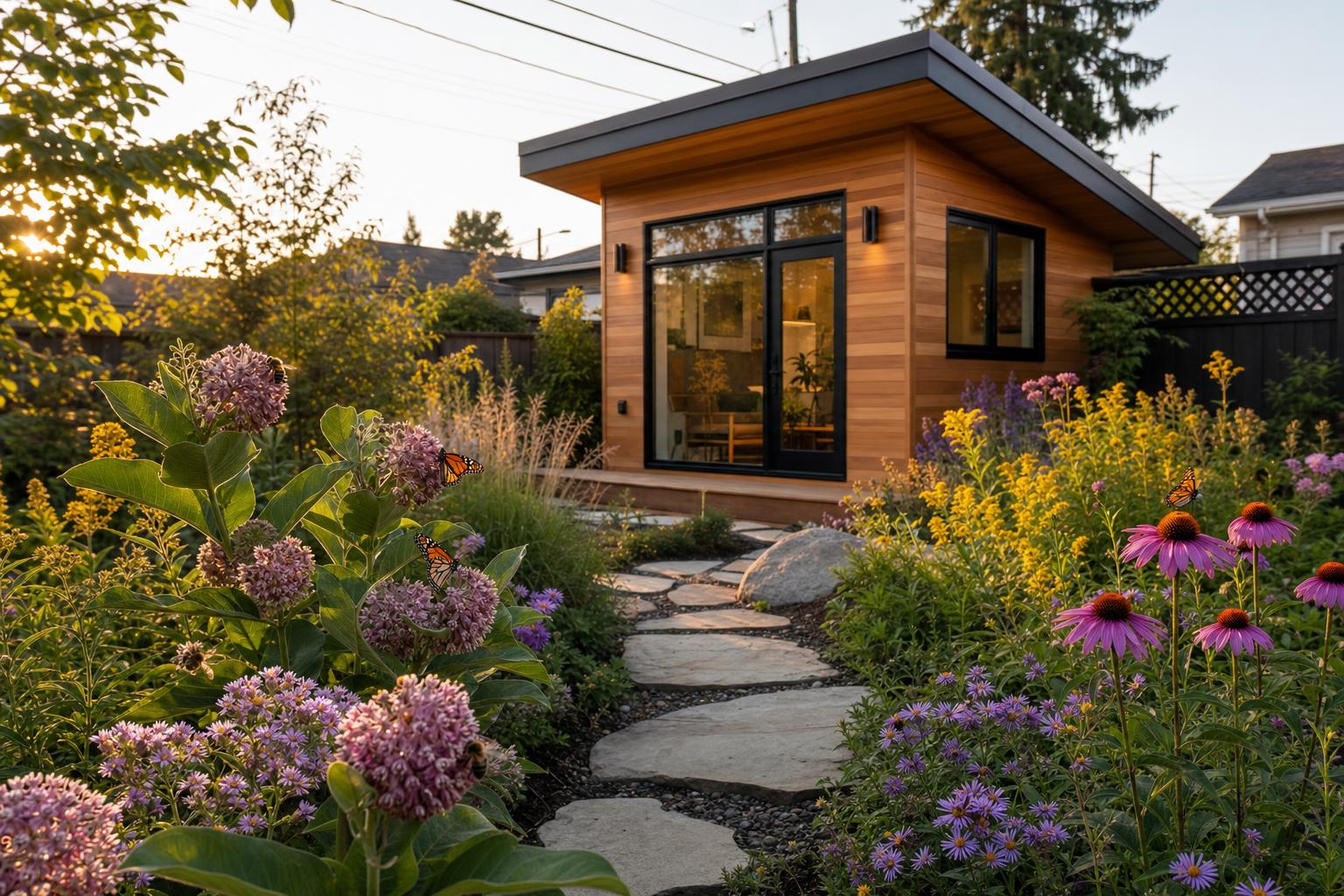
Native Plants for Small-Space Pollinator Gardens: Smart ADU Landscaping in Canada for 2026
Estimated reading time: 12 minutes
Key Takeaways
- Native plants are better adapted to local Canadian climates, soils, and wildlife, making them an excellent fit for pollinator gardens and compact ADU yards.
- Even very small spaces like side yards, courtyard beds, fence lines, and containers can become useful habitat for bees, butterflies, and birds.
- A successful pollinator garden needs more than flowers. It should include nectar plants, host plants, shelter, water, and chemical-free care.
- Regional plant selection matters. A plant that is native in one part of Canada may not be native in another.
- Thoughtful, eco-friendly ADU landscaping can reduce water use, improve resilience, and help strengthen local biodiversity over time.
Table of contents
- Why Native Plants Matter for Canadian Biodiversity
- Smart ADU Landscaping with Native Plants in Small Canadian Yards
- How to Build a Pollinator Garden with Native Plants
- Regional Native Plants for ADU Landscaping Across Canada
- Eco-Friendly Gardening Practices for ADU Landscaping
- Seasonal Maintenance Calendar for a Native Plant Pollinator Garden
- How Small ADU Gardens Strengthen Canadian Biodiversity
- Resources, Nurseries, and Next Steps for 2026
- Small Canadian ADU Landscaping Ideas in Action
- FAQ
- Start Small with Native Plants in 2026
Native plants are plants that evolved in a specific region over thousands of years. Over time, they formed close relationships with local insects, birds, soil, and climate. That is why native plants are such a smart choice for a pollinator garden and for ADU landscaping in Canada.
In 2026, more Canadian properties include accessory dwelling units, laneway houses, garden suites, and tiny homes. That means more small yards, side yards, and courtyards. It also means more chances to turn even a tight space into habitat. A small planting of native plants can support bees, butterflies, and birds, lower water use once established, and create a beautiful, resilient garden that helps strengthen Canadian biodiversity.
This guide shows how to design a small-space pollinator garden around an ADU using eco-friendly gardening methods. You will learn simple layout ideas, regional plant suggestions, and practical ways to care for a habitat-rich yard without making it high maintenance. Even one bed, one strip along a fence, or a few large containers can make a real difference. Learn more from Nature Canada’s guide to creating a native plant garden.
Why Native Plants Matter for Canadian Biodiversity
Canadian biodiversity means the wide mix of plants, insects, birds, and animals that keep local ecosystems working well. When that mix is healthy, gardens, parks, forests, wetlands, and neighbourhood green spaces are more resilient.
Native plants support this system better than most imported ornamentals because they are part of local food webs. Adult pollinators use flowers for nectar and pollen, but that is only part of the story. Many insects also need native plants as host plants, where they lay eggs and where caterpillars or larvae feed. If a yard has flowers but no useful host plants, it may look lively for a short time but still provide weak habitat.
Many non-native plants are attractive, but local insects often did not evolve with them. That means they may offer less food or no food at all. Native plants usually do more. Their roots are also adapted to local conditions, which can help improve soil health and resilience in compact urban lots. Deep or fibrous roots can help with water movement, soil structure, and long-term plant survival.
A strong pollinator garden also needs more than flowers. Native shrubs, grasses, standing stems, and leaf litter create shelter, nesting space, and overwintering habitat.
“Native” does not mean one generic Canadian list. It means the right plant for your local place.
This matters in every part of Canada, but the best plant list changes by region:
- BC coast: mild, wet winters and dry summers
- Prairies: drought, wind, and sharp temperature swings
- Ontario and Quebec: rich woodland and meadow options
- Atlantic Canada: coastal exposure, salt, wind, and shifting moisture
Even small gardens can act as habitat patches that connect bigger green spaces. In ADU landscaping, where every square metre matters, that makes each planting choice more important. For foundational guidance, see this native plant garden resource from Nature Canada.
Smart ADU Landscaping with Native Plants in Small Canadian Yards
ADU landscaping means the outdoor design around accessory dwelling units, laneway homes, garden suites, and tiny homes. In these spaces, every planting choice should do more than one job. A bed might need to soften a fence, support pollinators, manage runoff, and add privacy all at once.
Common ADU site limits include:
- Narrow side yards
- Small courtyards
- More paving and runoff
- Shade from fences or buildings
- Containers instead of open garden beds
- Compacted urban soil
These limits do not stop a good garden. They just change the design rules. The best small-space native planting plans aim for:
- Layered planting that uses vertical space
- Privacy without making the yard feel boxed in
- Four-season interest
- Low-water performance
- Strong habitat value for pollinators
Here are smart solutions that work well in compact yards:
- Vertical planting: Use trellises, fences, and wall-side planters to add greenery where ground space is tight.
- Container planting: Deep pots can hold compact native perennials, grasses, and smaller shrubs.
- Pocket meadows: A sunny patch can become a dense mini wildflower bed full of nectar plants.
- Green roofs: On sheds or small accessory structures, these can add habitat if structure and code allow. See this guide to a green roof for tiny homes in Canada.
- Permeable paving: Gravel or permeable pavers help reduce runoff.
- Rain barrels and downspout capture: These support irrigation and better stormwater management. Learn more about rainwater harvesting for tiny homes.
Micro-pollinator border
A slim bed about 0.5 to 1 metre deep and 3 to 4 metres long. Plant around 7 to 9 plants per square metre.
- Front: low groundcovers or compact perennials
- Middle: flowering midsize species
- Back: 1 to 2 shrubs
This works along a fence, beside a path, or next to a laneway suite.
Sunny courtyard
A 3 x 3 metre space can hold a full pollinator garden. Plant about 6 to 8 plants per square metre, plus 1 to 3 shrubs.
- Use a birdbath or large planter as a focal point
- Ring it with layered flowers and grasses
- Keep paths clear so the space still feels open
Shaded side-yard
A strip about 1.5 to 2 metres wide can become a woodland-style planting. Aim for 5 to 7 plants per square metre.
- Use shade-tolerant woodland species
- Add one vertical feature on the fence
- Mix ferns, spring flowers, and one small shrub for structure
Compact space is not a disadvantage when planting is intentional. In fact, native plants often work especially well in ADU landscaping because they create beautiful, low-maintenance habitat-rich spaces in a small footprint. For more inspiration, review Nature Canada’s native planting advice.
How to Build a Pollinator Garden with Native Plants
A pollinator garden is a garden designed on purpose to provide food, shelter, nesting habitat, and season-long support for pollinating species such as native bees, butterflies, moths, and hummingbirds. In a small Canadian yard, the goal is not to cram in as many flowers as possible. The goal is to create a clear system that supports life from spring to fall.
The five core building blocks are simple.
1. Nectar plants
These flowers give adult pollinators energy. A good pollinator garden has blooms across the whole season.
- Spring blooms support queen bumblebees and early solitary bees
- Summer blooms feed the highest number of pollinators
- Fall blooms help migration and overwintering prep
2. Host plants
These are the plants where butterflies and moths lay eggs or where young larvae feed. Milkweed is the best-known example because monarchs depend on it. Without host plants, butterflies may visit but not reproduce.
3. Shelter
Pollinators also need places to rest, hide, and survive winter.
Useful shelter includes:
- Shrubs
- Native grasses
- Hollow or pithy stems
- Leaf litter
- Quiet garden corners
4. Water
Pollinators need safe, shallow water. In a small yard, this can be very simple:
- A shallow dish with stones for landing
- Damp sand in a tray
- A small basin cleaned and refilled often
5. Chemical-free management
Pesticides work against the whole purpose of a pollinator garden. Even small amounts can harm bees and beneficial insects. If a plant has a minor pest problem, it is often better to prune, hand-remove pests, or wait for natural predators to help.
To make your garden work better, follow these practical design actions:
- Plan bloom succession from spring through fall
- Plant flowers in clumps of 3 to 5 of the same species
- Leave some stems and leaf litter standing through winter
- Keep a patch of bare soil in a sunny, quiet spot for ground-nesting bees
Different pollinators use gardens in different ways.
Native bees
They like flower diversity, repeated clumps, and nesting choices in soil, stems, or wood. Many native bees do not travel far, so even a small bed can help.
Butterflies and moths
They need both nectar and host plants. Many prefer sunny landing spots and flowers with flatter shapes.
Hummingbirds
They look for tubular flowers and nearby shrubs or small trees for shelter and perching.
In small-space ADU landscaping, structure matters. A good pollinator garden should still look intentional. Use repeated plant groupings, neat edges, and clear layers so neighbours and municipalities read it as landscaping, not neglect. Native plants feed bees, butterflies, and birds, but a thoughtful layout makes the habitat easier for people to appreciate too.
Helpful references include Nature Canada’s native garden guide and this article on a pollinator garden for an ADU in Canada.
Regional Native Plants for ADU Landscaping Across Canada
Before buying, verify native status, hardiness, and site fit for your exact province, city, and ecoregion in 2026. A plant may be native in one part of Canada but not another. Local confirmation matters.
West Coast / British Columbia
BC often has wet winters and dry summers, so native plants for ADU landscaping should handle that pattern well.
| Plant | Bloom season | Sun/shade | Mature size | Container suitable | Ecological value / best use |
|---|---|---|---|---|---|
| Salal (Gaultheria shallon) | Spring | Part shade to shade | 0.6–1.5 m | Yes, large pot | Evergreen screening, berries, understory structure |
| Red-flowering currant (Ribes sanguineum) | Early spring | Sun to part shade | 1.5–3 m | Yes, large container | Excellent early pollinator and hummingbird support |
| Oceanspray (Holodiscus discolor) | Summer | Sun to part shade | 1.5–4 m | Better in ground | Light screening, pollinator shrub |
| Common camas (Camassia quamash) | Spring | Sun to part shade | 0.3–0.6 m | Yes | Great for spring nectar in small beds |
| Nodding onion (Allium cernuum) | Summer | Sun to part shade | 0.3–0.5 m | Yes | Pollinator-friendly, tidy in compact beds |
| Native lupines (local forms) | Spring to summer | Sun | Varies | Some forms | Pollinator value, meadow planting |
| Sword fern (Polystichum munitum) | Non-flowering feature | Shade to part shade | 0.9–1.5 m | Yes, large pot | Strong woodland texture for shaded ADU yards |
| Kinnikinnick (Arctostaphylos uva-ursi) | Spring | Sun to part shade | 0.1–0.3 m | Yes | Dry-slope groundcover, evergreen mat, berries |
Prairies
Prairie native plants shine in eco-friendly gardening because they often have deep roots, drought tolerance, and strong wind resilience.
| Plant | Bloom season | Sun/shade | Mature size | Container suitable | Ecological value / best use |
|---|---|---|---|---|---|
| Prairie crocus (Pulsatilla patens) | Early spring | Sun | 0.1–0.3 m | Sometimes | Early nectar, compact sunny beds |
| Prairie smoke (Geum triflorum) | Spring | Sun | 0.2–0.4 m | Yes | Drought-tolerant, fine texture, seedheads |
| Purple coneflower (locally appropriate forms) | Summer | Sun | 0.6–1 m | Yes, deep pot | Pollinator favourite in sunny borders |
| Black-eyed Susan (Rudbeckia hirta) | Summer to fall | Sun | 0.3–1 m | Yes | Long bloom, easy colour in young beds |
| Prairie aster (Symphyotrichum spp.) | Late summer to fall | Sun | 0.4–1 m | Some forms | Crucial late nectar |
| Little bluestem (Schizachyrium scoparium) | Late summer interest | Sun | 0.6–1.2 m | Yes | Upright grass, nesting cover, winter structure |
| Wild bergamot (Monarda fistulosa) | Summer | Sun to part shade | 0.6–1.2 m | Yes | Bees, butterflies, and strong meadow look |
| Canada wild rye (Elymus canadensis) | Summer seedheads | Sun to part shade | 0.6–1.2 m | Yes, large pot | Fast structure, wind movement, habitat |
Ontario and Quebec
This region offers strong options for monarch support, clay soils, woodland shade gardens, and long meadow bloom.
| Plant | Bloom season | Sun/shade | Mature size | Container suitable | Ecological value / best use |
|---|---|---|---|---|---|
| Common milkweed (Asclepias syriaca) | Summer | Sun | 0.9–1.5 m | Better in ground | Monarch host plant, sunny habitat beds |
| Swamp milkweed (Asclepias incarnata) | Summer | Sun | 1–1.5 m | Yes, deep pot | Good for moist soil and monarch support |
| Butterfly milkweed (Asclepias tuberosa) | Summer | Sun | 0.4–0.8 m | Yes | Compact, drought-tolerant, bright flowers |
| Canada goldenrod (Solidago canadensis) or better-behaved local species | Late summer to fall | Sun | 1–2 m | Some smaller species | Important late nectar, use with care in tight sites |
| New England aster (Symphyotrichum novae-angliae) | Fall | Sun | 1–1.5 m | Yes, large pot | Key late-season pollinator plant |
| Wild columbine (Aquilegia canadensis) | Spring | Part shade | 0.3–0.9 m | Yes | Great for part shade and hummingbirds |
| Zigzag goldenrod (Solidago flexicaulis) | Late summer to fall | Shade to part shade | 0.3–0.9 m | Yes | Strong shade-garden nectar source |
| White trillium (Trillium grandiflorum) | Spring | Shade to part shade | 0.2–0.4 m | Not ideal | Woodland planting for rich shade |
| Virginia mountain mint (Pycnanthemum virginianum) | Summer | Sun to part shade | 0.6–1 m | Yes | Excellent pollinator magnet, tidy texture |
Atlantic Canada
Atlantic native plants often need to cope with coastal exposure, salt, wind, wet periods, and dry spells.
| Plant | Bloom season | Sun/shade | Mature size | Container suitable | Ecological value / best use |
|---|---|---|---|---|---|
| Northern bayberry (Myrica pensylvanica) | Spring flowers, ornamental berries | Sun | 1–2 m | Yes, large container | Salt-tolerant shrub, screening, bird value |
| Joe-Pye weed (Eutrochium maculatum) | Late summer | Sun to part shade | 1.2–2 m | Better in ground | Tall pollinator anchor for moist sites |
| Wild bergamot (Monarda fistulosa) | Summer | Sun | 0.6–1.2 m | Yes | Strong pollinator support in sunny beds |
| Blue flag iris (Iris versicolor) | Late spring to early summer | Sun to part shade | 0.6–0.9 m | Yes, moist container | Great for rain gardens and moist ground |
| Fireweed (Chamerion angustifolium) | Summer | Sun | 0.6–1.5 m | Sometimes | Pollinator support in bright open spots |
| Pearly everlasting (Anaphalis margaritacea) | Summer | Sun | 0.3–0.9 m | Yes | Host plant value, dry-site performer |
| Beach pea (Lathyrus japonicus) | Summer | Sun | Low spreading | Sometimes | Coastal groundcover, dune or sandy sites |
| Bunchberry (Cornus canadensis) | Spring | Shade to part shade | 0.1–0.2 m | Yes | Woodland groundcover, berries, small-space shade use |
The main takeaway is simple: the right plant in the right place means less maintenance, less irrigation, and fewer failures. That is the foundation of eco-friendly gardening in any small Canadian yard. For a starting point, use Nature Canada’s native plant garden information.
Eco-Friendly Gardening Practices for ADU Landscaping
Eco-friendly gardening protects the value of your pollinator garden after planting. In ADU landscaping, this matters even more because small spaces can be affected quickly by poor soil, extra heat, or chemical use.
Use a low or no pesticide approach
Avoid synthetic insecticides, herbicides, and fungicides whenever possible. These can harm bees and other beneficial insects.
A simple integrated pest management approach looks like this:
- Inspect plants often
- Hand-remove pests when practical
- Prune off badly affected growth
- Encourage beneficial insects
- Use the least-toxic targeted treatment only if truly needed
- Never treat plants when pollinators are active
Build healthy soil
Healthy soil helps native plants handle stress better.
- Add compost regularly
- Use mulch to hold moisture and keep soil cooler
- Avoid over-tilling
- Protect soil life by disturbing it less
This is especially useful in compacted urban lots around ADUs, where poor soil is common.
Save water
Many native plants need regular watering at first, but less once established.
Good water-saving methods include:
- Drip irrigation
- Soaker hoses
- Rain barrels
- Grouping plants by water needs
- Putting drought-tolerant native plants in hot, sunny spots
Greywater can be useful in some cases, but readers should check local bylaws and best practices before using it. See these guides to greywater for sustainable landscaping and greywater recycling for ADUs.
Choose better materials
Hardscape and lighting also affect habitat quality.
- Use recycled or reclaimed materials when possible
- Choose permeable surfaces over fully sealed paving
- Use warm, shielded, low-intensity lighting to reduce harm to nocturnal insects
These eco-friendly gardening choices support lower maintenance, lower water use, healthier habitat, and a more sustainable ADU landscape. Regionally appropriate native plants do much of the heavy lifting, but good care practices help them succeed. Additional reading: create a native plant garden and ADU landscaping for small spaces in Canada.
Seasonal Maintenance Calendar for a Native Plant Pollinator Garden
A native plant garden is lower maintenance over time, but it still benefits from simple seasonal care. The good news is that the work is usually lighter than turf-heavy yards or fussy ornamental beds. A broader seasonal home care reference is this ADU maintenance checklist for Canada.
Spring
Wait until temperatures are consistently mild before doing a full cleanup. Many insects overwinter in stems and leaf litter and need time to emerge.
Spring tasks:
- Top-dress beds with compost
- Plant new perennials and shrubs when soil is workable
- Check containers for drainage and winter damage
- Add early bloomers for emerging bees
- Trim only what truly needs trimming
Summer
This is the main growing and observation season for a pollinator garden.
Summer tasks:
- Water deeply and less often
- Weed young beds before weeds set seed
- Deadhead selectively
- Leave some seedheads for wildlife value
- Watch which flowers pollinators use most
This is also the best time to see where your bloom plan is strong and where it has gaps.
Fall
Fall is important for native plants and Canadian biodiversity because many insects and birds rely on late-season resources.
Fall tasks:
- Plant species that benefit from natural cold stratification
- Leave stems and some leaf litter in place
- Mulch containers and exposed roots in colder areas
- Add late-season nectar plants if needed
- Stop cutting everything back for a tidy look
Winter
Winter care is mostly about restraint.
Winter tasks:
- Disturb the garden as little as possible
- Check containers and small shrubs for wind or snow damage
- Review what worked best
- Plan edits for spring
Troubleshooting common problems
Invasive species
- Remove before seed set
- Do not use generic wildflower mixes without checking the species list
Soil compaction
- Reduce foot traffic
- Add stepping stones or defined paths
- Add organic matter each year
Flopping plants
- Plant more densely
- Let grasses and shrubs support neighbouring perennials
- Match plant height better to location
Low pollinator activity
- Increase bloom diversity
- Fill gaps between seasons
- Confirm plants are truly native
- Avoid sterile cultivars where possible
When managed with these simple habits, native plant gardens become resilient, low-maintenance habitat systems that work well in small-space ADU landscaping. See Nature Canada’s guide and this resource on native plant landscaping for ADUs.
How Small ADU Gardens Strengthen Canadian Biodiversity
Small gardens matter because cities are often fragmented. Parks, ravines, schoolyards, boulevard plantings, and private yards can feel separate, but pollinators and birds move through them as connected habitat. A pollinator garden around an ADU can act like a stepping stone in that network.
Even one small site can help species move across a neighbourhood. Milkweed and fall nectar plants can support monarchs. Bare soil and hollow stems can help solitary bees. Seeds, berries, and the insects attracted by native plants can feed birds. That is how a compact garden supports Canadian biodiversity far beyond its size.
Many municipalities now have biodiversity, pollinator, stormwater, or green infrastructure goals. Home landscapes can support those goals in practical ways, especially when they reduce runoff, increase planting, and provide habitat.
If you want to track the impact, practical options include:
- Joining iNaturalist
- Taking part in local pollinator counts
- Recording bloom times and wildlife visits
- Sharing sightings with local native plant or naturalist groups
One garden may feel small. Many small gardens together can create major ecological value across a city. Related reading includes creating a native plant garden, wildlife-friendly landscaping for tiny homes, and ADUs for birdwatchers.
Resources, Nurseries, and Next Steps for 2026
When planning with native plants, it helps to start with trusted local sources. For 2026, look for:
- Local native plant nurseries
- Provincial native plant societies
- Conservation authorities
- Pollinator-focused organizations
- Municipal biodiversity or rain garden programs
Before buying, confirm:
- The plant is native to your local area
- It fits your hardiness zone
- Its sun and moisture needs match your site
- The nursery stock is propagated, not wild-collected
Useful planning tools include:
- A regional planting calendar
- A bloom chart from spring to fall
- A one-page checklist
- A simple layout template PDF
A good checklist should cover:
- Measure the site and note sun and shade
- Identify soil and drainage
- Choose a region-specific native plant palette
- Pick 2 to 3 spring bloomers, 3 to 4 summer bloomers, and 2 to 3 fall bloomers
- Include at least one host plant
- Group species in clumps of 3 to 5
- Add a water source and overwintering habitat
- Plan for compost, mulch, and low-chemical care
Nature Canada is a useful starting point when building a native plant garden and checking basic principles for resilient, habitat-rich design. You can also explore pollinator-friendly ADU design for small-space planning ideas.
Small Canadian ADU Landscaping Ideas in Action
If you want a clearer picture of what this can look like, these example layouts show how native plants can transform compact spaces.
Example layout 1: Urban Ontario laneway suite
A small rear lawn is removed and replaced with a layered planting bed and narrow path.
Possible plant mix:
- Butterfly milkweed
- New England aster
- Wild bergamot
- A local serviceberry or similar shrub
Possible outcomes:
- Less turf to mow
- Lower watering needs than lawn after establishment
- More bee and butterfly visits in summer and fall
- Better privacy and stronger seasonal colour
Example layout 2: Tiny home courtyard in coastal BC
A very small courtyard uses large containers and one narrow in-ground strip.
Possible plant mix:
- Salal
- Red-flowering currant
- Common camas
- Nodding onion
Possible outcomes:
- Hummingbird activity in spring
- Year-round greenery from evergreen structure
- A clear, low-maintenance layout in a very small footprint
- Strong pollinator value without needing a full yard
These kinds of ADU landscaping plans work because the planting is layered, regionally appropriate, and focused on habitat as well as beauty.
FAQ
Can I grow native plants in containers?
Yes. Many native plants do well in deep pots, especially compact perennials, grasses, and smaller shrubs. Match the species to your sun, moisture, and winter exposure.
How much space does a pollinator garden need?
Not much. Even 1 to 2 square metres or a few large containers can help pollinators if you use the right native plants and include bloom across the season.
How do I attract monarchs in Canada?
Use regionally appropriate milkweed and add late-season nectar plants such as asters or goldenrods. Monarchs need both host plants and food sources.
Are native plants really low maintenance?
They are lower maintenance after establishment, but not no-maintenance. They still need watering early on, seasonal checks, and occasional editing.
Will a native garden look messy?
Not if it is designed well. Repetition, simple edging, defined paths, and layered planting make a pollinator garden look intentional and tidy.
Can I mix native and non-native plants?
Yes, but prioritize native plants for the strongest habitat value. Avoid invasive species and be careful with sterile cultivars that offer less benefit to pollinators.
What if my ADU yard is mostly shade?
You still have options. Use woodland native plants, ferns, shade-tolerant wildflowers, and shrubs suited to your local region.
Start Small with Native Plants in 2026
Using native plants in ADU landscaping is one of the simplest ways to build a beautiful, practical pollinator garden that supports Canadian biodiversity. The benefits are clear: lower maintenance over time, stronger resilience, less water use, and more habitat in small spaces.
The key is to start with the right regional plant list, match plants to your site, and plan for spring, summer, and fall bloom. Even a narrow border, a shaded side yard, or a few containers can become a useful part of a healthier local ecosystem when paired with eco-friendly gardening habits.
For the 2026 season, start with one small step. Sketch one bed or container grouping, choose a few region-specific native plants, and make sure your plan includes nectar, shelter, and season-long bloom. Regionally appropriate native plants create resilient, low-maintenance spaces that feed pollinators and birds while boosting biodiversity right outside the door.
To keep planning, visit Nature Canada’s native plant garden guide, ADU landscaping for small spaces in Canada, and native plant landscaping for ADUs.
Leave a Reply