

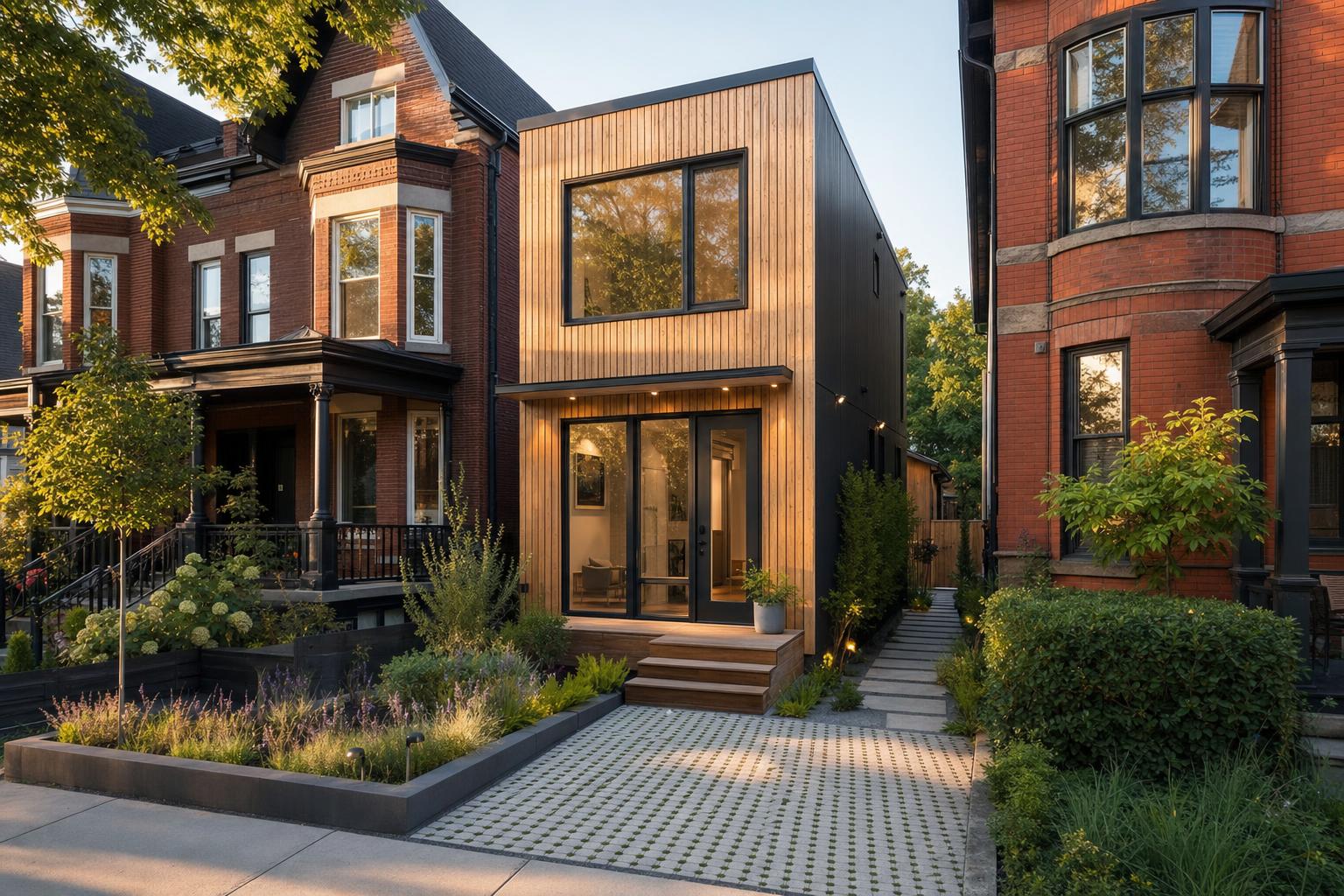
Urban Tiny Home Infill on Vacant Lots in 2026: A Practical Guide for Canadian Cities
Estimated reading time: 14 minutes
Key Takeaways
- Urban tiny home infill turns underused urban land into small-scale housing within existing neighbourhoods.
- Vacant lots matter in 2026 because they can support faster housing delivery, gentler density, and better use of roads, pipes, and local services already in place.
- ADUs, laneway homes, garden suites, and standalone city tiny homes all fit within broader infill development, but each works best on different lot types.
- Canadian urban planning is increasingly using zoning reform, reduced parking minimums, and more flexible infill policies to unlock these projects.
- Success depends on early feasibility, zoning review, smart design, community engagement, and a clear permitting path.
Table of contents
- What is urban tiny home infill?
- Why vacant lots matter in 2026
- Benefits of urban tiny home infill on vacant lots
- How this fits into infill development and Canadian urban planning
- Which housing type fits which site?
- Who needs to be involved?
- Step-by-step process for revitalizing vacant lots
- Practical design tips for city tiny homes and ADUs
- ADU-specific considerations
- Regulatory and policy considerations in Canadian urban planning in 2026
- Financing and business models
- Canadian case studies and precedents
- Common challenges and how to mitigate them
- Metrics of success
- Practical checklists
- Frequently Asked Questions
Urban tiny home infill is the use of very small permanent homes or ADUs on underused urban land, especially vacant lots, inside existing neighbourhoods. In 2026, this matters more than ever.
Canadian cities need faster housing, gentler density, better use of roads and pipes already in place, and lower-carbon growth. For urban dwellers, it offers new housing choices that can fit established streets. For developers, it opens practical urban infill opportunities. For planners, it offers a flexible tool that supports housing, climate, and land-use goals through city tiny homes and small-scale infill.
This broader case for infill is reflected in the infill zoning paradox and in research on tiny homes as an alternative to conventional housing.
Put simply: small homes on overlooked urban land can create meaningful new housing without waiting for massive redevelopment.
What is urban tiny home infill?
Urban tiny home infill means adding small homes into already-serviced urban areas. These homes may be detached tiny houses, garden suites, coach houses, laneway homes, or small clusters of compact dwellings.
Urban infill is broader. It means building on empty or underused land inside existing city boundaries instead of pushing growth outward into greenfield areas. Infill development can include duplexes, fourplexes, small apartment buildings, and ADUs. Urban tiny home infill is one of the smallest and most gradual forms of this change.
It helps to separate the main housing types:
- ADUs are secondary, self-contained homes on a lot with a main house.
- City tiny homes are very small permanent homes that may be the main dwelling on a lot or part of a small cluster.
- Laneway and garden suites are detached ADUs, often placed at the back of a lot.
One key point in Canadian urban planning: a tiny home is not always a home on wheels. Permanent dwellings usually need to meet local zoning and building rules. Squamish tiny homes policy is a useful example. It allows tiny homes as ADUs in some cases, but it does not broadly allow mobile tiny homes as permanent homes.
Why vacant lots matter in 2026
Vacant lots often sit idle for years. They can weaken the look of a block, attract dumping, reduce street activity, and add little housing value to a neighbourhood.
In 2026, these sites matter because:
- they are already inside serviced areas
- housing shortages remain serious
- cities need more homes without major sprawl
- many municipalities are rethinking low-density zoning rules
When vacant lots become housing, they can repair gaps in the street, support transit use, add customers for local shops, and make better use of nearby schools and services. This fits Canadian urban planning goals around compact growth, climate resilience, and smarter infrastructure use.
Urban tiny home infill is especially useful because small homes can fit sites that larger projects may ignore. That opportunity is highlighted in work on missed infill opportunities and practical guides to urban infill development.
Benefits of urban tiny home infill on vacant lots
Social benefits
Urban tiny home infill adds what planners often call gentle density. That means adding more homes without tearing down whole blocks for towers. It lets neighbourhoods grow in a slower, more natural way.
Small homes also widen housing choice. They can work for:
- single adults
- couples
- students
- seniors
- caregivers
- small families
- multigenerational households
Affordability is not automatic, but the logic is clear. Smaller homes use less space, often need smaller lots, and can share some site costs. In non-profit, co-op, or land-lease models, this can lower total housing cost. ADUs also help ageing in place by letting family members live nearby but separately.
These ideas connect with research on tiny homes as alternative housing and practical information about accessory dwelling units.
Economic benefits
For cities, infill development on already-serviced land can grow the tax base without the same level of new spending on roads, pipes, and utilities.
For the market, city tiny homes can create work for:
- small developers
- modular builders
- local trades
- designers
- non-profit housing providers
- homeowners adding rental units
There is also a local ripple effect. New residents support nearby shops. Construction creates jobs. Ongoing maintenance supports service businesses. For investors and owners, this is part of the logic behind ADU investment in Canada.
Environmental benefits
Urban infill reduces pressure to spread cities outward. That matters because sprawl often brings longer car trips and higher infrastructure costs.
Smaller homes also tend to use fewer materials. That can lower embodied carbon. If they include airtight envelopes, efficient windows, heat pumps, and solar-ready roofs, they can also lower operational emissions.
Useful add-ons include:
- green roofs
- rainwater capture
- permeable paving
- compact mechanical systems
- native planting
These ideas align well with climate-smart growth and with resources on net-zero ADUs and sustainable communities.
Urban design and safety benefits
Occupied homes add eyes on the street. That can improve perceived safety and make blocks feel more active. Small clusters of city tiny homes or rear-yard ADUs can support missing-middle housing patterns without overpowering neighbourhood character.
Many infill projects also improve the public realm through:
- better lighting
- new landscaping
- cleaner walkways
- tidier lane edges
How this fits into infill development and Canadian urban planning
Infill development is a planning strategy for adding homes within existing city limits. Urban tiny home infill fits this approach because it works on small, awkward, or irregular sites that larger buildings may skip.
In 2026, this helps cities meet several goals:
- faster housing supply
- climate-aligned compact growth
- better use of existing infrastructure
- gradual neighbourhood change instead of sudden large redevelopment
Municipalities are increasingly relying on tools such as:
- broader ADU permissions
- laneway and garden suite rules
- missing-middle zoning reform
- reduced parking minimums
- more flexible lot coverage and setbacks
Cities such as Vancouver and Victoria have helped move the conversation toward allowing more homes on lots once limited to one dwelling. The wider planning lesson is simple: many small projects can add up to meaningful housing supply.
This direction is reinforced by discussions about untapped infill potential and examples of urban infill with tiny homes and ADUs.
Which housing type fits which site?
ADUs
ADUs are self-contained homes that stay secondary to a main house. Common forms include:
- basement suites
- garden suites
- coach houses
Best fit:
- lots that already have a main home
- homeowners wanting rental income
- families needing space for relatives or caregivers
Standalone city tiny homes
These are very small primary dwellings on their own lot or in a cluster.
Best fit:
- standalone vacant lots
- pilot housing communities
- non-profit small-lot housing projects
Laneway or garden suites
These are detached rear-yard homes, often with lane access.
Best fit:
- lots with rear access
- areas with clear municipal rules
- neighbourhoods where backyard infill is already common
Key trade-offs
- ADUs often face less political resistance because they remain accessory.
- Standalone city tiny homes can add more homes on independent sites.
- Laneway housing depends heavily on lot shape and access.
Squamish shows how important legal definitions are. Tiny homes may be allowed as ADUs in some cases, while mobile units can face tighter limits. See Squamish regulations and this guide to types of ADUs in Canada.
Who needs to be involved?
A vacant-lot project works best when roles are clear.
- Property owners or homeowners: provide land, choose the end use, and approve the project path.
- Developers or builders: handle feasibility, design, approvals, and construction.
- Municipal planners and building officials: confirm zoning, code path, and permit needs.
- Neighbours or community groups: raise concerns about privacy, parking, and fit, but can also support a good design.
- Utilities: confirm water, sewer, stormwater, power, gas, and broadband service.
- Non-profits: can help deliver affordable or supportive housing.
- Lenders: provide loans, mortgage products, or impact capital.
It is also important to confirm how the National Building Code and provincial variations apply to each project.
Step-by-step process for revitalizing vacant lots
1) Site identification and early feasibility
Start with the lot itself:
- dimensions
- frontage
- slope
- lane access
- parcel shape
Some narrow or odd vacant lots can still work for urban tiny home infill if the units are compact and carefully arranged.
Also check:
- soil conditions
- contamination risk, especially on former industrial or auto sites
- flooding or groundwater issues
- water and sewer locations
- stormwater rules
- electrical capacity
- broadband access
- heritage areas
- tree protection
- easements and rights-of-way
A simple one-page feasibility memo with concept options is a smart first deliverable.
2) Zoning and regulatory review
Plain-English zoning checks include:
- what housing types are allowed
- height limits
- setbacks
- lot coverage
- open space rules
- parking minimums
- density or floor area ratio
Small details matter. A rear setback or lot coverage cap may decide whether one unit fits or three.
For ADUs, check:
- maximum floor area
- owner-occupancy rules
- privacy standards
- size caps
- short-term rental limits
- transit-related parking exemptions
Permanent city tiny homes usually must meet the National Building Code or a provincial version. Mobile units may be treated differently. A regulatory matrix is useful here: what is allowed as-of-right, and what needs a variance or rezoning. Helpful references include tiny home rules in Squamish and a guide to Canadian ADU regulations.
3) Community engagement and neighbourhood fit
Early outreach often saves time later. Common concerns include:
- parking spillover
- privacy loss
- shadowing
- noise
- property values
- design fit
Useful tactics:
- share concept sketches early
- hold a small neighbour meeting
- use before-and-after plans
- explain how landscaping and window placement reduce impacts
For supportive or non-market housing, working with a trusted non-profit can improve acceptance. See this resource on neighbour relations for tiny home projects.
4) Design development and prototyping
Modular or panelized homes can reduce on-site time and make repeat projects easier. Site-built homes can be better on tight or heritage-sensitive sites.
Good early design work should include:
- a site plan
- floor plans
- elevations
- shadow and privacy thinking
- servicing concept
A repeatable kit of parts can speed up future city tiny homes projects. Compare options in this guide to prefab ADUs vs custom builds.
5) Permitting and approvals
Possible approvals may include:
- development permit
- building permit
- minor variance
- servicing agreement
- utility connection approvals
- occupancy permit
Some municipalities have smoother ADU pathways than others. Squamish is one example where the tiny-home ADU treatment is clearer than in many places. See ADU permits in Canadian cities.
6) Construction and commissioning
General timelines:
- modular cluster: about 3 to 6 months after permits for simpler projects
- site-built project: about 6 to 12 months, depending on complexity
Choose contractors with experience in:
- tight urban sites
- compact mechanical systems
- high-performance building methods
Before occupancy, complete:
- HVAC testing
- airtightness checks
- electrical and plumbing sign-off
- life-safety review
- final inspection
7) Occupancy and long-term management
Possible operating models include:
- long-term rental
- small-lot ownership
- strata or condo cluster
- co-op
- non-profit operation
Set clear rules for:
- shared outdoor space
- waste handling
- bike storage
- maintenance
- quiet hours
Plan ahead for reserves and future repairs. A useful reference is this ADU maintenance checklist.
8) Simple timeline
- Months 0–3: feasibility
- Months 3–6: design and engagement
- Months 6–9: approvals
- Months 9–15: construction
- Months 15–16: occupancy
Modular methods may shorten on-site work.
Practical design tips for city tiny homes and ADUs
Site planning
Good site planning on vacant lots starts with sunlight and privacy. Place main windows to catch daylight and winter sun. Stagger units to avoid direct overlook. Use fences, trees, and planting as buffers. Plan for wind, snow storage, and rain protection. See outdoor ADU design ideas.
Footprint and massing
Units around 25 to 40 m² can still work well while leaving outdoor space. Where height rules allow, a two-storey compact form or loft can reduce lot coverage. Clustered layouts around a shared courtyard can improve community life and natural surveillance. Learn more from this guide to multi-storey ADU urban housing.
Interiors that work
Livability depends more on layout than size. Strong small-space features include:
- built-in storage
- flexible furniture
- compact kitchens
- efficient service walls
- simple circulation paths
Utilities and servicing
Shared trenching and grouped service runs can lower cost. Rain gardens and permeable paving can help manage stormwater. Electrical design should plan for heat pumps, induction cooking, and possibly EV or car-share needs. Useful resources include utility connections for Canadian ADUs and guidance on how much solar an ADU may need.
Universal design and accessibility
At least some units should support residents with mobility needs. Helpful features include:
- zero-step entry
- wider doors
- accessible washroom layout
- turning space
- strong lighting
- ground-floor sleeping option
Sustainable systems
High-performance small homes can include:
- continuous insulation
- triple glazing
- airtight construction
- reduced thermal bridging
- heat pumps
- HRVs or ERVs
- solar PV
- rainwater or greywater systems where allowed
- green roofs where suitable
This is where small-footprint living can deliver real energy savings. See North Grenville’s tiny home housing report and this article on net-zero tiny home appliances.
Landscaping and public realm
Use:
- native planting
- permeable paving
- shared courtyards
- bike parking
- good lighting
- lane and sidewalk upgrades
These details improve block appearance and help urban infill feel like a good neighbour. For ideas, see landscaping ideas for ADUs.
Security, storage, and parking
Basic CPTED ideas matter:
- clear sightlines
- visible entrances
- no hidden corners
- adequate lighting
Add secure bike parking and outdoor lockers for tools, strollers, and seasonal items. In transit-rich areas, car-lite design and shared parking can work better than large parking pads. Read more about whether an ADU requires parking.
Top 5 design tips
- Face front doors toward shared space.
- Build storage into walls and furniture.
- Keep plumbing and mechanical runs compact.
- Add outdoor storage early in the design.
- Use rooflines and materials that fit local character.
ADU-specific considerations
ADUs are legal secondary homes tied to a main dwelling, though names vary by municipality. Some cities have no minimum size or use flexible thresholds, which can make tiny-home ADUs possible.
Common policy issues include:
- owner-occupancy rules
- rental limits
- short-term rental restrictions
- strata rules
- metering and utility setup
Conversions can cost less, but they are limited by the existing structure. Detached new-build ADUs may offer better privacy and better energy performance, but often face more site review.
Squamish is again a useful example of a municipality that clearly frames tiny homes as ADUs in some situations while limiting mobile tiny homes as permanent dwellings. See benefits of secondary units in Canada.
Regulatory and policy considerations in Canadian urban planning in 2026
Federal and provincial programs can support innovation, modular housing, affordable rental, and energy-efficient homes. Exact 2026 programs vary, so current rules always need checking.
Broad zoning reform trends include:
- more missing-middle permissions
- wider ADU allowance
- reduced parking minimums
- more flexible setbacks and lot coverage
Many barriers still come from old zoning assumptions that do not match today’s housing needs. This tension is captured in the debate around infill zoning and missed opportunities and broader Canadian federal housing policy.
Permanent tiny homes generally must comply with the National Building Code and provincial amendments for habitability, egress, structure, fire safety, and energy performance. Homes on wheels often fall into a grey area, which is why some municipalities restrict them as permanent dwellings. See tiny home certification in Canada.
Legal caution: Always verify local zoning, code, and ADU rules by province and municipality. Regulations vary widely across Canada and can change quickly.
Financing and business models
Capital sources
Funding may come from:
- homeowner equity
- construction loans
- conventional mortgages
- insured or program-backed rental financing where applicable
- municipal grants
- social finance
- impact investors
- public-private partnerships
Access depends on the project type, tenure, and whether the homes are recognized as legal permanent dwellings.
Cost drivers
Main hard costs include:
- foundations
- framing or modules
- site work
- utility connections
- landscaping
Soft costs include:
- design
- surveys
- engineering
- permit fees
- financing costs
- contingencies
The biggest variables are servicing upgrades, site complexity, energy targets, modular versus site-built delivery, and local labour cost. See ADU build costs in Canada.
Revenue and value logic
Possible value sources include:
- long-term rental income
- housing for family use
- higher land value
- sale of units where rules allow
Well-located urban infill near jobs and transit can attract strong demand even when homes are small.
Ownership models
Common models include:
- fee-simple small lots
- strata or condo cluster
- land lease
- community land trust
- co-op
- non-profit ownership
Homeowners may prefer one rental ADU. Small developers may prefer strata or fee-simple sales. Non-profits may lean toward land trust or co-op models. Explore land lease communities in Canada.
Canadian case studies and precedents
Vancouver
Vancouver is a strong example of laneway housing and broader infill development logic. The key lessons are clear design rules, parking reform, and the power of many small projects adding up over time. See urban infill tiny homes and ADUs.
Toronto
Toronto’s laneway and garden suite evolution shows that rear-lot housing can unlock supply across many neighbourhoods. It also shows the value of pilot projects, modular thinking, and practical experimentation in city building. Read more in this urban infill guide.
Squamish
Squamish offers useful policy clarity. It treats some tiny homes as ADUs but places limits on mobile tiny homes as permanent dwellings. That helps show how legal definitions shape what can actually be built. See tiny home legal requirements in Canada.
A simple hypothetical example
Imagine a 10 m by 30 m inner-city vacant lot.
Project concept:
- three 32 m² one-bedroom city tiny homes
- shared courtyard in the middle
- minor variance for reduced parking
- standard building permit pathway
- 3 months feasibility
- 4 to 6 months approvals
- 6 to 8 months modular delivery
- funding from homeowner equity, a construction loan, and a municipal grant
- two neighbour meetings that lead to better window placement and more landscaping
This kind of sample urban tiny home infill project helps show that small sites can still produce useful housing.
Common challenges and how to mitigate them
Neighbour resistance
Common fears focus on parking, privacy, noise, and property values.
Mitigation:
- early outreach
- clear visuals
- shadow and privacy adjustments
- small demonstration projects
Regulatory ambiguity
Unclear definitions of ADUs, city tiny homes, and mobile units can slow approvals. Minimum-size rules can also block good projects.
Mitigation:
- pre-application meetings
- legal review
- municipal checklists
- pre-approved forms where possible
Helpful starting points include this tiny home legal clinic guide and the Squamish tiny homes page.
Minimum size, parking, and site standards
These are often hidden barriers to urban tiny home infill.
Mitigation:
- more flexible zoning tools
- reduced parking minimums
- standard designs
- better alignment between policy goals and bylaws
See tiny-home-friendly municipalities in 2026 and the North Grenville housing report.
Servicing constraints
Older areas may have aging water or sewer systems.
Mitigation:
- early engineering review
- phased servicing upgrades
- on-site stormwater strategies
Financing gaps
Some lenders are still cautious about tiny homes or unusual ownership structures.
Mitigation:
- standard plans
- strong appraisals
- non-profit partners
- proven modular-builder teams
Common permitting hurdles:
- unclear unit classification
- minimum-size conflicts
- parking minimums
- fire access or lane width
- heritage review
For additional permitting help, see ADU legal clinic guidance for Canada.
Metrics of success
A good project is not just about unit count. Strong metrics include:
- number of units added
- tenure mix
- affordability compared with local incomes
- build cost per unit and per m²
- time from application to occupancy
- energy use intensity
- emissions reduction
- resident satisfaction
- local business response
- safety perception
For municipalities, better data makes it easier to scale urban tiny home infill through future policy and infill development rules. See digital permitting for ADUs in Canada.
Practical checklists
Checklist for developers and homeowners
Site due diligence:
- zoning
- overlays
- servicing
- geotechnical review
- contamination risk
Permit pack:
- zoning summary
- variance list
- code path
- energy requirements
Design checklist:
- unit mix
- accessibility
- privacy
- landscaping
- servicing plan
Financial checklist:
- budget
- capital stack
- contingency
- delivery model
Checklist for municipal planners
Policy audit questions:
- Are tiny homes and ADUs clearly defined?
- Are minimum sizes and parking rules aligned with housing goals?
- Are mobile and permanent units clearly separated?
- Are there pre-approved plans or fast-track routes?
- Do local rules support urban infill on small and awkward sites?
Urban tiny home infill is moving from a niche idea to a practical housing tool in 2026. The next step is scaling it well: standardizing approvals, clarifying code paths, aligning financing, and building it into wider infill development strategies.
Every well-located underused parcel or vacant lot can become part of a healthier, more affordable, lower-carbon city. That is the promise of urban infill in Canadian urban planning: steady, gentle growth that makes better use of the neighbourhoods we already have.
Frequently Asked Questions
What is the difference between urban tiny home infill and general infill development?
General infill development includes many housing forms, from duplexes to small apartments. Urban tiny home infill is a narrower category focused on very small permanent homes or ADUs placed on underused urban land.
Are tiny homes on wheels usually allowed as permanent homes in Canadian cities?
Not usually. In many municipalities, permanent dwellings must meet zoning and building requirements, while homes on wheels fall into a different regulatory category. Squamish’s approach is a useful example of this distinction.
Why are vacant lots such a big opportunity in 2026?
Because they are already within serviced neighbourhoods. That means faster housing delivery, lower infrastructure expansion pressure, and a better fit with compact, lower-carbon urban growth.
Can urban tiny home infill improve affordability?
It can help, but affordability is not automatic. Smaller homes can reduce land and construction demands, and affordability improves further when paired with non-profit, co-op, land-lease, or supportive housing models.
Which type is usually easiest to approve: ADUs or standalone tiny homes?
Often, ADUs are easier because they remain secondary to a main dwelling and may face less political resistance. Standalone tiny homes on independent lots can be more complex depending on local zoning.
What are the most common barriers to these projects?
The biggest barriers are usually zoning ambiguity, parking minimums, minimum-size rules, servicing constraints, and lender caution.
Do modular tiny homes make urban infill easier?
Often yes. Modular and panelized systems can reduce on-site construction time and support repeatable designs, though tight sites and local permit requirements still need careful planning.
What should developers or homeowners do first?
Start with a quick feasibility review: confirm lot size, servicing, zoning, setbacks, and the likely permit path before investing heavily in design.
Leave a Reply