

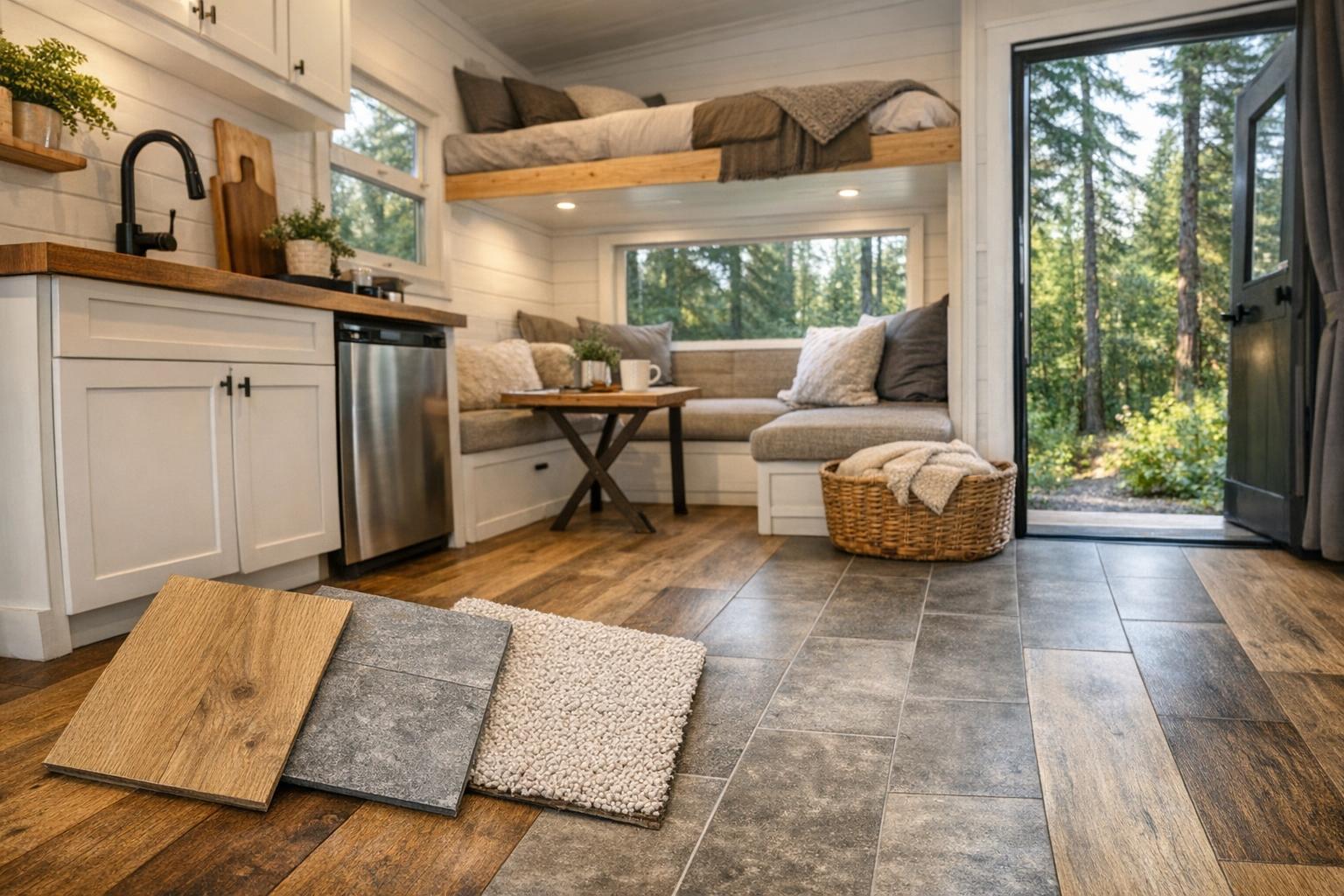
Flooring for Mobile Homes: The Complete 2025 Guide for Canadian Tiny Homes on Wheels
Estimated reading time: 7 minutes
Key Takeaways
- Durability is essential – the flooring must withstand continuous movement and vibrations.
- Weather-Resistance is critical for Canadian climates from freezing winters to humid summers.
- Lightweight materials help maintain mobility and fuel efficiency.
- Compliance with new 2025 codes such as CSA Z240-MH and CSA A277 is a must.
- A range of options—from vinyl to engineered wood, cork, bamboo, and composites—can suit every need.
Table of contents
- Introduction: Flooring for Mobile Homes—Why It Matters in Canada
- Overview of Mobile Homes and Tiny Homes on Wheels
- Key Criteria for Flooring in Mobile Homes
- Top Flooring Options for Mobile Homes in 2025
- Pros and Cons of Each Flooring Type
- Installation Considerations for Mobile Home Flooring
- Maintenance and Longevity Tips
- Conclusion: Making the Right Flooring Choice
- Frequently Asked Questions
Introduction: Flooring for Mobile Homes—Why It Matters in Canada
Selecting the right flooring for mobile homes is more than just a design choice. For Canadians living in tiny homes on wheels or anyone planning a mobile lifestyle, flooring must be able to handle tough conditions. It needs to be:
- Durable: Withstand constant road vibrations and wear.
- Lightweight: Prevent adding unnecessary burden on the home’s structure and towing efficiency.
- Weather-Resistant: Capable of surviving extreme Canadian climates – from freezing winters to heavy snowfalls and humid summers.
This guide is focused on tiny homes on wheels and outlines everything from choosing the best 2025 materials to managing the challenges of road travel and harsh weather. For an in-depth look at why this decision is so important, check out
Vanguard Inspections,
RE/MAX insights, and
Adustart’s Tiny Home Living Guide.
Overview of Mobile Homes and Tiny Homes on Wheels
Mobile Homes are factory-built houses on steel frames designed for easy transport with standards like:
- CSA Z240-MH: Mandatory since 1977.
- CSA A277: Certification for new modular homes, popular across provinces like Alberta.
Tiny homes on wheels take mobility and efficiency to a new level by ensuring minimal square footage (often under 400 sq ft), minimalist layouts, and high towability.
Specialized flooring is vital because mobile homes shift and flex as they are moved, and Canadian climates—whether heavy snow in BC or frigid temperatures in the Prairies—pose unique challenges. For further reading, visit
Vanguard Inspections,
RE/MAX’s mobile home guide, and
CHBA Code Compliance.
Key Criteria for Flooring in Mobile Homes
What makes the right flooring for mobile homes? Consider these vital factors:
1. Durability for Floor Vibrations
- Floors need to endure constant road travel and vibrations.
- Weak flooring can crack, warp, or delaminate over time.
2. Weather-Resistant Flooring for Canadian Conditions
- Must withstand heavy snow, humidity, and rapid temperature changes.
- Belly wraps beneath the floor add extra protection but can be compromised by moisture.
3. Lightweight Flooring for Mobility
- Every extra pound increases strain and reduces fuel efficiency.
- Traditional heavy materials like thick hardwood or tile are less suitable.
4. Compliance with 2025 Materials and Codes
- Adheres to updated standards including CSA Z240-MH and CSA A277.
- The new federal Housing Design Catalogue (2025) demands energy efficiency and regional material use.
The bottom line: Choose flooring that’s tough, lightweight, and weatherproof while also preparing for upcoming code changes. Stay updated by referring to
Vanguard Inspections and
Canada’s Housing Design Catalogue.
Top Flooring Options for Mobile Homes in 2025
Here are some leading options for flooring for mobile homes, each selected for their weather resistance, lightweight nature, and compliance with 2025 standards:
1. Vinyl Plank and Foam-Backed Vinyl
- Ultra lightweight and flexible – great for handling vibrations.
- Weather-resistant: Resistant to spills, snow, and humidity.
- Cost-effective and easy to maintain.
2. Engineered Wood and Lightweight Laminates
- Offer a warm, high-quality appearance without the extra weight of solid wood.
- Engineered wood resists cracking and warping due to road movement.
- Must be sealed properly to remain weatherproof and compliant with standards like CSA Z240-MH and CSA A277.
3. Cork and Bamboo
- Cork: Lightweight with excellent thermal insulation, ideal for winter comfort and dampening vibrations.
- Bamboo: Strong, eco-friendly, and moisture-resistant when treated.
4. Composites and Treated Hardwoods
- Engineered for lasting weather-resistant flooring performance against extreme conditions.
- Although slightly heavier, these materials comply with the new 2025 codes.
Each option balances being lightweight, durable, and compliant with emerging Canadian building regulations. Learn more about innovative materials at
Ecotrust’s research and
Adustart’s sustainable flooring guide.
Pros and Cons of Each Flooring Type
Vinyl Plank & Foam-Backed Vinyl
- Pros:
- Excellent flexibility against road vibrations.
- Superior moisture resistance; won’t warp in harsh weather.
- Ultra-lightweight and affordable.
- Cons:
- Expert installation recommended to avoid bubbles and curling.
- Might not echo the luxurious feel of natural hardwood.
Engineered Wood & Lightweight Laminates
- Pros:
- Robust with proper sealing, less prone to cracking.
- Lightweight with a warm, homey look.
- Cons:
- Requires regular maintenance in high-humidity regions.
- Costs are moderately higher compared to vinyl.
Cork
- Pros:
- Lightweight with excellent thermal insulation.
- Cushions the impact from road movement effectively.
- Cons:
- Not as durable in high-traffic areas; needs resealing against moisture.
- Costs are moderate.
Bamboo
- Pros:
- Strong, eco-friendly, and well-suited for Canadian climates when treated.
- Remarkably lightweight.
- Cons:
- Higher upfront cost and potential need for periodic refinishing.
Composites and Treated Hardwoods
- Pros:
- Exceptional for weather-resistant flooring, suited to extreme conditions.
- Low maintenance when properly installed and 2025-code compliant.
- Cons:
- Higher initial investment and potential weight issues if not engineered advanced.
Real-world examples include installations in CSA Z240-MH certified mobile homes and modern modular tiny houses striving for energy efficiency.
Installation Considerations for Mobile Home Flooring
Proper installation is crucial to ensure longevity and safety. Keep these best practices in mind:
- Flexible adhesives: Use adhesives that move with the structure to prevent edge lifting and cracking.
- Subfloor inspection: Ensure the floor is even, dry, and repair any gaps to protect the belly wrap.
- Proper drainage: Position your mobile home on slightly sloped ground and install vapor barriers to combat condensation.
- Lightweight fasteners: Keep panels securely fastened without using heavy screws that may loosen with movement.
- Follow CSA guidelines: Adhere to CSA Z240-MH and CSA A277 for a secure installation.
- Engineering approval: Consult a mobile home engineer when modifying floor weight or structure.
Missing these steps can lead to common issues, compromising the floor’s integrity. For more detailed guidelines, visit
Vanguard Inspections and
CHBA Code Compliance.
Maintenance and Longevity Tips
Keeping your flooring in top condition ensures years of safe, efficient use. Follow these tips:
Maintenance Routine
- Seasonal inspections: Check for soft spots, cracks, or signs of water damage.
- Belly wrap care: Repair any gaps to prevent moisture and rodent issues.
- Gentle cleaning: Use mild agents to preserve finishes and coatings.
- Seal edges: Reinforce floor joints to prevent drafts and moisture ingress.
Consider Floor Retrofits
- Upgrade insulation and modern materials to save significantly on energy bills.
- Retrofits have proven particularly effective in regions like BC.
For comprehensive retrofitting advice, take a look at insights from
RE/MAX and
Ecotrust.
Conclusion: Flooring for Mobile Homes—Making the Right Choice in 2025
Choosing the perfect flooring for mobile homes is a critical decision, especially for Canadians embracing the tiny home lifestyle. The optimal flooring should combine:
- Durability: To manage road vibrations and everyday wear.
- Weather-resistance: To handleCanadian extremes from snowy winters to humid summers.
- Lightweight design: Ensuring your home remains towable and fuel-efficient.
- 2025 code compliance: Preparedness for updated standards like CSA Z240-MH and CSA A277.
Whether you opt for vinyl, engineered wood, cork, bamboo, or composites, matching your floor choice to both the climate and the mobility demands is key. Remember, a solid floor lays the foundation for many years of safe adventures.
For further insights, refer to resources like
Vanguard Inspections,
RE/MAX, and
CHBA.
Frequently Asked Questions
Q1: What makes flooring for mobile homes different from traditional homes?
A: Mobile homes face constant movement and vibrations while also being exposed to harsh weather. Therefore, flooring needs to be durable, lightweight, and weather-resistant.
Q2: How important is compliance with 2025 codes?
A: Extremely important. New standards, such as CSA Z240-MH and CSA A277, ensure that materials are energy efficient and safe for modern mobile and tiny homes.
Q3: Can I retrofit my existing mobile home flooring?
A: Yes, upgrading insulation and the flooring material can enhance energy efficiency. Always consult with a professional to ensure that retrofits meet current building codes.
Q4: Which flooring option offers the best balance of cost and durability?
A: Vinyl plank and foam-backed vinyl are popular choices due to their affordability, lightweight nature, and excellent resistance to moisture and wear.
Leave a Reply