

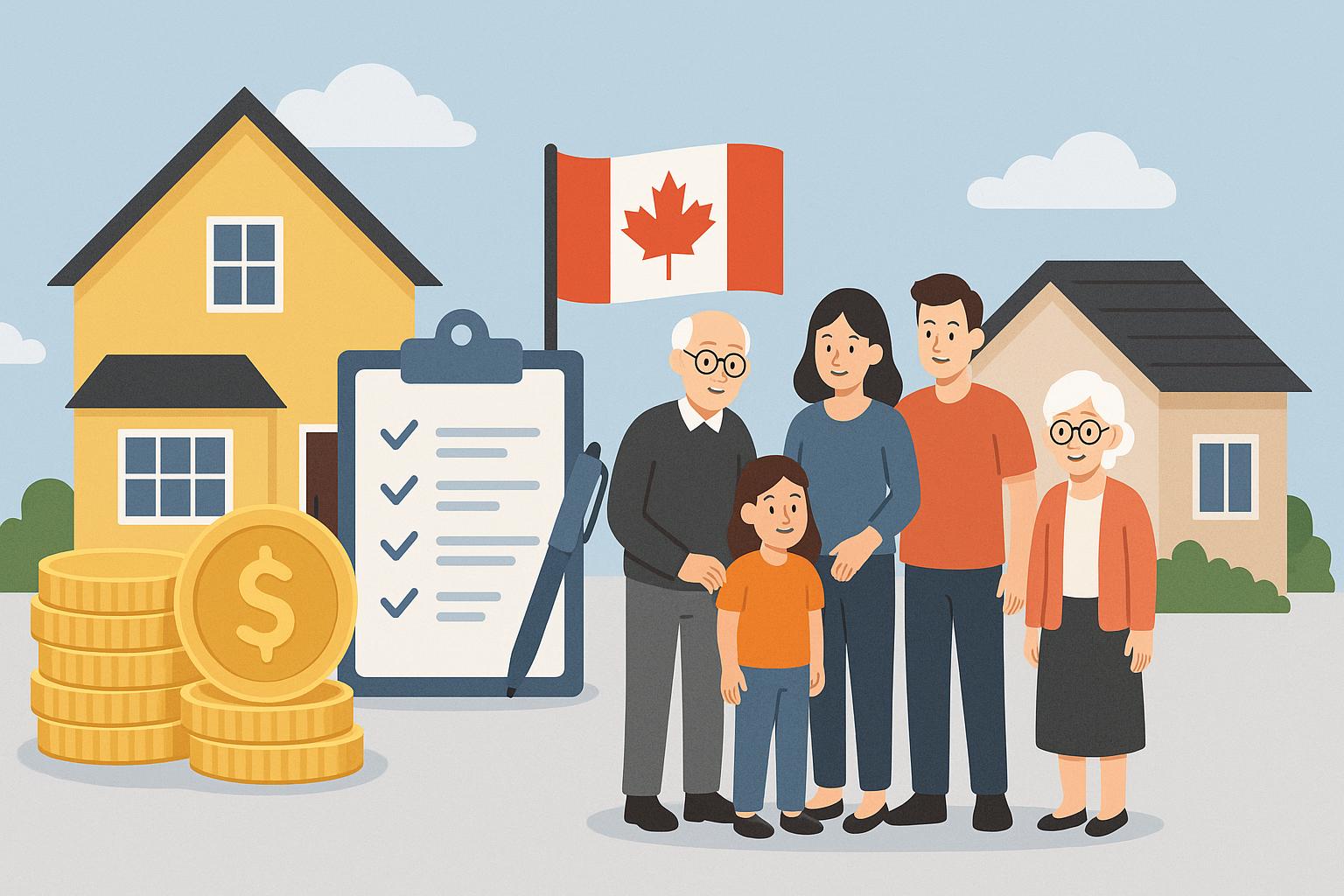
ADU Finance for Intergenerational Living: A Complete Guide for Canadian Families
Estimated reading time: 10 minutes
Key Takeaways
- Comprehensive Budgeting: Plan thoroughly for both construction and maintenance costs.
- Cost Sharing: Clear, written agreements help manage financial contributions among family members.
- Long-Term Planning: Integrate ADU finance with retirement, estate, and tax planning.
- Financing Options: Explore home equity loans, construction loans, and government incentives.
- Expert Consultation: Engage financial planners, tax experts, and legal advisors early.
Table of Contents
- Understanding Intergenerational Living and ADUs in Canada
- Budgeting for ADU Construction and Maintenance
- Strategies for Cost-Sharing Among Family Members
- Long-Term Financial Planning for Multi-Generational ADU Living
- Accessing Financing Options for ADUs in Canada
- Conclusion
- Frequently Asked Questions
Understanding Intergenerational Living and ADUs in Canada
Intergenerational living means that two or more generations—parents, adult children, and grandparents—reside together on one property, maintaining privacy through separate spaces. Examples include:
- Adult children living in a basement apartment,
- Older parents in a backyard garden suite, or
- A grandparent in a detached laneway house.
An Accessory Dwelling Unit (ADU) is a self-contained living space on the same lot as a primary residence. Known by other names like secondary suite, laneway house, or granny flat, an ADU must have its own kitchen, bathroom, and sleeping area. They are built to strict Canadian codes. Municipal regulations can be reviewed via Additional Residential Units, The Complete Guide to ADUs, and Types of ADUs: Canadian Guide.
Canadian families are attracted to ADUs because they offer:
- Housing Affordability: Manage rising costs and create rental options.
- Ageing in Place: Support elder independence while remaining close to family.
- Support for Adult Children: Offer solutions in challenging rental and housing markets.
- Supplemental Income: Rental revenue can offset mortgages and maintenance.
For further insight, check out this detailed guide on in-law suites.
Read more from trusted sources: ADU Friendly Neighbourhoods Canada 2025, The Complete Guide to ADUs in Canada, and Multi-Generational Living Tiny Homes.
Budgeting for ADU Construction and Maintenance
Planning the finances for an ADU involves breaking down costs into several categories:
1. Soft Costs
These include:
- Design and professional fees (architect, designer, engineer, or energy consultant services),
- Site surveys and plans,
- Permit fees and municipal development charges, and
- Utility connection and upgrade fees.
2. Hard Construction Costs
This encompasses direct building expenses such as:
- Site preparation: clearing, excavation, and foundation work,
- Framing and building envelope (walls, insulation, roofing, windows),
- Mechanical systems (plumbing, electrical, HVAC),
- Interior finishing (drywall, flooring, cabinetry), and
- Safety and compliance requirements (fire separations, soundproofing).
For weatherproofing in the Canadian climate, refer to Cold Climate Tiny Home Construction and Winter Proof Tiny Home Canada.
3. Operational and Maintenance Costs
Ongoing expenses include:
- Property taxes,
- Utility bills,
- Routine maintenance and repairs, and
- Insurance premiums (which may increase with additional dwelling units).
Learn more about insurance considerations at ADU Insurance Canada Guide and ADU Insurance Claims Canada 2025.
4. Canadian-Specific Cost Drivers
These include:
- Extra insulation and energy-efficient installations,
- Compliance with local building standards and policies, and
- Challenges on older or small lots requiring additional work.
Additional resources: ADU Cost Build Canada 2025 and Building Secondary Suite Yourself.
For more comprehensive details, read further at Building an Accessory Dwelling Unit in Ontario: What to Know, ADU Guide Niagara Falls June 2025, The Complete Guide to ADUs in Canada, and Hidden Costs in ADU Construction Canada.
Strategies for Cost-Sharing Among Family Members
For many families, sharing the expenses associated with an ADU is key to sustainability. Several models include:
- Rent-like Contributions: Family members pay monthly amounts toward utilities, maintenance, or even a share of loan payments.
- Shared Bills: Dividing utility expenses based on usage, square footage, or headcount.
- Capital Contributions: Upfront lump sums can be gifted, loaned, or treated as an investment, with the arrangement formalized in estate planning.
- In-Kind Contributions: Contributions through non-monetary means like caregiving, maintenance, or renovation work.
It is essential to start discussions early and document every agreement. Legal agreements such as co-ownership or rental contracts help avoid future disputes. For more guidance, review ADU Financing & Co-ownership in Canada, ADU Permitting Ontario Guide, and HOA Rules Canadian ADU Guide.
Additional details can be found at ADU Friendly Neighbourhoods Canada 2025 and The Complete Guide to ADUs in Canada.
Long-Term Financial Planning for Multi-Generational ADU Living
Integrating ADU finance within your broader long-term planning can lead to:
- Reduced Housing Costs: Lower living expenses compared to market rates.
- Increased Property Value: Quality ADUs can boost overall equity.
- Retirement Income: Rental opportunities can create a steady income stream.
- Lower Care Expenses: Living together can reduce the need for external caregiving services.
Important questions include who will repay ADU-related debt, whether the unit will remain in family use, and the tax or insurance implications. Estate planning should acknowledge any cash or in-kind contributions, ensuring fairness among all beneficiaries.
For expert advice, consider consulting financial planners, tax experts, and estate lawyers. Additional resources: ADU Friendly Neighbourhoods Canada 2025, The Complete Guide to ADUs in Canada, ADU Investment Canada Guide, and Housing Costs & ADU Tiny Homes.
Accessing Financing Options for ADUs in Canada
There are several financing methods available to Canadian families:
- Home Equity Loans / HELOCs: Use existing home equity to fund the new construction.
- Renovation or Construction Loans: Loans that release funds in stages as the project progresses.
- Cash and Family Investment: Pool savings or inheritances to minimize borrowing needs.
- Government Programs and Incentives: Federal and provincial incentives, such as design catalogues and grants, may be available. Explore resources like the Federal Government Housing Design Catalogue and the Small Scale Multi-Unit Housing initiative by BC.
Be aware of challenges such as lender restrictions on ADU income and high upfront soft costs. Stay informed by checking resources like ADU Financing Canada Guide and The Complete Guide to ADUs in Canada.
Additional reading includes The Complete Guide to ADUs in Canada, Federal Housing Design Catalogue, Small Scale Multi-Unit Housing – BC, and ADU Financing Canada Guide.
Conclusion
For Canadian families embracing intergenerational living, ADUs present a flexible solution, offering space, security, and long-term financial benefits. A robust plan covering budgeting, cost-sharing, and long-term financial strategies is essential for success.
- Plan your construction and maintenance budgets carefully.
- Establish clear, legally documented cost-sharing agreements.
- Incorporate ADU finance into your long-term estate, retirement, and tax planning.
- Consult with professionals to navigate municipal codes and financing options.
Start your ADU journey with sound planning and expert support. For further information, refer to these resources: ADU Friendly Neighbourhoods Canada 2025, Additional Residential Units, The Complete Guide to ADUs in Canada, Federal Housing Design Catalogue, ADU Guide Niagara Falls June 2025, Building an ADU in Ontario, and Small Scale Multi-Unit Housing – BC.
Frequently Asked Questions
Q1: What is the main benefit of an ADU for intergenerational living?
A1: ADUs provide flexible living arrangements that support cost-sharing, enhanced family support, and increased property value—all while maintaining privacy for multiple generations.
Q2: How can families ensure fairness in cost-sharing?
A2: By establishing clear, written agreements that outline financial contributions, shared bills, and in-kind support, families can avoid disputes and maintain transparency.
Q3: What financing options are available for ADU construction in Canada?
A3: Options include home equity loans, renovation or construction loans, cash or family investment, and various government programs and incentives.
Q4: How does long-term financial planning incorporate ADU investments?
A4: Long-term planning involves integrating ADU-related debt, potential rental income, tax implications, and estate planning to ensure the ADU contributes positively to the family’s financial future.
Leave a Reply