
Bus Conversion Tiny Home Canada 2026: Costs, Legal Rules, Winter Design, and Mobile ADU Potential
Estimated reading time: 14 minutes
Key Takeaways
- A bus conversion tiny home is a retired bus rebuilt into a livable home with insulation, wiring, plumbing, heating, and custom interiors.
- In Canada, interest is rising because of housing pressure, flexible mobile living, and the possibility of using a skoolie as a mobile ADU.
- A true Canadian skoolie needs serious planning for winter insulation, condensation control, heating, and safe plumbing layouts.
- Legality is split into two issues: whether the bus is road-legal to register and insure, and whether it is legal to park and occupy on private land.
- Typical 2026 Canadian costs range from about CAD $30,000 to $85,000 for many DIY builds, with higher costs for professional conversions.
- Before buying a bus, it is smart to research insurance, reclassification rules, parking bylaws, and climate needs for the province where you plan to use it.
Table of contents
- Bus Conversion Tiny Home Canada 2026
- Key Takeaways
- What is a bus conversion tiny home?
- Skoolie vs RV vs traditional tiny house vs mobile ADU
- Why Canadians are choosing school bus tiny homes in 2026
- The Canadian skoolie landscape in 2026
- Legal, registration, and safety considerations in Canada
- Designing a bus conversion tiny home for Canadian climates
- Systems and infrastructure inside a school bus tiny home
- Step-by-step build process and realistic timeline
- Costs and budgeting for a Canadian bus conversion tiny home
- Can a school bus tiny home work as a mobile ADU in Canada?
- Canadian skoolie case studies and examples
- Maintenance, resale, safety, and insurance tips for long-term mobile living
- Resources, communities, and next steps for beginners
- Frequently Asked Questions
- Final checklist for planning a Canadian bus conversion tiny home
Bus Conversion Tiny Home Canada 2026
A bus conversion tiny home is a retired bus turned into a real home on wheels, and in 2026 this idea is gaining real traction across Canada. More people are looking at the school bus tiny home lifestyle for freedom, lower housing pressure, flexible mobile living, and even as a possible mobile ADU on private land.
This guide explains what a conversion is, why Canadians are choosing it, what legal and insurance issues matter, how to design a true Canadian skoolie for winter, what it really costs, and when this type of home can work well in Canada.
For readers comparing wheel-based housing options, these guides on tiny homes on wheels, portable homes for Canadian nomads, moving a tiny home in Canada, tiny home insurance in Canada, and tiny-home-friendly municipalities in 2026 add useful context.
What is a bus conversion tiny home?
A bus conversion tiny home starts with a retired bus, often a school bus or shuttle bus. The bus conversion process means stripping out the old interior and rebuilding it into a livable space with insulation, wiring, plumbing, heating, and custom finishes.
A school bus tiny home is the finished result. It works like a small home and usually includes places to sleep, cook, store things, wash up, and stay warm.
A Canadian skoolie is the same basic idea, but built for Canadian realities. That means more focus on winter insulation, moisture control, legal registration, insurance, and provincial rules.
A mobile ADU is a movable secondary dwelling placed on a property for uses like family housing, a guest suite, or a backyard office. A skoolie can sometimes fill this role, but local zoning rules decide if that is allowed.
In this space, mobile living means using the bus as a home base that can move for travel, seasonal work, changing property needs, or a more flexible way to live.
A finished build usually contains:
- sleeping area or bedroom
- kitchenette or full kitchen
- bathroom setup such as a wet bath, RV toilet, or composting toilet
- heating and electrical systems
- storage and seating
Many finished skoolies also include solar power and off-grid systems, which is part of why they appeal to people who want independence and flexible housing. You can see the broader appeal in examples of buses converted into tiny homes, visual tours from remote-work skoolie owners, and guides covering off-grid living for Canadian tiny homes and solar-powered ADUs in Canada.
Skoolie vs RV vs traditional tiny house vs mobile ADU
These terms often get mixed together, but they are not the same.
Bus conversion tiny home or skoolie
A bus conversion tiny home is built on a bus chassis with a steel shell. It is highly customizable and often gets reclassified as a motorhome after conversion and inspection.
Best for:
- maximum custom design
- full control over layout
- a road-capable home
RV
An RV is factory-built. It is usually easier to insure and register because it was designed from the start as a recreational vehicle. Its systems are more standardized, but major structural changes are harder.
Best for:
- convenience
- faster setup
- easier paperwork
Traditional tiny house
A traditional tiny house may sit on a trailer or a foundation. It often faces more building-code and zoning rules than a vehicle-based build. It feels more like a small house, but it is usually less mobile than a school bus tiny home.
Best for:
- semi-permanent living
- cottage or backyard use
- more house-like feel
Mobile ADU
A mobile ADU is not one exact build type. It is a use case. A skoolie, RV, or trailer-based tiny house can all be used as a movable second unit on land, depending on local rules.
Best for:
- flexible secondary housing
- guest space
- family overflow
- seasonal rental use
This matters because classification affects registration, insurance, inspections, and where you can park or live in the unit.
Why Canadians are choosing school bus tiny homes in 2026
The rise of the school bus tiny home in Canada is about both lifestyle and practicality.
Lifestyle reasons
Many people are drawn to this kind of mobile living because it gives them freedom without giving up the idea of home.
Key reasons include:
- the ability to move without moving out
- seasonal travel across Canada
- a personalized design that fits real needs
- simpler, more intentional living
Owners often say the biggest draw is being able to take their home with them. That mix of freedom and control is one of the strongest reasons the skoolie movement keeps growing. You can see this in real skoolie remote-work stories, inspiring converted bus examples, and broader trends around tiny home exchange in Canada and remote work trends.
Practical reasons
A bus conversion tiny home can also make sense on paper.
Practical benefits include:
- lower entry cost than many conventional homes
- strong commercial bus structure
- off-grid systems for rural or seasonal use
- flexibility to use it as a home, guest suite, getaway vehicle, or mobile ADU
Many builds use reclaimed lumber, second-hand appliances, and salvaged materials. That can lower costs and give the interior more character. Designs also range widely, from clean minimalist layouts to warm cabin-style spaces. Browse visual examples through this skoolie interior inspiration post and ideas on reclaimed materials for tiny homes in Canada.
Community matters too
The Canadian skoolie scene is still small compared with mainstream housing, but it is active. Owners share layouts, winter tips, parking ideas, and lessons learned. That shared knowledge makes it easier for new builders to avoid expensive mistakes.
“A lot of the real value in skoolie living comes from what other builders already learned the hard way.”
Community discussions often happen in spaces like the Tiny House Marketplace community, skoolie-focused Facebook groups such as this Canadian tiny-home discussion thread, and events highlighted in guides to tiny home festivals in Canada.
The Canadian skoolie landscape in 2026
Hard national numbers are still limited, but signs of growth are easy to spot. There are more listings for converted buses, more social posts from people touring Canada, and more overlap between skoolie, van-life, and tiny-house communities.
Regional trends
BC
British Columbia has a strong alternative-living culture, high housing costs, and milder coastal weather. That makes it a natural fit for some skoolie owners.
Alberta and Saskatchewan
These provinces offer more rural land options and lots of DIY interest. Winters are much harsher, so heating and insulation choices matter more.
Ontario and Quebec
Expensive urban housing is pushing more interest in flexible housing, seasonal stays, and creative second-space use.
Atlantic Canada
This region has a smaller market, but there is growing interest in seasonal use, tourism stays, and unique rentals.
Geography changes the build
A true Canadian skoolie cannot be designed the same way in every province. Climate affects:
- insulation levels
- heating systems
- where tanks are placed
- tire choice
- rust prevention
- how often the bus moves in winter
Marketplace listings and social content show that converted bus living is not just an internet trend anymore. See examples in skoolie classifieds, social transformations like this school bus tiny home transformation, and Canadian guidance on tiny home parking in Canada and tiny home permits in British Columbia.
Legal, registration, and safety considerations in Canada
For any bus conversion tiny home, legality has two separate parts:
- Is the bus legal to drive and register?
- Is it legal to park and live in on a property?
That second question is often the harder one.
How reclassification usually works
In plain language, the process often looks like this:
- Buy a decommissioned bus.
- Remove school-bus-specific items like flashing lights, stop arm, and school markings.
- Convert enough of the interior to meet motorhome-style criteria.
- Complete inspections.
- Apply for reclassification as a motorhome or similar class.
The bus starts life as a commercial or passenger vehicle. The goal after conversion is usually to have it recognized as a motorhome or RV equivalent. Provincial definitions vary, but permanent sleeping, cooking, and storage features are commonly important.
Province quick facts
Ontario
Rules can change, so check current provincial sources in 2026. Expect safety inspection requirements and clear reclassification language. Documentation for propane, electrical, and major structural work may matter.
British Columbia
BC rules also change over time. Reclassification and inspections are key. Insurance and compliance questions may focus on how complete and safe the conversion is.
Alberta
Alberta often appeals to DIY builders, but inspections and proper documentation still matter. If your bus conversion includes propane or electrical systems, records help.
Quebec
Quebec may involve its own wording and inspection pathways. Verify motorhome classification, safety requirements, and any needed proof of work before assuming the bus is road-ready.
Structural and safety basics
- seat removal is common in a school bus tiny home build
- cutting structural ribs or affecting frame strength can cause inspection issues
- the VIN stays tied to the original vehicle
- school bus lights and signage usually cannot remain active
Insurance challenges
Insurance can be harder than many people expect. Some insurers are cautious about DIY conversions. What helps:
- build photos
- receipts
- professional sign-off on electrical or propane work
- inspection records
- early talks with specialty brokers
Wood stoves, custom propane systems, and undocumented wiring may trigger extra scrutiny.
Parking and occupancy
Municipal rules often decide whether you can live in a skoolie on land long-term. Some places allow only seasonal RV use. Some rural properties are more flexible. If you want to use your build as a mobile ADU, zoning, utility servicing, and short-term rental rules may still apply.
A key reality in Canada is that the biggest grey area is often not owning the vehicle, but where and how long you can live in it. Some municipalities are opening more garden suite and laneway housing options, but many still require permanent foundations or standards a skoolie may not meet.
Requirements vary by province and municipality, so every owner should verify current rules in 2026. Helpful starting points include guides to tiny home legal requirements in Canada, ADU insurance in Canada, tiny-home-friendly municipalities, and the ADU legal clinic Canada 2026.
Designing a bus conversion tiny home for Canadian climates
Winter-readiness is one of the biggest things that separates a general skoolie build from a real Canadian skoolie.
Insulation basics
For a bus conversion tiny home in Canada, many builders aim for:
- floors: about 2 to 4 inches of rigid or spray foam
- floor insulation: roughly R-10 to R-20 where possible
- walls and ceiling: often around R-14 to R-24, depending on climate
Steel transfers cold very quickly. That is why thermal breaks matter.
A thermal break is a layer of material that slows heat transfer between the steel shell and the finished interior.
Condensation control
This is a major issue in a school bus tiny home.
Warm indoor air hitting cold metal creates moisture. That moisture can lead to:
- mould
- rust
- wet insulation
- interior damage
To reduce this risk, builders use:
- vapour barriers
- careful sealing
- good ventilation
- thoughtful window treatment
Windows and winter heat loss
Original bus windows lose a lot of heat. Some owners:
- replace some windows
- cover selected windows
- add insulated inserts
- use thermal curtains
Winter setup strategies
If the bus stays parked for longer periods, these steps help:
- add skirting
- keep tanks and plumbing inside the insulated area
- run roof vents even in winter to control humidity
Heating options
Diesel heaters
Compact, efficient, and popular for skoolies.
Propane furnaces
Strong heat output, but they need fuel storage and proper detectors.
Mini-splits
Useful in milder climates or when shore power is available.
Wood stoves
Warm and cozy, but insurance and safety can be more complicated.
For Canada, insulation, heat, and ventilation have to work together. Winter living is possible, but only if moisture control is designed in from the start. For deeper climate planning, review guides on winter-proofing a tiny home in Canada, cold-climate tiny home construction, under-floor heating, and heat pumps for tiny homes.
Systems and infrastructure inside a school bus tiny home
A good school bus tiny home works like a small house because its systems are planned well.
Electrical system
A common setup includes:
- solar panels
- battery bank
- inverter/charger
- shore power hookup
Shore power means plugging into an outside electrical source, such as a home outlet, barn, or RV site.
Common roof solar sizes often range from about 800W to 2,000W, depending on roof space and how much power you use.
AGM batteries
- lower upfront cost
- heavier
- shorter lifespan
LiFePO4 batteries
- cost more upfront
- lighter
- deeper usable discharge
- usually better for regular off-grid use
Many skoolies are built with solar and off-grid capability, which is a big part of their appeal for flexible mobile living. Useful references include how much solar an ADU needs and a broader tiny home utilities guide for Canada.
Plumbing
Freshwater tanks often fall around 100 to 300 litres, depending on how many people use the bus and how often it moves.
In freezing climates, tank placement matters. Interior tanks are much easier to protect than exposed exterior ones.
Greywater is used water from sinks or showers.
Blackwater is toilet waste.
Toilet options include:
- black tank RV toilet
- composting toilet
A composting toilet can simplify plumbing, especially for seasonal or off-grid builds. For more detail, see guides on composting toilets in Canadian tiny homes, greywater recycling, rainwater harvesting, and tiny home wastewater solutions in Canada.
Heating, cooling, and ventilation
A bus conversion needs an integrated system, not just a heater. You need:
- insulation
- a heat source
- airflow
- moisture control
Common tools include:
- roof fans
- mini-splits
- cold-climate ventilation systems such as HRV-style setups
Safety systems
These are not optional:
- carbon monoxide detector
- propane detector
- smoke detector
- fire extinguishers
- emergency egress plan
Egress means a safe way to get out fast in an emergency. In a small mobile home, that is critical.
Step-by-step build process and realistic timeline
A bus conversion usually follows a clear order.
1. Source a donor bus
Check:
- rust
- engine condition
- transmission condition
- tires and brakes
- service records
- water leaks
A cheap bus with bad mechanicals can cost more in the end than a better bus bought at a higher price.
2. Get a mechanical inspection
Do this before purchase if possible. It can save you from buying a project with major hidden problems.
3. Decommission the bus
Remove school markings, stop arm, flashing lights, and other school-specific equipment.
4. Gut and clean the interior
Take out seats, old flooring, and anything you will not keep.
5. Repair rust and leaks
This is one of the most important steps and one of the most underestimated.
6. Plan the layout
Think about sleeping, cooking, storage, bathroom needs, and walking space.
7. Plan weight distribution
Heavy items like tanks, batteries, and appliances must be balanced properly. Poor weight distribution can affect safety, handling, and axle loads.
8. Frame and insulate
Build out walls, floor, and ceiling while protecting against thermal bridging and moisture issues.
9. Rough-in systems
Install the hidden parts of:
- electrical
- plumbing
- propane
- heating
10. Finish the interior
Add cabinetry, wall finishes, appliances, and fixtures.
11. Inspect and reclassify
Complete the required paperwork and inspections for road use.
Realistic timelines
- DIY full-time: 6 to 12 months
- DIY part-time: 12 to 18 months
- professional build: 3 to 9 months
Common mistakes
Watch out for:
- underestimating rust repair
- skipping moisture control
- building too heavy
- leaving insurance research too late
- doing electrical or propane work without proper review
Costs and budgeting for a Canadian bus conversion tiny home
Costs vary a lot. Bus size, finish level, DIY skill, and whether the build is meant for travel or full-time living all affect the price.
Typical 2026 cost ranges
- donor bus: about CAD $4,000 to $15,000
- DIY total: about CAD $30,000 to $85,000
- professional build: about CAD $70,000 to $150,000+
- finished turnkey skoolie: can go much higher depending on mileage, systems, and finish quality
Budget framework
Plan for these categories:
- bus purchase and initial mechanical work
- insulation and framing
- electrical and solar
- plumbing and tanks
- heating and cooling
- appliances
- cabinetry and finishes
- labour and inspections
Keep a contingency fund
Reserve about 15% to 20% for surprises such as:
- rust repair
- new tires
- mechanical fixes
- design changes
- replacement parts
Ways to save money
Some of the best cost-control strategies are:
- use reclaimed materials
- upgrade in stages
- do demolition and finishing yourself
- hire professionals for gas and electrical work
Some builders cut both cost and waste by using second-hand materials and appliances where possible. For market context, compare pricing through skoolie listings, community marketplace discussions, and resale-focused resources like tiny home resale in Canada.
Financing
People often fund a bus conversion tiny home through:
- savings
- line of credit
- HELOC
- personal financing
- in some cases, RV-style financing if the finished unit meets lender rules
Helpful starting points include this tiny home financing guide, tiny home financing in Canada, and ADU mortgage options in Canada for 2026.
Can a school bus tiny home work as a mobile ADU in Canada?
A mobile ADU is a movable second living unit used on private land. It can serve as:
- a backyard guest suite
- family housing
- a farm stay or glamping rental
- a seasonal office or studio
A school bus tiny home can sometimes fill this role well.
Benefits
- lower upfront cost than some permanent additions
- movable if needs or bylaws change
- unique rental or guest appeal
Limitations
- zoning is inconsistent
- servicing water, waste, and power can be tricky
- winter access may be harder
- financing and insurance can be more complex
The main point is simple: whether a skoolie works as a mobile ADU depends more on municipal bylaws than on the build trend itself.
Before using a Canadian skoolie this way, verify:
- whether long-term RV occupancy is allowed
- whether short-term rentals need a licence
- whether water, waste, or power hookups need permits
In many places, temporary use is easier than permanent occupancy. Rural land may offer more flexibility than urban lots. To compare options, see guides on secondary unit benefits in Canada, ADU permits in Canadian cities, and rural tiny home opportunities.
Canadian skoolie case studies and examples
These examples show how Canadians are using bus conversions in different ways.
Example 1: Remote-work couple
- bus type: used school bus
- bus cost: about CAD $9,000
- conversion budget: about CAD $40,000
- features: solar power, kitchen, bathroom, bedroom, roof deck
- use: travel and remote-work mobile living
- lesson: a mechanically solid bus saves money later, and second-hand materials can help control costs
This type of build shows how a bus conversion tiny home can support work, travel, and full-function daily life. Related inspiration includes remote-work ADU ideas and tiny home deck designs.
Example 2: Seasonal cabin-style bus
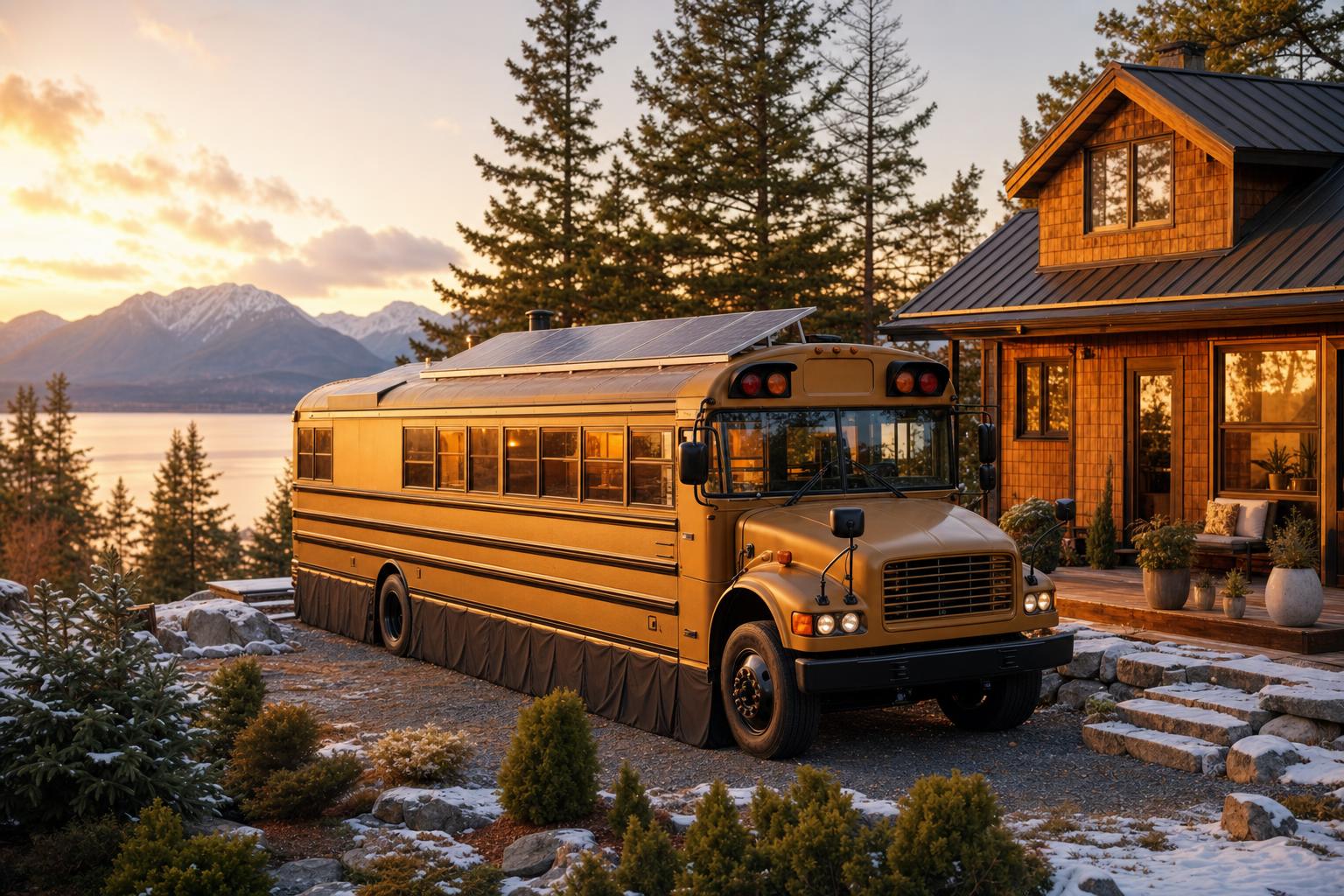
- bus type: school bus tiny home with warm wood interior
- budget: simpler than a full-time build
- features: wood finishes, moderate solar, composting toilet
- use: seasonal retreat
- lesson: part-time use allows simpler systems and lower cost than full-time winter living
Cabin-style interiors are especially popular because they make a steel bus feel cozy and personal. You can explore that style in small cabin eco-retreat design ideas.
Maintenance, resale, safety, and insurance tips for long-term mobile living
A bus conversion tiny home is both a vehicle and a home. That means maintenance has to cover both.
Drivetrain and chassis
Stay on top of:
- oil and fluid service
- brake checks
- tire condition
- steering and suspension
- battery health
Roof and rust prevention
At least once a year:
- reseal roof penetrations
- inspect the underbody
- check for rust spots
- fix small leaks fast
Plumbing and winterization
If the bus is not heated all winter:
- drain or winterize water lines
- protect pumps and fittings
- inspect tanks and valves
Electrical and propane habits
Regularly:
- test detectors
- inspect wiring
- check battery condition
- inspect propane lines and fittings
- review venting
Record-keeping for resale and insurance
A build binder is one of the smartest things you can keep. Include:
- receipts
- system diagrams
- appliance manuals
- inspection papers
- photos of hidden work behind walls
This helps with insurance, resale, troubleshooting, and future upgrades.
What affects resale value
- quality of workmanship
- mechanical condition
- clean documentation
- safety compliance
- layout and appearance
Resources, communities, and next steps for beginners
If you are new to the Canadian skoolie world, community knowledge is extremely useful.
Helpful resource types
Look for:
- provincial transportation authorities
- vehicle inspection programs
- insurance brokers familiar with conversions
- bus dealers
- RV and off-grid supply stores
- skoolie and tiny-house groups
Why join communities early
It is smart to join groups before buying a bus. You can learn about:
- common bus models
- mechanic red flags
- pricing
- layout ideas
- winterization
- parking options
Canadian skoolie and tiny-house groups are active places for real-world learning, including marketplace activity and owner advice. A few useful channels include the Tiny House Marketplace, Canadian tiny-home Facebook discussions, and events listed in Canadian tiny home festivals.
Social channels and tours also help you understand what a finished school bus tiny home actually feels like. Visual research can start with tiny home showroom guides in Canada.
Professionals you may need
- mechanic
- inspector
- propane technician
- electrician
- insurance broker
Frequently Asked Questions
Are bus conversion tiny homes legal in Canada?
Yes, a bus conversion tiny home can be legal to own and register if it meets the right requirements. The bigger issue is often where you can park and live in it, since municipal occupancy rules vary.
Can you live in a school bus tiny home during winter?
Yes, but only if the school bus tiny home is designed for winter with proper insulation, heating, ventilation, and moisture control.
Is a bus conversion cheaper than an RV or tiny house?
Not always. A bus conversion can cost less than some housing options, but full builds with strong systems are not automatically cheap.
Can a Canadian skoolie be insured?
Yes, a Canadian skoolie can often be insured, but it may take more work. Proper classification, inspections, receipts, and build documentation improve your chances.
Can a bus be used as a mobile ADU on private land?
Sometimes. A skoolie can work as a mobile ADU, but local zoning, utility servicing, and occupancy rules decide whether that use is allowed.
Final checklist for planning a Canadian bus conversion tiny home
- Define your goal: travel, full-time living, seasonal use, or mobile ADU
- Research provincial motorhome reclassification rules
- Check municipal parking and occupancy bylaws
- Set a realistic budget
- Add a 15% to 20% contingency
- Join a Canadian skoolie community
- Choose the right bus size and layout
- Get a pre-purchase mechanical inspection
- Plan insulation and heating for your province
- Design weight distribution carefully
- Decide what to DIY and what to hire out
- Contact insurance options early
- Document the build from day one
- Prepare for annual maintenance
- Confirm how your mobile living plan will work in winter and on land
A bus conversion tiny home can be a smart, flexible housing option in Canada when it is planned carefully. The best builds balance freedom with paperwork, comfort with safety, and creativity with real climate needs.
Leave a Reply