
Estimated reading time: 14 minutes
Key Takeaways
- A tiny home mobile shop is a compact, towable retail unit that can operate at markets, festivals, private lots, or temporary pop-up locations.
- For many founders, it offers a lower-overhead entry into retail compared with a traditional storefront.
- The model works best when you choose the business model first, then design the unit around sales flow, storage, power, and compliance.
- Permits, zoning, transport rules, and licensing vary by city and province, so local verification is essential before spending money.
- In Canada, this format can fit broader tiny home business and ADU commerce strategies, especially for flexible retail concepts in 2026.
Table of contents
- What Is a Tiny Home Mobile Shop?
- Why a Tiny Home Mobile Shop Makes Sense in 2026
- Choosing the Right Business Model Before You Build
- Canadian Entrepreneurship and Regulatory Basics
- Province and City Research Workflow
- Design Your Tiny Home Mobile Shop for Retail, Not Residential Living
- Equipment, Utilities, and Back-of-House Setup
- Mobility, Site Logistics, and Day-to-Day Operations
- Pop-Up Shop Checklists by Scenario
- Marketing a Tiny Home Mobile Shop So People Actually Show Up
- Financials, Startup Costs, and Break-Even Math
- Real-World Examples and Case Studies
- Step-by-Step Launch Timeline for 2026
- Useful Templates and Planning Assets
- Frequently Asked Questions
What Is a Tiny Home Mobile Shop?
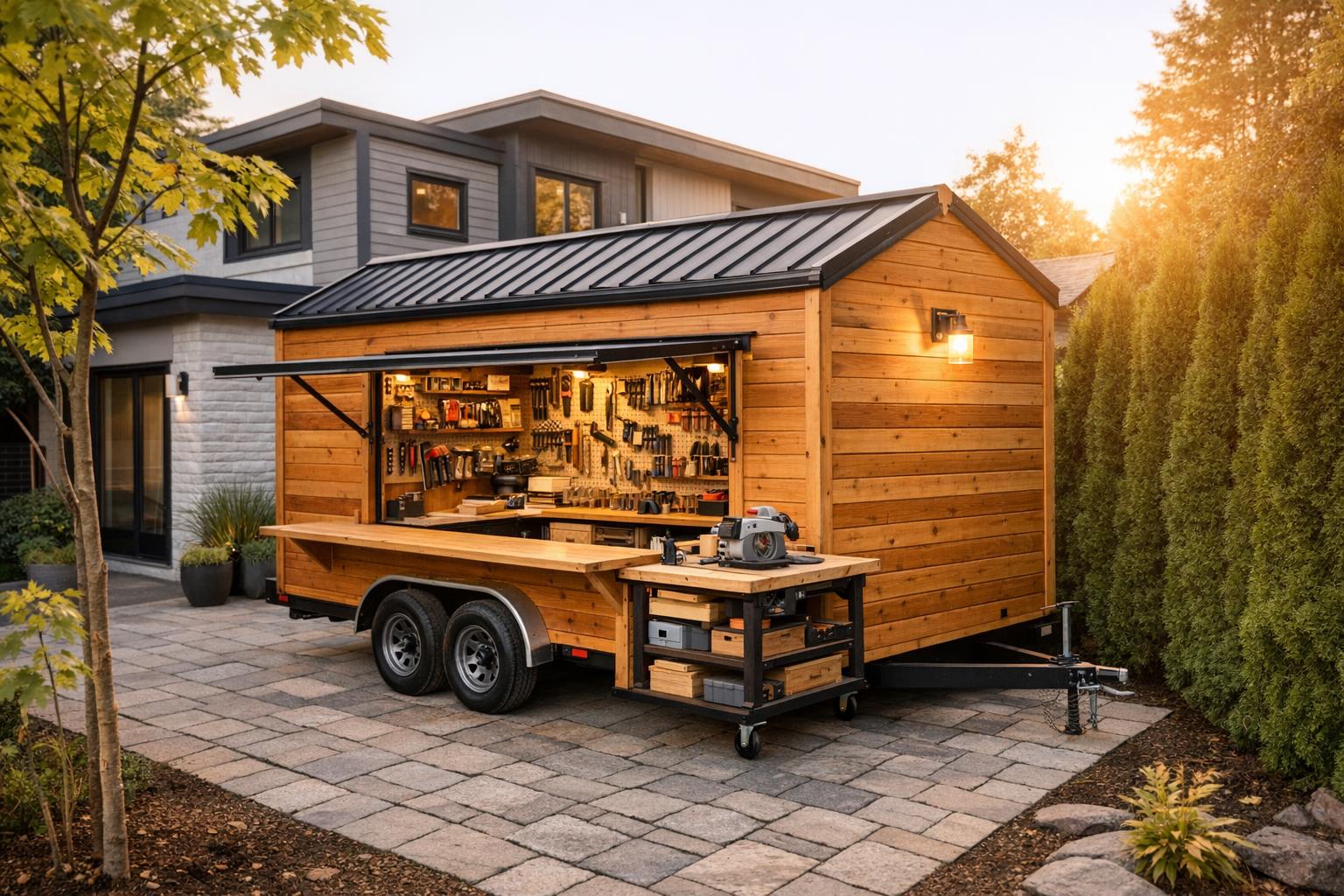
A tiny home mobile shop is a compact, towable tiny home or small ADU-style unit transformed into a retail space. It can function as mobile retail at markets, festivals, private lots, or temporary pop-up locations.
In simple terms, it gives you a small store that can move to where your customers already are.
This guide is designed to help you decide whether this model fits your business in 2026. It also covers permits and bylaws, retail-focused design, operations, marketing, and basic cost planning. While especially relevant for Canadian founders, it also applies to cross-border entrepreneurs exploring flexible retail and accessory-unit business models.
Before you spend money, verify local zoning, licensing, and transport rules in the city or province where you want to operate. That step matters more than any finish, fixture, or branding choice.
For background on the broader market and builder ecosystem, it helps to review resources from Minimaliste, this Canadian buying overview on what to know before buying a tiny home in Canada, and practical launch guides such as launch a tiny home business, tiny home business Canada guide, and pop-up retail in ADUs in Canada.
Why a Tiny Home Mobile Shop Makes Sense in 2026
A tiny home mobile shop gives entrepreneurs a more flexible way into retail without taking on the full weight of a long storefront lease.
The biggest advantage is often cost. Compared with a traditional retail setup, startup expenses can be significantly lower. Research cited in the project brief points to rough startup ranges of about $50,000 to $150,000 for some tiny-format concepts, compared with $500,000 or more for some conventional retail builds.
That lower entry cost matters for Canadian entrepreneurship because it allows founders to test demand before locking themselves into high fixed overhead.
There is also a strong market-testing advantage. A mobile retail unit can:
- go where seasonal traffic is strongest
- shift from outdoor markets to indoor events
- test multiple neighbourhoods before a long-term commitment
- adapt faster than a fixed storefront
Research in the brief also suggests mobility can lift revenue by around 25% because operators can rotate locations based on traffic patterns and seasonality.
Then there is the branding effect.
A tiny home mobile shop feels more like an experience than a booth.
It stands out more than a folding table, standard market tent, or basic kiosk. That matters in a consumer environment where shoppers increasingly respond to novelty, local products, event shopping, and limited-run pop-up concepts.
This model often works especially well for:
- curated retail
- coffee and light snacks
- wellness and beauty products
- handmade goods
- apparel
- service-based activations
It also helps to separate three related ideas:
- Mobile retail means your shop moves between locations or events.
- Pop-up shops are short-term sales opportunities, often tied to events or limited-time campaigns.
- ADU commerce means using a fixed accessory dwelling unit or secondary structure as a small commercial site where local rules permit it.
That makes this a strong fit for a broader tiny home business strategy. You can start with events, build audience and cash flow, then expand into a more stable ADU commerce setup later.
Of course, there are limitations too:
- weather can reduce turnout
- permits can be complex
- towing and storage require planning
- small spaces limit staff and inventory
Still, strong 4-season construction from builders such as Minimaliste, better systems, and a disciplined operating plan can reduce many of those risks.
The wider momentum is also worth noting. The brief points to growth in pop-up retail, a mobile vending market above $2 billion in Canada in 2025, and continued demand growth tied to the tiny-home sector, with related context available through MMRH, Canadian Tiny Homes, micro-retail tiny homes in Canada, tiny home festivals in Canada, and retail in ADUs.
Choosing the Right Business Model Before You Build
Choose your business model before you choose the unit.
That one decision affects your layout, utility needs, permits, storage plan, and staffing. A tiny home mobile shop built for coffee service will be completely different from one designed for candles, apparel, skincare, or curated gifts.
Here are four practical models to consider.
Event-Only Mobile Retail
Best for festivals, maker markets, and branded street activations.
This is often ideal for fast-selling goods, drinks, snacks, and impulse purchases. Permit complexity is usually moderate because events may carry separate approval structures. Revenue can be strong on active weekends but uneven between bookings.
Design priority: fast service, visible pricing, and fast setup.
Recurring Pop-Up Shops
Best for breweries, farms, malls, campuses, and private venues.
This format suits apparel, gifts, beauty, and small curated product lines. It gives founders a way to test markets without signing a long lease and usually creates more predictable revenue than one-off events if the schedule repeats.
Design priority: browsing flow and strong visual merchandising.
Fixed-Site ADU Commerce
Best for private property where retail use is allowed.
This can work for farm shops, year-round coffee concepts, and niche destination retail. Permit complexity may be higher because zoning, setbacks, and building review often become site-specific.
Design priority: more permanent storage, utility hookups, and year-round comfort.
Hybrid Model
This combines mobility with seasonal placement on one site.
It is useful for brands that want event revenue plus recurring local traffic. It can create a stronger revenue mix, but the design has to balance road safety with semi-permanent comfort.
A good planning rule:
If your concept depends on high transaction volume, design for queue flow and POS speed. If it depends on browsing and brand storytelling, design for display walls and visual merchandising.
For many founders, recurring pop-up shops are the safest starting point because they reduce risk, help test demand, and create a bridge into a larger tiny home business model in Canada later.
Useful references here include this 2026 Canadian tiny home overview, Minimaliste, pop-up retail in ADUs, and the broader Canada guide.
Canadian Entrepreneurship and Regulatory Basics
This is the most important section in the article.
Do this first.
A tiny home mobile shop only works if the legal path works. Rules vary by municipality, province, and by whether the unit is towable, fixed, or semi-permanent. Do not assume that because a builder can construct the unit, you can automatically use it as a retail shop.
In general, there are two main compliance paths.
1) Tiny Home Mobile Shop on Wheels
A road-legal unit on wheels may be treated more like a trailer, RV, or mobile vendor unit in some contexts. The brief notes that tiny homes on wheels under 400 square feet may be classified similarly to RV-style units when road-legal.
Important: that does not automatically approve retail use. It only affects transport or certification treatment in some cases.
2) Fixed or Semi-Permanent ADU Commerce Setup
A fixed unit is more likely to be treated like a building or secondary structure. That usually means zoning review, setbacks, parking, building compliance, and sometimes site plan considerations.
Zoning and Land Use
Retail from a trailer or ADU is not automatically legal on every property. Many municipalities limit mobile vending to approved zones, private-property agreements, or event-based permits.
You may face rules on:
- how long the unit can stay parked
- setbacks from lot lines
- parking counts
- fire access
- sign size and placement
- operating hours
The brief cites examples such as Vancouver limits on some pop-up uses and Calgary parking-permit scenarios for market operations. But those specifics can change, so confirm them directly.
Business Licensing
Most operators will need standard business registration plus a local business licence. Some municipalities may also require a mobile vendor licence. The brief references a Toronto mobile business licence range of roughly $200 to $500, though your actual fee depends on the activity and municipality.
Building Code and Unit Certification
Certification matters. The brief cites CSA A277 as relevant for factory-built units in certain contexts. Fixed ADU commerce setups may also follow applicable building code routes, including National Building Code Part 9 pathways depending on size and use.
If you buy from a builder, ask exactly what standards the unit meets. Then verify that those standards match your intended use with your municipality.
Health and Food Approvals
If you sell food, beverages, cosmetics, or other regulated products, you may need extra approvals. Public health inspection requirements can apply, and CFIA rules may matter for some food categories.
If you are only selling clothing, gifts, or non-regulated goods, the process is usually simpler.
Road Transport and Towing Compliance
Transport rules matter just as much as retail rules. Size, weight, lighting, trailer brakes, axle ratings, and visibility all affect compliance. The brief notes that towables under 4,600 kg GVWR may be easier in some provincial compliance contexts, but that does not remove the need for a proper weight and towing review.
Insurance
At minimum, review:
- commercial general liability
- trailer or vehicle coverage
- contents and inventory insurance
- event insurance if required by the venue
The brief estimates commercial liability around $2,000 to $5,000 annually in some cases, though real costs vary widely.
Taxes
You will likely need a CRA business number and may need GST/HST registration depending on your revenue and structure. Municipal fees also need to be built into your numbers. For fixed ADU commerce, commercial site use may affect property tax treatment.
Questions to Ask Your City
Use these questions when speaking with planning or licensing staff:
- Can a towable tiny home operate as a retail pop-up in this municipality?
- Are temporary sales allowed on private property?
- Do I need a mobile vendor licence, event permit, or business licence?
- How long can the unit remain parked?
- What signage, parking, accessibility, and fire-safety rules apply?
- If using an ADU, is retail permitted as an accessory or home-based commercial use?
One final warning: do not rely on builder marketing alone for compliance. A builder can sell you a beautiful unit, but local approval determines how and where you can actually use it.
For legal research, compare practical market references like Minimaliste, MMRH, and Canadian Tiny Homes with regulatory resources such as Canadian ADU regulations guide, tiny home legal requirements in Canada, and ADU legal clinic Canada 2026.
Province and City Research Workflow
Turn the legal review into a repeatable process.
- Identify the unit type
Decide whether your setup is towable, fixed, or hybrid. - Run targeted searches
Search phrases such as:- “[city] mobile vending bylaw”
- “[city] temporary use permit”
- “[city] accessory dwelling unit business use”
- “[province] trailer/tow regulations”
- Contact the right departments
Email or call:- planning
- licensing
- public health
- transportation
- Confirm venue rules
Ask event organizers and property owners about permits, insurance, hookups, and operating limits. - Get written confirmation
Save emails and permit notes. Written guidance helps if staff interpretations change later.
Municipal zoning portals and bylaw databases are often the best starting point. Rules continue to evolve, especially around modular housing formats, but retail use still needs direct confirmation.
Helpful references include ADU digital permitting in Canada, tiny home friendly municipalities in 2026, tiny home permits in British Columbia, and tiny home permits in Ontario.
Design Your Tiny Home Mobile Shop for Retail, Not Residential Living
The biggest design mistake is simple:
building a tiny house first and a store second.
A retail-first unit should prioritize customer flow, product visibility, checkout speed, storage, and weather protection.
Layout and Floorplan
Research suggests that about 200 to 400 square feet is often a practical range. That gives you enough room for a useful retail layout without making the unit too difficult to tow.
A straightforward zoning approach works well:
- Front zone: attraction area with hatch, folding counter, or service window
- Middle zone: browsing area with open aisle space and displays
- Back zone: storage, POS, batteries, supplies, and staff-only functions
Accessibility
Accessibility should be planned early, not patched in later.
- ramp access where required
- 1:12 ramp slope guideline as a planning reference
- 36-inch aisles where feasible
- lever handles
- lower-reach checkout surfaces
Exact requirements vary by jurisdiction, so verify local standards. Still, basic accessible design usually improves usability for everyone.
Fixtures and Merchandising
Use modular fixtures because product mixes change by season and venue.
- slat walls
- peg walls
- magnetic displays
- fold-down counters
- lockable shelves
- removable racks
An apparel concept may need mirrors and hanging space. A candle or skincare concept may need more vertical display and storage. A coffee service concept needs counters, workflow space, and under-counter organization.
Safety and Code
Even a small retail unit needs real safety planning:
- emergency exit paths
- smoke and CO detection
- fire extinguishers
- emergency lighting
- fire separation where applicable
- ventilation for heat, moisture, or scent-heavy products
HVAC and 4-Season Performance
Canadian weather is hard on tiny spaces. A strong 4-season unit should include:
- good insulation
- weather sealing
- condensation control
- insulated windows
- heating and cooling
The brief cites mini-split systems at around $3,000 as a common planning reference. Builders like Minimaliste also emphasize 4-season construction, which can reduce operational issues in colder climates.
Power and Technology
Retail requires more than a single plug. Plan around:
- shore power hookup
- solar
- battery backup
- generator backup
- lighting circuits
- POS devices
- router or hotspot
- charging points
The brief notes solar kits around $5,000 for roughly 2 kW as a planning estimate. That may work for lighter retail loads, though heavier service concepts often still need shore power or generator support.
Branding and Exterior Design
The outside of your unit is your first advertisement.
- vinyl wraps
- awnings
- menu boards
- pass-through windows
- branded signage
- exterior shelving
Strong branding can increase foot traffic, but signage still needs to comply with local rules.
Weight and Mobility Constraints
Every fixture, battery, finish, and display adds weight. Materials need to be durable but light. The brief notes practical towable design limits such as a width under 8.5 feet and compliant axle setups.
A beautiful fitout that makes the trailer too heavy is a design failure.
Conversion vs Purpose-Built
A conversion can be faster and sometimes cheaper, especially if you already have a shell. The brief notes rough conversion timelines of 8 to 12 weeks in some situations.
A purpose-built unit usually gives you better retail flow, integrated storage, and cleaner utility planning. The brief cites purpose-built units from MMRH starting around $145,000, with broader project ranges often landing between $145,000 and $235,000 depending on fitout.
Rough 2026 planning estimates from the brief:
- Conversion shell: $40,000 to $80,000
- Purpose-built shell: $100,000 to $150,000
- Conversion fitout: $30,000 to $60,000
- Purpose-built fitout: $40,000 to $70,000
Builder options worth comparing include MMRH, Minimaliste, Smart Modular, and Burnett Canada. You can also review planning resources on tiny home design in Canada, accessible design, storage solutions, and lighting design.
Equipment, Utilities, and Back-of-House Setup
A tiny home mobile shop needs more than good décor. It needs systems that make selling easy, secure, and repeatable.
Start with this practical equipment list:
- POS hardware
- internet hotspot or router
- lockable inventory bins and cabinets
- interior and exterior lighting
- battery and inverter setup
- water tanks if relevant
- waste storage
- fire extinguisher
- first-aid kit
- CO detector
- cash drawer
- anti-theft tools such as locks, cameras, and tethered devices
Your utility plan depends heavily on what you sell:
- Apparel or jewelry: lighter power demand, less ventilation
- Coffee, cosmetics, candles, or food: higher power loads, more ventilation, more sanitation planning, and more heat management
The brief cites Square POS as a useful planning reference, often in the $0 to $60 per month range depending on features. Off-grid support through solar or generator backup may also be necessary for festivals or remote locations.
A smart move: create a one-page setup sheet for your team showing what can run on solar, what requires shore power, and what needs generator backup.
Helpful planning resources include tiny home utilities in Canada, utility hookup guidance, off-grid tiny home planning, and how much solar an ADU may need.
Mobility, Site Logistics, and Day-to-Day Operations
Many mobile retail businesses do not struggle because of branding.
They struggle because operations are inconsistent.
Transport Basics
Your tow vehicle must match the trailer’s fully loaded weight, not just the empty shell. The brief notes that some tiny homes on wheels may be towable by vehicles such as an F-150 depending on the final specs, but you still need to confirm:
- total loaded weight
- hitch class
- brake system
- axle rating
- road height
Also confirm:
- trailer brakes work properly
- height and width stay within legal road limits
- inventory is balanced and secured before travel
- stabilizers and jacks are ready at arrival
Event-Day Operations
A repeatable setup process saves stress. A strong event-day sequence often looks like this:
- Arrive early and confirm parking position.
- Level the unit and deploy stabilizers.
- Connect power or activate the off-grid setup.
- Place exterior signage and pricing.
- Stage bestsellers near the front.
- Turn on POS and test internet.
- Complete a final safety and stock check.
- Open on time.
The brief notes setup can still take 1 to 2 hours even with a well-designed unit, so build that into your staffing and day planning.
Different Operating Patterns
One-day pop-up shops need speed and clean teardown.
Weekend markets need overnight security, replenishment, and waste planning.
Semi-permanent ADU commerce sites need maintenance routines, recurring utility systems, and possibly more formal inspection structures.
Practical Systems That Matter
- forecast inventory by venue size
- reduce SKU count
- use mobile payments
- staff with 1 to 2 people where possible
- manage queues outside the unit
- plan water and waste handling clearly
The brief notes portable waste handling costs around $200 per event in some scenarios. Small hidden costs like this can materially change margins.
Watch the Hidden Time Costs
Sales hours are not the same as work hours. Towing, setup, cleanup, restocking, and permit coordination all reduce the true selling window.
This is one reason many first-time operators underprice their event days.
Weather and Seasonality
Weather planning should be built into the operation:
- awnings
- anti-slip steps
- mats
- portable heaters
- insulated windows
- rain covers
- snow tools
If you want premium dates at major events, apply early. The brief notes that major events such as Calgary Stampede may require lead times of up to six months.
For transport and seasonal planning, see moving a tiny home in Canada, province-specific moving guidance, tiny home winterization checklist, and seasonal tiny home living in Canada.
Pop-Up Shop Checklists by Scenario
These practical checklists make mobile retail easier to run.
One-Day Pop-Up Shop
- pre-load inventory the night before
- charge phones, tablets, card readers, and hotspot
- test POS and internet
- test generator or battery setup
- pack permits and insurance certificates
- confirm signage and pricing are visible before opening
- aim to have signage up by 8 AM where event timing requires it
- post an “open now” story on social media
- plan breakdown around the venue’s closing window
Weekend Market
- set an overnight security plan
- refill water if needed
- schedule waste dump
- count cash daily
- replenish bestsellers each night
- rotate stock based on day-one sales
- deep-clean each morning
- reset displays before opening
Long-Term ADU Commerce Site
- confirm site permission or lease terms
- set up utility hookups
- track recurring inspections
- maintain a maintenance calendar
- build local SEO and map listings
- maintain snow clearing, landscaping, and safe access
- review anchor permits or monthly inspection needs
For related planning, review pop-up retail in ADUs and the ADU maintenance checklist for Canada.
Marketing a Tiny Home Mobile Shop So People Actually Show Up
A tiny home mobile shop is visually distinctive, but being interesting is not the same as being discovered.
Location Strategy
Good locations beat clever slogans. When assessing sites, review:
- foot traffic
- parking ease
- demographic fit
- event audience quality
- nearby competition
- seasonality
Use Google Maps, local event calendars, BIAs, market directories, and tourism calendars to validate site choices.
Social Media
For a tiny home business, the build itself is part of the marketing story.
Useful content formats include:
- design and build updates
- behind-the-scenes setup videos
- event-day clips
- product demos
- before-and-after footage
- opening countdowns
Use geotags and city hashtags consistently. Mobile retail audiences often search by location first.
Local SEO
If you operate from a regular site or recurring host location, optimize around city-specific search terms such as:
- tiny home mobile shop Toronto
- mobile retail pop-up Vancouver
- pop-up shops Ottawa
- ADU commerce Calgary
A Google Business Profile can help if the unit appears consistently in one area.
Email and SMS
Collect customer contact info at every event. Then send short updates about:
- where the shop will be next
- special drops
- weather changes
- event hours
Partnerships
Some of the best traffic comes from host venues that already have loyal audiences:
- breweries
- farms
- galleries
- condo events
- local festivals
- wedding venues
- corporate activations
- makers’ markets
Press and PR
Local media often respond well to visual, local-business stories. A tiny home mobile shop gives you a strong angle if the story includes entrepreneurship, design, or community impact.
Mini Playbook for Pop-Up Shops
- launch on high-traffic days
- test payday timing where relevant
- create urgency with limited-edition drops
- rotate merchandise weekly
- cross-promote with host venues
Guerrilla Tactics
Where legal, smaller tactics can help:
- eye-catching legal parking positions
- sandwich boards
- opening-day freebies
- QR codes on signage
The broader planning references in the brief align with launch and visibility resources such as tiny home open house guide, tiny home staging 2025, tiny home staging in Canada, and tiny home business incubator Canada.
Financials, Startup Costs, and Break-Even Math
A tiny home business may have a small footprint, but it still needs a full financial model.
Startup Cost Categories
Plan for:
- shell build or conversion
- trailer and transport equipment
- interior fitout
- permits and licensing
- insurance
- branding and signage
- opening inventory
- launch marketing
- contingency reserve
The brief suggests total startup costs often land between roughly $100,000 and $250,000 when build, transport, permits, and inventory are included.
Monthly Operating Costs
Typical monthly costs may include:
- fuel
- storage or parking
- insurance
- software and POS
- restocking
- staffing
- repairs and maintenance
- event fees
The brief gives a sample operating cost around $2,000 per month, although many real businesses will run higher depending on travel and labour.
Revenue Models
- Per-event sales model: high spikes, less predictable months
- Recurring pop-up shops: steadier local schedule
- Private bookings and brand activations: higher-fee days
- Semi-permanent ADU commerce site: steadier retail flow or hybrid revenue
The brief includes examples such as $3,000 per day event models and $5,000 per event scenarios at certain margins, but these should be treated as planning examples, not promises.
Break-Even Made Simple
Break-even = total fixed monthly costs ÷ average gross profit per event or day
Example:
- Fixed monthly costs: $2,000
- Average gross profit per event: $1,000
You would need about 2 events per month just to cover those fixed costs before recovering startup investment.
The brief also references planning examples like 20 events per year at a $4,000 average sales level and ROI windows of 12 to 18 months in some scenarios. Treat those as illustrations only.
Financing in a Canadian Entrepreneurship Context
Possible funding paths may include:
- BDC financing
- Canada Small Business Financing Program
- provincial startup grants
- clean-tech or energy incentives where solar or off-grid systems are involved
Before committing, get quotes from at least two builders and two insurers. Small differences in towing limits, fitout scope, and policy terms can change your real cost more than expected.
Helpful references include tiny home financing in Canada, 2025 financing guidance, and ADU financing in Canada.
Real-World Examples and Case Studies
These examples are useful for inspiration and caution. They are not guaranteed outcomes.
Example 1: Minimaliste THOW Used as a Vancouver Pop-Up Boutique
What was built: a tiny home on wheels adapted for boutique-style retail.
How it operated: event and market-based pop-up retail in the Vancouver area.
Approximate investment: varies by specification, with related research referencing first-year performance around $100,000.
Result: the concept benefited from visual appeal and event traffic.
Key lesson: zoning was checked early, which reduced the risk of fines and operating problems.
Example 2: MMRH Ottawa Build for an ADU Commerce Coffee Concept
What was built: a custom unit designed for coffee service and longer-term use.
How it operated: an anchored concept with ADU commerce features.
Approximate investment: the brief cites about $180,000.
Result: roughly $8,000 per month in revenue was cited in the scenario.
Key lesson: winter HVAC planning matters. A unit that works in October may fail in January without serious insulation and heating.
Example 3: Burnett Prefab Used as a Mobile Office and Retail Booth
What was built: a simpler prefab shell adapted for event-based use.
How it operated: a flexible branded booth and small retail point.
Approximate investment: lower shell cost than many custom builds, depending on fitout.
Result: faster launch and quicker path to ROI in some event settings.
Key lesson: a simpler shell can shorten launch time when the concept does not need full custom infrastructure.
The big lessons across these examples are consistent:
- start with bylaws
- match design to the sales model
- secure an event pipeline before launch
- plan for winter and shoulder seasons
That is the difference between a clever concept and a durable business.
For builder and launch references, review Minimaliste, MMRH, Burnett Canada, tiny home business Canada guide, and launch a tiny home business.
Step-by-Step Launch Timeline for 2026
Use this as a working roadmap.
Weeks 1 to 2
- define your product or service
- choose your business model
- shortlist target cities and events
- check zoning and bylaws
- draft your first budget
- start financing applications
Weeks 3 to 4
- compare builders and conversion options
- create a floorplan
- confirm power, internet, water, and storage needs
- get insurance quotes
- reserve key event dates
Weeks 5 to 8
- start the build or conversion
- order signage, POS, fixtures, and storage systems
- register the business
- set up CRA tax accounts
- begin your teaser campaign on social media
Weeks 9 to 12
- finish the fitout
- complete certifications or inspections
- test towing and parking setup
- run a soft launch at one small event
Months 4 to 6
- attend multiple events
- track best-selling products
- compare locations by revenue
- adjust pricing
- push toward break-even
Launch Day Checklist
- permits are in the vehicle
- POS is tested
- hotspot is charged
- inventory is loaded
- staff are briefed
- first post or story is live before opening
Related planning support is available through launch a tiny home business and tiny home open house guide.
Useful Templates and Planning Assets
A few simple tools make this launch process much easier to manage.
- Permit question list for municipal planners
Helps you ask the right zoning, licensing, and parking questions. - Sample retail floorplan
Useful for mapping customer flow, storage, and checkout. - Pop-up site checklist
Helps compare venues, utilities, access, and setup needs. - Simple P&L template
Gives you a quick way to model costs, margins, and break-even. - First 90-day social media calendar
Helps plan launch posts, event reminders, and product features.
These are especially useful if you are comparing a towable shop with a more fixed ADU commerce setup. Relevant planning resources include ADU legal clinic Canada 2026, tiny home business incubator Canada, and pop-up retail in ADUs in Canada.
A tiny home mobile shop can be a smart 2026 path for entrepreneurs who want a branded, flexible, lower-overhead retail format. It combines the visibility of mobile retail with the personality of a custom space, and it can grow into a wider tiny home business or even an ADU commerce model over time.
The right order matters: start with the legal path, then design for retail, then build operations, then market with intent.
For Canadian founders especially, the most important move is still the simplest one: verify municipal and provincial rules before committing money or booking events.
If you want this model to work, keep the next steps simple:
- choose your format
- verify your bylaws
- build a realistic budget
- secure your first locations
That is how a tiny home mobile shop moves from idea to real business.
Frequently Asked Questions
Is a tiny home mobile shop legal in Canada?
It can be, but legality depends on municipal zoning, business licensing, transport compliance, and the exact way the unit will be used. A road-legal trailer is not automatically approved for retail use.
How much does a tiny home mobile shop cost to start?
Many concepts will fall somewhere between $100,000 and $250,000 once you include the shell, fitout, permits, transport equipment, insurance, branding, and opening inventory. Smaller conversions may come in lower, while custom year-round builds may cost more.
What businesses work best in a tiny home mobile shop?
Popular fits include curated retail, apparel, handmade goods, wellness products, coffee service, beauty products, and branded activations. The strongest concepts are usually simple to staff and easy to merchandise in a compact footprint.
What is the difference between mobile retail and ADU commerce?
Mobile retail moves between events or locations. ADU commerce usually refers to a fixed accessory unit or secondary structure used for retail where local rules allow it. Some businesses begin with mobile retail and later expand into an anchored ADU model.
Do I need special permits to park a tiny home mobile shop on private property?
Often, yes. Even on private property, local zoning, temporary-use rules, business licensing, parking requirements, signage limits, and fire access rules may apply. Always confirm directly with the municipality and the property owner.
Can a tiny home mobile shop work year-round in Canada?
Yes, but only if it is designed for 4-season use. Insulation, windows, HVAC, condensation control, and winter operations planning all matter. A unit that works in summer may become uncomfortable or unprofitable in winter without proper design.
Leave a Reply