

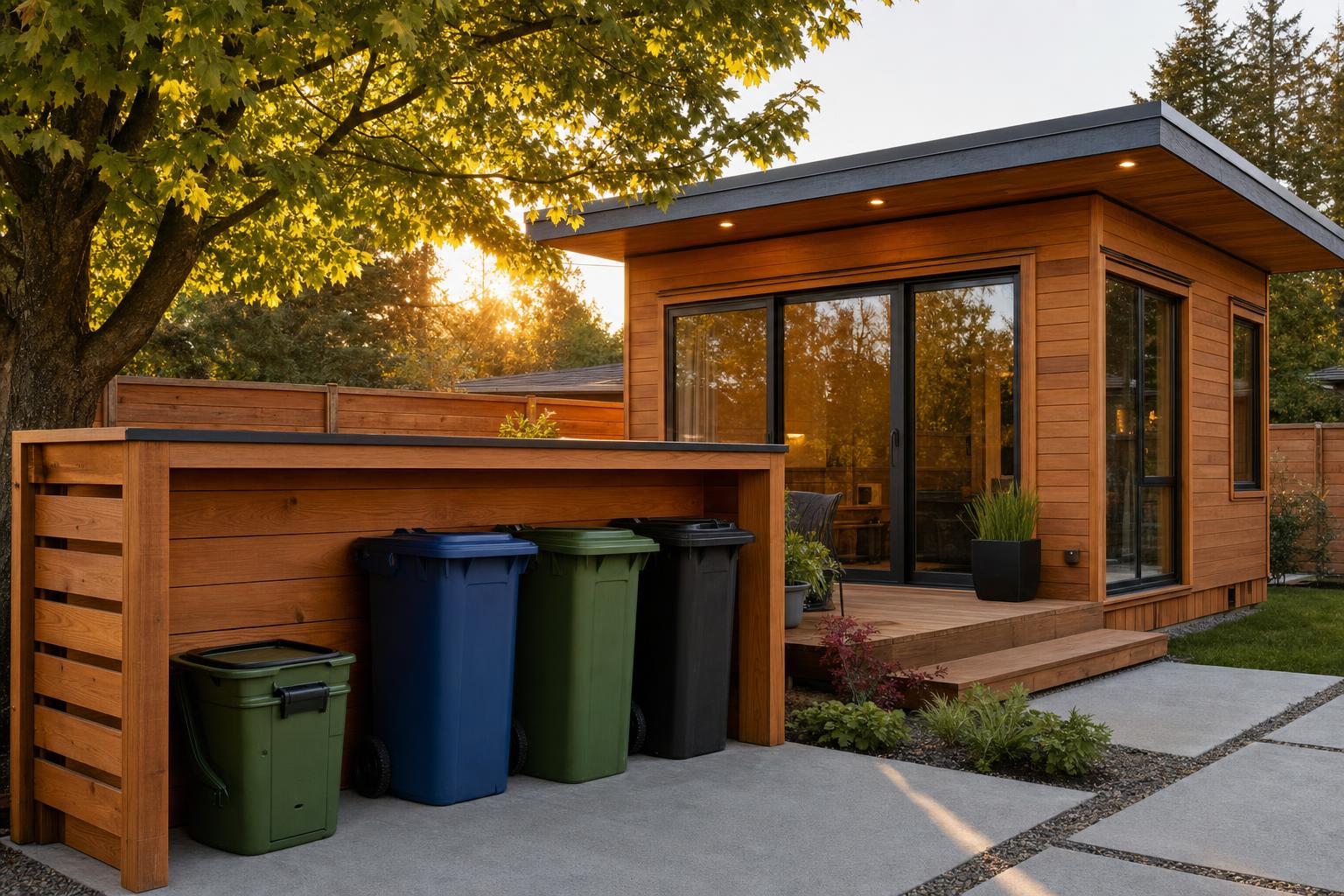
Recycling and Waste Management in Tiny Homes and Canadian ADUs: Practical 2026 Guide
Estimated reading time: 14 minutes
Key Takeaways
- Start with local rules, not bins. Recycling streams, organics pickup, ADU bylaws, and off-grid sanitation rules vary widely, so always verify using resources like the Canadian ADU regulations guide and the ADU legal clinic Canada 2026.
- A 7-day mini-audit prevents wasted space. It helps you size indoor and outdoor storage based on what your household actually throws away.
- Food scraps are usually the hardest stream in small homes. Sealed caddies, Bokashi, worms, or electric processors can all work depending on climate, budget, and pickup access.
- Canadian winters change everything. Freezing, snow, wildlife, and wet cardboard mean outdoor storage needs shelter, stronger seals, and smarter placement.
- The best system is compact, cleanable, and easy to repeat every day. If it feels annoying, it will fail.
Table of contents
- Key Takeaways
- Why This Matters in 2026
- Understand the Canadian Context Before Buying Bins
- Audit Your Waste Stream Before Choosing a System
- Compact Recycling and Sorting Systems for Small Kitchens and Living Areas
- Outdoor, Balcony, and Entry-Adjacent Systems
- Organic Waste Solutions: Composting and Food Waste in Canadian Climates
- Hazardous Waste, E-Waste, and Seasonal Storage Best Practices
- Odor Control, Pest Prevention, and Winter Care
- Brief Greywater and Water-Reuse Considerations
- Off-Grid and Off-Municipal Options
- Product and Material Recommendations by Category
- DIY Builds and Affordable Upgrades
- Layout Templates and Floorplan Examples
- Step-by-Step Implementation Checklist and Timeline
- Maintenance Schedule and Troubleshooting
- Case Studies and Quick Wins
- Resources and Verification Links for 2026
- Frequently Asked Questions
Recycling in tiny homes and Canadian ADUs is harder than it looks. In 2026, good waste management in a very small space means working around limited storage, different local pickup rules, freezing winters, and the need for compact, eco-friendly systems that are easy to clean and simple to keep using every day.
In this article, “tiny homes” means very small main homes with very little indoor storage. “Canadian ADUs” means accessory dwelling units such as laneway homes, garden suites, backyard suites, and some basement or garage conversions, based on local bylaws. “Waste management” here includes reducing waste, sorting recycling, handling food scraps, storing problem items safely, and keeping the whole system working over time.
By the end, you will have:
- A simple 7-day mini-audit process
- Space-smart indoor and outdoor sorting ideas
- Composting and food waste options for Canadian climates
- Guidance for hazardous waste, e-waste, and off-grid setups
- DIY ideas, product categories, cost ranges, layouts, and maintenance routines
One rule matters from the start: always verify local rules first.
Recycling programs, organics pickup, ADU bylaws, and off-grid sanitation rules differ by province and municipality. Start with the Canadian ADU regulations guide and the ADU legal clinic Canada 2026 before designing your setup.
Why This Matters in 2026
Recycling and waste management matter more in 2026 because Canadian households are being asked to sort materials more carefully under provincial and municipal systems shaped by Extended Producer Responsibility, deposit-return programs, and local diversion goals. That broader shift is part of the move toward zero-waste tiny home living.
This matters even more in tiny homes and Canadian ADUs because:
- Every litre of storage counts
- Overflow turns into clutter fast
- Food scraps create odor in small rooms
- Outdoor bins face snow, ice, and wildlife
- Visible bins need to look tidy in multi-use spaces
A well-planned eco-friendly system can:
- Cut landfill waste
- Make local recycling rules easier to follow
- Reduce trips to depots
- Lower odor and mess
- Fit daily life instead of fighting it
Canada’s recycling landscape is not one single system. Provinces lead many EPR programs for packaging, paper, and electronics, while municipal collection rules still vary by region. That is why the right setup in one city may fail in another, a point reflected in this waste and recovery report.
Understand the Canadian Context Before Buying Bins
Do not buy a recycling station first. Check the rules first.
That step matters because bin size, stream count, and storage style all depend on what your area accepts and how often materials leave your home.
What EPR means in plain language
Extended Producer Responsibility, or EPR, means producers are increasingly responsible for the cost and operation of collecting and managing some materials at end of life. For residents, that can change what goes into curbside recycling, what must go to a depot, and what can go back through retailer take-back programs.
In Canada, EPR programs in places such as Ontario, BC, and Quebec affect packaging, paper, and electronics systems. For background, review EPC Canada and this EPR and recovery overview.
Canadian waste management realities that affect small homes
Your system needs to match these real conditions:
- Curbside pickup is not available everywhere
- Rural homes may rely on transfer stations or depots
- Deposit systems change by province and by material
- Organics pickup may be weekly, seasonal, or unavailable
- Some properties use private hauling instead of city service
Why this matters in tiny homes and Canadian ADUs:
- If pickup is weekly, indoor bins can stay small
- If materials sit for 2 to 4 weeks, you need more storage
- If you use a depot, containers must be easy to carry and load
- If refundable containers build up, they need a separate return bin
Deposit-return systems can recover a high share of eligible containers. The brief’s example of 10¢ bottle deposits in Alberta and BC shows how strong deposit systems can support high recovery rates where applicable. Check local return systems through Return-It.
Winter realities in Canada
Winter changes recycling and waste management design.
Common problems include:
- Outdoor organics freezing solid
- Lids and hinges sticking
- Snow blocking access to bins
- Rodents getting into food waste
- Wet cardboard getting ruined outside
That often means you need:
- A sheltered outdoor cabinet
- An indoor staging area
- Better seals and stronger hinges
- Raised storage for paper and cardboard
Action steps before you buy anything
Check these four things:
- Your municipal recycling and organics pages
- Your provincial recycling or EPR pages
- Your local planning or building pages for ADU storage rules
- Whether the property has curbside pickup, depot-only access, or private hauling
Useful verification pages include Toronto waste and recycling, Recycle BC, and EPC Canada.
Audit Your Waste Stream Before Choosing a System
The smartest first step is a 7-day mini-audit. Many people overbuild their recycling setup and waste space. Others choose bins that are too small and end up with clutter on the floor. A better storage strategy often starts with ideas from tiny home storage solutions.
What to measure
Track each waste type:
- Plastics and metals
- Paper and cardboard
- Organics
- Landfill-only items
- E-waste
- Hazardous waste
- Refundable containers
Measure these for each stream:
- Daily or weekly volume in litres
- Collection or drop-off frequency
- Storage needs
- Odor risk
- Whether it needs a sealed container
- Whether it needs a child or pet lock
Simple 7-day worksheet
Use temporary bags or small bins for one week. Label each one.
Record:
- Waste Type
- Daily or Weekly Volume (L)
- Collection or Drop-off Frequency
- Storage Notes
- Odor Risk
- Need for Sealed Container?
- Need for Child/Pet Lock?
Helpful tips:
- Use the bin’s labelled litre size
- Note which stream fills fastest
- Track contamination problems
- Watch for odor or leaks
- See if grocery days or delivery days create spikes
Capacity benchmarks for small spaces
For many tiny homes:
- Active indoor sorting capacity often lands around 50 to 100 L total
For many Canadian ADUs:
- Active indoor plus outdoor capacity often lands around 100 to 150 L total
These are useful starting points, not fixed rules.
How to read the results
If organics dominate:
- Put your best effort into a sealed food waste system
If packaging dominates:
- Add multi-stream recycling bins
- Create a place for flattened cardboard
If refundable containers dominate:
- Set up a dedicated return bin near the exit
If DIY or maintenance waste shows up often:
- Add a secure utility cabinet for problem materials
Accepted materials still need to be checked locally, so use your audit with municipal verification pages and provincial recycling resources, not as a replacement for them.
Compact Recycling and Sorting Systems for Small Kitchens and Living Areas
The best recycling systems reduce friction. If sorting is easy during normal life, contamination drops and the system keeps working.
Indoor kitchen sorting systems
Pull-out triple or quad bins
Best for:
- A hidden built-in look
- Households that want a neat kitchen
Typical size:
- About 30 to 45 cm wide x 50 cm deep x 55 cm high
- Around 15 to 30 L per bin
Often fits:
- A standard 60 cm cabinet
Best streams:
- Mixed containers
- Paper
- Landfill
- Optional refundable stream
Good material choices:
- Recycled plastic liners
- Stainless steel frames
- Low-VOC cabinetry finishes
Stackable modular sorters
Best for:
- Flexible layouts
- Renters
- Balcony or utility corner use
Typical module:
- About 20 x 20 x 40 cm
- Around 10 L per bin
Why they work:
- They use height instead of floor space
- You can add or remove modules later
Under-sink and door-mounted bins
Best for:
- Food scraps
- One high-frequency stream
Typical size:
- Slim 10 to 15 L units
Watch out:
- Plumbing takes up space
- Measure carefully before buying
Hanging bag systems
Best for:
- Lightweight packaging
- Refundable cans
- Temporary overflow
Typical size:
- Around 5 L each
Pros and limits:
- Cheap and simple
- Less odor control
- Less tidy in visible rooms
Placement rules that work
- Put the most-used streams one step from the prep area
- Store paper farther away if you flatten it
- Do not make the landfill bin bigger than recycling by default
- Use square bins when possible because they use cabinet space better than round bins
- Choose removable inner bins for easier cleaning
Labels matter
Use labels with:
- Words
- Icons
- Large print
- Simple colours
That makes the system easier for children, guests, and busy households. Design considerations from family-friendly tiny homes design and accessible design for tiny homes support this approach.
Outdoor, Balcony, and Entry-Adjacent Systems for Tiny Homes and Canadian ADUs
Small homes often need a second-stage storage zone near the entrance or outdoors. This helps with lower-frequency streams and overflow.
Use this zone for:
- Flattened cardboard
- Refundable containers
- Depot-bound items
- Seasonal overflow
- Extra recycling between pickups
Sheltered multi-stream stations
Example footprint: 60 x 40 x 80 cm
Typical capacity: About 45 L per stream
Best for:
- Covered patios
- Side yards
- Protected entry zones
Lockable outdoor cabinets
Best for:
- Wildlife risk
- Pets
- Visual tidiness
- Shared properties
Look for:
- Weather-resistant hinges
- Ventilation
- Raised floor or feet
- Easy-clean interior
Small shed or locker solutions
Example size: 1 x 2 m shed
Best for:
- Larger Canadian ADUs
- Shared households
- Depot users
Helpful features:
- Labelled zones
- Shelf for e-waste tote
- Insulated divider for winter
- Hook or slot for flattened cardboard
Balcony use tips
- Keep weight modest
- Use sealed containers for organics
- Keep paper off wet surfaces
- Never block exits
- Follow building rules
ADU properties may also have bylaw, setback, or appearance rules that affect where an outdoor cabinet or shed can sit. Review ADU-friendly neighbourhoods in Canada and ADU outdoor design in Canada before placing exterior storage.
Organic Waste Solutions: Composting and Food Waste in Canadian Climates
Food waste is often the hardest stream in small homes. It smells, leaks, attracts fruit flies, and can freeze in winter.
Here are four practical options.
Countertop collection jars or caddies
This is a small sealed container for food scraps before transfer.
Recommended size: About 5 L
Good materials:
- Glass
- Stainless steel
- Durable plastic with washable liner
- Carbon-filter lid
Pros:
- Low cost
- Easy to clean
- Easy daily use
Cons:
- Needs frequent emptying
- Not a full system on its own
Best for:
- Homes with municipal organics pickup
- Homes with an outdoor composter nearby
Bokashi fermentation
Bokashi is a sealed indoor fermentation system that uses inoculated bran to pickle food scraps.
Recommended size: 10 to 20 L bucket
Why it suits Canada:
- It works indoors
- Freezing is less of a problem
- The bucket stays sealed
Pros:
- Compact
- Low odor if used properly
- Good for tiny homes
- Can accept more food types than worm bins
Cons:
- Needs bran
- Output still needs burying, trench composting, or transfer to a finishing compost system where allowed
Bokashi liquid may sometimes be diluted for non-potable landscaping where locally appropriate, but do not assume that is always allowed.
Worm bins or vermicomposting
Vermicomposting means using worms in a controlled bin to turn food scraps into castings.
Suggested compact size:
- About 30 x 40 x 40 cm
- Around 20 L
Climate limit:
- Worms usually need stable indoor temperatures
- They can die below about 10°C
Pros:
- Quiet
- Compact
- Can work indoors all year
- Makes useful castings
Cons:
- Needs light care
- Sensitive to moisture and acidity
- Not good for meat, dairy, or oily foods
Best for:
- People willing to monitor it regularly
Electric countertop composters
These are electric processors that dry and grind food scraps to reduce volume.
Suggested capacity: 3 to 5 L
Pros:
- Fast
- Compact
- Helpful in winter
- Can reduce food scrap volume by about 80%
Cons:
- Uses electricity
- Output still needs proper end use
- Costs much more than basic systems
Typical 2026 price range: Around $400 to $600
Energy note: Around the 200W category as a rough reference, depending on model
These units do not automatically replace local organics rules, and they do not create the same finished compost as a mature compost pile. For broader context, see composting toilets in tiny homes Canada and the urban homesteading tiny homes guide.
How to choose the right organics method
- If you have municipal green bin service: use a countertop caddy plus a sealed transfer bin
- If you do not have pickup but have garden access: consider Bokashi or worms
- If winter access is hard and budget is available: an electric processor may help
- If wildlife and freezing are major issues: use sealed indoor systems and move materials outside less often
Hazardous Waste, E-Waste, and Seasonal Storage Best Practices
Some items should never go into regular recycling or landfill bins without checking rules first.
This includes:
- Batteries
- Electronics
- Paint
- Solvents
- Aerosols
- Bulbs
- Strong cleaners
Create a safe storage zone
Use:
- A sealed 5 to 10 L bin, or
- A small lockable utility cabinet
Store items:
- Upright
- Labelled
- Dry
- Away from heat
Category-by-category guidance
Batteries
- Never toss loose batteries into standard recycling
- Store them in a non-conductive container
- Tape terminals when recommended
Electronics
- Keep phones, cables, tablets, and gadgets in one tote or drawer
- Drop them off only at approved collection points
Paint, cleaners, and chemicals
- Keep products in original containers where possible
- Never mix them
Light bulbs
- Store carefully to prevent breakage
Best small-space locations
- Bathroom utility closet
- Upper cabinet out of reach of children
- Weather-protected shed shelf
Seasonal storage tips
- In winter, stage materials indoors if freezing may cause leaks or damage
- Group depot trips monthly or quarterly to reduce clutter
Useful lookup tools include Call2Recycle, EPC Canada, and this ADU maintenance checklist Canada.
Odor Control, Pest Prevention, and Winter Care
A compact waste management system succeeds because of habits, not just hardware.
Odor control
- Use sealed lids
- Rinse sticky containers when local rules allow
- Add carbon filters to organics lids
- Empty food waste often
- Keep liners washable
Pest prevention
- Seal all food waste
- Do not let liquids pool in bins
- Use smooth interiors that wipe clean
- Raise outdoor storage off the ground
Diatomaceous earth may help around exterior problem areas, but do not use it in ways that contaminate compost or indoor air.
Winter care
- Use insulated or sheltered cabinets outside
- Move wet organics indoors during hard freezes
- Use heated pads only if the product allows it and electrical safety is clear
- Keep snowy paths clear so the system stays easy to use
Prevent cross-contamination
- Keep labels simple
- Do not create too many streams
- Teach everyone in the home
- Show guests the basics
Brief Greywater and Water-Reuse Considerations
Greywater is water from sinks, showers, and laundry, not toilet waste.
In some places, filtered greywater may be used for non-potable landscaping, depending on provincial and local rules. But it is not a substitute for proper wastewater management. See greywater recycling for tiny homes in Canada and the greywater recycling ADU guide.
Do not assume:
- Greywater reuse is allowed everywhere
- DIY systems are permit-free
- Urban Canadian ADUs can always use them
- Potable reuse is safe or approved
Always check with local building and health authorities before planning a system, including your city’s development pages such as Vancouver home, property, and development and utility guidance like tiny home utilities in Canada.
Off-Grid and Off-Municipal Options for Extreme Small-Footprint Living
This section mainly applies to remote or rural tiny homes, not standard urban Canadian ADUs.
Composting toilets
Composting toilets reduce or avoid flush water use by separating and stabilizing human waste. Some use bulking materials such as sawdust or other carbon media, depending on the design.
Benefits:
- Lower water use
- Useful off-grid
- Helpful where septic connection is hard
Drawbacks:
- Ongoing maintenance
- Regular emptying
- Odor risk if ventilation is poor
- Not legal everywhere
Urine diversion
Some systems separate liquids to reduce odor and make handling easier. Storage and disposal rules differ by jurisdiction.
Important caution:
- Some rural areas may allow these systems with approvals
- Urban ADUs often must connect to approved sewer or septic systems
- Health, plumbing, and building rules must be checked before installation
Greywater and urine-based outputs should only be used in low-risk, non-potable ways where locally allowed. Check local authority pages such as Vancouver planning and building resources and topic guidance like tiny home wastewater solutions in Canada.
Product and Material Recommendations by Category
It is better to compare product categories than chase one brand.
Best materials
- Recycled plastic for liners and modular bins
- Stainless steel for durability and easy cleaning
- Bamboo for visible dry-area storage
- Low-VOC finishes for built-ins and DIY cabinetry
What to look for by category
Pull-out bins
- Full-extension slides
- Washable liners
- Exact cabinet fit
- Removable inserts
Modular sorters
- Stable stacking
- Good lid seals
- Easy cleaning
Vermicompost kits
- Good drainage
- Simple tray design
- Ventilation
- Compact footprint
Electric food processors
- Capacity
- Cycle time
- Noise level
- Energy use
- Replaceable filters
Outdoor lockers
- Weather resistance
- Lockability
- Wildlife resistance
- Space for added insulation
2026 budget ranges
- Budget: $20 to $50
- Mid-range: $50 to $150
- Premium: $150+
Always tie buying choices back to your mini-audit. Do not pay for a complex system if your home produces only a small amount of each stream.
DIY Builds and Affordable Upgrades
DIY systems can fit awkward spaces better and cost less. Inspiration can come from the DIY prefabricated ADU kit guide and from using reclaimed materials in tiny homes Canada.
DIY compact pull-out recycling drawer
This is a cabinet-mounted drawer for two to four removable bins inside a lower cabinet.
Materials:
- Plywood
- Drawer slides
- Screws
- Paint or low-VOC sealer
- Bin inserts
- Handle
Approximate cost: Around $90
Tools:
- Saw
- Drill/driver
- Measuring tape
- Square
- Pencil
- Sandpaper
Build time: About 4 hours
Steps:
- Measure cabinet interior exactly
- Cut the drawer base and sides
- Install slides level and square
- Test the bins before final fastening
- Add labels
Common mistakes:
- Forgetting slide clearance
- Choosing bins that are too tall
Vertical multi-bin tower
This is a tall, narrow freestanding tower for lightweight recycling streams.
Materials:
- PVC or simple framing
- Connectors
- Bins or sleeves
Approximate cost: Around $60
Build time: About 2 hours
Best for:
- Entryways
- Utility corners
- Covered balconies
Safety tip: Anchor it to the wall where appropriate
Balcony compost locker
This is a small weather-resistant locker for compost tools or sealed organics buckets.
Materials:
- Pallets or basic lumber
- Insulation
- Hinges
- Latch
Approximate cost: Around $40 with reclaimed materials
Build time: About 3 hours
The locker should:
- Keep bins off the floor
- Block snow and rain
- Discourage pests
Check first that exterior placement is allowed and does not block exits.
Layout Templates and Floorplan Examples
These simple layouts show how recycling and waste management can fit without taking over the home.
200-sq-ft tiny home layout
Setup:
- 3 x 10 L under-sink bins
- 5 L countertop food caddy
- 20 L Bokashi bucket on a balcony or just outside
Why it works:
- Daily-use streams stay within arm’s reach
- Organics move out of the prep zone
- The full system uses about 1 m² or less
Expected result:
- Less clutter
- Lower odor risk
500-sq-ft backyard ADU layout
Setup:
- Kitchen sorting cabinet
- 5 L e-waste or battery bin in utility closet
- Outdoor shed or cabinet with 3 x 45 L streams
Why it works:
- Canadian ADUs often have a yard or side access
- Two-stage storage handles overflow better
- Deposit containers stay separate from daily bins
Existing ADU retrofit
Setup:
- Door-mounted sorter
- Compact worm bin in a utility area
- Cardboard slot behind a door or in a closet
Why it works:
- No major renovation needed
- Good for renters or light retrofit projects
- Solves clutter without new cabinetry
Step-by-Step Implementation Checklist and Timeline
Step 1: Plan about 1 week
- Do the 7-day audit
- Measure cabinet widths, depths, and heights
- Check municipal and provincial recycling rules
- Decide if you need indoor-only, indoor plus outdoor, or depot-oriented storage
Step 2: Buy or build in 1 to 2 weeks
- Pick bin types based on real measurements
- Source eco-friendly materials where possible
- Gather labels, liners, filters, and cleaners
- If building DIY, buy all hardware first
Step 3: Install in 1 day
- Mount pull-outs or place modular bins
- Label each stream clearly
- Create a transfer route from kitchen to outdoor storage
- Test all doors, drawers, and lids
Step 4: Train the household for about 1 week
- Show everyone what goes where
- Post a simple guide inside a cabinet door
- Explain local exceptions, such as rinsing rules or depot-only film plastic
Step 5: Maintain and adjust
After two weeks:
- Check if any bin is too big or too small
- Move streams if people keep using the wrong one
- Simplify labels if contamination continues
Maintenance Schedule and Troubleshooting
A calendar-based routine keeps recycling and waste management easy. Helpful references include the ADU maintenance checklist Canada and smart home maintenance for tiny homes.
Weekly tasks
- Empty and wipe food waste bins
- Transfer outdoor-bound materials
- Break down cardboard
- Check lids and liners
Monthly tasks
- Deep clean all bin interiors
- Inspect slides, hinges, and seals
- Replace carbon filters if needed
- Clear the e-waste or hazardous storage area if nearly full
Seasonal tasks
Before winter:
- Insulate or move vulnerable bins
- Test latches
- Keep paths safe and clear
In spring:
- Sanitize outdoor cabinets
- Check for moisture damage
- Reset compost systems
In summer:
- Empty food waste more often
- Watch for flies and odor
Troubleshooting
Cross-contamination
Cause:
- Too many streams
- Poor labels
Fix:
- Simplify
- Relabel with icons
Odor
Cause:
- Trapped liquid
- Slow emptying
Fix:
- Rinse recyclables
- Use a sealed caddy
- Empty more often
Freezing
Cause:
- Exposed outdoor organics
Fix:
- Use insulated staging
- Hold wet scraps indoors until transfer
Pests
Cause:
- Accessible food scraps
- Spills
Fix:
- Use sealed bins
- Clean more often
- Raise outdoor storage
Case Studies and Quick Wins
Case study 1: 200-sq-ft tiny home
Before:
- One trash bin
- Recycling in loose bags
- Counter clutter
After:
- Pull-out bins
- Bokashi bucket
Result:
- About 80% diversion
- No persistent odor
What made it work:
- Right-sized bins
- Daily organics routine
Case study 2: 500-sq-ft backyard ADU
Before:
- Messy balcony
- Winter overflow
- No place for deposit containers
After:
- Lockable shed
- Electric food waste processor
Result:
- Better winter handling
- Cleaner separation for local recycling and depot systems
Case study 3: Existing ADU retrofit
Before:
- No built-ins
- Frequent contamination
- E-waste piling up in drawers
After:
- Under-sink sorter
- Worm bin
- Utility e-waste box
Cost: Around $200
Space savings: About 2 m² regained
Resources and Verification Links for 2026
Recycling and waste management rules change, so keep this short list handy for 2026 checks. Start with tiny-home-friendly municipalities 2026 and the Canadian ADU regulations guide.
Municipal recycling and organics pages
- Toronto: Toronto waste and recycling
- Vancouver planning and building: Vancouver home-property-development
Provincial or stewardship resources
Local planning and ADU bylaw checks
Use your municipality’s planning or development department to confirm:
- Outdoor storage rules
- Setbacks
- Balcony or shed restrictions
- Utility and sanitation requirements
Community compost hubs and local zero-waste groups
Search locally in 2026 for:
- Community compost hubs
- Reuse depots
- Neighbourhood zero-waste groups
- Repair cafes
- Refill stores
You may also find current municipal or provincial green home, waste diversion, or ADU sustainability rebates, but these should always be verified before you rely on them. See ADU grants in Canada and municipal incentives and the ADU green upgrades financing guide.
The best recycling system for tiny homes and Canadian ADUs is not the biggest one. It is the one that matches local rules, real waste volume, climate, and daily habits. When your system fits your life, eco-friendly waste management becomes simpler, cleaner, and much easier to keep using year-round.
Frequently Asked Questions
What is the best recycling setup for a tiny home?
The best setup is usually a small indoor daily-use station plus a second-stage outdoor or entry-adjacent area. Most tiny homes benefit from sealed organics storage, compact square bins, and one dedicated space for refundable containers or flattened cardboard.
How much recycling storage does a Canadian ADU usually need?
Many Canadian ADUs work well with 100 to 150 L of total active indoor plus outdoor capacity, but your exact needs depend on pickup frequency, deposit-return use, packaging volume, and whether you rely on a depot.
What is the easiest food waste solution for Canadian winters?
For many households, the easiest option is a sealed countertop caddy paired with municipal green bin service. If pickup is unavailable or winter access is difficult, Bokashi or an electric food waste processor may be more practical.
Can tiny homes and ADUs compost year-round in Canada?
Yes, but the method matters. Outdoor compost systems can freeze, while indoor options such as Bokashi and worm bins are easier to manage year-round. Worm systems need stable temperatures, and electric processors need power and proper end use for output.
Where should I store batteries and e-waste in a small home?
Store them in a dry, labelled, sealed container or a small lockable cabinet away from heat and out of reach of children. Use approved drop-off programs such as Call2Recycle for batteries and local electronics stewardship programs for devices.
Do local recycling rules really vary that much in Canada?
Yes. Accepted materials, organics access, depot requirements, and packaging rules can differ significantly by municipality and province. That is why checking sources such as Recycle BC, EPC Canada, and your local municipal waste page should always come first.
Leave a Reply