
Smart Home Tech for Canadian Tiny Homes and ADUs in 2026
Estimated reading time: 14 minutes
Key Takeaways
- Smart home tech in 2026 is more valuable because devices now work together better through Matter, stronger Thread networking, and smarter energy controls.
- For Canadian tiny homes and ADUs, the biggest wins usually come from heating control, freeze protection, security, leak detection, and remote monitoring.
- The best voice assistant depends on your priorities: Apple for privacy and local-first control, Alexa for budget-friendly variety, and Google for natural language and bilingual use.
- An app-controlled ADU can simplify daily management with remote HVAC, expiring lock codes, alerts, and energy tracking.
- For most new setups in 2026, Thread plus Matter is the strongest future-facing path.
- In Canada, ROI is usually strongest where smart tech reduces heating waste, prevents freeze damage, and saves time on rental or property management.
Table of contents
- 2026 smart home tech trends reshaping tiny homes and ADUs in Canada
- How to choose the best voice assistant for a Canadian tiny home or app-controlled ADU
- What an app-controlled ADU looks like in real life
- Tiny home automation for lighting: small-space comfort, safety, and energy savings
- Security systems for a smart tiny home or app-controlled ADU
- HVAC automation for Canadian tiny homes and ADUs
- Smart appliances, plugs, and safety automation in small spaces
- The most useful automations for a Canadian tiny home or app-controlled ADU
- Matter, Thread, Wi‑Fi, Zigbee, and Z-Wave: what tiny home owners need to know
- Starter, mid-range, and pro smart home tech stacks for tiny homes and ADUs
- How to plan and install smart home tech in a tiny home or ADU
- Privacy and compliance considerations for a Canadian app-controlled ADU
- What smart home tech costs in 2026—and where the ROI comes from
- 3 Canadian examples of smart home tech in tiny homes and ADUs
- Common smart home tech problems in tiny homes—and how to fix them
- Tiny home and app-controlled ADU smart home checklist
- FAQs about smart home tech for Canadian tiny homes and ADUs
Smart home tech for Canadian tiny homes and ADUs in 2026 is more useful, more connected, and more energy-aware than it was even a year ago. What changed is not just better gadgets. It is the way devices now work together.
Thanks to 2025 innovation, more products support Matter, Thread mesh networking is stronger, sensors use less power, heat pump controls are getting smarter, and solar-plus-battery systems are easier to watch in one place. You can also see the broader direction of the market through this smart home technology overview and the latest Canada smart home market analysis.
That matters a lot in Canada. Tiny homes and ADUs have limited space, so every device needs to earn its spot. Many owners also want lower power use, remote monitoring, and simple control when they are away. In winter, heating reliability and freeze protection are not optional.
In a small Canadian home, the best smart device is not the flashiest one. It is the one that saves energy, prevents damage, and works reliably in January.
This guide explains how to choose the right voice assistant, how an app-controlled ADU works in daily life, and how to use tiny home automation for lighting, security, HVAC, and appliances. It also covers privacy, installation, costs, and ROI in Canada. At the end, you will find a practical checklist plus sample starter, mid-range, and pro setups.
2026 smart home tech trends reshaping tiny homes and ADUs in Canada
In 2026, smart home tech is not mainly about adding more devices. It is about building integrated systems that are easier to run across brands, apps, and rooms. That is especially important in small homes, where clutter, power use, and setup headaches show up fast.
Matter adoption went mainstream
Matter is a shared standard that helps compatible devices work across major ecosystems. In simple terms, a Matter-certified bulb, lock, or sensor is more likely to work with the platform you already use.
For tiny home automation, this is a big win because it reduces vendor lock-in. You do not have to build your whole setup around one brand. In a small home or app-controlled ADU, that can mean one cleaner system with fewer extra hubs and fewer duplicate apps.
Thread mesh networking matured
Thread is a low-power mesh network made for devices like locks, sensors, and switches. It is designed to be reliable and self-healing. If one device drops out, the network can often route around it.
That matters in tiny homes because battery-powered devices are common. Thread helps these devices last longer without putting everything on Wi‑Fi. It also supports cleaner installs in small spaces.
Low-power sensors improved
Door sensors, occupancy sensors, leak sensors, and temperature sensors now last longer on battery and often respond faster. That means less maintenance for remote cabins, rental ADUs, or backyard suites.
For Canadian owners, better sensors can do real work:
- warn about a water leak under a sink
- tell you if a window was left open
- flag low indoor temperatures in winter
- reduce wasted heating when no one is inside
Integrated heat pump controls became more common
Many ductless mini-splits and cold-climate heat pumps now come with better built-in apps or work with smart controllers. This is one of the most useful changes from recent 2025 innovation.
For Canadian tiny homes, smarter heat pump control helps with:
- vacancy setbacks
- pre-heating before arrival
- better overnight comfort
- freeze-risk protection
Solar and battery monitoring became more integrated
If a tiny home runs off-grid or uses partial backup power, owners can now see more of their energy picture in one place. That may include battery level, solar production, HVAC use, and key device loads.
This is useful for energy-conscious homes because it makes power planning easier and helps avoid surprises. For more context, see this guide to off-grid living in Canadian tiny homes, this overview of solar-powered ADUs in Canada, and these ideas for net-zero tiny home appliances.
Why these trends matter in Canadian tiny living
These trends are not abstract. They solve real tiny-home problems:
- less wall clutter from fewer separate controls
- better power management on small electrical service
- easier remote control for seasonal or rental units
- stronger comfort and freeze prevention in winter
This trend picture shapes every buying choice in the rest of this article. You can compare the broader outlook through this smart home tech buyers 2026 guide and another look at five smart home trends for 2026.
How to choose the best voice assistant for a Canadian tiny home or app-controlled ADU
A voice assistant is the voice control layer of your setup. It lets you use simple commands to run scenes, change temperature, turn lights on or off, and control compatible devices without touching your phone.
In a tiny home, that can be very handy. You may be cooking, carrying firewood, or climbing to a loft. Hands-free control makes more sense in a small space than many people expect.
Amazon Alexa
Strengths
- wide device support
- lower-cost speakers and displays
- strong third-party ecosystem
Weaknesses
- often depends more on cloud services
- privacy settings may need more manual review
Best fit
- budget-friendly setups
- rental units
- users who want lots of brand choice
Google Assistant
Strengths
- natural language is often very good
- strong media and search links
- useful bilingual support
Weaknesses
- platform changes can create confusion
- Google Home and Nest history has felt fragmented at times
Best fit
- Google-focused households
- users who want more conversational control
- bilingual homes
Apple Siri / Apple Home
Strengths
- stronger privacy reputation
- more local control in many setups
- excellent Matter and Thread support with HomePod mini or Apple TV
Weaknesses
- higher hardware cost
- best if the household already uses Apple devices
Best fit
- privacy-focused owners
- premium tiny homes
- local-first builds
What matters most for Canadian users
Local control vs cloud reliance
Local control means key automations can still run in the home even if the internet goes down. This matters in rural Canada, remote sites, and storm-related outage situations.
Bilingual support
English and French support can matter a lot, especially in Quebec or bilingual households. If two people use the system in different languages, test this before buying deep into one ecosystem.
Offline or edge processing
Some platforms now handle more tasks closer to the home, not only in the cloud. That can improve speed and resilience.
Privacy
Smart speakers can collect voice and usage data. Before setup, review:
- voice recording settings
- history deletion options
- guest mode or mute controls
- account sharing rules
Real tiny-home voice assistant use cases
Useful commands can be simple:
- “Turn on kitchen lights.”
- “Set loft temperature to 20°C.”
- “Run away mode.”
- “Unlock the entry for the cleaner.”
You can also build emergency routines, such as turning on all lights and sending a notification if a leak or unusual motion is detected.
Why Matter and Thread make voice assistant choice easier
Matter-certified devices are easier to mix across brands. In many cases, setup is as simple as scanning a QR code. That means your voice assistant choice no longer locks you into every other product as tightly as before.
Quick recommendation
- Choose Apple for privacy and local-first control.
- Choose Alexa for the widest low-cost ecosystem.
- Choose Google for strong language handling and Google-based homes.
For related reading, see this guide to tiny home automation in Canada and this breakdown of smart tiny home voice automation.
What an app-controlled ADU looks like in real life
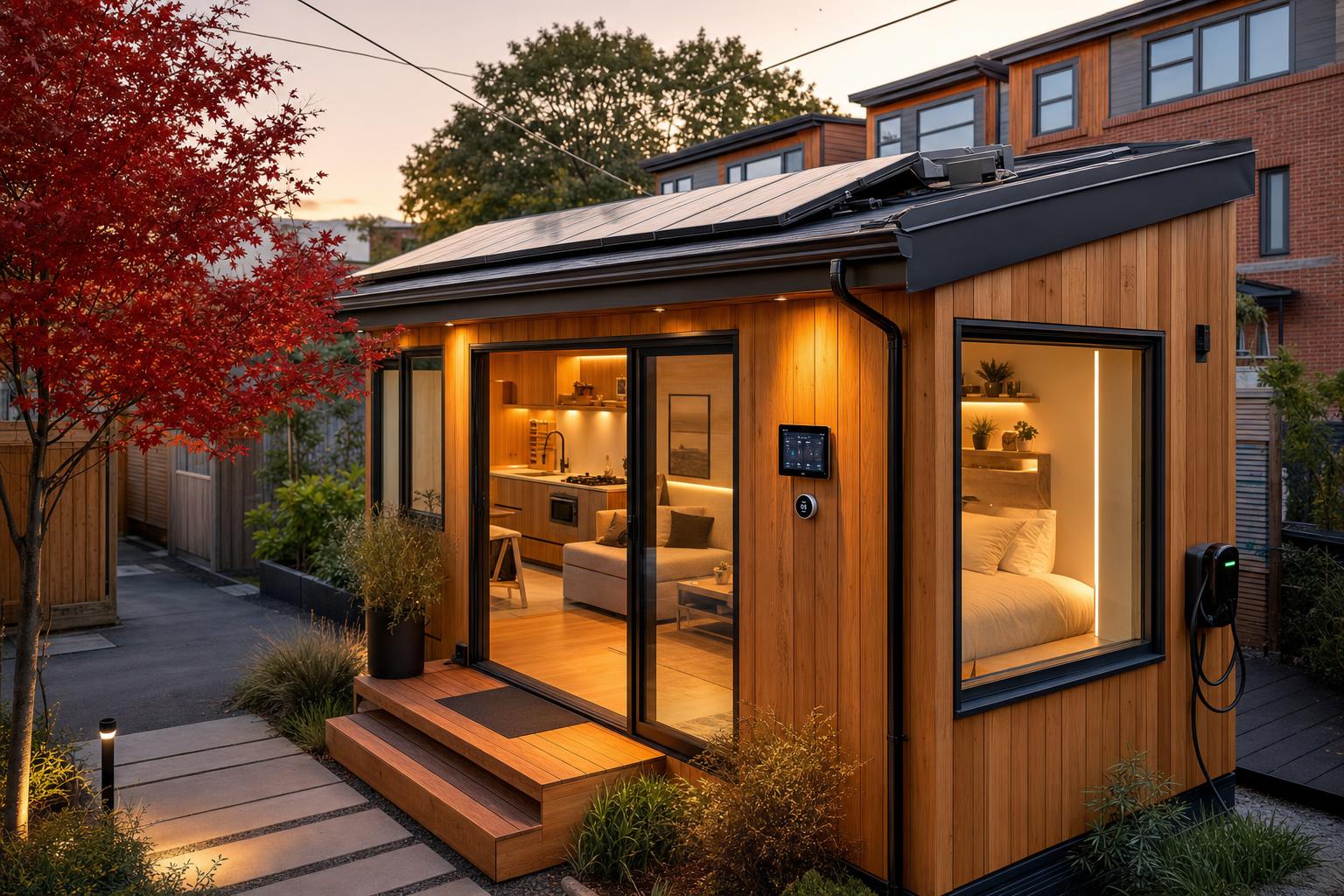
An app-controlled ADU is an accessory dwelling unit where core systems are managed from one main app or a small group of linked apps. That can include locks, HVAC, lighting, cameras, sensors, and sometimes energy monitoring.
This setup can help several kinds of users:
- homeowners managing a backyard suite
- landlords with long-term tenants
- short-term rental hosts
- property managers with more than one unit
Core workflows in daily use
Remote HVAC scheduling
You can pre-heat the suite before arrival, lower the temperature when it is vacant, and keep a safe winter setpoint to reduce freeze risk.
Access control
A smart lock can create:
- temporary guest codes
- cleaner access windows
- maintenance codes
- entry logs
Remote monitoring
An app-controlled ADU can alert you to:
- low indoor temperature
- high humidity
- a door left open
- a possible leak
Billing and usage tracking
If you add an energy monitor or smart meter, you can better understand separate usage patterns. That is helpful when a unit has its own heating profile or irregular occupancy. For background, see whether an ADU can have separate meters, how utility connections for Canadian ADUs work, and why smart water management for Canadian ADUs matters.
Features worth looking for
A good app should offer:
- multi-user roles and permissions
- scheduling
- geofencing
- firmware updates
- device health status
- energy reporting
- diagnostic alerts
Advice for landlords and property managers
Reusable automation templates save time. One setup can handle check-in, check-out, vacancy mode, and winter protection. Expiring lock codes are much safer than physical key copying. Indoor low-temperature alerts are especially useful in Canadian winters.
One important caution
Not every smart device belongs in a rental. Indoor cameras in private living spaces should be avoided. Convenience never beats privacy or legal transparency. For operators, it also helps to think about optimizing rental unit profitability alongside the larger Canadian smart home market.
Tiny home automation for lighting: small-space comfort, safety, and energy savings
Lighting is often the easiest first step in tiny home automation. It is visible right away, often affordable, and easy to understand.
Smart bulbs
Smart bulbs are usually the easiest retrofit option. They are great for:
- table lamps
- plug-in wall lights
- places where rewiring is not ideal
The downside is simple: if someone turns off the wall switch, the bulb may stop acting smart.
Smart switches and dimmers
Smart switches and dimmers are better for permanent installs and new builds. They keep normal wall-switch behaviour, which is often better for households and rentals.
Useful lighting automations
- morning lights that turn cooler and brighter
- evening lights that turn warmer and dimmer
- occupancy-based lighting in bathrooms or entryways
- outdoor lights for icy steps and snowy paths
Why lighting matters more in small homes
In a tiny home, one fixture may serve the kitchen, living space, and work area. That makes scenes more important. Dimming can reduce glare, support winding down, and make compact rooms feel calmer.
Energy angle
Pair smart controls with efficient LED fixtures. That cuts wasted power and helps keep small electrical systems under control. For design ideas, see interior lighting for tiny homes and this guide to smart lighting for Canadian tiny homes.
Security systems for a smart tiny home or app-controlled ADU
Security matters more when the home is detached, remote, or used as a rental. A smart tiny home or app-controlled ADU can use a few well-chosen devices to improve both safety and convenience.
Smart locks
Smart locks offer:
- keyless access
- time-limited codes
- remote locking and unlocking
- entry records
Battery-powered models work well with low-power protocols like Thread, which can reduce maintenance.
Doorbell cameras
These help with:
- checking visitors
- watching deliveries
- reviewing activity at the door
Motion sensors
Motion sensors can watch indoor and outdoor areas. Tune them carefully if you have pets, nearby roads, or wildlife.
Glass-break and contact sensors
These add extra security, especially in isolated locations or detached backyard suites.
Privacy-aware setup
For good practice:
- do not place cameras in bedrooms or bathrooms
- disclose camera locations clearly in rentals
- use privacy zones where possible
- keep video retention short unless needed
Day-to-day operational advice
Set alerts for:
- forced entry
- unlocked doors
- low temperatures
- leaks
If you use a monitoring service, confirm that it is suitable for Canadian locations and response needs. More detail is available in this guide to smart home security for tiny homes and this overview of tiny home safety in Canada.
HVAC automation for Canadian tiny homes and ADUs
HVAC is where smart home tech often gives the biggest real-world value in Canada. Climate control affects comfort, heating cost, guest experience, and pipe-freeze risk.
Best fit: ductless mini-split or cold-climate heat pump
For many tiny homes and ADUs, a ductless mini-split is the best fit. It heats and cools efficiently, saves space, and avoids bulky ductwork.
Smart control options
You can control HVAC through:
- manufacturer apps
- compatible thermostats
- dedicated heat pump controllers
- Matter-ready or API-based integrations where available
Most useful automations
- lower temperature when vacant
- warm the unit before arrival
- adjust sleeping temperature overnight
- maintain a freeze-protection minimum
- use humidity-aware control if supported
Multi-zone logic
A loft can trap heat. A main floor can stay cooler. In ADUs with a separate bedroom, room-by-room tuning may improve comfort and efficiency.
One key rule
Smart should never reduce safety. Heating must still be easy to understand and easy to control manually if the app fails.
For planning help, review this guide to a heat pump for a tiny home, this under-floor heating guide, and this article on solar-powered heating for tiny homes.
Smart appliances, plugs, and safety automation in small spaces
Appliance automation needs care in small homes. In a compact space, power limits and fire safety matter more than novelty.
Smart plugs
Smart plugs are a simple way to control:
- lamps
- fans
- coffee stations
- some small appliances
Some also track energy use. But always check load ratings. High-load or heating appliances should only be used if the plug and circuit are clearly suitable.
Built-in smart appliances
Useful examples include:
- induction cooktops with timers and shutoff features
- compact laundry units with cycle alerts
- mini-fridges with monitoring
Safety automation that makes sense
- leak sensors near sinks, toilets, and washers
- shutoff routines for risky loads
- alerts if an appliance runs unusually long
Practical examples
- an induction cooktop shuts off after inactivity
- a washer leak alert sends a phone notification
- a coffee station smart plug only works in morning hours
For small-space planning, see this guide to tiny home kitchen design in Canada, this look at tiny home laundry in Canada, and these ideas for net-zero tiny home appliances.
The most useful automations for a Canadian tiny home or app-controlled ADU
The best smart home tech does not come from one device. It comes from routines that tie systems together.
Away mode
Away mode can:
- turn off most lights
- set HVAC to eco mode
- arm sensors
- confirm that doors are locked
Guest check-in mode
For a rental or backyard suite, guest mode can:
- pre-heat or pre-cool the unit
- turn on porch lights
- activate a guest lock code
- prepare a simple welcome setup
Winter protection mode
This routine can:
- watch for low indoor temperature
- keep minimum heating active
- send an alert near freeze risk
- trigger a check reminder if needed
Night mode
Night mode can:
- dim lights
- reduce sound notifications
- confirm lock status
- hold the sleeping temperature
In tiny homes, these routines are especially effective because a small number of devices can change comfort, safety, and energy use all at once. A voice assistant can also trigger these scenes quickly with one command.
For more ideas, explore smart home maintenance for tiny homes, livability upgrades for tiny homes in Canada, and this look at privacy in tiny homes.
Matter, Thread, Wi‑Fi, Zigbee, and Z-Wave: what tiny home owners need to know
Protocol names can sound complex, but the basics are simple.
Matter
Matter is not a radio signal. It is a compatibility standard. It helps devices work across ecosystems.
Thread
Thread is a low-power mesh network. It is great for sensors, locks, and switches.
Wi‑Fi
Wi‑Fi is useful for cameras and high-bandwidth devices, but it is less ideal for many battery devices.
Zigbee
Zigbee is an older mesh option. It still works well in many homes.
Z-Wave
Z-Wave is also reliable and often hub-based. It is still useful, but it is not as central to current consumer discussion as Matter and Thread.
Bluetooth Low Energy
This is often used for onboarding and direct phone setup.
Best practical advice for 2026
For new builds, Thread plus Matter is the strongest future-proof path.
Also plan connectivity properly:
- detached ADUs may need a mesh node or outdoor access point
- remote sites may need cellular backup or Starlink
- put routers, hubs, and key controllers on backup power where possible
Low-power protocols are especially helpful for locks and sensors because they reduce battery changes. For network planning, see this guide to Wi‑Fi for tiny homes in Canada and this overview of tiny home utilities in Canada.
Starter, mid-range, and pro smart home tech stacks for tiny homes and ADUs
Buy by use case, not hype.
Starter stack
What it includes
- smart bulbs
- one speaker or display as a voice assistant
- one Wi‑Fi camera
- smart plugs
- simple thermostat
Best for
- owner-occupied tiny homes
- first-time users
Cost
- about CAD $400 to $800
Install level
- mostly DIY
Mid-range stack
What it includes
- Thread border router
- Matter-compatible lock
- smart switches or dimmers
- heat pump controller or thermostat
- energy monitor
- basic camera system
Best for
- detached backyard ADUs
- homeowners who want stronger integration
Cost
- about CAD $1,200 to $2,500
Install level
- moderate, with some electrician help likely
Pro stack
What it includes
- professional hub
- property management features
- multi-zone HVAC integration
- advanced locks
- camera privacy zoning
- remote diagnostics
- solar and battery monitoring
Best for
- short-term rentals
- remote-managed ADUs
- premium builds
Cost
- about CAD $3,000 to $7,000+ excluding major HVAC equipment
Install level
- professional
Simple decision guide
- Starter: low budget, basic needs
- Mid-range: best balance for most readers
- Pro: best for income-producing or heavily managed units
For more comparisons, review tiny home automation in Canada 2025, this guide to the tiny home smart home approach, and the latest Canada smart home market outlook.
How to plan and install smart home tech in a tiny home or ADU
A smart setup works best when the plan comes first.
Step-by-step roadmap
- Assess the layout, insulation, and power capacity.
- Map key zones: entry, living and sleeping area, bathroom, utility space, and exterior path.
- Choose your ecosystem and voice assistant.
- Pick the hub or Thread border router if needed.
- Prioritize critical devices first:
- smoke alarms
- CO alarms
- HVAC controls where suitable
- Add core connected devices:
- thermostat or heat pump controller
- smart lock
- lights or switches
- leak sensors
- Add convenience devices:
- speakers
- cameras
- appliance controls
- Build and test two or three routines before adding more.
- Test outage scenarios and backup access.
Wiring vs wireless
For new builds, rough in more wiring than you think you need. It is much cheaper before walls close.
For retrofits, wireless devices usually make more sense. They reduce mess and avoid unnecessary wall work.
When to hire professionals
Hire qualified help for:
- line-voltage electrical work
- HVAC installation
- panel upgrades
- code compliance issues
Make sure the system fails well
Smart systems should fail gracefully:
- doors need backup access
- heating needs manual control
- alarms must stay code-compliant
Related reading includes this accessible tiny home guide for Canada and this guide to ADU architecture and Canadian design.
Privacy and compliance considerations for a Canadian app-controlled ADU
Convenience is useful, but privacy and legal use of data matter just as much.
Digital security basics
Use these best practices:
- install firmware updates
- create strong unique passwords
- enable 2FA
- use separate guest Wi‑Fi
- prefer local-only options for critical functions where possible
- set camera privacy zones
Canadian privacy basics in plain language
Under PIPEDA-style principles, landlords and managers should only collect data that is reasonably necessary. They should explain what is collected, why it is collected, and how it is protected. Access logs and video footage must be safeguarded and not kept longer than needed.
What this means for an app-controlled ADU
- disclose smart locks, cameras, and monitored systems clearly
- avoid indoor surveillance in private living spaces
- use access logs only for operations and security
- keep data handling transparent
Emergency alerts and liability
Smoke and CO alerts should work locally first. App alerts are helpful, but secondary. Automation can support alarm events with lighting or access routines, but it must never replace required safety hardware.
Keeping a maintenance record is also wise. It shows that sensors, locks, alarms, and heating systems were checked. For more detail, see this ADU maintenance checklist for Canada and this guide to ADU fire insurance in Canada.
What smart home tech costs in 2026—and where the ROI comes from
There are three main cost layers in any smart home tech project:
- upfront hardware
- installation and labour
- subscriptions, cloud storage, or connectivity fees
Where savings usually come from
In Canadian tiny homes and ADUs, returns often come from:
- lower heating costs through smarter heat pump control
- less wasted heating or cooling in vacant units
- fewer in-person visits for rental management
- smoother guest or tenant experience
Be realistic about ROI
Smart lighting by itself rarely pays for a full project. The strongest returns usually come from:
- HVAC control
- freeze protection
- access automation
- remote monitoring
A smart thermostat or heat pump controller may pay back in a few years, depending on climate, utility rates, and how often the unit sits empty. For rental units, saved time and fewer access issues are also part of ROI.
Rebates and incentives
Some projects may benefit from:
- federal or provincial efficiency programs
- heat pump incentives
- retrofit support
- solar or battery incentives where available
For financing context, review this guide to ADU green upgrades and financing, along with the Canadian smart home market report and this smart home buyers guide for 2026.
3 Canadian examples of smart home tech in tiny homes and ADUs
1. Off-grid tiny home in coastal BC
This setup uses:
- solar and battery
- Thread sensors and locks
- Matter-based thermostat or heat pump control
- local-first routines
Lesson: Low-power networking and local control improve reliability during storms and outages.
See off-grid living in Canadian tiny homes, this guide to solar-powered ADUs in Canada, and this overview of solar-ready ADU design in Canada.
2. Short-term rental app-controlled ADU in Ontario
This setup uses:
- smart lock with expiring guest codes
- smart thermostat with setback and freeze protection
- entry camera and motion lighting
- automated guest check-in workflow
Lesson: Access automation and climate control reduce turnover friction and help control heating costs.
Related reading: short-term rentals in ADUs.
3. Minimal-rewiring retrofit in Montreal
This setup uses:
- smart bulbs and plugs
- one voice assistant
- Wi‑Fi thermostat
Lesson: Useful tiny home automation does not always require opening walls or spending heavily. Start with the basics that solve daily problems.
For inspiration, see how to make your tiny home smart, tiny home design in Canada, and ideas for decorating a secondary suite in Canada.
Common smart home tech problems in tiny homes—and how to fix them
Even a good setup can have issues. Most are fixable.
Connectivity dropouts
Try these steps:
- move the router
- reduce interference from metal and appliances
- add a mesh node or border router
Voice assistant mishearing commands
- place speakers away from reflective corners
- keep them clear of noisy appliances
- use simple room names
- make loft lights and main lights clearly different
Sensor false positives
- lower sensitivity
- move sensors away from windows
- avoid direct views of roads, trees, or heat sources
Power outage behaviour
- check backup lock access
- set safe HVAC defaults
- keep router or hub on backup power if possible
App sync issues
- update firmware
- reboot the router or hub
- re-pair devices only as a last step
Keep a simple record of your setup, including device names, room map, and admin details for maintenance. For more support, review this guide to smart home maintenance for tiny homes.
Tiny home and app-controlled ADU smart home checklist
Pre-build checklist
- zoning and permits reviewed
- heating strategy chosen
- wiring plan prepared
- hub or ecosystem selected
- internet plan confirmed
Install-day checklist
- router and hub online
- thermostat and lock installed
- smoke and CO alarms tested
- device naming set clearly
- backup physical access checked
Post-install checklist
- away mode tested
- winter protection tested
- guest flow tested
- firmware updated
- 2FA enabled
Buyer decision checklist
- Matter support?
- Thread support?
- Canadian safety certification?
- local control available?
- fits your budget and skill level?
FAQs about smart home tech for Canadian tiny homes and ADUs
Which voice assistant is best for tiny homes in Canada?
Apple Home with Siri is often best for privacy and local-first control. Alexa is usually best for low-cost device choice and wide compatibility. Google Assistant is a strong option for natural language and bilingual households. The best choice depends on your devices, budget, and privacy priorities.
Can I run an app-controlled ADU off-grid?
Yes. An app-controlled ADU can work off-grid if you use solar and battery storage, low-power devices, and local automations that do not rely fully on internet access.
Are Matter devices worth it in 2026?
Yes. Matter devices are worth it in 2026 because they improve interoperability, simplify setup, and make future upgrades easier across brands and platforms. You can also review this guide to tiny home certification in Canada when evaluating product fit and compliance.
How do I secure smart locks for rentals?
Use expiring guest codes, enable 2FA, keep firmware updated, maintain a backup entry method, and clearly disclose how access systems work.
What smart home tech should I buy first for a tiny home?
Start with heat control, a smart lock, lighting, and leak sensors. These usually bring the biggest gains in comfort, safety, and daily convenience.
The best smart home tech for Canadian tiny homes and ADUs in 2026 is practical, energy-aware, privacy-conscious, and built around real routines. The smartest approach is to start with heating, access, safety, and strong connectivity. Then add convenience tools like scenes, a voice assistant, and simple appliance controls.
The biggest reason this is more realistic now is 2025 innovation. Matter, Thread, better heat pump integration, and stronger low-power devices have made tiny home automation and the app-controlled ADU model much easier to build well in 2026. Canadian owners now have better tools to create homes that are small in size but smart in the ways that matter most. For market context, see the latest Canada smart home market report.
Leave a Reply