

Estimated reading time: 7 minutes
Key Takeaways
- Urban challenge: Noise pollution in Canadian cities makes soundproof tiny homes essential.
- Early planning: Integrating effective soundproofing techniques during design and construction is vital.
- Innovative materials: From acoustic foam to eco-friendly composites, modern materials drive tiny home quiet.
- Smart construction: Techniques like resilient channels and double stud walls reduce noise transfer.
- Holistic design: Proper room placement and dual-purpose features enhance both aesthetics and silence.
Table of contents
- Introduction: The Critical Role of Tiny Home Soundproofing in Urban Living
- Understanding Noise Pollution in Urban Settings
- Key Principles of Tiny Home Soundproofing
- Innovative Materials for Noise Solutions in Tiny Homes
- Construction Methods to Enhance Quiet Tiny Homes
- Design Strategies for Quiet Tiny Homes
- Case Studies / Examples
- Benefits of Effective Tiny Home Soundproofing
- Conclusion: Building Peace of Mind for Urban Living
- Frequently Asked Questions
Introduction: The Critical Role of Tiny Home Soundproofing in Urban Living
Noise pollution is an escalating challenge for Canadians living in cities. With Toronto alone logging 17,343 noise-related complaints in 2024, the struggle for quiet is real (source). In this environment, tiny home soundproofing isn’t just a luxury—it’s essential.
Tiny homes are a modern solution to dense urban living, but with smaller spaces comes greater exposure to exterior and neighbouring noises. Without effective noise solutions, daily comfort and privacy can rapidly deteriorate.
As we look ahead to construction 2025, evolving soundproofing materials and techniques offer innovative ways to create quieter, healthier spaces. This guide delves into the need for soundproofing, examines practical strategies, and showcases cutting-edge solutions for tiny homes in Canada.
Understanding Noise Pollution in Urban Settings: Urban Living & Noise Solutions
What Is Noise Pollution?
Noise pollution refers to unwanted or harmful sounds infiltrating our living spaces. In Canadian cities like Toronto and Vancouver, noise often stems from traffic, construction, nightlife, and other urban activities. Recent research highlights that:
- More than 60% of Canadians over 55, and nearly 80% between 18 and 34, are bothered by outside noise at home (source).
- Traffic is the major contributor, accounting for about 60% of urban noise complaints in Toronto (source).
- Experts recommend limiting daytime noise to 55 dB(A) and nighttime noise to around 40 dB(A), targets that are rarely met in major cities (source, source).
Why Tiny Homes Are Especially Vulnerable
Tiny homes are built on compact footprints using thin walls and lightweight materials, which can let in more exterior noise. Without proper planning, these spaces may become disproportionately affected by urban clamor.
For a broader look at tiny home living including sustainability and lifestyle benefits, explore our guide on Tiny Home Living: A Complete Guide to Micro Homes, Sustainability, and Lifestyle Freedom.
Key Principles of Tiny Home Soundproofing: Tiny Home Soundproofing & Noise Solutions
What Counts as Soundproofing?
True soundproofing goes beyond merely muffling sound—it prevents unwanted noise from entering or leaving your space. In tiny home construction, this involves deliberate design choices and specialized materials that both block and absorb sound.
Soundproofing vs. Acoustic Treatment:
- Acoustic treatment: Improves the quality of sound within a room by reducing echoes.
- Soundproofing: Focuses on preventing exterior noise from intruding and keeping interior sounds contained.
Why Early Planning Matters
- Choose materials and wall designs known for robust noise control.
- Integrate barriers and insulators before finishing surfaces are applied.
- Seal all potential gaps around windows, doors, and wall penetrations.
For additional tips on maximizing space and functionality in your design, check out Tiny Home Design in Canada.
Unique Tiny Home Considerations
Every square inch matters in a tiny home. Soundproofing strategies must therefore balance noise isolation with space efficiency—an approach that is central to the construction trends of 2025.
Innovative Materials for Noise Solutions in Tiny Homes: Construction 2025 & Tiny Home Soundproofing
Sound-Blocking Materials for Modern Tiny Homes
With construction 2025 on the horizon, modern tiny home builders are exploring efficient and sustainable soundproofing materials:
1. Acoustic Foam Panels
- Properties: Lightweight with high sound absorption.
- Benefits: Ideal for absorbing mid to high frequencies and easy to install on interior surfaces.
- Application: Works well as part of modular wall panels in tight spaces.
2. Mineral Wool Insulation (Rockwool or Stone Wool)
- Properties: Dense and effective at dampening both airborne and impact sounds.
- Benefits: Fire-resistant and provides simultaneous thermal and acoustic insulation.
- Application: Easily fits into wall cavities, floors, and ceilings without adding bulk.
3. Eco-Friendly Green Composites
- Properties: Made from recycled denim, cellulose, or renewable fibres.
- Benefits: Offers effective sound absorption with a lower environmental impact.
- Application: Perfect for use where lightweight yet effective sound barriers are required.
Discover more about sustainable building materials in our article on Eco-Friendly Building Materials: Innovations and Best Practices for Tiny Homes and ADU Construction in Canada 2025.
Construction Methods to Enhance Quiet Tiny Homes: Tiny Home Soundproofing & Construction 2025
How Building Techniques Make a Difference
Constructing a quiet tiny home relies not only on materials but also on the techniques used during installation. Key methods include:
1. Resilient Channels
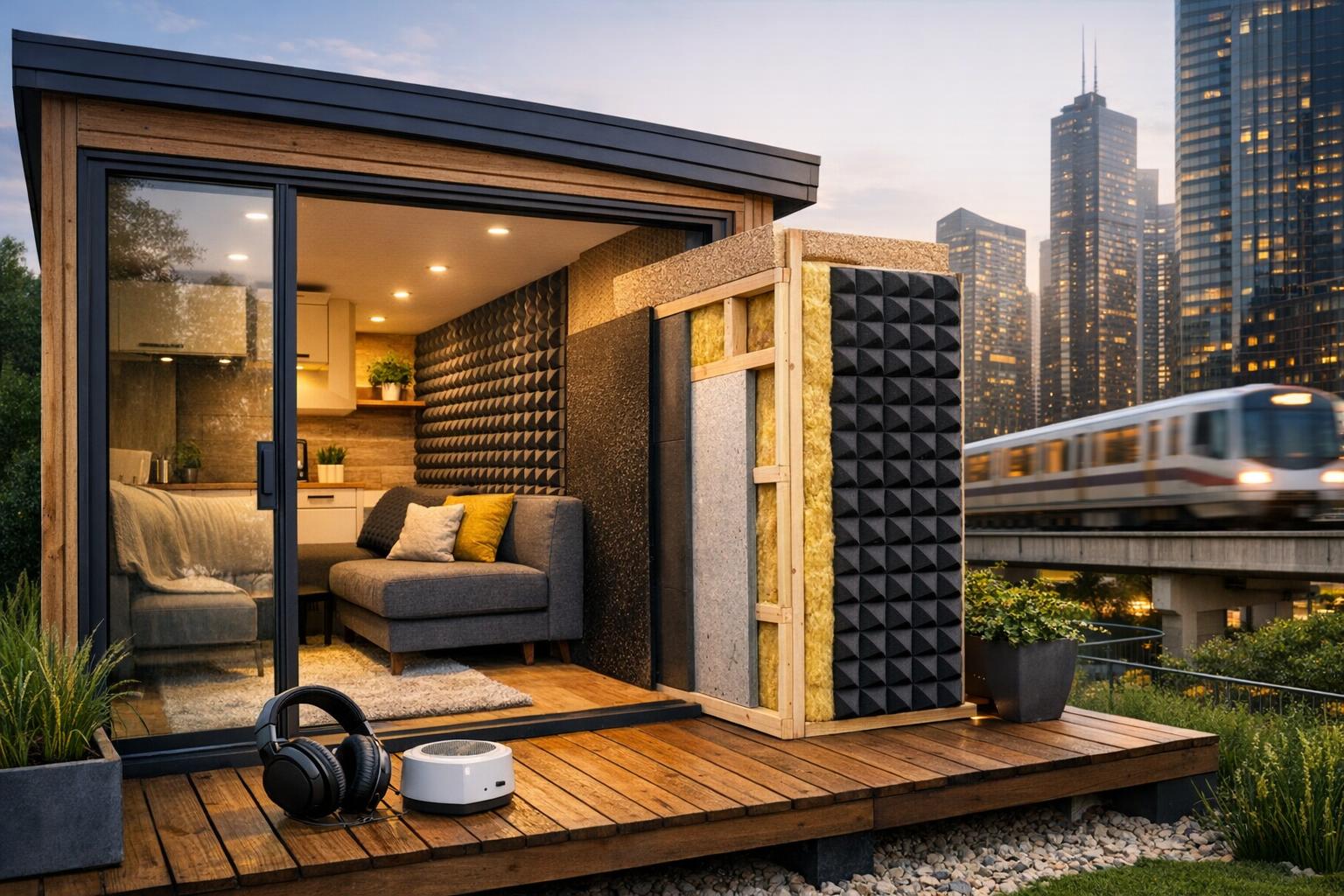
- Description: Metal strips placed between drywall and framing to decouple the wall and reduce sound transfer.
- Tip: Combine with quality insulation for maximum effect.
2. Double Stud and Staggered Stud Walls
- Double Stud Walls: Construct two separated walls to create a noise buffer.
- Staggered Stud Walls: Offset studs in a single wall to prevent straight sound bridging.
3. Sealing and Sound-Dampening Adhesives
- Technique: Seal all openings—windows, outlets, and wall seams—with acoustical caulk.
- Usage: Apply damping compounds between drywall layers to absorb vibrations.
Future construction trends will incorporate modular panels with integrated soundproofing and multi-functional wall systems. Learn more about innovative construction at Tiny Homes: Space Optimization, Cost-Effective Living, and Sustainable Design Explained.
Design Strategies for Quiet Tiny Homes: Urban Living, Tiny Home Soundproofing
Smart Layout Planning to Combat Urban Noise
- Room Placement: Designate quieter areas such as bedrooms and studies away from exterior walls, using buffer zones like kitchens or closets.
- Strategic Storage: Incorporate built-in shelving or wardrobes along noise-prone walls to add an extra layer of sound absorption.
- Landscaping: Use hedges, fences, or vertical planters as outdoor barriers to dampen incoming street noise.
- Dual-Purpose Features: Combine aesthetics with function—acoustic panels can double as modern wall art, for example.
For more insights on function and design, read our guide on Mini Homes: The Ultimate Guide to Compact Living, Downsizing, and Urban Style.
Additional tips on outdoor noise control are available in our article on Landscaping Ideas for ADUs: Creative and Practical Strategies to Boost Curb Appeal in Canadian Gardens.
Case Studies / Examples: Quiet Tiny Homes & Construction 2025 Innovations
Example 1: Urban Quiet Pod in Downtown Toronto (Hypothetical)
- Challenge: Constant noise from a nearby transit corridor affecting the dwelling.
- Solution: Implementation of double stud walls with mineral wool insulation, resilient channels, eco-friendly acoustic panels, and reinforced sealing around openings.
- Result: Interior noise levels dropped from 65 dB(A) to 39 dB(A), creating a tranquil living environment.
Example 2: Vancouver Green Micro-Loft (Hypothetical)
- Challenge: A compact design with shared party walls in a high-density area.
- Solution: Integration of recycled denim insulation, triple-sealed windows using modern adhesives, and an acoustic garden buffer with vertically planted planters.
- Result: A calm and comfortable living space despite a bustling neighbourhood.
These examples illustrate how the incorporation of energy-efficient materials and innovative construction methods lead to quiet, sustainable tiny homes. For additional inspiration, visit How Tiny Home Communities Are Redefining Affordable, Eco-Friendly, and Communal Living.
Benefits of Effective Tiny Home Soundproofing: Noise Solutions & Urban Living
- Enhanced Comfort and Privacy: Effective soundproofing keeps unwanted street and neighbor noise at bay.
- Mental Health and Well-Being: Reduced noise levels contribute to lower stress and better sleep, as supported by research (source).
- Higher Property Value: Soundproofing increases the desirability of your home in competitive urban markets.
- Environmental Benefits: Utilizing sustainable, eco-friendly materials can also help reduce your home’s carbon footprint.
Conclusion: Building Peace of Mind for Urban Living with Construction 2025 Soundproofing
Urban noise pollution poses significant challenges, particularly for those living in high-density areas. In tiny homes, effective soundproofing is not just about comfort—it’s a crucial element in ensuring privacy, well-being, and sustainable living.
Challenge: Intrusive outdoor noise can compromise the tranquility of even the smallest living spaces.
Solution: Employ a combination of advanced soundproofing materials, smart construction techniques, and thoughtful interior design.
Vision: As we move towards construction 2025, there is a strong focus on developing innovative techniques that ensure quieter, healthier urban homes.
Call to Action: Whether you’re building or renovating a tiny home, prioritize soundproofing to create a peaceful retreat amidst the urban hustle. Every Canadian deserves a sanctuary of calm.
Learn more about the impact of noise control with insights from studies (source, source, source).
Frequently Asked Questions
What is the best soundproofing material for tiny homes?
Many experts advocate for a combination of acoustic foam panels and mineral wool insulation to achieve effective noise reduction in compact spaces.
When should soundproofing be integrated during construction?
It is best to incorporate soundproofing measures during the design phase to ensure all potential noise bridges are addressed before the finishing touches are applied.
Are eco-friendly soundproofing materials as effective as traditional ones?
Yes, eco-friendly options like green composites have proven effective at absorbing sound while also reducing environmental impact.
Can soundproofing be retrofitted in an existing tiny home?
While retrofitting is possible, the best results are often achieved when soundproofing is integrated into the initial construction process.
Leave a Reply