

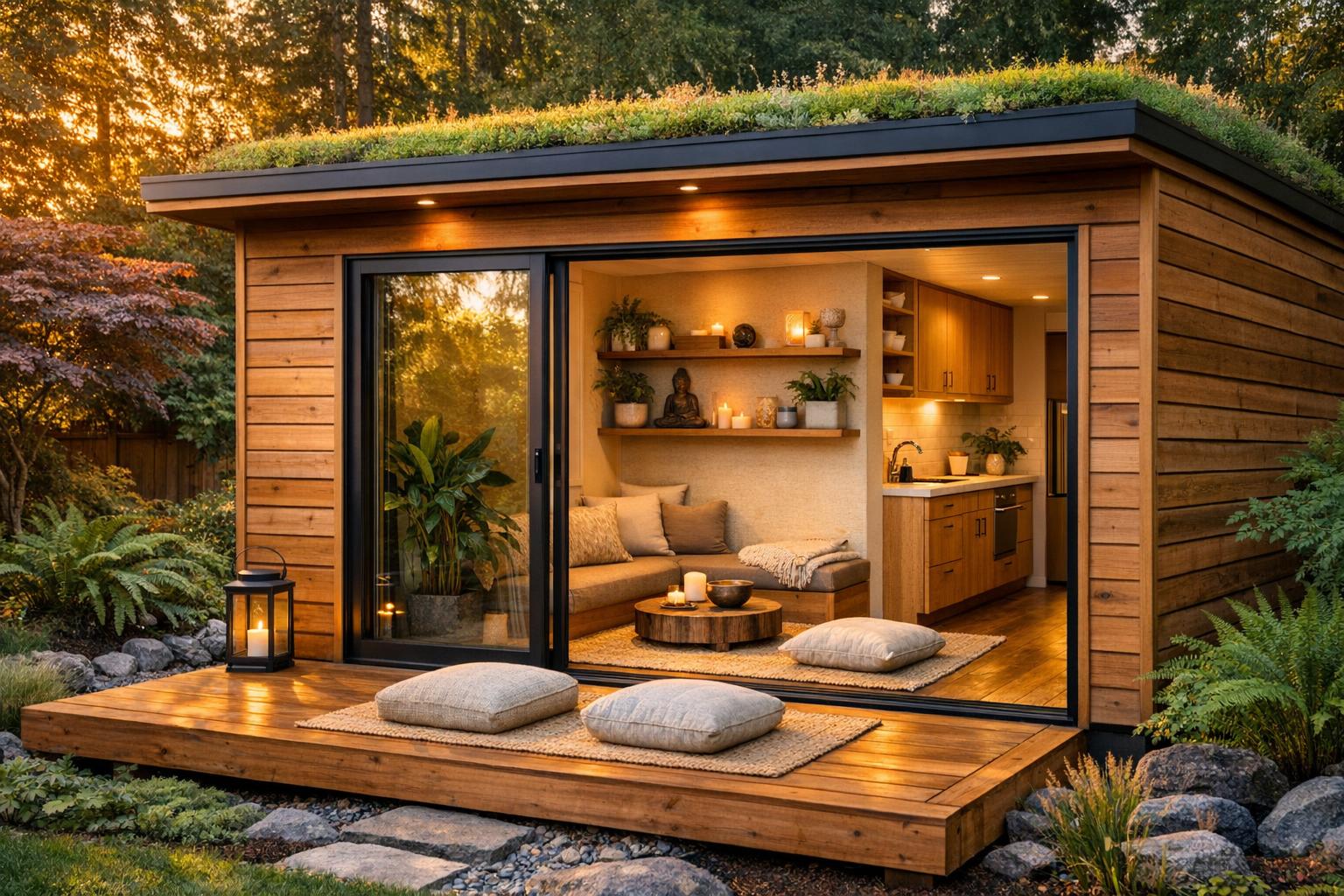
Estimated reading time: 14 minutes
Key Takeaways
- Wellness design helps tiny homes and ADUs feel less cramped by improving light, flow, privacy, and sensory comfort.
- Wellness-focused residential design and ADU design trends increasingly prioritize daylight, ventilation, calming materials, and retreat-like layouts.
- Mental health in compact living improves when homes support circadian rhythm, reduce clutter, protect privacy, and include simple biophilic elements.
- Budget matters, but strategy matters more. Even modest upgrades like blackout curtains, low-VOC paint, layered lighting, and better storage can have a meaningful effect.
- Canadian realities such as cold-climate ventilation, urban density, multigenerational living, and local ADU code variation should shape every design decision.
Table of contents
- What Wellness Design Means in Tiny Homes and ADUs
- Why Mental Health Should Drive Tiny Home and ADU Design
- Layout and Spatial Strategies for Calm in Tiny Homes and ADUs
- Light, Views, and Circadian Support in Wellness Design
- Biophilic Elements That Reduce Stress in Small Spaces
- Privacy Solutions for Compact Living
- Materials, Finishes, and Indoor Air Quality That Support Mental Health
- Sound, Sensory, and Thermal Comfort in Tiny Homes
- Storage, Decluttering, and Daily Rituals for Stress Reduction
- Budget-Friendly to High-End Wellness Design Upgrades
- Case Studies and Mini Floor Plan Examples
- Room-by-Room Wellness Design Checklist
- Recommended Products and Trusted Resources
- Implementation Roadmap for 2026
- Conclusion and Next Steps
- Frequently Asked Questions
Wellness design can help tiny homes and ADUs feel far more restorative than their square footage suggests. When compact living is planned around mental health, even a 300–800 sq ft home can support better sleep, lower stress, and calmer daily routines through better light, stronger privacy, cleaner flow, and simple natural elements.
This guide is for homeowners, ADU designers, tiny-home builders, renters improving small spaces, and even therapists or care professionals who advise clients on supportive environments. By 2026, wellness design trends are helping turn small dwellings into sanctuaries with more daylight, better ventilation, calming palettes, and retreat-like layouts. At the same time, evolving ADU design trends homeowners are loving, smart, sustainable, livable ADU strategies, and the growing appeal of tiny home living benefits all point in the same direction: small can still feel deeply supportive.
You will also find practical strategies informed by compact-space planning, including smart storage design and better privacy design for tiny homes in Canada.
What Wellness Design Means in Tiny Homes and ADUs
Wellness design is a whole-home approach that shapes a space to support physical comfort, emotional calm, clear thinking, and healthy routines. In tiny homes and ADUs, this matters even more because every choice is amplified.
Bad light, clutter, noise, and weak privacy solutions feel stronger when there is less room to escape them.
In compact living, wellness design rests on seven core principles:
- daylight and circadian support
- nature connection and biophilic elements
- visual and acoustic privacy solutions
- clutter reduction and simplicity
- healthy materials and indoor air quality
- sensory balance, including sound, texture, glare, and temperature
- flexibility for changing routines and users
The link to mental health is simple. A well-planned small home can reduce cognitive overload, help the body wind down at night, lower overstimulation, and make daily life feel safer and easier.
Wellness design does not always mean more square footage. It means better decisions inside the square footage you already have.
Think of a before-and-after example.
Before:
A cramped 300 sq ft loft has glare from one harsh window, exposed storage, poor zoning, and no place to retreat. The whole home feels chaotic.
After:
The same space gets a skylight, built-in storage, soft finishes, a few plants, and a screened sleeping area. Suddenly, it feels calmer, brighter, and more usable.
That is the power of wellness design trends in compact homes. It also aligns with current ADU design ideas and the broader value of intentional tiny home living.
Why Mental Health Should Drive Tiny Home and ADU Design
Mental health should not be treated as a nice extra. It should be a design goal from the start.
Tiny homes can support wellbeing because they are often easier to clean, simpler to maintain, and more intentional. But they can also create stress. Noise spreads fast. Clutter is always visible. Sleep can suffer. Personal space can disappear.
Different users need different supports:
- Solo dwellers: need visual calm, focus zones, and routines that reduce fatigue and isolation
- Couples: need stronger privacy solutions for work, sleep, and quiet time
- Caregivers and multigenerational households: need flexible zones and retreat areas to reduce burnout
- Aging-in-place residents: need good lighting, low-stress circulation, and easy ground-floor access
The mental-health mechanisms are practical:
- natural light can support circadian rhythm and mood
- plants and nature cues can help restore attention
- retreat spaces can improve emotional regulation and sleep
- organized storage can reduce visual stress and decision fatigue
Some wellness-oriented trend reports tie light, privacy, sensory comfort, and biophilic design to lower anxiety and better sleep. In compact homes, even small gains can feel meaningful because the space affects you all day. Some sources describe trend-linked reductions in anxiety in the 20–30% range when small homes prioritize light, privacy, and nature connection, but this should be understood as supportive design framing, not a medical guarantee.
For more context, see ADU design trends for 2026, luxury home wellness trends for 2026, homeowner-loved ADU trends, and Canadian perspectives on the psychology of tiny homes and tiny homes and mental health in Canada.
Layout and Spatial Strategies for Calm in Tiny Homes and ADUs
Layout is one of the strongest tools in wellness design because it shapes how the home feels every hour of the day. Good layout lowers stress by reducing friction.
In small spaces, zoning means giving each area a clear job and emotional role, even when one room serves many uses.
A helpful five-zone structure for tiny homes and ADUs looks like this:
- Entry / transition zone
Use hooks, a tray, a bench, or a slim shelf. This catches clutter early and signals arrival. - Living / working zone
Place this near the best daylight and best view. Keep distracting storage out of sight if possible. - Sleeping zone
Put this in the most shielded part of the home, away from the entry and kitchen noise. - Restorative nook
Add a reading chair, meditation cushion, plant corner, or window seat. - Service zone
Group the kitchen, bath, laundry, and storage for efficiency.
Good flow reduces stress because it creates:
- fewer obstacles
- clear sightlines
- easier cleaning
- less object-shuffling
- intuitive movement from entry to storage to living to sleep
To make a compact home feel bigger, try these moves:
- use the same flooring through most of the home for visual continuity
- limit upper cabinets so walls feel lighter
- line up furniture to protect long views
- use taller ceilings, clerestory glazing, or vertical storage
- choose leggy or floating furniture to show more floor area
Multifunctional furniture should support wellbeing, not create mess. Good examples include:
- a built-in bench with hidden storage
- a Murphy bed that opens only at night
- a dining table that doubles as a desk only if cords and supplies can be hidden quickly
A simple example floor plan for a 450 sq ft ADU:
- 10% entry and mudroom
- 40% open living and kitchen facing the best view
- 30% bedroom
- 20% restorative nook and flexible circulation
- sliding partitions to create separation when needed
This kind of layout supports mental health because each area has a purpose, and the home asks less of the brain. Related ideas appear in livable ADU planning for 2026, the tiny house design guide for 2026, Canadian guides to tiny home design, modular furniture, and smart furniture for ADUs.
Light, Views, and Circadian Support in Wellness Design
Light is one of the highest-impact ways to improve mental health in tiny homes. Poor lighting makes small spaces feel cave-like, cluttered, and tiring very quickly.
Natural daylight strategy
Where possible, place windows to capture useful morning and daytime light. In many Canadian settings, south and east exposures are especially valuable.
Use a few well-placed larger windows instead of many small ones that break up the walls and views. If privacy is tight, clerestory windows and skylights can bring light deeper into the space while protecting wall space.
Helpful daylight ideas:
- prioritize one strong living-area window over several weak ones
- use clerestory glazing in narrow ADUs
- add a skylight over kitchens or sleeping zones where walls are limited
- bounce daylight with light walls, but avoid shiny surfaces that create glare
Views and visual calm
Views matter. A framed look at trees, sky, a garden, or even a planted privacy screen can make a small interior feel much less confined.
If your view is poor, create a better one:
- add a trellis with climbing plants
- place a window box outside the main window
- use privacy planting to control what the eye sees
- focus seating toward the best outlook
Circadian-friendly artificial lighting
Circadian lighting is lighting that changes brightness and colour temperature to better support the body’s daily rhythm.
A simple approach:
- brighter, cooler light in the morning and daytime
- warmer, dimmer light in the evening
Useful targets:
- 300–500 lux for many daytime tasks
- 400+ lux in living or work zones where alertness matters
- tunable LEDs around 2700–6500K
- daytime often in the 3000–5000K range
- warmer evening settings closer to 2700K
Use layered lighting:
- ceiling light for general brightness
- task lights for work and cooking
- low warm lamps for evening wind-down
For privacy solutions that still allow light, use:
- translucent glazing in bathrooms
- top-down/bottom-up shades
- sheer curtains with blackout panels
- reeded or frosted glass in sleeping areas
In compact homes, better light is not just about seeing better. It can support mood, routine, and sleep. See related thinking in ADU trend reports, wellness design trends for 2026, smart and livable ADU design, and Canadian advice on tiny home light design.
Biophilic Elements That Reduce Stress in Small Spaces
Biophilic elements are features that connect the home to nature. This can include plants, natural materials, daylight, airflow, organic shapes, and views of greenery or sky.
Biophilia matters in tiny homes because small interiors can become sterile and overly practical. Nature softens that feeling. It adds life, texture, and visual recovery.
Plants
Start small. Two or three healthy plants are better than a crowded jungle.
Good options for compact homes:
- pothos
- snake plant
- ZZ plant
- peace lily
- Norfolk pine
- ferns if humidity and light are right
Natural materials
Use a few honest, tactile finishes:
- wood cabinetry
- sealed wood shelving
- linen curtains
- wool rugs
- matte stone-look or mineral finishes
Organic forms and patterns
Nature is not only about plants. It is also about shape and texture.
Try:
- rounded table edges
- woven baskets
- leaf or branch patterns in moderation
- biomorphic shapes instead of sharp heavy forms
Indoor-outdoor connection
Even a small outdoor link helps.
- a window seat facing a tree
- planter boxes outside key windows
- a small deck or patio for an ADU
- visible landscaping from the bed or sofa
Integrated planting
If maintenance is realistic, plants can be built into the design:
- ledges near windows
- planters in millwork
- a small living wall only if ventilation and care are manageable
Do not overdo it. Too many plants can become clutter. Water features may raise moisture and maintenance issues in tiny homes.
Biophilic elements are often associated with stress reduction, better attention, and a fresher feeling indoors. Some trend-based sources cite stress drops around 15%, but again, the best way to frame this is as supportive, not guaranteed. Explore more through biophilic design for tiny home wellness, green roof ideas for tiny homes in Canada, and pollinator garden ideas for ADUs.
Privacy Solutions for Compact Living
Lack of privacy is one of the biggest hidden stressors in tiny homes. One small footprint may need to support sleeping, working, caregiving, and social time all in the same day.
Visual privacy solutions
These help create boundaries without making the home feel boxed in:
- pocket doors
- sliding panels
- open shelving as partial dividers
- curtains on ceiling tracks
- frosted or reeded glass
- sofa backs used to define lounge zones
- loft edge screens where lofts are allowed
Acoustic privacy solutions
Acoustic comfort matters just as much as sightlines. STC means Sound Transmission Class. It is a rating for how well a wall or door blocks sound. Where budget and construction allow, STC 50+ is a useful benchmark for stronger bedroom or work-room separation.
Helpful sound-control steps:
- insulation in interior partitions
- resilient channels or decoupling where possible
- mass-loaded vinyl in targeted assemblies
- acoustic panels disguised as art
- rugs, curtains, and upholstered seating
- solid-core doors
- door seals
Outdoor privacy solutions
ADUs often sit on shared lots, so exterior privacy matters too.
- fences and trellises
- layered planting
- strategic window height and placement
- semi-private patios
- screened porches
- sheltered entry courts
Flexible privacy solutions work especially well in small homes. A curtain, screen, or sliding panel can create retreat space when needed, then disappear. That kind of boundary can reduce stress, support concentration, improve sleep, and lower friction between people sharing a compact home.
Useful related reading includes tiny home privacy strategies, soundproofing tiny homes in Canada, and noise reduction in Canadian housing.
Materials, Finishes, and Indoor Air Quality That Support Mental Health
In a small footprint, materials affect mood more intensely because you are always close to them. The wall finish, flooring sheen, and textile texture are never far away.
A healthy material strategy aims to reduce:
- off-gassing
- glare
- sensory fatigue
- visual noise
Good choices include:
- low-VOC or zero-VOC paints
- sealed wood finishes with lower-emission products
- cotton, linen, and wool textiles where budget allows
- matte or low-sheen surfaces instead of glossy finishes
- simple patterns instead of many competing prints
Indoor air quality is especially important in tiny homes and ADUs because they are often tightly sealed. In cold Canadian climates, efficient envelopes are common, which means fresh-air planning matters even more.
Priority steps:
- use an HRV or ERV in airtight builds; these are ventilation systems that bring in fresh air efficiently
- add a compact HEPA unit in retrofit spaces or allergy-prone homes
- make sure kitchen and bathroom exhaust fans are strong enough and quiet enough to actually use
Canadian readers should also remember that building code, energy rules, and ADU requirements can vary by province and municipality. Always verify local standards for ventilation, egress, and occupancy.
Low-VOC paint lines such as zero-VOC options on the market can be useful reference points, but the bigger principle is simple: choose low-emission, low-glare, easy-to-live-with finishes. For more, review air quality in tiny homes, tiny home air quality in Canada, and eco-friendly building materials in Canada.
Sound, Sensory, and Thermal Comfort in Tiny Homes
Wellness design is multisensory. A home can look lovely and still undermine mental health if it is noisy, too hot, too cold, too bright, or physically irritating.
Sound comfort
Reduce echo and transfer with:
- insulation in partitions and floor assemblies
- underlayment beneath hard flooring
- rugs and curtains
- soft seating
- acoustic wall panels
- quieter appliances where possible
Thermal comfort
Temperature swings feel bigger in small homes.
Helpful strategies:
- strong insulation and air sealing
- exterior shading for summer heat
- radiant heat for stable comfort in colder climates
- programmable thermostats to smooth out swings
Sensory balance
Keep the space gentle on the senses:
- use a muted, cohesive palette
- limit sharp contrast and visual clutter
- layer just a few textures well
- avoid strong synthetic scents in sealed rooms
Chronic noise and thermal discomfort can increase irritability and fatigue. Calm sensory input makes it easier to focus, rest, and recover after a busy day. See also livability upgrades for tiny homes in Canada, eco-friendly heating for ADUs, and heat pump guidance for tiny homes.
Storage, Decluttering, and Daily Rituals for Stress Reduction
Clutter is not just a style problem in tiny homes. It is a stress problem. Every object competes for limited visual and physical space.
A useful storage hierarchy is:
- daily-use items: easy to reach at point of use
- weekly-use items: concealed storage
- seasonal or backup items: overhead, under-bed, or less accessible storage
A strong target is to keep about 80% of belongings in hidden or enclosed storage so the room can visually rest.
Other practical rules:
- create an entry drop zone to stop clutter at the door
- avoid open shelving unless it is curated and easy to keep neat
- use built-ins where possible
- choose furniture that hides mess, not just moves it
A compact version of KonMari works well here:
- keep only what is useful or meaningful
- assign every item a home
- do a 10-minute reset each week
- do not buy “space-saving” products that only help store excess
Daily rituals also support mental health. In a small home, a ritual gives the space a calm rhythm.
Examples:
- a tea or coffee nook for mornings
- a reading corner by a window
- a cushion in a screened corner for breathing or prayer
- a basket for devices in the evening to protect sleep
When storage and ritual are designed together, the whole home feels less demanding. Explore more through the tiny house design guide, tiny home storage solutions, and a minimalist living guide for Canada.
Budget-Friendly to High-End Wellness Design Upgrades
You do not need a full rebuild to improve wellness design. The best approach is to match upgrades to your budget and solve the biggest stress points first.
Quick wins: about CAD $500–$2,000
- add plants
- repaint with low-VOC calming colours
- install curtains and blackout layers
- add rugs and soft furnishings for acoustics
- improve task lighting and bulb colour temperature
- reorganize storage
- create one restorative nook
Mid-range upgrades: about CAD $5,000–$15,000
- install tunable LED fixtures
- replace key windows for better daylight and privacy performance
- add built-in storage
- install pocket or sliding doors
- upgrade bathroom and kitchen ventilation
High-end upgrades: about CAD $20,000+
- add skylights or clerestories
- install HRV or ERV systems
- add custom millwork and sliding partitions
- complete major insulation or acoustic improvements
- build integrated biophilic elements such as custom planter joinery
The smart order is:
- solve light, privacy solutions, clutter, and sleep first
- improve acoustics and ventilation next
- then invest in premium finishes and architectural upgrades
This order usually gives the biggest wellbeing return for the money.
Useful references include ADU build costs in Canada and hidden ADU construction costs.
Case Studies and Mini Floor Plan Examples
These examples show how wellness design can work in real compact homes.
Case study 1: Single-person tiny home, 300 sq ft, BC
Before:
A cluttered loft had weak daylight and no break between living and sleeping.
Interventions:
A skylight was added. Bench storage was built in. Two key biophilic elements were introduced: a tall plant by the main window and warm wood shelving. Finishes were changed to lighter matte surfaces. A small reading nook replaced unused clutter.
Outcome:
The home feels brighter, calmer, and easier to reset at the end of the day.
Related inspiration: tiny house design guide 2026 and tiny home light design.
Case study 2: Caregiver ADU, 600 sq ft, Ontario
Before:
The open plan created stress, noise transfer, and no place to step away.
Interventions:
Stronger privacy solutions were added through a sliding partition, better bedroom separation, ground-floor sleeping access, improved ventilation, layered lighting, and softer acoustic finishes.
Outcome:
The ADU now better supports caregiving routines and gives the resident a place to decompress.
See also ADUs for caregiving and flexible housing.
Case study 3: Couple’s micro-ADU, 450 sq ft, Alberta
Before:
Both people worked from home. Storage was weak. Sleep was often interrupted.
Interventions:
Circadian lighting was installed. Plants were added near the main window. A sliding partition separated work and rest. Blackout layers and sound-control details improved evenings.
Outcome:
The couple now has better boundaries, better storage, and calmer nights.
Additional reading: remote work retreat ideas in Canada.
In each case, the same design logic appears:
- improve daylight path
- place privacy partitions carefully
- concentrate storage
- use biophilic elements with restraint
- protect one restorative zone
Room-by-Room Wellness Design Checklist
Use this quick checklist to assess a compact home zone by zone. Score each area from 1 to 5 for:
- light
- privacy
- clutter control
- comfort
- nature connection
Then identify the top three changes to make first.
Entry
- hooks, tray, bench, and shoe storage
- immediate lighting
- visual calm
- clutter capture close to the door
Living / working zone
- good daylight access
- glare control
- sound absorption
- one or two biophilic elements
- charging and cable control
- daytime lighting in the 300–500 lux range where possible
Sleeping zone
- blackout option
- warm evening lighting
- strongest available privacy solutions
- noise control
- thermal comfort
Kitchen / bath
- effective ventilation
- low-VOC finishes
- easy-clean, low-clutter surfaces
- frosted glazing if needed
- quiet exhaust use
Outdoor edge or patio
- planted screen
- shaded sitting spot
- a private or semi-private view
- one micro-retreat area
Useful small-space details include hardy plants, frosted glazing, door seals, hidden storage, and tunable LEDs. See more in accessible design for tiny homes and ADUs and curbless entry guidance for tiny homes in Canada.
Recommended Products and Trusted Resources
This section is best used as a shortlist of practical categories, not a shopping list.
Helpful product types include:
- sliding or pocket door systems
- acoustic panels
- tunable LED bulbs or fixtures
- compact HEPA air purifiers
- low-VOC paint lines
- blackout curtains
- top-down/bottom-up shades
- hardy houseplants from local nurseries
Examples of known options in the market may include:
- NanaWall-style systems through Canadian suppliers
- Philips Hue for tunable lighting
- Dyson for compact HEPA units
- Para Paints and other low-VOC paint options
Also include trusted non-product resources when planning around mental health and compact housing:
- CMHA mental health resources
- local utility efficiency guides such as BC Hydro resources
- provincial code and zoning information for ADUs
The best resource mix combines wellness design guidance, technical building advice, and local rules. Helpful starting points include House Beautiful wellness design trends overview and a Canadian ADU regulations guide.
Implementation Roadmap for 2026
A clear sequence makes wellness design more manageable.
Week 1: Audit stress points
Look for:
- poor sleep
- glare
- clutter
- noise
- weak privacy solutions
- no retreat area
Week 2: Pick the top three interventions
Choose the changes with the biggest wellbeing return.
For many homes, that means:
- sleep and privacy
- daylight and lighting quality
- clutter and storage
Weeks 3–4: Complete fast fixes
Focus on:
- paint
- curtains
- storage resets
- better bulbs and lamps
- plant placement
Weeks 4–8: Complete moderate upgrades
This may include:
- partitions
- built-ins
- door upgrades
- ventilation improvements
Three to six months: Larger projects
These can include:
- structural window changes
- skylights
- major acoustic work
- full ADU planning
Ballpark timing and cost:
- small renovation: around 4–6 weeks and roughly $10,000
- full build or major redesign: 3–6 months and $150,000+
For Canadian projects, always check provincial and municipal requirements, especially for ADUs, energy performance, egress, ventilation, and accessibility. Good starting points include the Ontario ADU permitting guide, Canadian ADU regulations guide, and the British Columbia ADU permitting guide.
Conclusion and Next Steps
Wellness design can make tiny homes and ADUs feel calmer, healthier, and more supportive of mental health without adding more square footage. The goal is not perfection. It is to create a home that helps you rest, focus, and recover more easily.
The five highest-impact changes are clear:
- improve daylight and circadian lighting
- add biophilic elements
- create stronger privacy solutions
- reduce clutter with built-in or hidden storage
- improve air quality, acoustic comfort, and thermal comfort
Tiny homes work best when they are not just efficient, but restorative. With intentional choices, a compact home can feel bright, private, and deeply livable.
For final inspiration, revisit wellness design trends for 2026, popular ADU design trends, and Canadian resources on tiny homes and mental health and biophilic design for tiny home wellness.
Frequently Asked Questions
Can wellness design really make a tiny home feel bigger?
Yes. Better light, clearer zoning, hidden storage, and stronger sightlines can make a compact home feel more open and much less mentally crowded.
What is the best first upgrade for mental health in a small home?
If you only do one thing, improve the sleeping zone. Add blackout layers, warm evening lighting, clutter control, and better privacy. Sleep quality influences almost everything else.
Are biophilic elements expensive to add?
Not necessarily. A few healthy plants, natural textures, better window views, and wood or linen accents can create a strong effect without a major renovation.
How do I improve privacy in a studio-style ADU?
Use flexible privacy solutions such as curtains on ceiling tracks, sliding panels, frosted glass, partial dividers, and targeted acoustic upgrades like rugs, insulation, and door seals.
What matters most in Canadian tiny homes and ADUs?
Ventilation, insulation, moisture control, and code compliance matter a great deal. Cold-climate comfort and local rules around ADUs, egress, and occupancy should always be checked before major work.
Do I need a designer to apply wellness design principles?
No, not always. Many improvements are approachable for homeowners and renters, especially lighting, decluttering, privacy, storage, and plant placement. A designer becomes more useful when layout, windows, ventilation, or custom millwork are involved.
Leave a Reply