

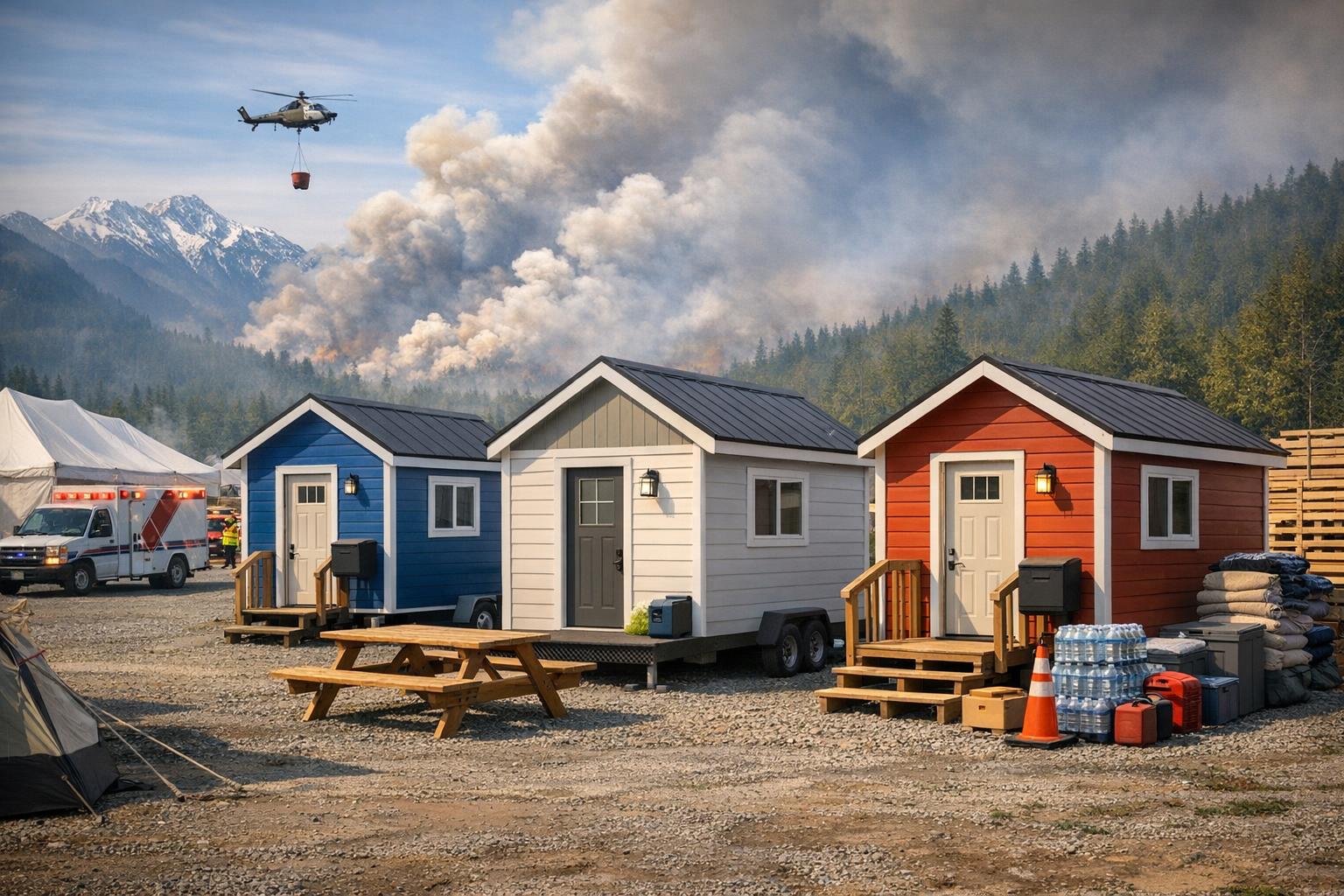
Emergency Tiny Home Shelters: Transforming Temporary Housing for Canadian Disasters
Estimated reading time: 8 minutes
Key Takeaways
- Rapid Deployment: Emergency tiny home shelters enable swift construction and relocation, reducing time spent in unsafe conditions.
- Cost-Effective Solutions: With significantly lower costs compared to traditional shelters, these units expand housing capacity during disasters.
- Adaptability and Mobility: Both tiny homes and ADUs provide flexible, modular options that adapt to changing disaster scenarios.
- Resilience and Community Focus: Thoughtfully designed blueprints foster supportive communities while withstanding harsh Canadian weather.
- Policy and Regulatory Shifts: Streamlined zoning and permitting can accelerate emergency responses and pave the way for long-term resilience.
Table of contents
- Overview of Emergency Shelters in Disaster Situations
- The Role of Tiny Homes in Canadian Disasters
- ADU Resilience and Its Contributions to Emergency Housing
- Blueprints and Models for Temporary Housing Using Tiny Homes and ADUs
- Challenges and Considerations
- Future Outlook and Policy Recommendations
- Conclusion
- Frequently Asked Questions
Overview of Emergency Shelters in Disaster Situations
When disaster strikes, communities need immediate, secure shelter. Traditional solutions such as tents and temporary structures or converted facilities often fall short due to limited infrastructure, slow setup, and the psychological toll on residents. New approaches, like emergency tiny home shelters and ADU resilience, are rapidly transforming this landscape.
For more insights on emergency response models, refer to ShelterBox Canada and explore the tiny home living benefits for design and lifestyle improvements.
The Role of Tiny Homes in Canadian Disasters
Tiny homes have proven their ability to adapt to crisis situations across Canada. They offer:
- Rapid Construction and Deployment: Areas affected by disasters, such as after the wildfires of 2025, have seen tiny homes erected in a fraction of the time required for traditional construction. Learn more at Deep Blue Home.
- Cost-Effectiveness: With construction costs around one-tenth that of conventional homes, these shelters make it feasible for cities and NGOs to reach broader communities. Additional details can be found here.
- Mobility and Adaptability: Designs featuring homes on wheels or modular units can be relocated as needed. For more on portable living solutions, visit ADU Start.
- Climate Resilience: Engineered to combat Canadian winter challenges, these shelters incorporate robust insulation and heating systems. Guidelines on winterization are available at this checklist, while resilient structures are highlighted at Axcess Box.
ADU Resilience and Its Contributions to Emergency Housing
Accessory Dwelling Units (ADUs) are essential complements to tiny homes, doubling as rapid emergency shelters while offering long-term housing benefits. ADUs, whether detached backyard suites, converted garages, or purpose-built modular cottages, provide:
- Dual Functionality: They serve as both regular housing and as immediate shelters during disasters.
- Standardization and Speed: Prefabricated ADUs allow for rapid deployment. Read about these designs on Deep Blue Home.
- Economic Efficiency: With lower costs per square foot, ADUs make it viable to expand emergency capacity. For comprehensive guides, check out this ADU guide and perspectives on backyard suites at ADU Backyard Cottages.
Blueprints and Models for Temporary Housing Using Tiny Homes and ADUs
Smart, flexible blueprints are at the heart of resilient emergency housing. Key design principles include:
- Modular Scalability: Prefabricated modules that can be stockpiled and rapidly assembled.
- Durable Materials: Using insulated walls, triple-pane windows, and weather-resistant roofing to withstand Canadian extremes.
- Rapid Assembly: Simplified foundations and plug-and-play systems streamline utility hookups.
- Community-Oriented Layouts: Arrangements that encourage shared facilities and safe, supportive neighborhoods. For design inspiration, visit ADU Accessible Design and explore community models at Tiny Home Community Startups.
Further design insights are available at Deep Blue Home and Axcess Box.
Challenges and Considerations
Implementing emergency tiny home shelters and ADUs is not without difficulties. Key challenges include:
- Regulatory and Zoning Barriers: Restrictive zoning laws and stringent building codes can delay shelter deployment. A comprehensive guide is available at ADU Permitting in Ontario.
- Infrastructure Hurdles: Rapid utility hookups and winterized systems are vital. For more details on emergency utility setups, refer to Axcess Box Emergency Shelters.
- Community Acceptance: Transparent communication is essential to ensure residents understand that temporary shelters are meant for emergency use only.
- Supply Chain and Delays: Fluctuating material costs and logistical challenges can postpone projects, as seen in the Chatham-Kent initiative reported by Chatham News.
Future Outlook and Policy Recommendations
As climate change intensifies, scalable and resilient shelter models will be critical in disaster response. Strategic policy shifts are needed, including:
- Advance Zoning Reforms: Establish fast-track approval mechanisms for emergency shelter projects.
- Regional Stockpiling: Develop inventories of modular units for immediate deployment in crisis zones.
- Integrated Disaster Planning: Align tiny home and ADU strategies with municipal and provincial emergency response plans.
- Innovation Incentives: Invest in research for ultra-efficient, renewable energy-equipped homes. More on policy can be read at Canada Federal Housing Policy 2025.
Looking ahead, these initiatives combined with community support will transform emergency responses and serve as a model globally. For additional context, visit ShelterBox Canada and Deep Blue Home.
Conclusion
In a future marked by frequent and severe disasters, emergency tiny home shelters offer a transformative solution by providing rapid, affordable, and resilient temporary housing. Their integration with ADU models advances community stability and supports quicker recovery.
By embracing innovative designs, clear policy reforms, and proactive planning, Canadian communities can reduce risks and safeguard lives. The success of initiatives like Chatham-Kent’s tiny cabin project underscores the importance of investing now for a safer future.
Frequently Asked Questions
Q: What makes emergency tiny home shelters an effective solution during disasters?
A: They enable rapid deployment, are cost-effective, and are designed to withstand Canada’s extreme climates while fostering community resilience.
Q: How do ADUs complement tiny homes in emergency housing?
A: ADUs provide additional, standardized housing that can quickly be adapted for emergency use, ensuring both immediate shelter and long-term support for displaced residents.
Q: What policy changes are necessary to support these shelter models?
A: Revisions in zoning laws, fast-tracked permitting processes during emergencies, and increased investment in modular housing stockpiles are key to effective implementation.
Leave a Reply