

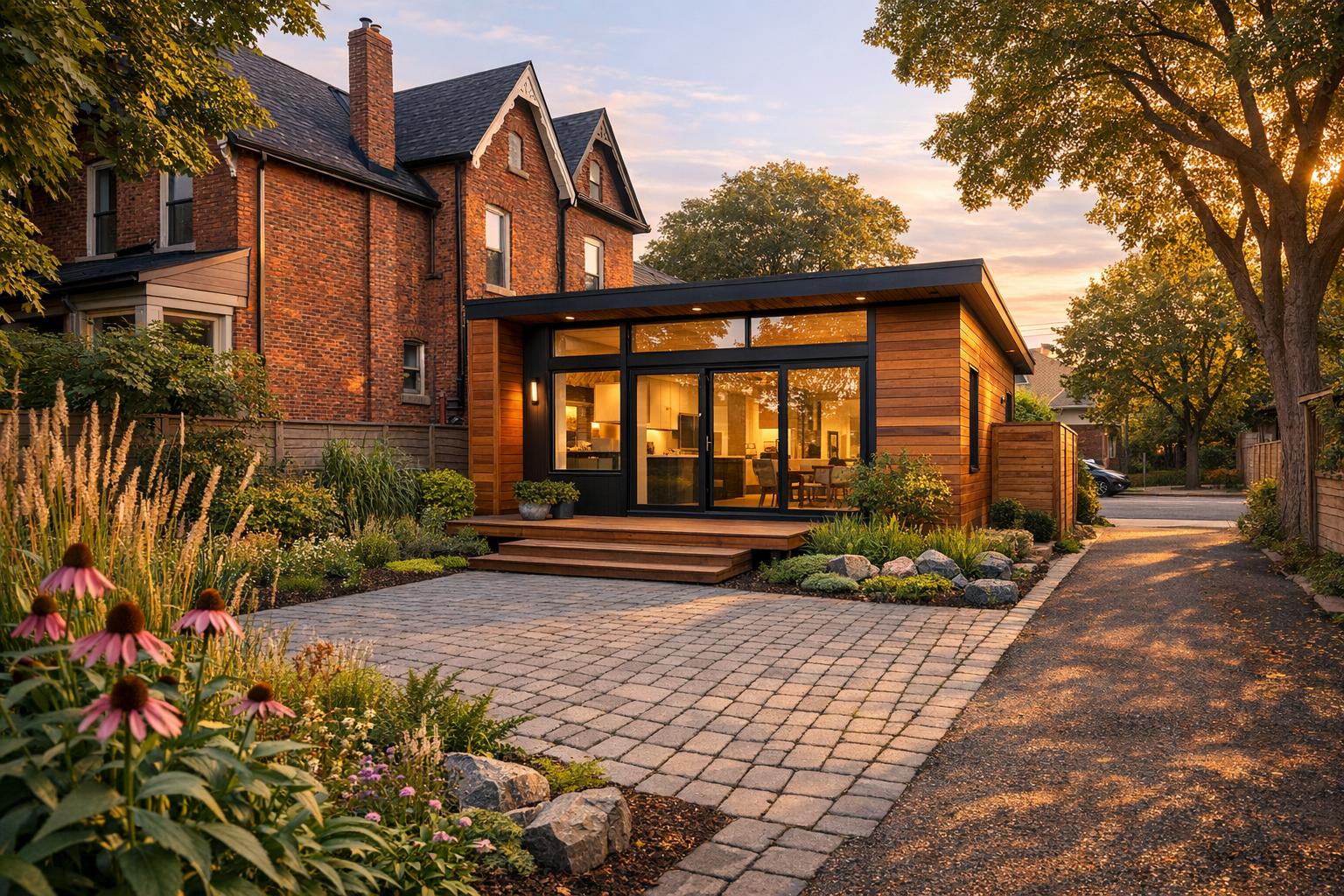
Urban Infill and Alley ADUs in Canadian Cities: A 2026 Guide to Compact Living, Costs, and Approvals
Estimated reading time: 11 minutes
Key Takeaways
- Urban infill is helping Canadian cities add homes inside existing neighbourhoods instead of expanding outward.
- An alley ADU is a small detached secondary home at the back of a lot, often accessed by a lane or laneway.
- These homes matter in 2026 because they support gentle density, rental income, multigenerational living, and more efficient land use.
- Approval depends on zoning, servicing, lot conditions, title restrictions, and local permit rules, not just whether a lot has rear-lane access.
- Typical costs in Canada often range from $200,000 to $400,000 CAD, with total timelines commonly around 6 to 18 months.
- Well-designed alley ADUs can improve affordability, support compact living, and align with broader city planning goals around equity, democracy, and housing choice.
Table of Contents
- Why Urban Infill and Alley ADUs Matter in 2026
- Alley ADUs in Canadian Cities: Where the Trend Is Growing
- Alley ADU Rules: Zoning, Permits, and Approval Steps
- Designing an Alley ADU for Compact Living
- What an Alley ADU Costs in Canada and How Long It Takes
- Real Alley ADU and Infill Examples from Canadian Cities
- How Alley ADUs Fit into City Planning Goals
- How to Get Involved in an Alley ADU Project
- Common Alley ADU Mistakes to Avoid
- FAQ: Urban Infill and Alley ADUs in Canadian Cities
- Resources for Starting an Alley ADU Project
- The Future of Urban Infill Is Already in the Alley
Urban infill is turning forgotten lanes into real housing in Canadian cities. In 2026, more rear alleys and service lanes are being reused for small homes as cities face housing shortages, rising costs, and a lack of buildable land. This guide explains how an alley ADU works, why it matters, what approvals you may need, what it can cost, and how homeowners or small developers can get started.
It is part of a bigger shift toward adding homes inside existing neighbourhoods instead of pushing growth farther out, a shift closely tied to research on urban infill, equity, and democratic city-building.
This guide is for:
- Homeowners who want rental income or space for family
- Small developers looking at gentle-density projects
- Architects and designers working on compact living
- People following city planning changes in Canadian cities
- Non-experts who want simple, clear explanations
Why Urban Infill and Alley ADUs Matter in 2026
Urban infill means adding new homes inside built-up neighbourhoods on land that is already serviced but underused. That could mean a rear yard, a corner lot, or a site behind an existing house. Instead of building outward onto undeveloped land, urban infill makes better use of land that cities already have.
An alley ADU is a small secondary home at the back of a lot, usually reached from an alley, lane, or laneway. Depending on the city, it may also be called a laneway house, coach house, garden suite, or detached secondary suite.
Why does this matter in 2026?
- An alley ADU can add one more home on an existing lot
- It supports compact living without changing a whole block into towers
- It gives homeowners space for parents, adult children, caregivers, or downsizing
- It can create rental income
- It uses oversized backyards and lane-facing land more efficiently
For cities, the value is bigger than one property. Alley ADUs support city planning goals like lower sprawl, better land use, and more homes near transit, schools, shops, and parks. This is often called gentle density: more housing added in a lower-impact way than large redevelopment.
There is also an equity benefit. Research shows ADUs can sometimes rent for about 25% to 50% below market rates, helping create more affordable homes and a fairer spread of housing options. They can also open up low-density areas that once had few choices beyond one large house per lot.
Alley ADUs are not only a design trend. They are a practical housing tool.
This broader shift is reflected in municipal infill strategies such as Saskatoon’s and in growing public interest around urban infill and tiny-home-style ADU development. In Ontario, municipalities have also been required to permit attached or detached ADUs on residential lots, helping normalize these homes.
Alley ADUs in Canadian Cities: Where the Trend Is Growing
There is no single Canada-wide process for an alley ADU. Rules vary by municipality, and sometimes by zone, lot shape, or local overlay. Some Canadian cities have made rear-lane housing fairly normal. Others are still changing their rules.
Here is the broad picture:
- Vancouver
Vancouver is the benchmark. Laneway houses have been allowed since 2009, and the city has produced more than 1,000 units. In many neighbourhoods, rear-lot housing is now an established urban infill pattern. - Toronto
Toronto allows coach houses and garden suites. Provincial reforms, including Bill 23, helped speed up housing approvals more broadly. Toronto’s approach shows how alley ADU-style infill connects to wider city planning and neighbourhood intensification. - Calgary
Calgary’s R-CG district supports more flexible grade-oriented infill. In some cases, up to six units may be allowed on a lot, including ADUs. This makes Calgary a key example of low-density zoning becoming more flexible. - Ottawa and Montreal
These cities show promise, but they can be more constrained. Ottawa has strong interest in missing-middle housing. Montreal often faces tighter form, heritage, and built-context limits. - Saskatoon and smaller cities
Smaller Canadian cities are also moving toward infill. Saskatoon has aimed for 10% of new growth to come from infill and projected 940 extra units by 2026 through policy and funding efforts. Still, servicing and infrastructure limits can slow projects.
Permissive municipalities usually share three traits:
- Clearer bylaws
- More predictable permitting
- More built examples that staff and neighbours understand
Restrictive municipalities often struggle with:
- Sewer and water capacity
- Narrow lots
- Servicing constraints
- Heritage controls
- Neighbourhood opposition
At the national level, housing pressure is pushing governments to support more infill and faster housing delivery. Federal financing momentum, including CMHC-backed housing announcements, signals support for more homes in existing neighbourhoods. Broader trend coverage also points to the rise of ADU-friendly neighbourhoods across Canada.
Still, one rule matters most: if something is allowed in one city, that does not mean it is allowed on your lot. Always check local rules first.
Alley ADU Rules: Zoning, Permits, and Approval Steps
The biggest mistake is assuming a rear-lane lot automatically qualifies for an alley ADU. It does not. Approval depends on zoning, lot shape, legal restrictions, servicing, and the local municipal process.
Zoning and land-use basics
Zoning decides whether a detached secondary unit is allowed. It also sets the rules for:
- Lot coverage
- Floor area
- Height
- Rear-yard setbacks
- Side-yard setbacks
- Distance between buildings
Cities may regulate the same kind of home under different names, such as laneway house, coach house, garden suite, or detached secondary suite. Even where the use is allowed, the size may be tightly controlled. In Vancouver-style contexts, for example, setbacks from the alley may be around 1.2 metres, but exact rules vary. Some lots also face limits on how much of the yard can be covered, often around 40% to 50% in some contexts. For Ontario-specific interpretations, guides like this ADU zoning overview can help frame the questions to ask your municipality.
Land title and legal constraints
A title search is a legal check on the property record. It helps you find problems before design work goes too far.
Watch for:
- Easements: legal rights that let utilities or others use part of the land
- Rights-of-way: legal access rights across a property
- Encumbrances
- Shared ownership issues
These can block foundations, underground service lines, or access routes. A rear yard that looks open may not be fully buildable. If you need a plain-language explanation, this Canadian ADU glossary is useful for decoding common terms.
Permits and technical approvals
A building permit is usually required. You may also need separate permits for:
- Plumbing
- Electrical
- Gas
- Demolition
- Tree removal
- Driveway, curb, or lane work
Some sites face extra review if they fall within:
- Heritage areas
- Special design districts
- Ravine or conservation zones
- Tree protection areas
In Toronto and similar design-control settings, built form, privacy, massing, and material choices may trigger added review. Documents such as Toronto urban design guidelines and practical resources like this Ontario ADU permitting guide show how layered approvals can become.
Access, parking, waste, and emergency needs
Lane access matters in more ways than people expect. Cities may review:
- Lane width
- Turning space
- Fire department access
- Garbage storage and pickup
- Snow clearing
- Safe site entry
Some municipalities waive parking for small ADUs, especially units under about 50 m², but this is not universal. Even if parking is waived, safe access still matters.
Utilities and servicing
Servicing is often the hidden issue that changes the whole budget.
Check:
- Water connection
- Sewer capacity
- Stormwater management
- Hydro or power supply
- Gas connection if used
- Metering needs
Older neighbourhoods may need upgrades, engineering review, or drainage plans. In places like Saskatoon, infrastructure strain can slow or complicate infill approvals. This is a major reason to review both local reports and practical checklists such as guides to utility connections for Canadian ADUs.
Typical approval path
A common process looks like this:
- Pre-application meeting with planning or building staff
- Preliminary zoning and site review
- Site survey and concept design
- Submission of drawings, elevations, site plan, and servicing details
- Permit review and revisions
- Trade permits if needed
- Construction inspections at key stages
- Final approval or occupancy
If your lot does not fully meet the rules, you may need a variance or committee hearing. That can add time and risk. This overview of ADU permits in Canadian cities can help you map what stage comes next.
Red flags that delay projects
- Easements or buried utility corridors
- Narrow lots
- Poor setbacks
- Shared service lines
- Major trees
- Drainage problems
- Heritage limits
- Assuming an old garage can be converted without code upgrades
Even in supportive Canadian cities, permitting can still take 3 to 6 months or more. If variances, redesigns, or servicing upgrades are needed, the process may be longer.
What to bring to a municipal meeting
- Property survey
- Title search
- Basic lot dimensions
- Photos of the alley and rear yard
- Rough concept sketches
- Questions about zoning, fees, timelines, parking, utility hookup, and inspections
If the city offers written pre-consult notes, ask for them. They can save time later.
Designing an Alley ADU for Compact Living
Compact living means making a smaller home feel useful, comfortable, private, and appealing. Size matters, but layout matters more. A well-planned small home can feel better than a poorly planned larger one.
Typical sizes and layouts
Common formats include:
- Studios of about 25 to 40 m²
- One-bedroom units of about 50 m²
- Loft or split-level layouts that use height well
- Ground-floor accessible plans for aging in place
These sizes often work best when every wall, stair, and storage zone has a job. Resources on the best-size range for ADUs in Canada can help homeowners avoid overbuilding or underplanning.
Space-saving ideas that work
Good compact living design often includes:
- Storage under stairs
- Built-in benches with storage
- Murphy beds
- Fold-out desks
- Pocket doors
- Combined kitchen-living spaces
- Custom millwork to reduce clutter
- Movable partitions for flexible rooms
These features make a small alley ADU feel calm, not cramped. Thoughtful storage ideas like those in this tiny-home storage guide can make a major difference.
Designing for alley conditions
Rear-lane homes face unique conditions. Good design responds to them directly.
Privacy
- Use fences and planting
- Add frosted glazing where needed
- Place windows carefully to avoid direct overlook
Light
- Use clerestory windows
- Add skylights
- Consider glazed doors or light wells
Noise
- Use stronger wall assemblies
- Choose insulated windows
- Add acoustic protection on the lane-facing side
Entry design
- Make the front door clear and welcoming
- Avoid making the home feel like leftover backyard space
A lane-facing home should feel intentional and dignified, not hidden.
Construction approaches
There are three main paths:
- Prefab or modular
This can speed up construction and may lower costs by around 20% in some cases. But transport route, crane access, and lane width must be checked first. - Shipping container conversions
These can look bold and modern, but they need careful insulation, structural work, and code review. - Stick-built construction
This is often the best fit for tight, custom, or irregular lots.
Accessibility and multi-generational use
A good alley ADU should work for more than one life stage.
Helpful features include:
- Zero-step entry where possible
- Wider doors
- Main-floor bedroom and bathroom
- Lever handles
- Curbless showers
- Simple circulation paths
This supports seniors, caregivers, and long-term flexibility. It also helps diverse households fit into low-density areas. For more detail, see these guides on accessible tiny homes for aging in place and universal design principles.
Sustainability features
Many small infill homes now aim for lower operating costs and lower emissions.
Popular features include:
- Heat pumps
- High-performance insulation
- Strong building envelopes
- Solar-ready roofs
- Rainwater and drainage planning
- Durable cladding that handles lane conditions well
Some projects may target high insulation levels, including wall systems around R-40, depending on budget and design goals. Good design also helps urban infill fit better into existing neighbourhoods. A quiet, well-detailed home often faces less opposition than a rushed one. Sustainability-minded readers may want to explore net-zero ADU strategies and climate-resilient ADU design.
What an Alley ADU Costs in Canada and How Long It Takes
Costs vary a lot. The city, lot constraints, utility work, finish level, and construction type all affect the total. These are ballpark numbers, not quotes.
Ballpark cost in 2026
A broad range for an alley ADU in Canada is about $200,000 to $400,000 CAD.
- Simple projects may land below this
- Tight urban lots may go above it
- High-end finishes and major servicing can push costs up fast
Cost planning resources such as this Canadian ADU build-cost guide can help frame early estimates.
Main cost drivers
Big budget items often include:
- Foundation and structure
- Utility extensions
- Separate servicing or metering
- Demolition or garage removal
- Difficult site access
- Design and consultant fees
- Permit fees
- Development charges where they apply
- Drainage, landscaping, and exterior work
These outside the building costs are often missed in early budgets. A practical starting point is to review likely extras through resources like hidden ADU construction costs in Canada.
Typical timeline
A rough schedule looks like this:
- Feasibility and concept: 1 to 3 months
- Permits and revisions: 2 to 4 months or more
- Construction: 3 to 9 months
- Total project time: about 6 to 18 months
Clear rules and simple lots usually mean faster timelines. If delays are a concern, this guide to ADU construction delays and solutions is worth reading.
Financing options
Possible funding sources include:
- HELOC
- Mortgage refinance
- Construction loan
- Cash savings
- Family capital
- Affordability or energy-efficiency programs where available
Federal housing financing support continues to shape the market, including CMHC-backed funding momentum tied to affordable housing delivery. Homeowners comparing options may also find value in this ADU financing guide for Canada and this 2026 ADU mortgage overview.
Income and return
Long-term rental income can help offset costs. In some markets, a broad rent range of $1,500 to $2,500 per month may be possible, depending on unit quality and location. Some projects may pencil out around a 5% to 8% return, but this depends on:
- Interest rates
- Taxes
- Insurance
- Vacancy
- Maintenance
- Local rents
Short-term rental income should never be assumed. Many cities restrict or prohibit it. Investors can review deeper assumptions through this ADU investment guide and this backyard suite rental ROI resource.
Budgeting advice
- Carry a contingency of at least 10% to 20%
- Get local builder pricing early
- Get utility quotes before final numbers
- Do not build your pro forma on best-case assumptions
Real Alley ADU and Infill Examples from Canadian Cities
These examples show patterns, not one-off inspiration.
Vancouver laneway house
What happened: A compact detached laneway home of about 60 m² was added behind an existing house in a lane-served neighbourhood.
What worked: Vancouver’s long-running laneway system made the process more predictable. Demand for rental use was strong. Early talks with neighbours helped reduce concern about privacy and access.
What to watch: Even in a mature market, setbacks, servicing, and lane access still shape the design.
Takeaway: Clear rules plus early neighbour communication make urban infill smoother. Strategies for those conversations are covered in this guide to neighbour relations for tiny homes and ADUs.
Toronto coach house or garden suite
What happened: A backyard secondary unit moved forward under Toronto’s more supportive rules, using a faster-build modular approach.
What worked: The project benefited from stronger policy support for infill and a clear need for small-scale housing in established areas.
What to watch: Design controls still matter. Massing, materials, overlook, and neighbourhood fit may all be reviewed.
Takeaway: In Toronto, approvals and design quality need to work together. Readers exploring built-form ideas can review examples of innovative urban ADU design in Canada.
Calgary infill under R-CG
What happened: An ADU was considered as part of a broader lot intensification strategy, not only as a backyard add-on.
What worked: Flexible zoning opened more housing choices on the site.
What to watch: Utility upgrades remained a hidden cost risk.
Takeaway: Zoning flexibility helps, but services still decide what is practical. Alberta-focused permitting questions are covered in this ADU permitting guide for Alberta.
Saskatoon emerging infill case
What happened: Policy support aimed to grow infill supply, but implementation depended heavily on infrastructure and local acceptance.
What worked: Clear city goals helped build momentum.
What to watch: Servicing constraints and community concern can slow delivery in newer infill markets.
Takeaway: In emerging cities, public understanding and infrastructure planning matter as much as zoning. Broader community-focused examples can be found in this look at urban renewal and ADU-friendly communities.
How Alley ADUs Fit into City Planning Goals
Alley ADUs help cities add homes where roads, pipes, parks, schools, and transit already exist. That makes them useful for city planning. They support missing-middle and gentle-density goals without turning every block into mid-rise buildings.
Positive impacts
- More housing choice
- Better use of serviced land
- More options for aging in place
- Closer family living
- Lower-impact density than large redevelopment
- Less pressure to expand outward
Common concerns
- Privacy
- Overlook
- Parking spillover
- Waste pickup
- Older sewer and water strain
Many of these issues can be reduced with better design, servicing review, and clear rules.
There is also an equity angle. Alley ADUs can soften exclusionary low-density zoning and create more mixed-income, mixed-household neighbourhoods. They support more democratic growth when residents are included in planning reviews and local consultations. That is one reason urban infill keeps gaining support in Canadian cities, and one reason many now ask whether ADUs can help solve the housing crisis.
How to Get Involved in an Alley ADU Project
- Check basic site feasibility
Measure alley width, backyard depth, and likely footprint. Check whether a garage must be removed. Find a recent survey. - Run a title search
Look for easements, right-of-way issues, utility corridors, and other restrictions. - Confirm local zoning
Ask the municipality whether a detached secondary unit is allowed and what size and height limits apply. - Book a pre-application meeting
Bring your survey, photos, title, and concept. Ask about fees, servicing, parking, timelines, and consultants. - Build a project team
Choose professionals with direct alley ADU, laneway house, or infill experience. - Test the financial model
Compare estimated costs with rental income or family-use value. - Prepare drawings and permit materials
Include plans, sections, elevations, servicing, drainage, and code information. - Speak with neighbours early
Explain privacy measures, access, and construction timing. - Choose a construction method
Compare prefab, modular, and stick-built options. Check crane and delivery access. - Plan construction and occupancy
Confirm inspections, insurance, addressing, and utility hookup.
The best first move is usually feasibility and zoning confirmation, not design inspiration alone. If you need help getting started, resources like this Canadian ADU legal clinic guide and this article on hiring an architect for an ADU can be helpful.
Common Alley ADU Mistakes to Avoid
- Underestimating utility and sewer costs
Fix: verify servicing early and carry contingency. - Ignoring easements or rights-of-way
Fix: order a title search before design goes too far. - Skipping pre-consultation
Fix: meet the municipality early. - Assuming a small site will automatically suit compact living
Fix: test layouts carefully with a designer. - Poor drainage planning
Fix: include stormwater and grading review early. - Creating privacy problems
Fix: use smart window placement, screening, and neighbour-aware design. - Relying on short-term rental income
Fix: check local bylaws first. - Forgetting construction access limits
Fix: confirm lane width, delivery routes, and crane needs before pricing.
FAQ: Urban Infill and Alley ADUs in Canadian Cities
What is an alley ADU?
An alley ADU is a small secondary home at the back of a lot, usually accessed from an alley or lane. It is a form of gentle urban infill because it adds housing within an existing neighbourhood, as discussed in this sustainable cities research.
Are alley ADUs legal in Canadian cities in 2026?
Sometimes. It depends on the municipality and the lot. Cities like Vancouver and Toronto are more permissive, while other places are still changing their rules. For a broader overview, see this guide to Canadian ADU regulations.
How much does an alley ADU cost in Canada?
A common ballpark range is $200,000 to $400,000 CAD, though complex sites may cost more. The range is discussed in both municipal infill materials and this ADU cost guide for Canada.
How long does it take to build an alley ADU?
Most projects take about 6 to 18 months from early planning to completion, depending on permits, design, and construction complexity. Delays are common enough that many owners review guidance like this construction delay solutions article early.
What makes an alley ADU work for compact living?
Efficient layouts, built-in storage, good daylight, vertical space, privacy design, and furniture that serves more than one use all help compact living feel comfortable. Helpful references include this compact living and smart storage guide and this modular furniture guide.
Why are cities supporting urban infill projects like alley ADUs?
Because they add homes, support gentle density, reduce sprawl, help climate goals, and make better use of existing infrastructure, which is a key city planning goal. More background is covered in the research on urban infill and equitable city growth and in this overview of urban infill tiny homes and ADUs.
Resources for Starting an Alley ADU Project
Useful resources to review include:
- Municipal planning and building department pages in major Canadian cities
- Laneway house, coach house, and garden suite bylaw pages
- Permit application and fee pages
- Provincial land title search services
- CMHC financing and housing program pages
- Local architect and designer directories with small-home or ADU experience
Helpful project tools include:
- Pre-application checklist
- Neighbour notification template
- ADU feasibility worksheet
- Budget and timeline calculator
Rules, fees, and incentives vary by municipality in 2026, so local city planning and building sources should always be checked first.
The Future of Urban Infill Is Already in the Alley
Forgotten lanes are becoming real housing opportunities. For many homeowners and small developers, an alley ADU is one of the most practical forms of urban infill now available in Canadian cities. It can support rental income, family flexibility, and compact living while fitting into established neighbourhoods.
The key is not hype. It is careful feasibility, local bylaw review, smart design, servicing checks, and respectful neighbour-aware planning.
Regulations differ across Canadian cities, and even lot-by-lot conditions can change what is possible. Before making financial or construction decisions, verify local rules and speak with planning and building staff, surveyors, and qualified professionals.
Leave a Reply