

Estimated reading time: 12 minutes
Key Takeaways
- Urban wildlife includes animals, plants, fungi, and insects that live alongside people in cities, and even tiny-home spaces can support them.
- Small areas like balconies, rooftops, decks, and laneways can become micro-habitat patches that help improve urban biodiversity.
- Using native plants, shallow water, layered planting, and pesticide-free care can make a tiny-home setup far more wildlife-friendly.
- Canada’s broader biodiversity goals now place real value on urban habitat connectivity, native biodiversity, and greener city spaces.
- Citizen-science tools like iNaturalist and the City Nature Challenge can turn simple observations from a tiny home into useful conservation data.
- Good stewardship means supporting wildlife ethically, avoiding conflict, and caring for habitat over time rather than planting once and forgetting it.
Table of contents
- Why Urban Wildlife Matters for Tiny Homes in Canadian Cities
- Wildlife-Friendly Tiny Homes: Design Principles for Big Biodiversity in Small Spaces
- Boost Urban Biodiversity in Canadian Cities With Tiny-Home Planting Plans
- Practical Stewardship Tips for Tiny Homes in Canadian Cities
- Observe Urban Wildlife From Your Tiny Home: Simple Setups and Citizen Science
- Safe Coexistence With Urban Wildlife in Canadian Cities
- Tiny Home Case Studies: Biodiversity Success Stories in Canadian Cities
- Tiny-Home Action Plan: 30/90/365 Days to Support Urban Wildlife
- Resources for Tiny Homes, Urban Wildlife, and Biodiversity in Canada
- Small Spaces, Big Impact for Urban Wildlife
- Frequently Asked Questions
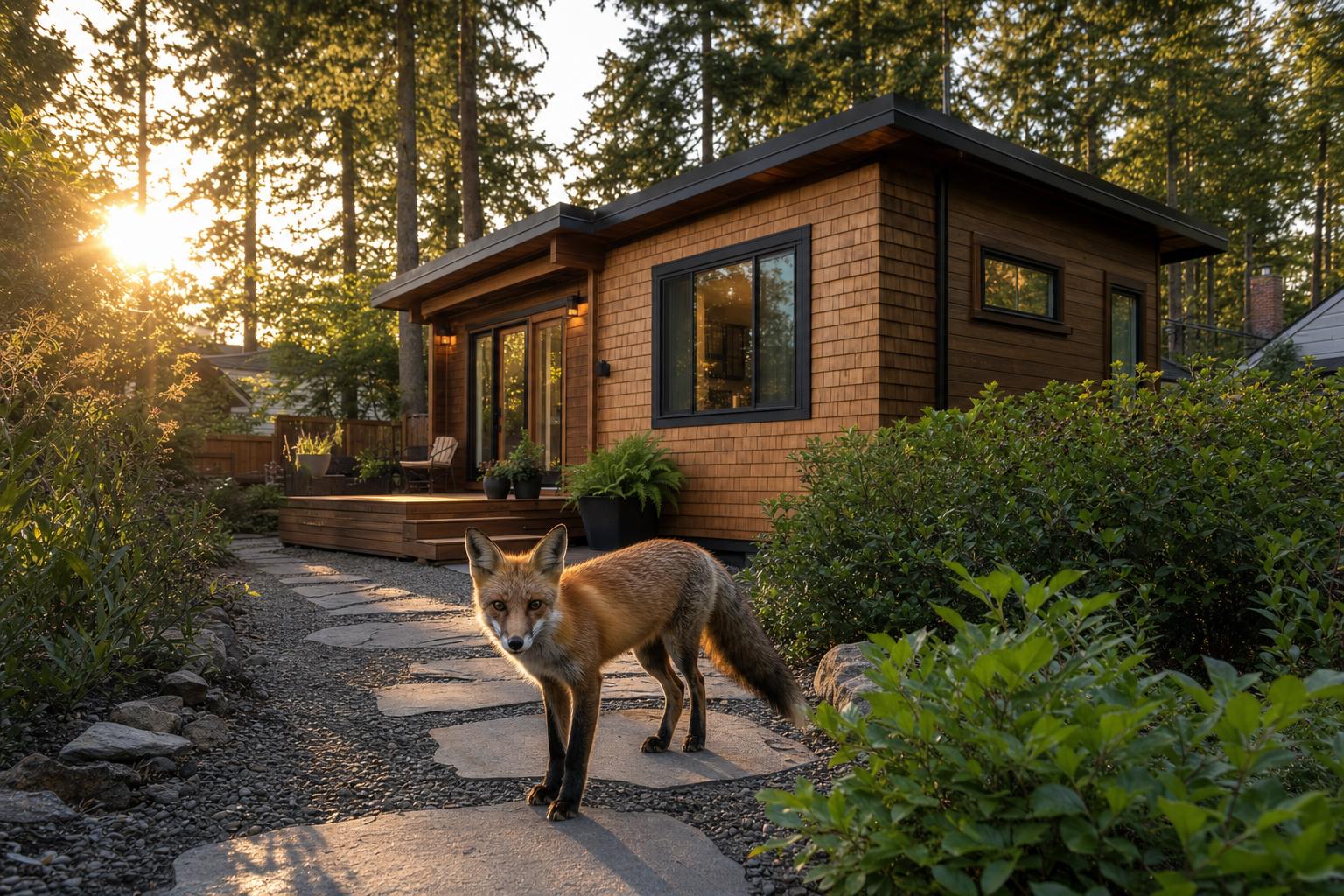
Urban wildlife includes the wild animals, plants, fungi, and other living things that survive in busy human places. In Canadian cities, that can mean bees on a balcony, sparrows in a laneway, mushrooms in damp soil, butterflies on a deck planter, or native plants growing beside a fence.
For people living in tiny homes, this matters because small spaces can still support biodiversity and show real stewardship. A tiny lot, rooftop, balcony, or narrow side yard can become a simple habitat patch that helps birds, pollinators, and other species move through the city.
In 2026, that kind of local action fits a bigger Canadian push to protect nature close to home. Urban areas can still provide meaningful habitat, and this guide shows how to make tiny homes more welcoming for urban wildlife, how to care for those spaces ethically, and how to observe and record what appears in Canadian cities.
Why Urban Wildlife Matters for Tiny Homes in Canadian Cities
Urban wildlife means wildlife living in human-shaped spaces such as cities, balconies, rooftops, parks, alleys, garden edges, and laneways. Biodiversity means the variety of species and habitats that make these urban ecosystems stronger and more able to recover from change. In simple terms, more kinds of life usually mean a healthier city. That idea is central to WWF-Canada’s urban habitat framing.
This is especially important in Canada right now. Canada’s 2030 Nature Strategy calls for better green and blue spaces in urban areas and highlights native biodiversity, habitat connectivity, and the link between nature and human well-being.
That means city nature is no longer a side issue.
It is part of the national plan.
Many municipalities are also acting on biodiversity or developing strategies around it, showing that this is becoming mainstream in Canadian cities rather than a niche interest. That wider momentum is reflected in efforts highlighted by the Canadian Wildlife Federation’s call for cities to track biodiversity.
For tiny homes, the benefits are direct:
- Better mood and less stress: Birds, bees, and greenery can make a small home feel calmer.
- Pollination: Bees and other pollinators can help herbs, tomatoes, berries, and other edible plants in containers.
- Natural pest control: Birds, bats, beetles, and spiders can help reduce pest insects.
- Cooling and cleaner air: Plants soften heat, hold some moisture, and make hard urban spaces feel less harsh.
- Stronger community ties: A wildlife-friendly planter often starts conversations with neighbours.
Tiny homes matter because they are often designed with care. When space is tight, every surface counts. A balcony rail can hold flowers. A roof edge can hold a shallow water dish. A narrow side yard can become a mini meadow.
Even one small area can work as a micro-habitat.
Tiny homes also often sit in edge spaces, like infill lots and laneways. Those spots can help connect bigger green areas, acting as stepping stones that support urban wildlife movement across the city. That aligns with the broader Canadian goal of habitat connectivity.
In 2026, this matters even more because climate change and urban growth are changing which species can live in cities. Research connected to Toronto suggests that climate and land-use change will reshape future urban wildlife patterns, with some species gaining space and others losing it.
The big idea is simple: action at the tiny-home scale supports much larger biodiversity goals. What happens in one planter or one laneway can still matter, a point echoed by community-facing urban nature messaging like this biodiversity awareness post.
Wildlife-Friendly Tiny Homes: Design Principles for Big Biodiversity in Small Spaces
The goal is not to copy a perfect wilderness.
The goal is to build safe, layered, useful habitat that fits a very small space.
Native plants first
Native plants are species that evolved in a region over a long time. They usually support local insects, birds, and food webs better than most exotic ornamentals. They are also often better matched to local weather and seasonal patterns.
In tiny homes, that can mean healthier plants with less fuss and more value for biodiversity. Start with urban habitat guidance from WWF-Canada and practical local help such as this native plants guide.
Build layered habitat
Wildlife needs more than one flat row of pots. Try to create layers:
- Low layer: groundcovers and low plants
- Middle layer: flowers and grasses
- Upper layer: shrubs or taller structural plants
- Vertical layer: vines or climbers on trellises
Even one balcony can do this. Put shorter plants near the front, medium plants in clusters, and one taller planter or vine at the back. This creates shelter, feeding spots, and visual depth.
Add water
Water is one of the easiest ways to support urban wildlife.
Good small-space choices include:
- shallow dishes
- bee bowls with stones for landing
- small recirculating bird baths
Keep water:
- shallow
- clean
- refreshed often
- close to plant cover, but not so hidden that predators can ambush animals
Provide shelter and nesting spots
Shelter helps wildlife rest, hide, and survive weather.
Helpful ideas for tiny homes:
- dense planters for cover
- a small insect hotel, cleaned and maintained properly
- bundles of sticks or small logs
- bark pieces tucked into a dry corner
- a few rocks placed to create crevices
- a nest box only if local rules allow it and species guidance is followed
Not every shelter suits every species. The safest approach is to offer simple, natural structure rather than forcing animals into one feature.
Focus on plant-based food sources
Plants should do most of the feeding work. Nectar, pollen, berries, and seeds are better than heavy use of artificial feeders.
Try to choose flowers and shrubs that provide food over a long season:
- Spring: early nectar
- Summer: rich pollen and nectar
- Fall: berries, seeds, and late blooms
- Winter: stems, seed heads, and cover
Think about connectivity
Connectivity means helping wildlife move between habitat patches. In a city, that can mean movement between street trees, yards, parks, ravines, wetlands, rooftops, and gardens.
A tiny-home planting can act as one small stepping stone. That is especially useful in dense blocks where wildlife has few places to pause. This kind of urban habitat linking is part of broader Canadian biodiversity goals discussed in Canada’s 2030 Nature Strategy, WWF-Canada’s urban areas resource, and design thinking around small-space wildlife corridors.
Reduce light and noise
Too much night light can disrupt migrating birds and nocturnal animals. Bright lighting can also make a small habitat less useful.
Use:
- warm-toned bulbs
- downward-shielded fixtures
- low-intensity lights
- timers or switches so lights are off when not needed
This supports bird-safe city practices, including Lights Out approaches during migration.
Keep it pesticide-free
Pesticides can harm bees, butterflies, beetles, and other helpful species. In a tiny-home habitat, even light pesticide use can undo much of the benefit.
Better options:
- hand-pick pests
- use mulch
- improve airflow
- avoid overcrowding
- grow a mix of species so one pest does not take over everything
Micro-habitat ideas for tiny homes
Tiny homes on wheels
Mobility changes the design, but habitat is still possible.
Try:
- modular planters secured for travel
- detachable window boxes
- lightweight vertical gardens
- portable insect hotels
- moveable bundles of sticks, bark, or hollow stems
Balconies, decks, and rooftops
These spaces can do a lot with careful planning.
Use:
- grouped pots of different heights
- trellises with native vines where suitable
- shallow roof trays or roof boxes if structurally safe
- matched balcony planting with neighbours to build mini wild corridors
Ground-level micro-lots or laneway suites
These spaces can fit richer features.
Try:
- one raised-bed mini meadow
- an under-stair log pile
- a tiny pond-in-a-pot
- a recirculating birdbath
- a fence-side strip of native grasses and flowers
Practical materials that work
Choose materials that are durable and easy to manage:
- sub-irrigated planters
- fabric grow bags
- reclaimed untreated wood
- recycled containers with good drainage
For balconies and rooftops, always respect structural weight limits and local codes. Wet soil and water features can be heavy.
Also think about maintenance. Tiny homes work best when wildlife features are simple enough to care for each week. Place at least some habitat near a window, door, or seating area so it can be enjoyed from indoors.
That makes stewardship easier and more rewarding.
Boost Urban Biodiversity in Canadian Cities With Tiny-Home Planting Plans
The best planting plans for tiny homes start with a few clear rules:
- choose regionally native species
- match plants to hardiness zone, sun, wind, and moisture
- aim for year-round value
- combine low, medium, and taller plants for structure
A good tiny-home planting should offer:
- spring nectar
- summer pollen
- fall berries and seeds
- winter shelter and stem structure
This list is only a starting point. Readers should check local growing conditions, native plant lists, and 2026 plant availability before choosing species.
Pacific Coast: Vancouver and Victoria
Tiny homes on the Pacific Coast often deal with mild winters, summer drought, and mixed sun conditions.
Good options include:
- Salal (Gaultheria shallon) for evergreen cover and berries
- Red flowering currant (Ribes sanguineum) for early nectar and hummingbirds
- Ocean spray (Holodiscus discolor)
- Kinnikinnick (Arctostaphylos uva-ursi) as a low, drought-tolerant groundcover
- native bunchgrasses
- Yarrow
- Nodding onion
A compact planter mix here could use kinnikinnick at the edge, yarrow in the middle, and a larger shrub pot with salal or currant if space allows.
Great Lakes and Ontario: Toronto and Ottawa
This region suits many strong pollinator plants and small native shrubs.
Useful choices include:
- Serviceberry (Amelanchier spp.) for spring blossoms and berries
- Black-eyed Susan (Rudbeckia hirta)
- Milkweed species for monarch caterpillars and pollinators
- Wild bergamot or bee balm
- dwarf white cedar or small native shrubs where space and bylaws allow
A tiny-home deck in Toronto might use one serviceberry in a deep pot, underplanted with bee balm and black-eyed Susan, with milkweed in a sunny container nearby.
Prairies: Calgary and other prairie cities
Prairie tiny homes often face wind, sun, and dry spells. Tough native plants are a good fit.
Look at:
- Prairie sage (Artemisia spp.)
- Yarrow (Achillea millefolium)
- native bunchgrasses like little bluestem and fescues
- compact willow species if container size and species suitability are confirmed
These plants can handle hard conditions and still support urban wildlife.
Quebec and the Montreal region
Montreal tiny homes may deal with courtyards, mixed light, and strong seasonal swings.
Helpful species include:
- native viburnums such as nannyberry
- Goldenrod (Solidago spp.)
- Asters (Symphyotrichum spp.)
- ferns and shade-tolerant natives for enclosed spaces
- maple saplings only where very large containers and long-term care are realistic
Asters and goldenrod are especially useful because they feed pollinators late in the season, when many other flowers are done.
Container and soil tips for biodiversity
Container planting is not just about the plant. Soil and setup matter too.
Use these basics:
- high-quality potting mix
- reduced-peat mix if possible
- compost added over time
- deep containers for shrubs and woody plants
- grouped pots for shelter and moisture retention
- leaf or wood-chip mulch on top of soil
Mulch helps hold water and creates a tiny habitat for invertebrates.
Avoid generic wildflower mixes. Many contain non-native or even invasive species. It is better to buy province-specific or ecozone-specific native pollinator mixes.
Smart planting for small spaces
In tiny homes, one container should often do more than one job.
A single pot can combine:
- a low spiller plant
- a medium nectar flower
- a taller grass or shrub
This improves structure, saves space, and creates better habitat than one plant in one pot.
Finding local support in Canadian cities
To build biodiversity in the right way, look for local resources. Search terms that help include:
- “[City name] native plant program”
- “[Province] native plant society”
- “[City name] biodiversity strategy”
- local plant giveaways
- local pollinator garden programs
This matters because broader urban biodiversity goals only work when local people can use local plants and local advice. Useful references include Canada’s 2030 Nature Strategy, practical examples of ways to increase urban biodiversity in Canada, and this guide to small-space landscaping for Canadian ADUs and tiny-home settings.
Practical Stewardship Tips for Tiny Homes in Canadian Cities
Stewardship means active, ongoing care for habitat and ethical coexistence with wildlife. It is not just planting once and walking away.
In tiny homes, stewardship means looking after the space, reducing harm, watching how wildlife uses it, and helping the wider neighbourhood support biodiversity too.
This idea fits both national and local goals. Canada’s biodiversity planning supports better habitat, and more municipalities are taking biodiversity seriously, as seen in federal biodiversity policy and municipal awareness efforts shared by the Canadian Wildlife Federation.
Seasonal pruning and cleanup
A tidy garden is not always the best wildlife garden.
Better stewardship means:
- leaving seed heads through winter for birds
- leaving hollow stems for overwintering insects
- doing major pruning in late winter or early spring
- checking carefully for active nests before cutting anything
This simple change can protect many small species.
Pesticide-free pest management
Try to solve pest problems with low-harm methods:
- hand-pick pests when possible
- use a sharp spray of water for some soft-bodied insects
- remove badly infested leaves
- grow many plant types together
- attract predator insects with flowers and shelter
Diverse tiny-home planting is often more stable than a row of identical plants.
Water stewardship
Water should be used wisely in Canadian cities.
Helpful habits include:
- using watering cans carefully instead of overwatering
- setting up drip systems
- choosing self-watering containers
- mulching the soil surface
For birds and insects:
- refresh water often
- scrub basins regularly
- stop mosquito breeding by not letting water sit dirty and still for long
Responsible composting and wildlife-proofing
A wildlife-friendly space should not become a nuisance site.
Use these basics:
- sealed compost systems
- secure bins
- pet food kept indoors
- no food scraps left outside
This helps avoid attracting raccoons, rats, and other animals into unsafe contact with people.
Community stewardship
One tiny-home resident can still shape a whole block.
Good community actions include:
- coordinating balcony or fence-line pollinator plants with neighbours
- joining local stewardship groups
- taking part in community garden networks
- helping local habitat projects
Even a few linked plantings can create a corridor for pollinators and birds. That local-to-city effect is strongly supported by WWF-Canada’s urban nature perspective and practical community examples like community gardens and tiny-home stewardship.
Neighbour-friendly touches can also help:
- a small “pollinator-friendly garden” sign
- sharing extra native seedlings
- chatting about what birds or butterflies have appeared
That is stewardship too. It spreads knowledge and makes biodiversity more visible.
Observe Urban Wildlife From Your Tiny Home: Simple Setups and Citizen Science
Observation is part of enjoyment, but it is also part of stewardship.
People protect what they notice.
Tiny homes are well suited to wildlife watching because the main habitat area is often close to a window, deck chair, or door.
Simple observation setup
You do not need much.
Useful basics:
- a chair, folding bench, or window seat facing the planting area
- binoculars or a monocular
- a notebook or phone for quick records
- a camera, motion camera, or doorbell camera if privacy rules are respected
- one clear shrub, perch, or flower cluster placed where it can be seen easily
Try to design one “viewable” feature on purpose. A bird perch near a window or a flowering pot at eye level makes watching easier.
Feeder guidance
Feeders can help with observation, but only when legal and easy to clean.
If you use one:
- place it near cover
- reduce bird-window collisions with decals or screens
- clean it often
- stop use if disease risk rises
- never let seed build up underneath
Habitat planting is still the best base for urban wildlife.
Best times to watch
Wildlife activity changes through the day.
- Birds: dawn and early morning
- Pollinators: warm midday hours
- Mammals: dawn and dusk
- Winter signs: berries used up, seed head damage, tracks in snow
Watching at different times gives a fuller picture of biodiversity around tiny homes.
Citizen science for Canadian cities
Citizen science turns small observations into useful data.
iNaturalist / iNaturalist.ca
You can upload photos or sounds of plants, birds, fungi, insects, and other species found around your tiny home. This helps document urban wildlife and teaches identification over time.
The City Nature Challenge is a spring event where cities work to record biodiversity together. It is a great fit for tiny-home residents because even a small yard, balcony, or laneway can produce useful sightings. Learn more through the Canadian Wildlife Federation’s City Nature Challenge page and this City Nature Challenge story map.
eBird
eBird is useful for logging birds seen from a window, rooftop, or deck. Even short lists can show seasonal changes.
NatureCounts
NatureCounts is a Canadian wildlife monitoring platform that supports broader data collection.
PollinatorWatch and similar projects
These projects help track bee, butterfly, and other pollinator activity around your plantings.
How to measure biodiversity change over time
Keep it simple.
Track:
- a species list
- first bloom dates
- first sightings in spring
- before-and-after photos
- seasonal changes
- yearly changes
Join at least one citizen-science project in 2026. It is one of the easiest ways to turn private observation into public stewardship.
Safe Coexistence With Urban Wildlife in Canadian Cities
A wildlife-friendly tiny-home space should support animals without causing dependence, nuisance behaviour, or safety problems.
Basic coexistence rules
Do not hand-feed mammals such as:
- raccoons
- foxes
- coyotes
Also:
- secure garbage and compost with latching lids
- avoid leaving food waste outdoors
- use habitat plants instead of food attractants where possible
This is safer for both people and wildlife.
Cats and stewardship
Keeping cats indoors or supervised is one of the clearest stewardship steps a resident can take. Free-roaming cats can kill birds and small mammals, even in very small urban spaces.
Feeder and water hygiene
If you use feeders or water stations:
- clean feeders regularly
- replace water often
- scrub basins
- avoid crowding many animals into one dirty feeding point
Clean features reduce disease risk.
Check local rules
In Canadian cities, rules can vary. Before adding features to tiny homes, check local bylaws on:
- wildlife feeding
- bird feeders
- water features
- rain barrels
- greywater
- rooftop additions
- balcony structures
- accessory structures
- tiny-home siting
Helpful searches include:
- “[City name] wildlife bylaws”
- “[City name] bird feeder rules”
Bird-safe lighting and Lights Out
Many Canadian cities promote bird-friendly building design or seasonal Lights Out efforts to reduce migratory bird collisions. Good tiny-home habits include:
- warm lights
- shielded fixtures
- low light output
- blinds closed at night during migration
- unnecessary lights turned off
These simple changes support urban wildlife and fit broader biodiversity goals described in Canada’s 2030 Nature Strategy, WWF-Canada’s urban habitat guidance, and practical advice on smart lighting for Canadian tiny homes.
Common concerns
Pests:
Avoid food attractants, secure compost, and focus on native habitat plants.
Disease:
Keep water and feeders clean. Avoid heavy crowding.
Allergies:
Choose lower-allergen species where possible and keep seating areas and walkways tidy.
Safe coexistence is really about balance.
Support wildlife, but do not create conflict.
Tiny Home Case Studies: Biodiversity Success Stories in Canadian Cities
These short examples show how tiny homes can support biodiversity even with real limits.
Laneway tiny home in Toronto
Challenge:
The space was shady, had very little ground soil, and seemed too small to matter.
Actions:
The resident added vertical trellises, used shade-tolerant native containers, placed a shallow water dish near cover, and logged species on iNaturalist during the City Nature Challenge. They also drew inspiration from shared event resources like this City Nature Challenge story map.
Outcomes:
Over two seasons, more native bees and songbirds appeared. Neighbours noticed and copied the planting style, helping extend the habitat corridor down the lane.
Tiny home on wheels in Vancouver
Challenge:
The home had limited weight capacity, moved often, and could not support permanent landscaping.
Actions:
The owner used lightweight modular containers, chose Pacific Coast native plants such as salal and kinnikinnick, added a portable insect hotel, and learned from urban biodiversity workshops linked to policy and design resources including Canada’s 2030 Nature Strategy and practical tiny-home guidance like this British Columbia tiny-home resource.
Outcomes:
Pollinators visited the setup in multiple locations. The design also gave other tiny-home owners practical ideas for mobile habitat features.
Micro-lot tiny home in Montreal
Challenge:
The courtyard was hot, sunny, and bare, with no existing vegetation and serious summer heat.
Actions:
The resident built a raised-bed mini meadow with asters, goldenrod, and grasses, then worked with neighbours to reduce night lighting and support bird-friendly goals.
Outcomes:
The space became cooler and more pleasant. Butterflies and birds increased, and the courtyard drew stronger local interest in biodiversity.
Helpful organizations and initiatives
Tiny-home residents in Canadian cities can learn from:
- WWF-Canada urban biodiversity resources
- Nature Conservancy of Canada
- Birds Canada
- Pollinator Partnership Canada
- Bird Friendly City ideas where used locally
WWF-Canada’s urban nature resources are a strong starting point for understanding how city habitats work.
The larger lesson from these case studies is clear: one wildlife-friendly tiny-home plot can influence a whole block, lane, or courtyard.
That is stewardship in action.
Tiny-Home Action Plan: 30/90/365 Days to Support Urban Wildlife
Use this quick checklist to support urban wildlife, biodiversity, and stewardship around tiny homes.
Core checklist
- choose 3–5 native plants
- add a shallow water source
- install an insect hotel or log/rock habitat
- stop using pesticides
- add bird-collision prevention to windows
- switch to warm shielded lighting
- join iNaturalist or eBird
- talk to one neighbour
- secure waste and compost
- start a species checklist
In 30 days
- research native plants for your city
- buy your first containers
- set up clean shallow water
- make a simple observation spot
- create a citizen-science account
In 90 days
- add more plant layers and structure
- install an insect habitat feature
- join a local biodiversity event or City Nature Challenge if the season fits via the City Nature Challenge page or this event story map
In 365 days
- compare species records
- adjust bloom timing
- improve shelter layers
- share results with neighbours or online
- consider a small open-garden moment for your lane or building
Resources for Tiny Homes, Urban Wildlife, and Biodiversity in Canada
Useful apps
- iNaturalist / iNaturalist.ca
- eBird
- NatureCounts
Canadian organizations
- Birds Canada
- Nature Conservancy of Canada
- Pollinator Partnership Canada
- WWF-Canada urban biodiversity resources
Helpful local search prompts
- “[City name] native plant program”
- “[City name] biodiversity strategy”
- “[City name] wildlife bylaws”
- “[Province] native plant society”
- “Bird-friendly city [City name]”
Municipal action works best when it connects to Canada’s wider biodiversity goals around native species, habitat connectivity, and healthier urban spaces, as outlined in the federal nature strategy.
Small Spaces, Big Impact for Urban Wildlife
Tiny homes may be small, but they can make a big difference for urban wildlife, biodiversity, and stewardship in Canadian cities.
A few native plants, a shallow water dish, safer lighting, and careful observation can turn even a tiny outdoor area into a useful habitat patch.
The best first step is a simple one: plant a few local species, add water, and watch what arrives.
Record your sightings, share what changes, and let your space inspire others nearby. In 2026, every planter, balcony, deck, rooftop, and laneway can help build more nature-rich Canadian cities, one small habitat at a time.
Frequently Asked Questions
Can a tiny home really support urban wildlife?
Yes. Even a balcony, rooftop edge, or small laneway strip can provide nectar, shelter, water, and resting space for birds, pollinators, and beneficial insects. Small habitat patches add up across a city.
What are the best plants to start with?
Start with 3 to 5 regionally native plants suited to your local sun, wind, and moisture conditions. Focus on species that provide nectar, pollen, berries, or seeds across multiple seasons.
Do I need a yard to create wildlife habitat?
No. Containers, railing planters, vertical trellises, shallow water dishes, and grouped pots can all support biodiversity without a traditional yard.
Should I use bird feeders in a tiny-home habitat?
Only if local rules allow it and you can keep them clean. Habitat planting should be the foundation, while feeders should be used carefully to avoid disease, mess, and wildlife conflict.
How can I make the space safer for birds?
Use warm, shielded lighting, reduce unnecessary night lighting during migration, and add window-collision prevention such as decals or screens near glass.
What is the easiest way to track what shows up?
Use a notebook or phone to keep a simple species list, take seasonal photos, and join a citizen-science platform like iNaturalist or eBird.
How do I support wildlife without attracting pests?
Focus on native plants instead of food scraps, keep compost sealed, secure garbage, clean water features often, and avoid hand-feeding mammals like raccoons or foxes.
Why does this matter in Canada right now?
Because urban biodiversity is now part of larger national goals around habitat connectivity, healthier green spaces, and resilience in a changing climate. Small local actions support that bigger picture.
Leave a Reply