

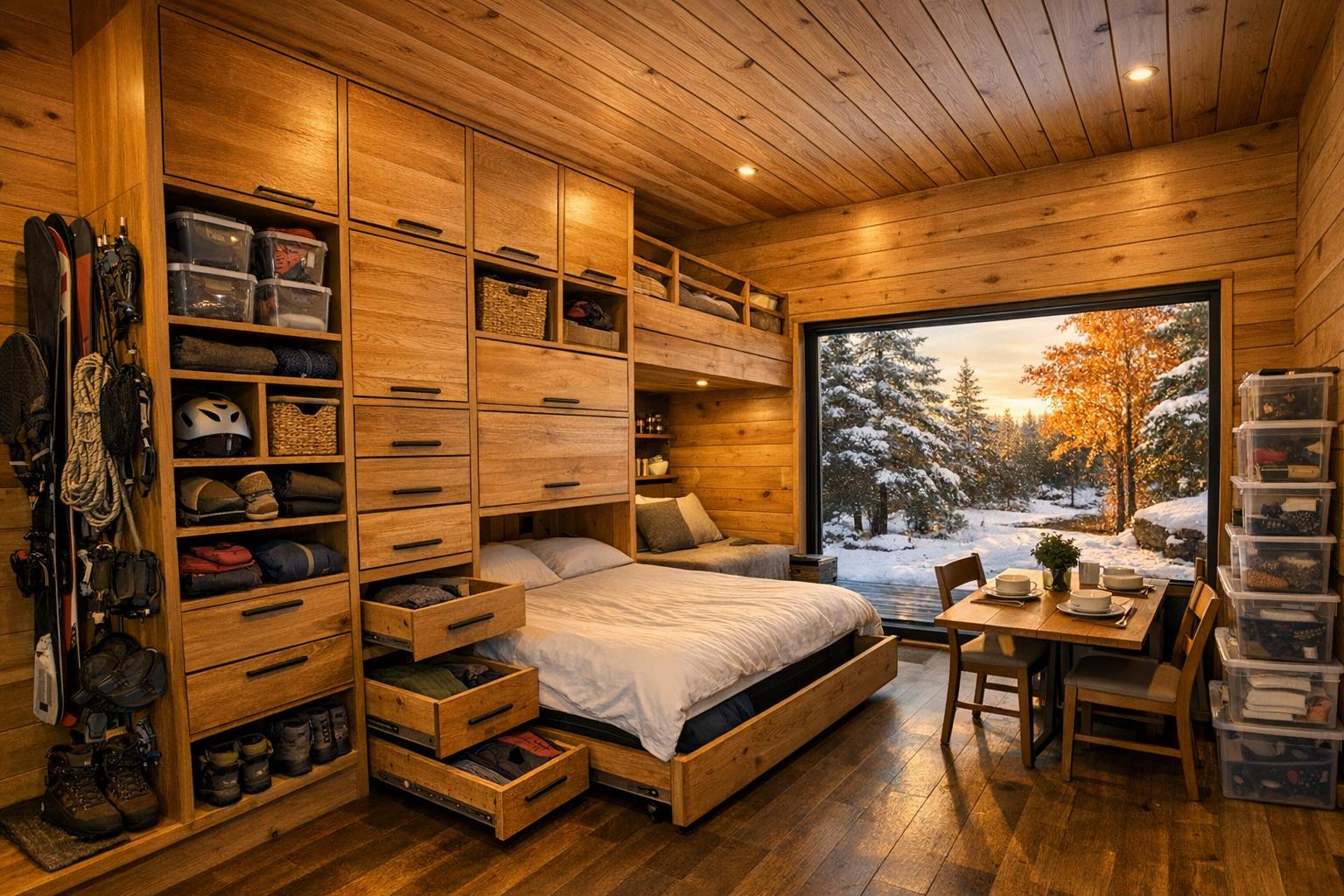
Tiny Home Storage Solutions for Seasonal Items in 2026
Estimated reading time: 11 minutes
Key Takeaways
- Tiny home storage solutions work best when you start with a full audit, not with random bins or shelves.
- A seasonal rotation system keeps in-season items close and off-season items compact, which protects precious daily living space.
- Vertical storage, hidden storage, and multi-purpose furniture are some of the most effective ways to make small layouts feel functional rather than crowded.
- Moisture control matters in Canada. Dry items fully, use sealed bins where needed, and choose breathable storage for gear that can mildew.
- Off-site storage can be worth it when bulky seasonal items interfere with daily life or block access to essentials.
Table of contents
- Tiny Home Storage Solutions for Seasonal Items in 2026
- Quick Assessment: Measure, Map, and Declutter Before You Store
- Build a Seasonal Rotation System That Keeps Tiny Homes Functional
- Core Space-Saving Principles Behind the Best Tiny Home Storage Solutions
- Best Storage and Organization Ideas by Type of Seasonal Item
- Furniture and Hardware That Double Your Storage Without Making Tiny Homes Feel Crowded
- Protect Seasonal Items From Moisture, Pests, and Safety Risks
- A Step-by-Step Seasonal Swap Routine You Can Repeat Every Year
- When Off-Site Storage Makes Sense for Tiny Home Living
- Budget vs Luxury Tiny Home Storage Solutions
- Mini Case Studies and Visual Examples for Different Tiny Home Layouts
- Tools, Templates, and Recommended Resources
- Frequently Asked Questions
Tiny Home Storage Solutions for Seasonal Items in 2026
Tiny home storage solutions are practical systems, furniture choices, and storage habits that help people living in tiny homes store, protect, and rotate seasonal items without sacrificing daily living space.
In tiny homes, bulky or rarely used items can take over fast. Holiday decorations, snow boots, heavy coats, skis, paddles, bikes, and beach gear all compete for the same small footprint. Without a clear storage and organization system, even a tidy home can start to feel cramped.
This 2026 guide explains how to assess what you own, build a seasonal rotation plan, choose space-saving storage methods, protect items from moisture and pests, and decide when off-site storage makes sense. It is written for tiny home dwellers, vanlifers, tiny house on wheels owners, and even small apartment residents.
For ideas and inspiration, resources from ShelfGenie, Big Tex Storage, and Teeny Tiny Homes highlight how modern tiny homes are maximizing every inch. For Canadian readers, guides on seasonal furnishing hacks, tiny home furniture in Canada, and a modular furniture guide are especially relevant.
The goal is not to cram more into a tiny home. The goal is to make sure the right things are accessible at the right time.
Quick Assessment: Measure, Map, and Declutter Before You Store
Good storage organization starts before you buy bins, hooks, or shelves. First, do a storage audit. A storage audit is a full review of every seasonal item you own, where it is currently kept, how often it is used, and how much space it takes up.
Start by sorting seasonal items into groups:
- Holiday decorations: lights, ornaments, wreaths, wrapping supplies, tree parts, candles
- Winter gear: coats, gloves, scarves, boots, snow pants, skis, sleds
- Summer sports equipment: bikes, paddles, beach chairs, foldable coolers, camping accessories
Build a simple inventory for each group:
- Take a photo
- Measure length x width x height
- Note the condition
- Rate use: daily, weekly, seasonal, or rare
- Decide: keep, donate, sell, or store off-site
Be strict when decluttering. If you have not used something in two full seasonal cycles, it should usually be donated, sold, or moved off-site unless it is very sentimental or costly to replace. Keep sentimental items separate from practical ones.
In tiny homes, memory boxes can quietly grow bigger every year. Resources on downsizing and decluttering for tiny homes and minimalist living in Canada can help you make harder decisions with less stress.
Next, measure your real storage zones:
- Under-bed clearance
- Wall-to-ceiling height
- Back-of-door depth
- Stair riser depth
- Bench seat interior size
- Loft or over-cab storage size
Also look for dead space. Dead space means areas that exist but are not used well, like behind doors, above cabinets, under benches, under stairs, and narrow wall gaps.
Use this quick checklist:
- Photo each item group
- Measure each item group
- Rate usage
- Decide keep / off-site / donate
- Map available storage zones
Aim to finish this in one afternoon. Many people free up room immediately before adding any new storage. For more storage-audit inspiration, see tiny house organization ideas from Extra Space.
Build a Seasonal Rotation System That Keeps Tiny Homes Functional
A seasonal rotation system is a planned schedule for moving in-season items into easy reach and moving off-season items into compact, less accessible storage.
This matters because one of the biggest mistakes in tiny homes is treating every item like it needs year-round access. It does not.
Your winter boots do not need prime space in July. Beach chairs should not block your entry in January.
A simple Canada-friendly rotation can look like this:
- April: pack away winter boots, heavy coats, snow gear, and leftover holiday items
- April: bring out bikes, paddles, light jackets, and summer accessories
- October: reverse the process before snow and wet weather arrive
- November to December: move holiday décor into easy-reach storage
- Early January: return holiday décor to long-term storage
Use two storage levels:
- Frontline storage: the easiest-to-reach storage for the current season
- Long-term storage: less accessible storage for the off-season
Frontline storage can include entry hooks, a top bench bin, or an under-seat drawer. Long-term storage can include ceiling bins, under-loft spaces, or sealed exterior compartments.
A smart trick is one-touch staging:
- Put incoming seasonal items in one sorting spot
- Clean and inspect them
- Move them straight into assigned frontline zones
- Move outgoing items straight into labelled off-season bins
Label bins clearly. Use colour coding if it helps:
- Blue = winter
- Green = summer
- Red = holidays
Write labels like “Winter Gloves + Hats” instead of “misc.”
For many people, clear bins work best because they make storage faster and easier to scan. Opaque bins are better for light-sensitive or messy-looking items. More ideas on rotating for climate and season can be found in seasonal tiny home living in Canada and tiny home décor ideas.
Core Space-Saving Principles Behind the Best Tiny Home Storage Solutions
The best tiny home storage solutions follow a few simple rules. In tiny homes, space-saving storage means using vertical, hidden, or dual-purpose areas so the same square footage works harder.
1. Go vertical
Vertical storage means using wall and ceiling height instead of floor area. This is one of the smartest storage moves in tiny homes.
Use:
- Floating shelves
- Wall-mounted rails
- Pegboards
- Hooks
- Ceiling racks
Put lighter and less-used items higher up. Keep heavy or daily-use items lower and easier to reach.
2. Use under-furniture zones
Hidden low spaces can hold a lot when measured properly.
Good options include:
- Under-bed drawers
- Rolling bins under benches
- Toe-kick drawers
- Low-profile trays under sofas or built-ins
Make sure bins match the actual clearance you measured earlier.
3. Choose multi-purpose furniture
Every piece of furniture should ideally do at least two jobs.
Examples:
- Bench seating with hidden storage
- Loft stairs with drawers
- Fold-down tables with compartments
- Beds with built-in cubbies
4. Maximize dead space
Dead space is unused space, like behind doors, under stairs, above cabinets, or along narrow wall strips.
Try:
- Slim behind-door organizers
- Pull-out stair risers
- Narrow custom shelves
- Weatherproof exterior racks where suitable
5. Match storage to the item
Not every item should be stored the same way.
- Soft goods like blankets and coats can go in vacuum bags
- Long rigid gear like skis and paddles should be wall-mounted
- Wet boots need ventilation, not sealed storage
In Canada’s humid, cold, and shifting climate, airflow matters. Sealed but breathable storage helps reduce mildew. If an item is even a bit damp, let it dry fully before packing it away.
For more visual inspiration, see these tiny house storage ideas, this tiny house storage video example, and Canadian guides to modular furniture.
Best Storage and Organization Ideas by Type of Seasonal Item
Holiday Decorations
Holiday storage works best when it is modular, visible, and protective.
Use clear stackable bins so decorations stay sorted and easy to spot. Ornament organizers with dividers help prevent breakage and make setup easier next year. For small parts like metal hooks, batteries, and tiny hardware, use magnetic strips or small divided containers.
To protect decorations:
- Add silica gel packs to bins
- Use padded dividers for fragile items
- Wrap glass ornaments one by one
- Keep heavy lights and tree stands in separate bins
- Coil string lights loosely so wires do not kink or wear out
Avoid damp exterior storage unless the bin is fully sealed and the contents can handle temperature changes. Clear bins such as IKEA Samla are a useful example because they stack neatly and let you see what is inside. Related inspiration: tiny home décor ideas.
Winter Gear
Winter gear needs two storage approaches: easy access for daily use, and compact storage for the off-season.
For in-season use, place gear near the entry:
- Open boot rack or ventilated boot tray
- Strong hooks for coats and scarves
- Wall rail for hats and gloves
- Drip zone for wet footwear
A boot tray is especially helpful in Canadian winters because it catches melting snow and slush before it spreads through the home.
For off-season storage:
- Vacuum bags for dry coats, blankets, and snow pants
- Sealed bins for gloves and hats
- Protected compartments for freeze-sensitive items
Only vacuum-pack textiles when they are fully dry. Even slight dampness can cause mildew. If you store items in an unheated area, insulated mini-lockers or protected compartments may help with gear that does not handle freezing well.
For climate-specific advice, see the Canadian tiny home winterization checklist and tips to winter-proof a tiny home in Canada.
Summer Sports Equipment
Large summer gear can quickly steal floor space, so this is where space-saving storage really matters.
Store long items vertically when possible:
- Bikes on wall hooks
- Paddles on slim wall holders
- Boards on racks
- Helmets in hanging baskets
When buying new gear, choose foldable or collapsible versions if possible. That decision affects future storage just as much as the rack you buy.
Good compact choices include:
- Foldable beach chairs
- Compact coolers
- Stackable outdoor bins
- Collapsible camping gear
For van setups, interior wall-mounted systems are often easier to access than bulky roof boxes. They also reduce exterior drag and make gear easier to check, clean, and grab on the go.
If you live mobile, comparisons like tiny home on wheels comparisons and guides to portable and mobile homes can help you plan storage around movement as well as square footage.
Furniture and Hardware That Double Your Storage Without Making Tiny Homes Feel Crowded
In tiny homes, the best furniture supports daily life and adds hidden or flexible storage at the same time.
Useful options include:
- Ottomans with hinged lids for blankets or sports accessories
- Loft beds with built-in drawers or bins
- Bench seating with lift-up lids
- Fold-down tables with hidden compartments
- Pegboards and slatwall panels for adjustable wall storage
Pegboards and slatwall are especially useful because your needs change by season. Hooks, trays, and baskets can move around without a full remodel.
When adding hardware, think about safety too:
- Use strong anchors for heavy items
- Match hardware to your wall material
- Add lip shelves or retention bars if your home moves
- Secure gear well in vans and tiny houses on wheels
Quick DIY: ceiling pulley storage
A ceiling pulley system can be a beginner-friendly way to store light off-season items overhead if the supports are solid.
Basic idea:
- Install pulley brackets into structural supports
- Thread rope through the pulleys
- Attach a light platform or cargo net
- Raise lightweight bins overhead
This works well for:
- Holiday décor bins
- Soft gear
- Lightweight off-season items
Do not overload it. Heavy loads need rated hardware and proper installation.
For more inspiration, review smart furniture ideas and multifunctional loft design.
Protect Seasonal Items From Moisture, Pests, and Safety Risks
Protection matters because tiny home storage zones are often close to doors, floors, exterior walls, or unheated spaces. These spots face more moisture swings, pests, and bumps.
For moisture control:
- Use silica gel packs in bins
- Add cedar blocks for some textiles
- Dry everything fully before storing
- Never seal damp boots, coats, or décor
For pest control:
- Use sealed bins instead of cardboard
- Check soft goods before packing
- Clean beach and picnic gear so food residue does not attract pests
For fire and electrical safety:
- Coil holiday lights loosely
- Check cords for damage before storing
- Keep electrical décor away from heaters or hot equipment
- Do not crush cords under heavy bins
For mobile tiny homes:
- Strap down heavy items like skis, tools, or metal décor
- Use non-slip mats under trays and racks
- Keep heavier items lower for better stability while moving
For added protection guidance, review pest control for tiny homes in Canada, tiny home safety in Canada, and tiny home insurance for remote Canada.
A Step-by-Step Seasonal Swap Routine You Can Repeat Every Year
Good organization only lasts if your storage system has a repeatable routine.
Use this order every swap day:
- Empty frontline storage zones
- Pull out outgoing seasonal items
- Take a photo inventory before packing
- Clean and dry the items and the bins
- Repair, discard, or donate damaged items
- Pack and label outgoing bins
- Bring in the new season’s items
- Put daily-use items in the easiest spots
- Update your checklist and spreadsheet
This order works because it stops duplicate purchases, catches damage early, and prevents “temporary piles” from turning into long-term clutter.
Try setting two official swap days each year:
- Spring swap
- Fall swap
In many tiny homes, a full seasonal switch takes only 30 to 90 minutes once the bins are labelled and the zones are mapped.
Helpful companion reads include seasonal furnishing hacks, planting a tiny home garden, and an ADU maintenance checklist for Canada.
When Off-Site Storage Makes Sense for Tiny Home Living
Off-site storage should not be your first answer, but sometimes it is the smartest one.
It may be worth it when:
- Items are bulky and rarely used
- The gear is expensive and worth protecting
- Keeping it at home hurts daily function
A practical rule is simple: if rarely used seasonal items take up a large part of your living space or block access to everyday things, off-site storage deserves a serious look.
Good candidates include:
- Large holiday displays
- Backup winter tires
- Oversized sports gear
- Duplicate décor
- Rare hobby equipment
Common options include small self-storage units, shared storage with family or friends, or a community shed if your tiny home site offers one. The trade-off is added cost and travel time, but many people gain a much more usable home.
If land setup affects your storage options, explore a tiny home land lease guide and information on land lease communities in Canada.
Budget vs Luxury Tiny Home Storage Solutions
The best tiny home storage solutions are not always the most expensive. The right setup is the one that fits your layout, climate, and daily habits.
Budget options
- Vacuum bags
- Thrifted clear bins
- DIY hooks
- Zip-tie custom racks
- Repurposed baskets inside benches
Best for:
- Renters
- New tiny home setups
- People still testing their layout
Main downsides:
- Lower durability
- Less polished look
- Cheap materials may fail faster in rough weather
Luxury options
- Custom pull-out cabinetry
- Modular slatwall systems
- Built-in stair drawers
- Built-in loft-bed storage
- High-quality weatherproof exterior systems
Best for:
- Long-term homes
- Awkward layouts
- Owners who want a cleaner fit and better finish
Main downsides:
- Higher cost
- More complex installation
A smart rule is to start budget while your habits are still changing. Upgrade to custom built-ins only after you know how you really use the space. For presentation and resale-minded upgrades, see tiny home staging.
Mini Case Studies and Visual Examples for Different Tiny Home Layouts
Converted van
Before, sports gear and winter layers were piled on the floor and under seats. After, wall racks, bike hooks, and vacuum bags moved the bulk upward and out of the walkway. This space-saving storage plan worked because vertical systems freed floor area and made gear easier to see.
See more on portable homes and mobile living.
Tiny cabin
Before, winter gear sat in a messy entry corner. After, under-stair pull-outs and labelled bins gave each item a home. The organization improved because hidden storage turned wasted stair space into useful daily storage and opened the room again.
Cabin readers may also find value in small cabin eco design ideas.
Tiny house on wheels
Before, holiday décor was mixed into random under-bed bins. After, a ceiling pulley system held lightweight holiday bins overhead, while current seasonal accessories moved into labelled frontline drawers. These tiny home storage solutions worked because long-term storage and daily access were finally separated.
That separation is often the difference between a cramped tiny home and a calm one.
Tools, Templates, and Recommended Resources
A few simple tools make seasonal storage easier to maintain.
Useful resources include:
- Seasonal rotation checklist
- Inventory spreadsheet
- Printable bin labels
Use the checklist on swap days so you do not miss steps. Use the spreadsheet to track item size, condition, and storage location. Use printed labels to support colour-coded organization.
Helpful brand examples include:
- IKEA for clear stackable bins
- Rubbermaid for trays and durable utility containers
- ShelfGenie for custom pull-out inspiration
Related topics that pair well with this type of storage planning include tiny home entryway organization, air quality in tiny homes, and ongoing maintenance planning.
Frequently Asked Questions
How often should I rotate seasonal items in tiny homes?
Most households should rotate seasonal items twice a year: once in spring and once in fall. If you use holiday décor, add one smaller swap in late fall or early winter. This keeps tiny homes functional and prevents off-season items from taking over prime storage space. See more in seasonal tiny home living in Canada.
What is the best storage for fragile holiday decorations?
The best storage and organization setup is usually a clear divided bin or padded ornament organizer. Add silica packs for moisture control, wrap fragile pieces, and store heavy items like lights or stands in separate bins so glass items do not get crushed. More ideas are available from Extra Space and tiny home décor ideas.
When is off-site storage worth it?
Off-site storage is worth considering when bulky items in tiny homes take up too much living space or block easy access to everyday gear. It is especially useful for large, rarely used, or expensive seasonal items. A good starting point is this guide to tiny home land lease considerations.
Tiny home storage solutions work best when they follow a system. Audit what you own, measure your real space, declutter hard, set a rotation calendar, use vertical and hidden storage, match the storage type to the item, and protect everything from moisture and pests.
The key idea is simple: the best tiny home storage solutions are not about cramming more stuff into a small space. They are about making sure only the right seasonal items are easy to reach at the right time.
With smart storage, clear organization, and practical space-saving habits, tiny homes can feel calmer, more functional, and easier to enjoy through every season in 2026.
Leave a Reply